


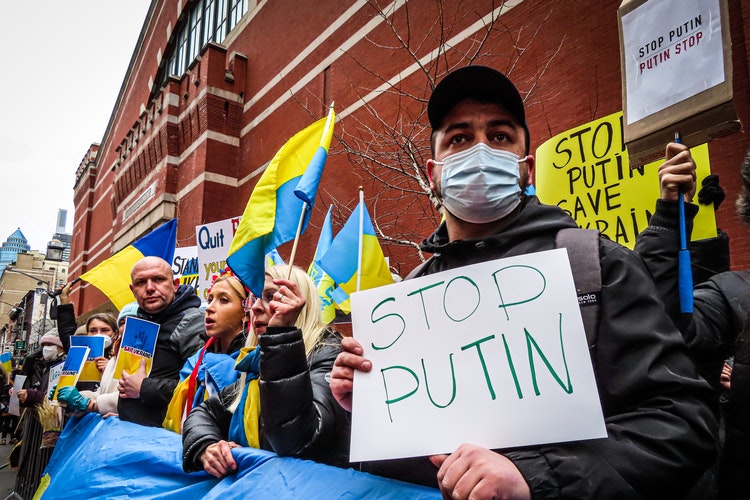
7 Reflections on Russia’s Invasion of Ukraine
Various thoughts on morality, faith and governance, regarding the current conflict in Ukraine, precipitated by Russia. War is a terrible thing, but we have everlasting hope in Christ.
Two Thursdays ago, Russia invaded Ukraine.
Ukraine was meant to fall in 48 hours, crushed under the treads of Russian tanks. But the nation is still standing as I write: Ukrainians are fighting back in ways few predicted. And Ukrainian President Volodymyr Zelenskyy is showing the world the meaning of courage.
There’s much to say about this war and war in general. Here are 7 reflections:
1) Moral relativism doesn’t work in the real world of wars and conflict
How often do we hear our secular neighbours say things like:
-
There are no moral absolutes.
-
Morality is ‘relative’.
-
No one culture is better than another.
-
Everyone (and every culture) should be free to choose their morality.
But notice how Westerners see Putin’s aggression as wrong — utterly wrong. Nobody’s defending Putin’s right to ‘choose his own morality’.
To paraphrase Eric Bana from the movie Black Hawk Down, ‘Once that first bullet flies past your head, moral relativism go’ right out the window’.
2) War is horrific. But in a fallen world, if we want peace, then we must prepare for war
As the Bible and human history demonstrate, there are evil people like Putin bent on conquest in our fallen world.
And despite our hopes, sometimes these people can’t be deterred. Whether with words. Or appeasement. Or pacificism. But only with the threat of lethal force: a force that God has authorised human governments to wield (Rom 13:1-6).
And the better-prepared governments are to wield this lethal force, the less likely they are to be invaded.
This preparation protected Western Europe from Soviet domination during the Cold War. And the lack of such preparation encouraged Hitler to invade the rest of Europe during WW2 and Putin to invade Ukraine.
3) There’s a time for peace and a time for war. The trick is knowing what the time is
While we need to be prepared for war to deter evil, not all wars should be fought.
As Ecclesiastes 3:8 points out, there is a time for peace and a time for war. Why? Because we live in a morally complex world, where some conflicts should be avoided (eg World War 1), whereas others need to be fought (eg standing up to Hitler in WW2).
What about Ukraine?
What should NATO and the West do? The moral case against the Russian invasion seems clear. But does this mean we should do everything to help the Ukrainians?
Sadly, it’s not that simple:
-
If NATO steps in, it risks escalating the war, even to nuclear levels. Is defending Ukraine worth that risk? The answer is not obvious.
-
This raises a larger question: are we obligated to stop every war in every part of the world? Passages like Galatians 6:10 help us see the complexity: ‘as we have opportunity, let us do good to all people.’
-
While the above passage applies to Christians, it’s a moral template that would seem to apply to non-Christians, including governments: Governments don’t always have the opportunity to ‘do good’ by helping every victim state through military means. And they shouldn’t be held to account as such.
-
But governments should take some steps — ‘as they have opportunity’ — which may include sanctions and military supplies — and occasionally intervention.
In a fallen world, moral decision-making is complex.
4) In a fallen world, war is normal
There hasn’t been a big war in Europe for 70 years.
And so, we’re tempted to think peace is normal (in the West). But peace is not ‘normal’: in a fallen world, war is. Just look at other parts of the world (eg the Middle East). We’ve simply been spared the horror of (major) wars, at least in the West.
And with the US becoming weaker and other regional players like Russia and China becoming more assertive, we shouldn’t be surprised if such conflict becomes the new normal.
5) War should not drive us to despair, but help us yearn for the new creation.
So many of us have found ourselves saddened and distraught by what’s going on in Ukraine.
(And I can only imagine what the Ukrainians are going through.) But despair is never a God-given response to tragedy. While we should lament and be sad about sad things (see the Psalms), we need not despair.
Instead, suffering is used by God to grow our dependence and love for Him and for the eternal hope that no war can take away.
And so, may this war cause us to look forward to that day when:
[T]he nations will beat their swords into plowshares
and their spears into pruning hooks
Nation will not take up sword against nation
Nor will they train for war anymore. (Isaiah 2:4)
6) People don’t start wars: governments do.
It’s worth remembering this, lest we demonise entire peoples for being on the wrong side.
Russian people — including Russian soldiers — are image-bearers of an infinite God and for whom Jesus died. Throughout this conflict, we should pray for them and care for them as the opportunity arises.
7) War can bring out the worst and best in people. And we can learn from both.
While wars are a catalogue of the worst that human nature can do — and chances are we’ll hear about atrocities in the coming weeks — it’s also an opportunity for people to do good.
The bravery of Ukrainian Volodymyr Zelenskyy is a case in point.
But so is the bravery of ordinary Ukrainian men and women deciding to defend their nation rather than flee. As is the bravery and love of Ukrainian Christians who have decided to stay and serve those around them.
And if nothing else, we Western Christians can learn from this bravery.
How much more should we stand up and contend for our faith in our increasingly hostile culture? Yes, we might face online cancellation, perhaps loss of job, or at the very worst, a prison sentence. But that’s nothing compared to facing down death at the hands of the world’s third-largest army.
What’s more, we can face whatever opposition comes our way not from a position of fear but of faith, knowing that Christ has won the victory over sin and death.
And His victory is our victory (Colossians 3:1-5).
___
Originally published at AkosBalogh.com. Photo by Katie Godowski from Pexels.
2 Comments
Leave A Comment
Recent Articles:
9 October 2026
1.3 MINS
Season 6 of The Chosen is releasing next month, and until 15 November, your church has the opportunity to host a free pre-release screening of Episode 1. Here's how.

9 October 2026
2.9 MINS
Angus Buchan’s remarkable journey from farmer to evangelist is brought to life in a new documentary now streaming, revealing the faith, family and challenges behind his public ministry.

9 October 2026
3.3 MINS
New South Wales healthcare workers who object to abortion and voluntary assisted dying face growing pressure, raising serious questions about conscience rights, employment and moral injury.
9 October 2026
2.9 MINS
God is intensely relational, and he puts us into a community of believers so we can use our gifts in service of Christ's body.

8 October 2026
3.6 MINS
John Anderson warns that Australia’s decline is rooted in spiritual and cultural disintegration, calling for a recovery of Christian foundations, social cohesion and national purpose.

8 October 2026
4.1 MINS
Aboriginal communities in Central Australia already know the gospel message. What they need now, Robyn Murray writes, is discipleship, encouragement and Christians willing to pray and participate.
8 October 2026
4.1 MINS
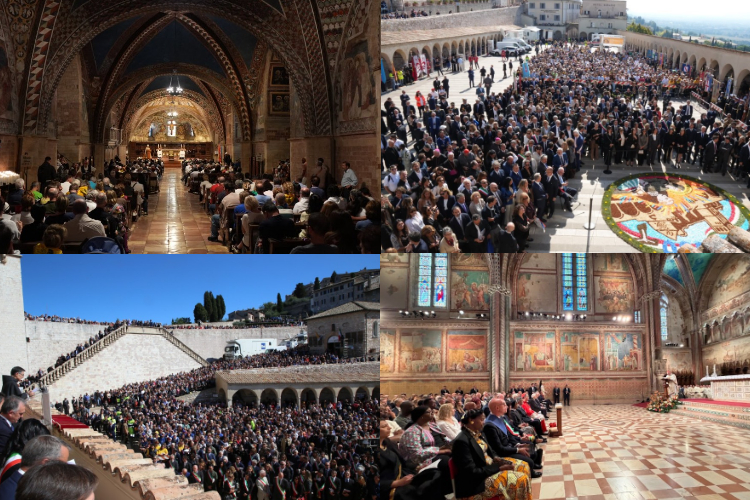
Italy honours St Francis of Assisi 800 years after his death, celebrating a saint whose devotion to Christ, radical simplicity and message of peace continue to shape generations.



Akos Balogh, thank you for this. What I value most is your acknowledgment of the many different perspectives from which to view this tragedy. I am so encouraged that you challenge people to get out of a binary stance of simplistic right and wrong.
Very important and well articulated article. There is simply no winners in war and yet sadly we should not be surprised. Jesus talked about “wars and rumours of wars.” Our job is to pray for peace and for mercy!