


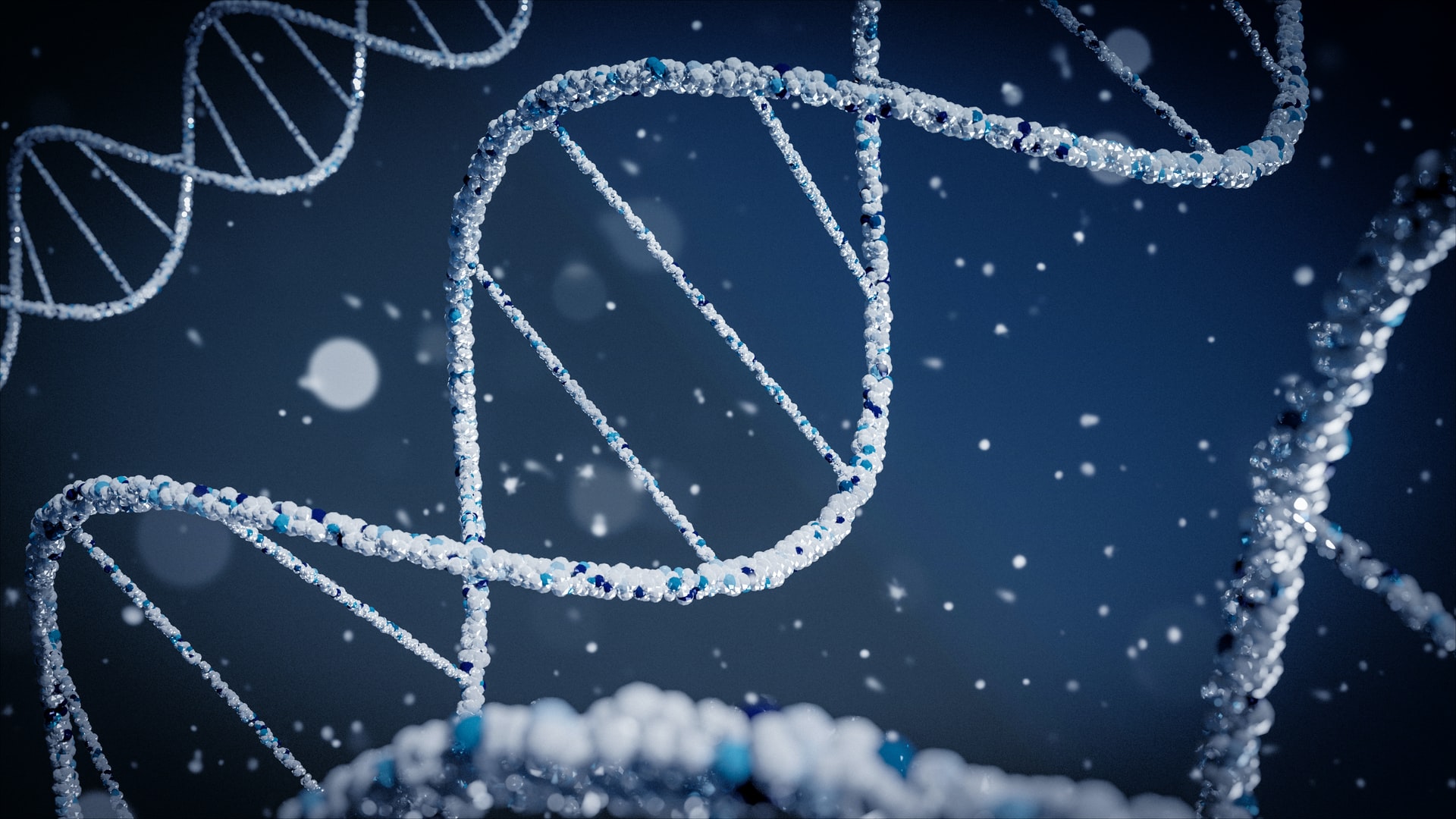
A Fatal Flaw at the Heart of Evolutionary Morality
Can human standards of morality be explained by the evolutionary mechanism? Or do we require a God Who established the laws of our universe?
Our secular culture often uses evolution to explain why we’re moral creatures.
It’s popularised by thinkers like evolutionary psychologist Jonathan Haidt or author Steven Pinker. Evolution has given us our morality, we’re told, explaining why we’re morally outraged at Putin invading Ukraine or cops killing unarmed black men.
And there’s no God required.
But rarely do secular Westerners dig deeper into this theory, and unearth its fatal flaw.
1) How Evolution (supposedly) gives us morality
The ‘Evolution gives us morality’ view can be summarised by this three-step syllogism :
- a) Our ancestors survived the evolutionary process;
- b) We survived (in part) because of moral trait [X];
- c) Therefore, moral trait [X] is something we should hold to today.
Moral trait [X] can be anything our secular world holds near and dear, like caring for strangers or altruism. [1]
But there’s a fatal flaw with this logic of ‘evolution gave us morality’:
2) The fatal flaw at the heart of ‘Evolution gave us morality’
(It ‘cheats’ by smuggling in morality).
There are many problems with the idea that ‘evolution gave us morality’. [2]
But the critical problem is that it ‘cheats’ by smuggling in morality. Let me explain by unpacking the above syllogism:
- a) Our ancestors survived the evolutionary process;
- b) We survived (in part) because of moral trait [X];
- b.1) Trait [X] is morally good
- c) Therefore, moral trait [X] is something we should hold to today.
Do you see the problem?
The ‘evolution gave us morality’ view injects an external moral evaluation into its thinking — ‘trait [X] is morally good’ — without explaining the origin of such an evaluation, or the moral standard such an evaluation is based on. What’s the standard that measures which trait is morally good, and which isn’t? Where does such a moral standard come from?
We’re not told. [3]
It’s merely assumed without question. At best, ‘Evolution gives us morality’ gives us an explanation of why we might have moral feelings, but it doesn’t tell us — it can’t tell us — whether those feelings are truly moral. And thus, ‘Evolution gives us morality’ fails to give us a consistent moral standard, by which we can judge the likes of child kidnappers or Vladimir Putin’s aggression.
It’s deeply flawed.
3) Can you have an external moral standard in an Atheistic Universe?
Now some prominent atheists like Richard Dawkins admit there are no external, objective moral standards in a Godless universe:
‘In a universe of electrons and selfish genes, blind physical forces and genetic replication, some people are going to get hurt, other people are going to get lucky, and you won’t find any rhyme or reason in it, nor any justice.
The universe that we observe has precisely the properties we should expect if there is, at bottom, no design, no purpose, no evil, no good, nothing but pitiless indifference… DNA neither knows nor cares. DNA just is.’ [4]
No good. No evil. Nothing but blind, pitiless indifference.
It’s an intellectually honest answer — and I agree that in an atheistic universe, morality is by definition subjective: it’s not something that exists objectively, but something we make up. The atheistic worldview denies the existence of an external moral standard by which we can judge the actions of others.
And yet, even a committed atheist like Dawkins judges others by a moral standard.
4) Why are we outraged without a compelling reason for moral outrage?
Every atheist I know gets morally outraged by things such as the kidnapping of children or unprovoked wars.
Yet, if, as Dawkins points out, the atheistic universe has ‘no design, no purpose, no evil, no good, nothing but pitiless indifference’, then what compelling reason is there for such moral outrage? Without an objective standard of morality, morality becomes subjective. It becomes nothing more than personal taste: e.g. our taste might be to respect other countries’ sovereignty, whereas Putin prefers to invade them.
How then can we say our moral taste is better than Putin’s, without an objective moral standard?
You can’t appeal to the existence of timeless, universal moral standards that apply to all people across our world (such as Putin) and then deny the existence of such standards. It’s an illogical way to live. [5]
And yet, that’s where atheistic evolutionary morality leads: a logical contradiction.
It’s a simple flaw, it’s a subtle flaw, but it’s a fatal flaw.
___
[1] This raises questions about human beings’ other traits, such as tribalism, and why such characteristics aren’t also considered ‘moral’.
[2] E.g. why would a trait that helped our ancestors survive (according to this thinking) make a moral obligation for us today? Yes, it may produce a moral feeling within us, but why would it create a moral obligation (especially if it goes against our immediate interests)?
[3] The common answer is that ‘society gets to say’. But who in society? Societies are rarely uniform: witness the polarisation around ethical issues such as abortion and euthanasia. Furthermore, what if a society says it’s ok to oppress women: does that mean we’re to give such societies a free pass? Furthermore, this leaves morality in the realm of the subjective.
[4] Richard Dawkins, A River Out Of Eden: A Darwinian View of Life (Basic Books, 2008).
[5] Admittedly, clinical psychopaths have no moral compass, without any moral feelings.
___
Originally published at AkosBalogh.com. Photo by Braňo on Unsplash.
Recent Articles:
23 October 2026
6.8 MINS
Hillsong UNITED’s Joel Houston reflects on fame, faith and the burden of ministry, questioning performative Christianity as he seeks a more authentic walk with God.
23 October 2026
13.1 MINS
Tasmania’s proposed conversion practices legislation raises serious questions about religious freedom, pastoral care and whether Christians can freely pray with those seeking to live according to their faith.
23 October 2026
3.1 MINS
The one who is worthy of it all is awakening his Church to be captivated by him, so that we will honour one another and share his gospel with humility and courage.
22 October 2026
2.9 MINS
Victoria Labor’s promise to fund free abortions has drawn a forceful response from Presbyterian leaders, raising profound questions about unborn life, government priorities and Australia’s moral direction.

22 October 2026
4.7 MINS
Western Australia’s proposed anti-discrimination overhaul has sparked warnings from Christian leaders that religious freedom, parental choice and faith-based schools’ ability to uphold their beliefs are at risk.

22 October 2026
2.9 MINS
An Israeli political candidate claiming a remarkable biblical identity has sparked questions about false messiahs, the Antichrist and how Christians should interpret prophecy.
22 October 2026
2.8 MINS
31 October is a historic day of reformation and revival. This end of month, let's gather together on this day which holds deep wells of revival, and ask God to do it again.


