


A National Response to Islamophobia: From Anti-Hate Strategy to Ideological Manifesto
In August 2024, the Australian Human Rights Commission released a 40-page document titled A National Response to Islamophobia. The report, which was supposed to be a guide to “social cohesion” and “inclusive democracy,” claimed to lay out a positive national plan for fighting anti-Muslim bias. Its goals seem good on the surface: no civilised society should allow hate, violence, or discrimination against any group. But behind its open language is a deeper and much more worrying plan.
The document is more than just a plan to protect Muslims from prejudice. In its substance and tone, it also functions as a broad policy statement, part advocacy agenda, part ideological framework, that seeks to redefine the boundaries of acceptable public discourse and embed a particular set of assumptions about religion, identity, and society into Australian institutions. It reflects a vision of social cohesion in which criticism of Islam, political Islamism, or Islamist movements is increasingly framed not as legitimate debate, but as harmful prejudice.
The central argument of this essay is straightforward: A National Response to Islamophobia goes beyond the vital task of addressing discrimination. It also attempts to shape the terms of public conversation, introducing a tendency to equate dissent with hostility. However well-intentioned, this risks narrowing democratic space and eroding some of the foundational principles, such as freedom of expression and open debate, on which Australian public life depends.
Islamophobia Redefined: From Prejudice to Ideological Shield
The report begins by noting that there is no single, universally accepted definition of Islamophobia. So it draws on widely used definitions, such as the United States’ description of it as “hatred, discrimination, or bias directed at Muslims or those perceived to be Muslim.” From there, the text expands the concept well beyond individual prejudice, describing Islamophobia as encompassing a range of anti-Muslim behaviours, including negative perceptions of Islam based on religious and cultural signifiers, and the propagation of stereotypes that portray Muslims as a threat. It argues that these dynamics can be seen not only in personal attitudes but also in institutional contexts, media narratives, political discourse, and even foreign policy debates.
This definitional expansion is more than a matter of semantics. It carries significant implications for public discourse. By broadening the concept of Islamophobia to include criticism of ideas as well as hostility toward people, the report risks blurring an important distinction. If opposition to Islamist ideology, the application of Sharia in public law, or aspects of jihadist theology can all be labelled “Islamophobic,” then the space for open democratic debate may be unintentionally narrowed.
The report also suggests that certain foreign policy positions may contribute to prejudice. It warns against Islamophobic framings of global conflicts and warns that geopolitical discourse can reinforce bias, language that could be interpreted as encompassing criticism of Islamist groups or support for Israel. In such a framework, not only speech but even strongly held views risk being viewed as problematic.
When a term becomes too elastic, it risks losing its analytical clarity. Once “Islamophobia” is used to encompass virtually all criticism of Islam or related political ideologies, important and legitimate debates, including those about political movements, gender norms, or human rights, risk being dismissed too readily as prejudice. Such an approach may be effective in discouraging harmful rhetoric, but it can also make it harder to foster genuine understanding or robust democratic discussion.
Silencing by Design: Proposals That Police Discourse
The report’s ambition to regulate public speech is not merely implicit — it is written into its policy recommendations. Among them:
● Visa bans for foreign speakers deemed “Islamophobic” — a euphemism for critics of political Islam.
● Parliamentary codes of conduct that could sanction MPs for “Islamophobic” statements, chilling debate on issues ranging from immigration to counterterrorism.
● “Media guidelines” and algorithmic interventions to suppress content deemed harmful to “community cohesion.”
● Curriculum mandates requiring educators to present Australian history and global events through a “Muslim-inclusive” lens.
These are not defensive measures against hate crimes. They are proactive attempts to narrow the boundaries of permissible speech. Their practical effect would be to punish dissenters not with imprisonment, as in blasphemy regimes abroad, but with reputational destruction, professional ruin, and institutional sanction.
The report goes out of its way to compare Islamophobia with antisemitism, even suggesting that antisemitism gets more attention from politicians and the press. But that framing skews the picture: antisemitism isn’t a relic of the past — it’s a centuries-old hatred that still shapes public life today. Notably, the document says almost nothing about prejudice emanating from within Muslim communities themselves, including antisemitism, misogyny, or hostility toward LGBTQ+ Australians. A truly comprehensive approach to social cohesion would address prejudice in all directions, this one does not.
The report also states that Islamophobia can lead to anxiety, depression, and even suicidal ideation. Those are serious assertions — yet the report provides no long-term studies or clinical evidence to support them. Discrimination can absolutely harm mental health, but the causes are rarely that simple. Real-world outcomes are shaped by a tangle of social, economic, and personal factors that the report doesn’t address.
This reflects a broader tendency throughout the report: Islamophobia is presented as a key explanatory factor for many negative outcomes affecting Muslim communities, from social exclusion to employment disparities. This sweeping narrative simplifies a multifaceted set of issues into a single moral framework, one that may be politically useful but is analytically weak.
The Victimhood Narrative: A Skewed Picture of Muslim Life
Selective framing is a recurring feature of the report’s approach. Negative statistics are foregrounded and amplified, while less dramatic findings, such as the Scanlon Foundation’s repeated evidence of broad public support for multiculturalism and religious freedom — receive little attention.
This imbalance has consequences. The report may give a picture of the Muslim experience in Australia that is more extreme and divided than it really is by focusing on some data and downplaying others. The outcome is a narrative that predominantly depicts Muslims as victims of animosity and ostracism.
This emphasis is what gives it its rhetorical power: Muslims are often called “dehumanised”, “marginalised”, and “under siege”. A reader relying solely on this account might conclude that Muslims exist in a near-constant state of oppression, a conclusion that overlooks the diversity and complexity of Muslim life in contemporary Australia.
Reality is more complex than narratives of marginalisation alone. According to the 2021 Census, 813,392 Australians, about 3.2% of the population, identified as Muslim, reflecting a steadily growing community. Muslims participate across public life, from parliament and the judiciary to academia and business, though their representation still lags behind population share.
Many Muslims aged 20 to 24 go to college at rates similar to the national average, but the results are different for men and women and for people from different socioeconomic backgrounds. Mosques, Islamic schools, and halal-certified products are becoming more common across the country.
Islamic holidays like Eid are also getting more attention in workplaces and public institutions. These indicators point to substantial participation and integration alongside ongoing challenges, complicating simplistic portrayals of Muslim life in Australia.
Very little of this appears in the report. Instead, the emphasis remains on grievance and vulnerability, not because that is the full reality, but because such a framing arguably strengthens the case for state intervention, from curriculum changes to regulatory oversight. It also risks delegitimising dissent by portraying criticism as a form of bigotry.
Gaza and the Islamophobia Agenda: Mission Creep
The section on the Israel–Gaza conflict in A National Response to Islamophobia may be the most revealing. The report spends a lot of time on very harsh criticisms of Israeli policy, often quoting groups that use words like “genocide“, “unchecked cruelty”, and “a ruthless war on children”. These perspectives are often presented with limited context, and deeply contested political claims are sometimes treated as settled facts.
The connection between such material and domestic prejudice is not always clear. Its inclusion suggests that the report’s ambitions extend beyond addressing discrimination in Australia to incorporating broader foreign policy debates into the conceptual framework of Islamophobia.
In this context, disparagement of Hamas or other Islamist factions may be articulated in ways that imply Islamophobic connotations. Also, an endorsement of Israel may be demonstrated as potentially fostering bias. The report also warns against stories that make pro-Palestinian activism seem less legitimate, suggesting that even questioning its motives could be seen as a problem.
This widening of scope reflects a broader international trend. Policy documents in Canada and the United Kingdom, for example, have similarly linked Islamophobia to narratives surrounding global conflicts, including Israel and Palestine. These changes show that advocacy in this area is moving from a focus on domestic bias to include controversial geopolitical issues. Critics say that this change could make it harder to tell the difference between efforts to fight bias and efforts to shape foreign policy discourse.
The Structural Islamophobia Trap: An Ideological Escape Hatch
The report leans heavily on the idea of “structural Islamophobia” whenever facts don’t fit its preferred story. Things like tougher airport checks, counterterrorism policies, or public debate about Sharia are all described as proof of systemic bias. But the concept is so broad that it’s almost impossible to challenge. Because it’s framed as something that’s everywhere and built into everything, almost any situation can be explained through it.
That means the discussion often shifts away from actual evidence and toward interpretation — a police investigation, for instance, isn’t just a response to intelligence anymore, it’s treated as another example of prejudice. Concerns about Islamist separatism are treated not as part of legitimate democratic debate but as symptoms of institutional hostility. Even inaction can be interpreted as proof of bias.
The result is a framework that can exert significant normative pressure. The problem with the idea of “structural Islamophobia” is that it is defined so broadly, institutions may feel compelled to demonstrate their opposition by adopting the report’s assumptions. They might revise lesson plans, moderate their language, or reshape policies to signal compliance. In that sense, the concept becomes less about analysing real-world conditions and more about driving behavioural change. The irony is that such expansive use can end up clouding the issues it seeks to clarify.
In this way, the concept functions less as a tool for understanding reality and more as a lever for shaping it. Ironically, its sweeping use risks obscuring rather than clarifying the issues it seeks to illuminate. It can change the subject from facts to moral judgments, which makes it harder to have open discussions about important but sensitive topics.
The Deeper Risk: Balkanising the Republic
The report’s understanding of social cohesion may be its most telling flaw. It seems to call for unity, but in reality, it could make things worse. The “whole-of-society” approach often strengthens identity boundaries instead of breaking them down. Muslims are presented less as citizens sharing a common civic identity than as a distinct group whose beliefs require affirmation and protection from criticism.
This is not the foundation of a pluralist democracy. It is a path toward fragmentation — a society increasingly divided into identity blocs, each seeking state recognition, cultural deference, and legal insulation from critique.
Conclusion: Confronting Hate Without Criminalising Critique
No decent society should tolerate anti-Muslim hatred. It is real and must be opposed with the same moral clarity we bring to racism, antisemitism, and every other form of prejudice. But A National Response to Islamophobia goes beyond combating hate. It seeks to shape the boundaries of public discourse.
● It deploys language in ways that can delegitimise dissent.
● It incorporates foreign conflicts into domestic debates.
● It portrays Muslims primarily as victims rather than active citizens.
● And it proposes changes that would reshape Australia’s civic culture along narrower ideological lines.
Australia deserves better: a strategy that protects Muslims without insulating Islam from critique, that confronts hatred without conflating it with disagreement, and that strengthens social cohesion without subordinating democratic principle to identity politics. Until such a strategy emerges, A National Response to Islamophobia should be read not as a plan for harmony but as an ambitious attempt to control the terms of our national conversation.
___
Sources
- Australian Bureau of Statistics. (2021). 2021 Census of Population and Housing.
- Human Rights Watch. (2015). Saudi Arabia: 10 years, 1,000 lashes for blogger.
- Macpherson, S. (2022, July 8). Canada’s Online Harms Bill threatens free speech. National Post.
- Malik, A. (2025). A national response to Islamophobia: A strategic framework for inclusion, safety and prosperity. Australia’s Special Envoy to Combat Islamophobia.
- Walker, P. (2021, July 6). Trevor Phillips suspended from Labour over Islamophobia claims. The Guardian.
___
Image courtesy of Adobe.
4 Comments
Leave A Comment
Recent Articles:
31 July 2026
5.9 MINS
It's been 44 years since Keith Green's death in a tragic plane crash, but “his legacy of love for God and love for the lost still lives on to this day.” His uncompromising cross-shaped Christianity is as relevant today as it was over four decades ago.
31 July 2026
3.3 MINS
On Monday Senator Rand Paul released over 1,000 pages of Fauci’s musings, written in his journal during the COVID era — which shockingly reveal that what Fauci demanded the public to believe was very different to what he knew to be the truth.
31 July 2026
12.3 MINS
Christopher Nolan's adaptation of "The Odyssey" deploys progressive messaging beneath a veneer of cinematic spectacle, using identity politics to create a revisionist betrayal of Homer's original epic. Here's a reveal of this ideology so it doesn't ensnare you.

31 July 2026
5.8 MINS
The Trump administration has cut $67 million of taxpayer funding for controversial “radical leftist sex ed” programs in favour of solid curriculum that emphasises abstinence and marriage.
30 July 2026
4.7 MINS
Tim Kirk isn't just the chief winemaker at Clonakilla, celebrated as one of Australia’s finest wineries. After a dramatic spiritual encounter filled him with the love of Jesus, he incorporates his faith into all of life and is on a mission to share God with others — and often as a result of his profession.
30 July 2026
1.7 MINS
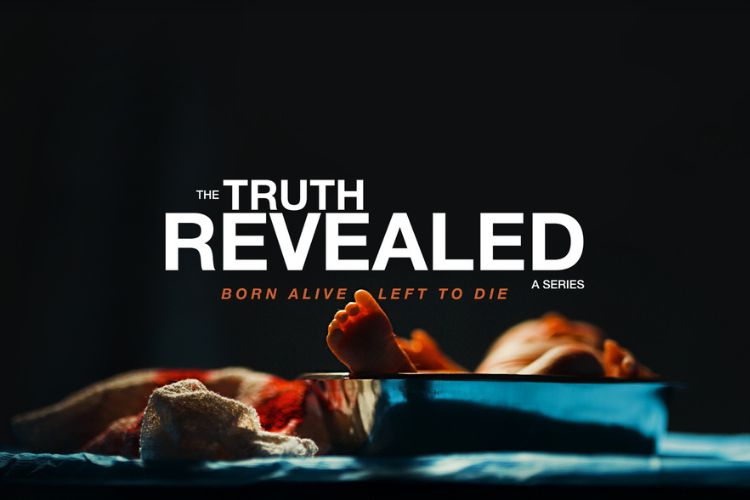
An Australian-made documentary is exposing what few are willing to discuss: babies born alive after abortion — and left to die. The documentary, titled Born Alive Left To Die, is difficult to watch. Yet this 22-minute film sensitively and unflinchingly presents the medical evidence that every Australian needs to know.
30 July 2026
5.1 MINS
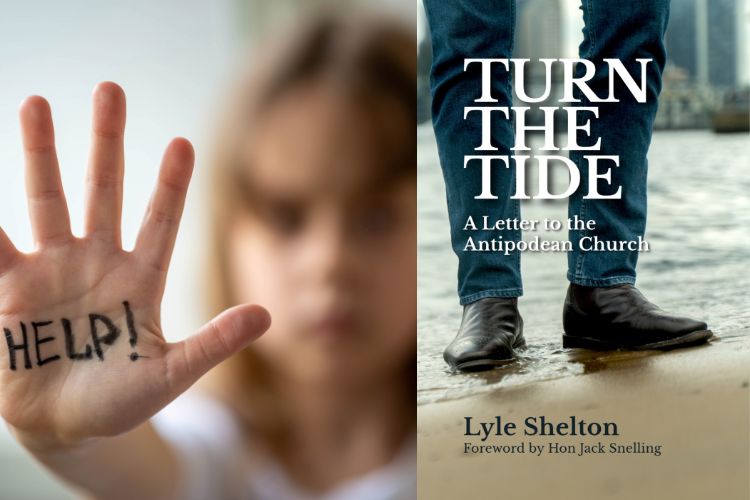
"Turn the Tide" is a timely call to the Church in Australia and New Zealand to recover courage, clarity, conviction, and public faithfulness in an age of confusion and compromise. Shelton's book challenges Christians to rediscover the Church's responsibility to protect children, speak truth, and act faithfully in the public square.



Thank you Dr Tim for your analysis and reporting on the 40 page document. Many of us, including myself, have not read it. Your article gives a good breakdown of the issues for concern(of which there seems to be many).
Thanks so much for this illuminating article.
It has been well said, that, in order to easily recognise a fake dollar note, it’s essential to firstly clearly recognise the details of a genuine dollar note.
Similarly with our culture.
Weak leadership, compromised education, heavily biased journalism, and censored public square discussion, open wide the door to deception and manipulation. Which is what we have way too much of today.
Will the real Australia please stand up ?
Will pretenders please take a back seat !
As has also been well said :
Australia : love it, or LEAVE IT.
meanwhile zero such legislation for any other religion eg Judaism .
Yet freedom of religion was supposed to treat all religions equally What happened to that ?
Entrapments .King Charles Head of the Commonwealth is reported on various Alphabet hosted sites or their dependents , as having converted to Islam years and years ago and allegedly it’s well known to the Saudi Wahhabi royals .Royals created by England .
I remember as a child reading how the English throne is actually originally an Islamic seat .In the old Look and Learn magazines I think from memory .And I recall some stories about english monarchs having special relationships with certain Moslems .
It’s all a bit vague in the memory though now decades later. Bottom line there about 2 billion Moslems now .Pre WW1 the Yusupov family really controlled the Islamic world but somehow Tsar Nicholas was induced to offer them a Title ,royal title for them to give that up .Pre WW1 .They would have secured Russia victory if the Yusupov s had declined the title imo .They would be the richest family on earth today too .
join the dots .
Thank you, Stephen, Pauline, and Nik, for taking the time to read and share such thoughtful reflections.
Stephen, I appreciate your encouraging words. I know that few have had the time (or energy!) to read the full forty-page document, so I’m glad my summary helped clarify some of the main concerns and why they matter.
Pauline, your analogy about the genuine and the counterfeit is spot on — we can only discern what’s false when we’re deeply familiar with what’s true and good. Your comments on leadership, education, and the state of public discourse really capture the heart of what many Australians are feeling today: a longing for honesty, courage, and moral clarity in our culture.
Nik, you raise some important questions about fairness and the consistent application of freedom of religion. Your reflections remind us how vital it is to keep examining these issues openly and carefully, without censorship or bias. History is often more intertwined than we realize, and exploring those connections — however complex — helps us better understand where we are now.