



How Multiculturalism Fuelled Australia’s Deepening Anti-Semitism Crisis
A personal story from a Sydney high school reveals how multiculturalism unintentionally seeded anti-Semitic attitudes — and why ignoring the cost of mass immigration carries long-term consequences.
I completed year 12 at Bankstown Senior College back in 1997. My teachers were great. It was easily one of the best years of my life.
The school must have been something like 90-95% non-Anglo students — no joke. I studied modern history in year 12 and we covered the Arab-Israeli conflict. My history teacher made it all very interesting, which is one reason I did pretty well in history. At the end of final term she told us she tended more towards the pro-Palestine side, but I genuinely never noticed any bias on her part. She was great in all respects.
My support of Israel goes back at least as far as these classes, in which I saw a little state created after WWII and win war after war that, as far as I could see, it didn’t start.
But here’s my point. I remember one boy, Fadi, an oafish moron. One day in class he just started literally yelling “I hate Jews! I hate Jews! Every Jew, back to Benjamin!” I knew straight away that he was just aping something he’d heard at home.
What were the chances that his views were completely eccentric for his immigrant circles? Not high. It was obvious to me from that point on that we had imported thousands upon thousands of people who carried a hate and resentment in their hearts that they would never let go of; a hatred that they love deeply.
Australia is at a crossroads.
Do we embrace a shared cultural identity — or continue down the path of multiculturalism, with its growing tensions and confusion?
Historian @ChavuraStephen makes the case that we must choose — and soon.
A thread 🧵 pic.twitter.com/Fm83OKA6Dl
— Kurt Mahlburg (@k_mahlburg) July 9, 2025
The Problem with Multiculturalism
Saying that we have an anti-Semitism problem in Australia is like saying someone with a brain tumour has a headache. It focuses on a symptom while ignoring the real problem — in this case mass Islamic immigration, especially from the Middle East.
We never should have taken so many Middle Eastern Muslims into our country, and now they’re here, they’re growing, and no influential politician wants to touch the issue.
All talk about solving the problem of anti-Semitism is like telling someone with brain cancer to take a Panadol. Frankly, I’m sick of hearing it. The ideology of multiculturalism is what allowed this national canker to emerge, grow, and fester.
Multiculturalism is national cancer, and any honest person could have seen that decades ago. In fact, many people did, but they were shouted down as racists.
The introduction of the policy of multiculturalism in the 1970s was a gross betrayal of our Anglo-Celtic and European national identity.
To all the do-gooders out there who championed this policy for decades and are now whinging about anti-Semitism, all I can say is, congratulations, this is your fault.
See my longer presentation on this — including my distinction between multiculturalism and multiracialism — below.
The Question of Australian Identity
In the following talk, delivered at IPA Academy 2025, I examine the origins of multiculturalism in Australia, its rise as official policy, and its impact on the nation’s deep-rooted British cultural heritage. I ask: has multiculturalism enriched Australia — or eroded something essential?
Read on for the full transcript.
Well, it’s great to be here at the IPA Academy. I’m Steven Chavura, I’m a senior lecturer in history at Campion College. My research in the past has ranged over Tudor history; currently, Australian history. I teach other types of history, ancient history as well. And today I’m going to talk about a question that I’ve been very interested in for well over 20 years, and that is the question of multiculturalism in Australia.
I think the first thing I should do is very clearly distinguish between multiculturalism and multiracialism. My talk is not on multiracialism. My talk is entitled “Against Multiculturalism,” not against multiracialism, and I am going to give an argument against the policy of multiculturalism because I think it has actually turned out to be—I think the setbacks and the negative impacts of multiculturalism in Australia have vastly exceeded the positives. I’m going to try as best I can to define what I mean by multiculturalism as well.
Few policies in Australia have proven to be as controversial as the policy of multiculturalism. It seems every 10 years in public debate, debate flares up over the issue. In the 1980s and the 1990s, when I was your age in the ’90s, it was largely around Asian immigration and assimilation. From the 2000s onwards, since 9/11, it’s for the most part been about Muslim immigration and Muslim integration. Despite near unanimous support for multiculturalism among intellectuals, academics, policy advisors, politicians, the ABC, the policy has always been very controversial among Australians.
In a way, one of the main problems surrounding multiculturalism is that it’s notoriously difficult to define, perhaps even deliberately so. What exactly is multiculturalism? Hence, political scientist Mari Gut found that from 1988 to 1997, there was a majority of support for assimilationist views, i.e., that migrants should try to forget their old national customs, adopt the Australian way of life. But there was also majority support for multiculturalist views, i.e., that ethnic groups should not be criticized if they want to mix mostly with themselves, that migrants should be able to become Australians without giving up their own culture, and that multiculturalism promotes fairness and is necessary for a harmonious society. These are completely contradictory views that most Australians held at the same time. How do you explain that? You explain it by the fact that the actual word “multiculturalism” isn’t quite meaningless, but it’s close to it. It’s very vague in its meanings.
Today, there’s still confusion about exactly what multiculturalism is. For example, the most recent Scanlon Mapping Social Cohesion report from 2023 says that there is high and growing support now for multiculturalism and diversity, and that these things are a great asset to Australia and that they’re good for social harmony and cohesion. So, the 2023 Scanlon report says 78% of Australians agree, or at least of survey participants agreed, that accepting immigrants from many different countries makes Australia stronger. So, is that to suggest that multiculturalism is simply accepting immigrants from many different countries? I would say that’s not really what multiculturalism is. You know, 89% agree that multiculturalism has been good for Australia, again, it’s not really defined. 86% agree that immigrants are generally good for Australia’s economy. Well, I mean, you can be against multiculturalism but agree that immigrants are good for the economy. You don’t have to be a multiculturalist to believe that.
It then goes on to say that despite sort of high levels of approval for multiculturalism, quote, “prejudice, discrimination remain as problems,” end quote. So, although more than 90% of Australians have very or somewhat positive feelings towards immigrants, according to the Scanlon report, immigrants from Italy, Germany, and the UK—so Europeans—this proportion drops to 70% for migrants from India and to little more than 60% or below for immigrants from Ethiopia, Lebanon, China, Iraq, and Sudan. 27% of people expressed a negative attitude towards Muslims in 2019; 41% expressed negative attitudes towards Muslims. So, you’ve got this strange situation where, apparently, according to Scanlon, the overwhelming number of Australians, 80%, even nearly 90%, say that multiculturalism is a good thing, but you’ve also got quite large minorities of people, where it would overlap with that large percentage of pro-multiculturalists, who say, basically, we don’t want Muslims, and, again, very sort of low levels of support for other forms of immigration. So, how do you make sense of that? It doesn’t seem to make sense.
Well, I think one of the reasons these things happen is because, again, the word “multiculturalism” is very vague, it’s very ill-defined, and I think, again, probably deliberately so, because as long as the word multiculturalism is not properly defined, anyone who says that they don’t want multiculturalism can easily just be derided as a racist. So, the more vague the word is, the harder it kind of is to attack in a way where you can’t be—the response cannot just be, “Well, you’re a racist, you want a White Australia policy.” So, I think that’s part of the reason the word is so vague and very, very rarely defined.
All right, so what is multiculturalism? I mean, I’ve been sort of reading theoretical multicultural literature probably for the last, probably nearly 20 years. I’ve always had an interest in multicultural policy in Australia, so I’ll try and sort of offer a definition of what I’ve gleaned from all of that. But I think a great place to start is where the best historian of multiculturalism in Australia, Mark Lopez, in a brilliant book he wrote on the history of the origins of the multicultural policy, he points out that, quote, “it is one of the most significant and controversial political ideologies to emerge in Australian life,” end quote.
So, the first thing to understand when we’re talking about multiculturalism is, multiculturalism is an ideology. It’s an ideology, and I’m not saying that—I’m not using the term ideology in a negative sense at all, but I am saying it is an ideology in that it’s not simply describing a fact about Australian life, that there are multiple cultures in Australia, what we would call multiculturality. It’s actually making a normative statement to the effect that this is a good thing, and we want multiple cultures in Australia. It’s important to point out that multiculturalism is an ideology because this reminds us that it does not merely claim to describe how Australia is, but declare what Australia ought to be. It turns the fact of multiculturality into an end in itself, multiculturalism.
So, what is this policy of multiculturalism? I could basically describe about four factors. It holds that cultural pluralism is an intrinsic good, it’s an intrinsically good thing, which kind of means that cultural monism is a bad thing. That’s the first one. Two, that minorities and people from minority cultures have a right to enjoy their own culture within the context of their new host culture, but within the context of some fairly abstract host culture values that are held to be non-negotiable values, like equality, democracy, liberty, tolerance. So, no advocates of multiculturalism say that anything from any culture should go, should be acceptable. Most, the overwhelming majority, probably all of them, would say there are these broad Australian values within which we need to, you know, make sure that all cultures sort of respect and stay within the bounds of. Of course, these values are very, very vague—equality, democracy, freedom. I mean, these are not exactly clear concepts, and they can all be defined in all sorts of ways to accommodate anything, really.
Three, the government has a positive duty to see that cultural minorities enjoy strong cultural community ties, so it’s the government’s job to make sure that people feel and enjoy strong cultures within Australia as a whole. And finally, according to the ideology of multiculturalism, because cultural minorities have both a) a right to enjoy their original culture and b) a right to enjoy civic rights and social participation equally to others, therefore c) the government has a duty to accommodate services and to accommodate our conception of national identity to minority cultures, that is to, in a way, redefine who we are to make Australian identity and Australian society more palatable to minority cultures. So, rather than minority cultures sort of having to feel a strong burden to adjust to the host culture, the host culture has a strong burden to try to adjust itself to the minority cultures.
But there are a few problems with all of this. A good way to illustrate is when I was in high school, I remember the question arose, what is Australian culture? And I remember the teacher, a very good teacher, great guy, he said, “Oh, that’s easy, Australia’s culture is multiculturalism.” And I was 18 at the time, I thought, “Oh, okay, whatever, makes sense, I’ve heard that word before, sure, why not?” The problem is, Australia’s culture is not multiculturalism. Australia’s culture, historically, up until very recently, as I’ll point out later, has been, for lack of a better term, Britishness or Anglo culture.
So, when we say Australia’s identity is multicultural and that we are a nation of multiculturalism, the question is, where does that leave the original culture that actually founded modern Australia, that defined Australia so exclusively up until the end of World War II? This culture that remained dominant up till the 1990s and still defines our institutions and much of our national character today, that is, again, sort of Britishness or Anglo culture. So, for example, the dominant language in Australia is English. Our legislative system is sort of a hybrid of the Westminster system and Washington, and Washington itself is a derivative from the Westminster system, so our legislative system is British. Our economy is basically forged from ideas coming out of the British Enlightenment. Common law, British common law, is very influential in Australian law. I would also say, up until recently, sort of the dominant forms of Christianity in Australia have been British varieties of Christianity, whether Catholicism or Protestantism.
I’d also say that, just at a subtle level, the Australian character is far more British than it is, say, American, which is why I think a lot of Australians, when they look at Americans, say, for example, Donald Trump is not popular in Australia. About 60-odd percent of Australians don’t like him. Why? Well, I think because Donald Trump is very American, he’s very brash, he’s very New York, and I think Australians still have a very understated Britishness about them, where they look at that and just think, “They’re crazy, that’s kind of crazy stuff.” And even when I was a kid in the ’80s and ’90s, particularly in the ’80s, British television was just everywhere. The comedies that we used to watch were British comedy shows. You had a lot of American stuff, but you had a ton of British stuff that you would watch as well. So, Anglo-British culture has constituted Australian culture up until, I would say, the 1990s, and it’s still quite strong to this day. It’s still quite strong to this day, and it’s actually still also very strong in many immigrant communities as well, who went through periods of British colonialism.
Where does this policy of multiculturalism come from? Why do we have it to begin with? Well, the origins go back probably to the 1950s and certainly to the 1960s, when certain academics, clergy, social workers, and activists began a sincere examination of the struggles and hardships experienced by post-World War II migrants, especially in Melbourne. Melbourne is really where it all started in Australia, the multicultural movement. Problems of unemployment, social isolation among immigrant communities, educational disadvantages—they were the main objects of concern, and blame was being placed on the policy of assimilation, which people thought made it too hard for immigrants to get ahead in Australia.
In other words, as with many other ideologies, many other “isms,” the earliest phases in the history of multiculturalism were genuine responses, or at least inquiries into genuine social problems. So, it’s quite a practical movement to begin with—how can we increase employment among the Greeks and the Italians? How can we make sure that the Italians in the public schools are doing well, that they’re not falling behind in their grades for language reasons? These are very fair and practical issues that any immigrant country would want to be dealing with.
But the practical nature of the very, very early multicultural movement didn’t last long, because very soon, radical political ideologies started to creep in, obviously, I’m talking about varieties of Marxism and critical theory, largely inspired by what was going on over in America from the mid-1960s onwards, if you know anything about that kind of thing, and a bit of liberalism in there as well. But once radical theory became involved, the project became less about integrating migrants into a pre-existing social system and culture that was considered to be sort of the legitimate dominant culture that we should all fit into, and it became more about changing the existing social system and culture to fit the plurality of migrant communities, to sort of fit the emerging cultural diversity.
Multiculturalism, one could say that—well, Lopez points out many crucial facts in his history, and it’s an incredible book. It goes, unfortunately, it’s 500 pages long, so I mean, it’s great if you love reading, so I loved every minute of it, but it’s a commitment, it’s a commitment. One of the most important facts that Lopez labours throughout his history is that multiculturalism was always pushed and championed by a very small group of elites, literally about four people surrounded by a small group of activists, a small group of elites who found their way into key public policy roles, particularly during the Whitlam and the Fraser years. I’ll get to that later. There were only a handful of them, but they were highly organised and knew how to get an agenda across.
As Lopez says, quote, “Multiculturalism was developed by a small number of academics, social workers, and activists, initially located on the fringe of the political arena of migrant settlement and welfare,” end quote. He says elsewhere, “Multiculturalism has never had majority support and never required majority support to be secure in the policy process,” end quote. It’s not even that multiculturalism did not have majority Australian support in its early days; it didn’t even have the widespread support of ethnic minorities, whose goals had nothing to do with ideology but were simply to be gainfully employed on good wages and to see their children enjoy upward social mobility—very typical immigrant dreams.
In other words, while the advocates of multicultural minorities, while the multiculturalist advocates were becoming increasingly radical throughout the 1960s and 1970s, the migrants themselves were keeping to what may be described as conservative, even bourgeois, social values. In other words, what I’m getting at here is, as is so often the case with radical political movements, they don’t really represent the interests or the thoughts or the beliefs of the people they’re claiming to be fighting for.
One frequent strategy of advocates of multiculturalism was to conflate multiculturalism with racial tolerance and therefore paint anti-multiculturalism as racist. One reason it was easy to depict anti-multiculturalism as racist was because, as the multiculturalist movement is emerging in the ’60s and ’70s, particularly the ’60s and the early ’70s, we’re having debates over the Australia policy. During this period, the White Australia policy, throughout the 1960s, is being dismantled by the Liberal Party. The Liberal Party actually dismantles the White Australia policy in legislation. It’s, I think, dismantled by about 1967, and while that’s taking place, the discussion of multiculturalism is starting to emerge as well. So, it’s very easy for multiculturalists to basically say, “You don’t want multiculturalism? Oh, so you want the White Australia policy again?” as though there’s no middle ground between a White Australia policy and multiculturalism.
So, it was just very, very easy, during a period where we were discussing race and racism and the White Australia policy, it was very easy for multiculturalists to say, “If you’re not with us, you must be with the White Australia group.” And to this day, if someone was to say, “I’m against multiculturalism,” our immediate thought would be, “Racist.” I think that would be an immediate thought among most of us, “Oh, you’re a racist,” even though they didn’t say multiracialism, they said multiculturalism. So, it’s a nice little trick that the multiculturalists have played on the Australian psyche. I think it’s probably also a reason, you know, multiculturalism these days gets very high approval ratings because when people, when they’re asked, “Do you like multiculturalism?” and people think, “Oh, yeah, people from different races, yeah, I got, I’m not a racist, I got no beef with multiculturalism, yeah, bring it on,” whereas, possibly, if you were to define it more carefully, you might find that the rates of approval for multiculturalism would decline.
I’ll talk about more of this a little bit more. It’s during the Whitlam period, from 1972 to 1975, that the multicultural activists had their most success, particularly when the Minister for Immigration Affairs, Al Grassby, who himself was not quite a multiculturalist, he was a strong anti-assimilationist, but he had a listening ear to the multiculturalists. Probably the first political leader that really took multiculturalism on holus-bolus was Malcolm Fraser. Multiculturalism actually becomes Australian law, not under Whitlam, it becomes Australian law under Fraser. So, it’s the Liberal Party that actually introduces it to Australian law. It starts to make inroads in public policy in Australia under Whitlam, but Fraser is the one who really champions it.
So, by the time you get to about 1974, you hear Fraser saying things like—I’ve got a great—that’s right, towards the end of 1975, just before the dismissal, Fraser is trying to court the ethnic vote, and you could hear him saying things at rallies like this, quote, “We as Liberals are committed to encouraging and supporting diversity in our multicultural society. We reject the sterile Anglo conformity of past days,” end quote. Thanks for nothing, Fraser, not much good to say about the actual heritage that created this country.
Multiculturalism is first actually used in a speech in 1973. The guy who wrote the speech was actually shocked that the speech was approved, and he could conclude that the speech must have been approved because there was no time to check it. So, that’s pretty interesting. By 1988, you’re having lots of debates, lots of immigration debates in Australia, and you have the 1988 Fitzgerald report into Australian immigration. Now, this report is largely in favor of immigration to Australia, so it’s a pro-immigration report, but it has numerous things to say about the concept of multiculturalism, little of it good.
It accepted, the Fitzgerald report accepted, that the early iteration of the ideology may have been benevolent, practical, beneficent, but it seems that the idea had become more troubled than it was worth by the time we get to the late ’80s. Here are some quotes. Basically, what they say is, in the public mind, multiculturalism is associated with immigration and is seen by many as social engineering, which actually invites injustice, inequality, and divisiveness. So, the public mind, by 1988, doesn’t like multiculturalism; it associates it with social engineering.
Quote, “Multiculturalism provides important support for immigrants, but as a concept, it is not something with which many can identify. Just as Australia is a democracy but has its own identity, so it is also multicultural but nonetheless identifiably Australian. It is the Australian identity that matters most in Australia to Australians, and if the government will affirm that strongly, multiculturalism might seem less divisive or threatening,” end quote. So, again, Australians don’t really like this idea of multiculturalism.
Quote, “Our consultant’s research on the question of multiculturalism suggests that, compared with the 1950s, there is a much better tolerance of ethnic diversity, particularly among the more affluent, but this tolerance does not entail majority support for multiculturalism. The Anglo-Australian sense of the superiority of their culture, previously manifest in the policy of assimilation, is disowned by governments but remains as a significant factor in the community,” end quote. And why shouldn’t Anglo-Australians in the late ’80s have felt that Anglo-Australian culture was the superior culture for Australia? It’s a crazy thing to think that they shouldn’t. It’s just as crazy to think that the Japanese shouldn’t think that their culture is the best culture for Japan.
It’s this strange affliction that Anglos have, that the only culture that isn’t worth celebrating and that shouldn’t have any kind of normative force in a country is Anglo culture, when we’d never suggest that for other countries. You would never suggest that the Italians shouldn’t principally want to jealously guard Italian culture—a crazy idea. And you would say the same thing about Indians, you would say the same thing about the Japanese, the Chinese. And yet, we have this strange reluctance in the Anglosphere to want to jealously guard Anglo culture, against which the concept of multiculturalism as a normative national project is a direct assault.
In other words, as Australia was coming into the 1990s, Australians were still not on board with the multiculturalist mantra. What was the government response to this? Full steam ahead with multiculturalism, especially during the Keating years. Now, to his credit, John Howard saw and recognised Australians’ discomfort with the idea of multiculturalism and may be the only PM ever who’s explicitly said that he was not comfortable with multiculturalism while in office. I don’t know if Tony Abbott ever did. If there was another PM who did, it would have been Tony Abbott, but I’m not too sure.
So, I’ve tried to give you some idea of what the concept of multiculturalism is. I’ve given you a very potted, incomplete history of where the policy came from, Australians’ attitudes to it up until fairly recently. What’s my beef with multiculturalism? Why am I giving a paper called “Against Multiculturalism”? Well, first, let me begin by saying what my objections to multiculturalism are not.
I have no problem with a multi-racial nation, and I’m copping a bit of flack these days for saying that, so that’s a bit of a shame. So long as the racial diversity does not undermine social solidarity and a single sense of national identity and appreciation for heritage. In this respect, how much diversity is too much diversity? Well, when the question of who we are becomes increasingly difficult to answer, apart from very vague, abstract concepts as values, i.e., values, I think that’s when diversity has probably gone too far. When we don’t actually know who we are anymore.
Also, diversity—I’ll actually get back to another point here. Like, it’s a question worth asking: how much diversity is too much diversity? Like, could a diversity officer in HR or a diversity officer at a university or in the public service, could they answer that question, how much diversity is too much? Of course, they’re going to say there’s never too much diversity. Really, never too much diversity? So, diversity is the one thing, almost one of the few things in existence, that you could never have too much of? I doubt that. So, already, I’ve suggested that once we become so diverse, it’s very hard for us to say who we are anymore as a nation. At that point, diversity has probably gone too far. I’ll get to something else a bit later, which is a sure indication of when diversity and multiculturality have gone too far, and we’re certainly living through that now.
So, that’s the first thing I want to say: I’m not against a multi-racial nation. Second, I actually have no problem with thick cultural communities within host cultures, within Australia, again, so long as those cultural communities complement and enhance the host society more than they destabilise and divide. Those who know me very well, I’m a great Grecophile, I love all things Greek, I’m trying to learn the language, I love Greece the country, I love the people, I really love that particular culture. I believe that any immigration system that invites people from diverse cultures will inevitably create subcultures, even under an assimilationist policy, which is exactly what has happened in Australia.
It is simply ignorant to think that Slavic, Greek, Italian, German, and Chinese subcommunities only emerged in Australia after the abolition of assimilation in the late 1960s. They emerged immediately, and I have no problem with that per se. Such communities have to be culturally porous enough, though, to allow a large degree of assimilation to the host country. Again, pretty much all European immigration has allowed for this, not to mention much Asian, Indian, and Middle Eastern immigration. So, what I’m saying is, there’s this kind of myth that unless you have a policy of multiculturalism, you won’t have interesting cultural subcommunities emerging, there’ll just be one glob of a culture, but it’s just not true. As soon as we started bringing in Eastern Europeans and Europeans, cultural subcommunities with their own customs, with their own traditions, with their own shops, with their own cuisines, they started emerging straight away. It’s a natural thing that happens, and that was all happening under the policy of assimilation.
Assimilation—I think what multiculturalism does is it tries to overly encourage something that doesn’t necessarily need to be encouraged; this is a natural thing that immigrants will do. So, what are my problems with multiculturalism?
First, as soon as you say, as soon as a country adopts the identity of multicultural or multiculturalism, it at that point becomes impossible to say who we are culturally. For example, even though, right up to the 1990s and still to a large extent today, Australia was predominantly of Anglo characteristic demographically, culturally, and institutionally, it was ideologically forbidden to say that. So, if I was to go on to Q&A tomorrow and say, “Australia is culturally Anglo,” again, that would be such a controversial thing to say to so many people because we’ve just had it hammered into our heads for the last 30 years, “Australia’s culture is multiculturalism, Australia’s culture is multiculturalism.” And, like I said, when I was your age, some of you, 18 here, when I was 18 and I was told that, I just believed it. Why did I believe it? Because I hadn’t been taught anything else. I didn’t know much about Australian history. But when I started reading and studying Australian history, I started to realize, “Hey, wait a second, the First Fleet was not multicultural.” They were, I mean, if they were multicultural, like, sort of in the UK sense, you had Welsh, Irish, Scots, and English, and, yeah, they didn’t like one another that much, but it’s certainly not the kind of radical multiculturalism that we’re talking about today. Like, it was British, it was Anglo culture, it was Anglo culture that set up the first institutions that came to define this country, and it was Anglo culture that was the predominant aesthetic of Australia, again, right up to, I would say, the 1990s.
But once you start saying, “Well, Australia’s culture is multiculturalism,” you’re just taking the actual culture of this country and just throwing it away and saying, “That doesn’t mean anything anymore, that’s nothing now.” You can’t do that because when you start doing that, what it means is people don’t actually understand what this country is anymore. And the other thing is that migrants who come over, who kind of want to fit in, they’re kind of asking, “Well, what are we supposed to fit in to?” We just keep getting told that this is sort of multicultural.
When I was a little boy, I visited my nana, who was Ukrainian. There was a man who always lived up the street from my nana, Mr. Kong. Mr. Kong, a very old man, he would be long dead now. Mr. Kong always claimed that he was a bodyguard for Stalin back in the day, and he even had his revolver that he brought from Russia—you could bring guns to Australia back then. But do you know what Mr. Kong, who never spoke English, never learned English, do you know what he had in his lounge room? He had a portrait of the Queen. This is a man who came from a communist country, he comes to Australia, he knows exactly what Australia is all about, and, you know, something, all he wants to do is fit in because, like most migrants, he’s damn grateful to be here, and he just wants to fit in. So, the first thing he does, because he’s given it when he becomes a naturalized citizen, he puts up a portrait of Her Majesty. To me, that’s just the perfect embodiment of what Australia could and should be, not multiculturalism, some form of assimilation, integrationism, where it is inevitable you will have the existence of minority cultures, multiculturality, but the overall normative culture is that British Anglo culture, which has so created this country.
So, multiculturalism, it kind of just stops people from understanding who we are. It’s no longer permitted to say, “Well, actually, Australian culture is Anglo.” If you want to read a great book on this, there’s a book by a guy named Sher Sufi, who’s written a book called Australia on Trial. The last chapter of that book, on what is Australian culture, that is worth the price of the book. So, it’s a very good book to get, Sher Sufi, I think it’s called Australia on Trial, it’s just come out. The very last chapter, he discusses all this very well.
The second issue is that once we cannot say that Australia is still, in many respects, essentially British, and once we cannot say that the normative cultural heritage, the cultural heritage that around which our conception of who we are should revolve, once we can no longer say it’s Anglo-British, we can no longer justify culturally sensitive or, dare I say it, culturally discriminatory immigration policies that prefer, for example, immigrants from European and Commonwealth countries sympathetic to Britishness over countries that have, at best, no affinity with Anglo-Britishness or are historically and culturally hostile to it. This has led to an inability to express strong arguments against mass Islamic migration in particular and an inability to say those cultures are in tension with our culture, for multiculturalism declares that our culture is simply multiculturalism.
So, once you lose an idea of who you are culturally and you just say, “We are multiculturalism,” you can no longer say, “Well, their culture doesn’t really fit with us,” and you basically have no arguments against letting in people who hold cultural positions where, as individuals, they’re entirely benign and good citizens, but get 200,000 of them together into a community, and you have a completely different entity. At that point, you have a subculture which, in many ways, is in tremendous tension with the host culture, Anglo-Britishness. And in areas like, you know, Punchbowl, Lakemba—I grew up in a Sydney suburb called Bankstown—there have been, over the last 30 years, really serious issues between, sort of, cultural tensions between, in many respects, Islamic ways of doing things and mainstream Australian ways of doing things. The cultures don’t go well together a lot of the time.
But, again, once you just say, “Our culture is multiculturalism,” what argument do you have against bringing in 800,000 Muslims into Australia? What’s your argument against it? You can’t say, “Well, it’s probably in tension with the way our culture is,” because we don’t have a culture anymore under multiculturalism. You’ve got nothing, there’s really nothing left. And so, it’s actually really bad for an immigration policy, and we’re seeing that today, but Britain, England, the UK is especially seeing it, ’cause they’ve just gone down the multiculturalism mantra hellbent for leather for the last 30 years now, especially since the Blair government, and they’re having massive problems right now. They’re having huge problems right now because, for decades, they were simply not able to say anymore, “Anglo-Britishness is our culture, and we don’t want, you know, X amount of millions of people coming from this region or that region whose way of thinking, whose way of living is just manifestly at odds with the way we do things here,” because multiculturalism means you can no longer say, “This is who we are, this is how we do things here.” And if you can’t say that, you’re going to have a terribly detrimental and dangerous immigration policy.
It’s happened in Germany, it’s happened in England, it’s happened to a large extent in France, even though I don’t think France ever went down the multicultural path; they still went down a very irresponsible immigration path. It could potentially happen in Australia; arguably, it is. I mean, one of the sad things about Australia is, we’re actually, just now, we’re used to terrorism now in Australia. So, when that Syrian Bishop, Mar Mari, I forget his name, when he was stabbed in the face, it’s like, have we forgotten that was an act of terrorism in Australia? Like, it’s like, who even bats an eyelid anymore? We didn’t used to have that kind of thing.
So, one and two, those are my main objections to multiculturalism, but there are others. I would say it’s probably intrinsically divisive; it makes social solidarity more difficult. And there’s a whole political science literature on the relationship between levels of public trust and social homogeneity; it’s discussed at length by a British journalist, David Goodhart, in one of his books. In other words, there’s a political science that says, if you want high levels of public trust, they’re really, really good because when you have high levels of public trust, people are more likely to be happy to pay into public services and things. But if you have very low levels of public trust, you have very low levels of social trust, people are much less likely to want to pay into social services. Why? Because they feel like their money, their hard-earned money, is going to people who are not like them.
Now, I’m not saying this is a good thing, I’m not saying it’s a bad thing, I’m just saying it’s a fact that levels of public trust, to a large extent, depend on cultural and, dare I say it, even racial homogeneity. When people think like you, when they act like you, and when they look like you, you’re more likely to trust them. Again, I’m not saying it’s a good thing, I’m not saying it’s a bad thing, and I did bring up the word “race” then because that’s in the literature, although, again, I stress, I’m not calling for some kind of racially homogeneous Australia. The horse is well and truly bolted on that; there’d be no point in calling for it, even if I did believe in it, which I don’t.
Finally, multiculturalism created yet another government bureaucracy for which, as a matter of bureaucratic survival, we can never attain enough diversity and multiculturalism. Let me return to that question I asked earlier: how much is too much diversity? How much multiculturalism is too much multiculturalism? How much multiculturality is too much multiculturality? I actually think this question can be answered. So, you heard my first answer: at the point where it becomes difficult to answer the question, “Who are we?”—that is the point that diversity and multiculturality have gone too far, and they will always go too far under a policy of multiculturalism because multiculturalism sees cultural diversity as a good thing in itself, something to pursue as good in itself; there can never be too much of it.
There’s more, though. We also know that they’ve gone too far at the point at which social tensions and instability have emerged to the point that we are finding ourselves having to do the following three things. So, when has diversity gone too far? When, in order to manage the social tension that it brings, we find ourselves having to do three things: one, censor information for the sake of social harmony, so, for example, censoring crime statistics, not telling people who the main offenders are because the main offenders of a particular crime in a particular region might be some kind of cultural or ethnic minority. Once you start having to censor information, important information, from the people for the sake of maintaining harmonious diversity, at that point, diversity has gone too far.
Second, censoring speech for the sake of social harmony—hate speech and vilification laws. When you have to, when the only way you can maintain social harmony, given the levels of diversity we have, is to censor speech, at that point, it’s obvious that we have too much diversity, and that’s why I’m actually—there’s a lot of talk about new laws outlawing anti-Semitic hate speech now. I despise anti-Semitism, but I do actually not want more limitations on things that we can say. So, I’m actually not in favor of increasing the number of anti-vilification laws to deal with the anti-Semitism problem that we have. I don’t know that you can actually deal with that problem, to be honest, because that is a problem that is not caused by bad free speech laws; that is a problem that’s caused by 30 years of really reckless immigration that’s let in, at this point, literally millions of people who subscribe to sort of cultural expressions and expressions of Islam that are deeply anti-Semitic. You’re not going to fix that with a whole bunch of new vilification laws, which will inevitably be turned against other people, will be turned against, say, someone like me for giving a talk against multiculturalism.
And if you don’t believe that, remember there’s a TV presenter, her name is Sonia Kruger, in around about 2017, she just innocently said, “We need to stop Islamic immigration because I’m afraid that we’re going to have more terrorist incidents in Australia.” She had to go before the New South Wales Anti-Discrimination Tribunal. Now, they couldn’t find her guilty for anything, but what they made very clear in their judgment is they wanted to, but they just didn’t have the legal infrastructure in New South Wales to do it. That’s big trouble. And so, when the only way to manage the tensions that have arisen from diversity are to censor speech, diversity and multiculturality have gone too far, or we’ve brought in some of the wrong cultures.
Third, you have to bombard the public with constant propaganda in favor of diversity and multiculturalism. Ever notice, every time there’s some kind of violent attack or something, whether it’s in England or something terrible goes wrong in, say, Islamic communities in Australia, you just get bombarded with this propaganda: “Well, we’re a successful multicultural country, we’re the most successful, we can deal with this, strengthen diversity, unity in diversity,” and all this kind of rubbish. I grew up with it in Bankstown, it’s just everywhere in Bankstown, “unity in diversity, strong multicultural community.” The only reason you have to say stuff like that is because the reality is the very opposite.
You know, I could go on about that, but I won’t. This list that I’ve just offered is not exhaustive of when diversity has gone too far and the issues that I, and many others, have with multiculturalism. But I have noticed, during my lifetime, and you guys would have noticed it as well in your lifetime, that the cost of social harmony has been free speech, free information, constant false propaganda, which is basically social manipulation. If these become the only ways we can deal with the outcomes of the levels of diversity we have achieved, then the levels have become too high.
Look, there’s more I could say. I don’t think I’m going to skip some bits. I’ll just say, you know, what can be done? This is a really tricky thing, and you have to be honest, maybe nothing can be done. Like, maybe the problems that we have can never really be fixed; that’s a possibility. Or, if they’re going to be fixed, it’s not going to be through any legislative way; it’ll just be throughout the course of history, and that often is very ugly. We have to be realistic.
But let me end on a note of constructive optimism; it’s very rare for me. Some of us here are old enough—in fact, I actually, looking around, I don’t know if anyone here is old enough, maybe, maybe—but some of us here old enough to remember what our bicentennial year, 1988, was like. Anyone, anyone alive during the bicentenary? No, I mean, I was a little kid, they gave us all a little coin, I’ve still got mine. It was an amazing year, I’m sorry for you all, actually. I have to change this speech to “none of us other than myself are old enough to remember what our bicentennial year, 1988, was like.” That was when we turned 200. Australia celebrated that year like nothing since the visit of, say, the Queen or the Melbourne Olympics in 1956. It was an amazing time to be an Australian.
I get—we were unified, we were proud of our country, we were optimistic. In my memory, 1988 stands as the happiest year of Australia, even happier than the 2000 Olympics, because we were more unified. I get sentimental thinking about it, and I actually, I do legitimately mourn for the fact that you guys have never really experienced that Australia; it was an amazing thing to be in a country so unified, so happy, so optimistic, just so in love with Australia; it was an amazing thing.
But here’s the good news, ladies and gentlemen: in 2038, Australia celebrates its quarter millennium. I propose Project 2038, with the goal that is to try to bring about the same unity, pride, and hope in Australia as that which was on display in 1988. How can we bring this about? There are a few ideas that I, probably others, have that Peter Dutton, who I’m thinking is probably going to be the next prime minister, I think he should consider.
These ideas will be hated by the ABC, they’ll be hated by the universities, they’ll be hated by the professional activists and much of the public bureaucracy, but they will find a ready acceptance by most of the Australian public, including, I believe, immigrants. So, number one, the next Liberal PM must be unashamedly patriotic. This isn’t Trumpism; this is what Australia used to be like before the Rudd years, with the exception of the self-loathing Keating years. But, believe it or not, once upon a time, Australian prime ministers were really patriotic, like Bob Hawke wearing an Australian flag jacket. Like, we look at it now and think, “Oh, that’s so weird.” That’s because we have changed; we have become more cynical about Australia, and a lot of that’s because of the high school curricula and university curricula we’ve all gone through.
Second, the next Liberal PM should frankly speak out against the ideology of multiculturalism, saying that it was a bad turn, it was a bad move. Reaffirm our multi-racial society, reaffirm multiracialism and the contribution of immigration and immigrants, but also affirm the normative significance of the Anglo-British heritage—this is who we are.
Third, radically revise the Australian educational curriculum to instil curiosity and admiration in the nation’s founders and heroes, as well as gratitude for our British heritage, not just sort of smug moral judgment on those in the past who did so much, judgment from us who have done just so little in comparison.
Fourth, deport any non-citizens or dual-citizen immigrants who break our laws or stir up gross social unrest. Obviously, this will have to be carefully thought through. I personally do not like the category of hate speech, but I see no reason why Australia should have to keep, for example, Islamic clerics who teach followers to hate and disrespect Jews or teach that the West is deserving of terrorist attacks or who praise terrorists or terrorism. If we can deport such people, we should deport them. This includes people with refugee status; even if you’re a refugee, if you come over here and you start making trouble, you should be deported. It’s as simple as that. So, basically, get rid of the people that are white-anting this country. If we can get rid of them, deport them.
Redefine our immigration system to bring in people from regions most likely to be sympathetic with our British Christian heritage. In other words, I propose the common-sense notion of a culturally discriminatory, not racially discriminatory, but a culturally discriminatory immigration system. The ABC and the academics will freak out, but I think most Australians will get it. Does that mean that we have a ban on Islamic immigration? I would actually say no to that, and the reason I would say no to a ban on Islamic immigration is because I don’t think it’s a good thing for the government to be able to be accused of banning Islamic immigration. So, what that might mean is it goes down to a trickle, goes down to a trickle, but you start focusing on other regions.
This has been attempted in the past, and the politician who attempted it was, I think it was Kevin Andrews. He came under severe criticism, but this is what I would say: look, at the end of the day, the people you answer to and the people who vote for you are not the journalists, they’re the Australian people. And if it’s going to fly with the Australian people, focus on that. And I think part of the problem with too many politicians, and certainly too many Liberal politicians, is that they mistake the press gallery for the electorate. And so, when the press gallery start giving them lots of heat, and when the ABC starts giving them lots of heat, they start freaking out and think, “Oh, no, no, this is really, really bad.” No, no, it’s probably really, really good, because a lot of Australians are very cynical about the mainstream media; they don’t think the media represents who they are.
And a guy who didn’t give a tinker’s cuss about what the press thought—well, actually, I can think of two guys who couldn’t have given a damn: one was John Howard, and one was Paul Keating. Now, the people just voted Paul Keating out eventually because what Paul Keating cared for was not what the people cared for. But John Howard, he kept coming back again and again and again; he didn’t care what the press said. He was very successful at this kind of thing in some ways, although he was not a low-immigration PM. I think there’s some real problems with what he did with his immigration policy, but at the very least, he spoke out in favor of loving this country. He mentioned his reservations against multiculturalism; that was a big deal.
Slash immigration where possible, but as American political scientist Michael Anton has pointed out, the only path forward may be to suffer some economic status for a period during which immigration is severely reduced to allow time for governments to pursue successful policies for Australians to have more children. It must be said that the elephant in the room of the immigration debate is the low fertility rates in Western countries and now, increasingly, Asian countries as well. We need to be having more babies.
Finally, literally abolish the Departments of Multicultural Affairs. Admittedly, most of them are at the state level, but the federal government and subsequent state Liberal governments could lead the way. Take the South Australian Department of Premier and Cabinet website, where there is a page entitled “Multicultural Affairs.” It reads, quote, “Our vision is to achieve an open, inclusive, cohesive, and equitable multicultural society where cultural, linguistic, and religious diversities are understood, valued, and supported,” keeps going, “with a focus on supporting the community and encouraging communities to showcase their cultural diversity. Multicultural Affairs is also responsible for the administration and delivery of multicultural grant programs, events, awards, community forums, support programs, and resources.” Abolish it all. We have no need for those departments. What on earth do we want a department that is pursuing, as an end in itself, cultural diversity? We have no need for that in Australia.
Before I finish, here are some questions that you might want to think about. I would imagine we’d have some libertarians here. To what extent should a government take an interest in the cultural character of the nation? Is it the state’s business? Should a libertarian even care about this? That is, from a political point of view. Two, to what extent does the stability, peace, and prosperity of a country derive from its deeper culture, in our case, Anglo culture? Three, what practical measures can be taken to emphasise Australia’s traditional Anglo heritage without sending a message of ingratitude or hostility to non-Anglo migrant communities who have contributed an awful lot to this country?
___
Republished with thanks to Stephen Chavura. Image courtesy of Unsplash.
2 Comments
Leave A Comment
Recent Articles:

23 October 2026
6.8 MINS
Hillsong UNITED’s Joel Houston reflects on fame, faith and the burden of ministry, questioning performative Christianity as he seeks a more authentic walk with God.
23 October 2026
13.1 MINS
Tasmania’s proposed conversion practices legislation raises serious questions about religious freedom, pastoral care and whether Christians can freely pray with those seeking to live according to their faith.

23 October 2026
7.7 MINS
Melbourne Catholic Archbishop Peter Comensoli has spoken out clearly against the deadly promises by both major parties in Victoria ahead of the election, drawing a comparison between abortion and capital punishment.

23 October 2026
3.1 MINS
As Western societies grow more hostile, could abandoning Christianity’s moral foundations be contributing to the rise of ideological extremism, political intolerance and violence?
23 October 2026
5.1 MINS
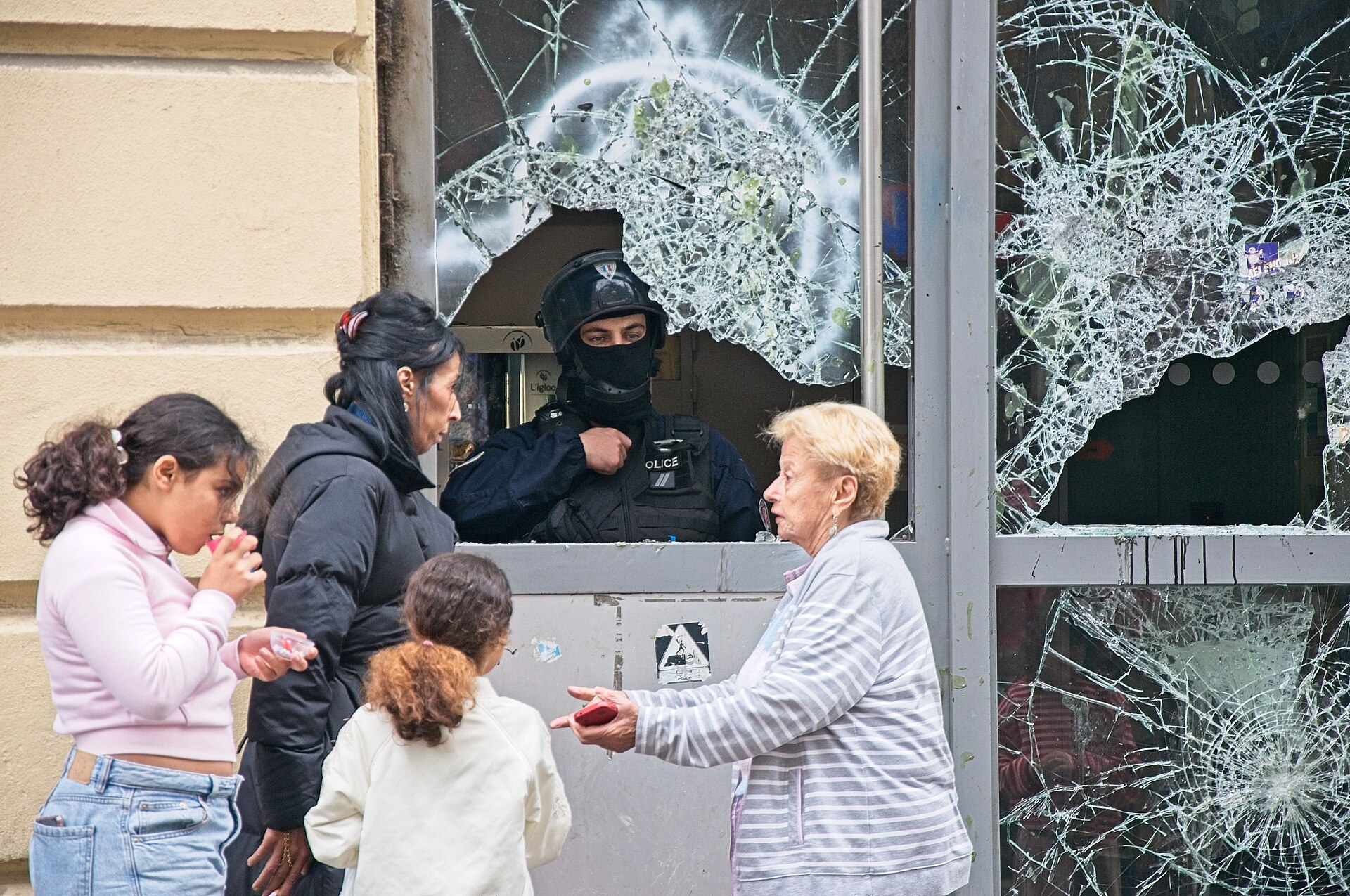
France’s escalating riots expose the dangers of political extremism, antisemitism and radical alliances, offering America a stark warning about the future of Western democracy.
23 October 2026
3.1 MINS
The one who is worthy of it all is awakening his Church to be captivated by him, so that we will honour one another and share his gospel with humility and courage.
22 October 2026
2.9 MINS
Victoria Labor’s promise to fund free abortions has drawn a forceful response from Presbyterian leaders, raising profound questions about unborn life, government priorities and Australia’s moral direction.



Perhaps God is the mastermind behind it all! The nations are coming to us, Australia, a nation established with Christianity at its core! South Australia was built on a Christian foundation! As the old song says, “We’ve a story to tell to the Nations that will turn their hearts to the right!” I believe that the Church is beginning to rise up to its mission to the Nations of the world, right here on our own doorstep!
I can only think of one nation which held together a multicultural country for 1, 300 years –The Republic of Venice without any uprising. The Russian Empire under the Tsars collapsed because of among other things, ethnic separatism. Multiculturalism has been a disaster for Australia.We are just at the beginning of the troubles which will happen in future. We hear so much rubbish how multiculturalism has ” enriched ” our society. We are told that food =”culture ” which is most definitely NOT “culture ” ! WHAT have some sections of these people who do not subscribe to honesty , etc done to ‘enrich ” our society?I frequently see at 7am on Channel 9 evidence of bribery, breaking of Planning laws, and night after night home invasions, and nothing but knife crime in shopping centres, drive -by shootings, massive importation of drugs, attacks on Jewish homes and places of worship, the cathedral in Melbourne encircled by hostile crowds .We are on the brink of far worse in future with complainsant State govts and magistrates who let out on b ail the same day they are arrested these criminal SCUM.None of this was when we were a unified country populated by descendants of Europeans . I am too scared to visit Melbourne. I am glad i don’t live there. Victorians are leaving the State in droves , coming where I live but it won’t be long before it is just as bad !