


When the Bomb Fell on Japan’s Christians
Before the atomic age obliterated it in seconds, Japan’s Catholic community had already survived centuries of persecution, martyrdom, and forced secrecy — a story history has largely forgotten.
For most people, the names Hiroshima and Nagasaki immediately evoke images of mushroom clouds, ruined cities, and the terrifying arrival of the atomic age. The bombings of August 1945 marked the closing chapter of World War II and permanently altered human history forever.
Discussions surrounding the bombings often focus on military strategy, casualty figures, and the race to end the war before a full invasion of Japan. Yet hidden beneath the broader historical narrative lies a lesser-known and deeply tragic reality: Nagasaki was also the spiritual centre of Japanese Catholicism and home to one of the most significant Christian communities in East Asia.
A Faith Forged in Persecution
Christianity in Japan had already endured centuries of suffering long before the atomic bombs fell. Following the arrival of Christian missionaries in the sixteenth century, many Japanese converts embraced the faith, particularly around Nagasaki.
But as political authorities increasingly viewed Christianity as a threat to imperial authority and national unity, persecution intensified dramatically. Christians were tortured, executed, or forced to publicly renounce their faith.
Many believers went underground for generations, becoming known as the Kakure Kirishitan — the “Hidden Christians” — preserving fragments of Christian worship in secret while outwardly conforming simply to survive. Despite centuries of suppression, the faith endured quietly beneath the surface of Japanese society through extraordinary courage and perseverance.
The Heart of Japanese Catholicism
By 1945, Nagasaki had become home to the largest Catholic population in Japan. According to EWTN NEWS, the city had been an important centre of Catholicism in Japan since the sixteenth century, originally evangelised by Jesuit and Franciscan missionaries.
The Urakami district contained the massive Urakami Cathedral, one of the largest Christian churches in Asia at the time and the heart of Japanese Catholic life. Yet on August 9, 1945, much of that Christian community vanished within seconds when the second atomic bomb detonated above the city.
Reports suggest that nearly two-thirds of Nagasaki’s Catholics perished as a result of the bombing and its aftermath. Entire Christian families disappeared, while churches that had symbolised the survival of faith through centuries of persecution were reduced to rubble.
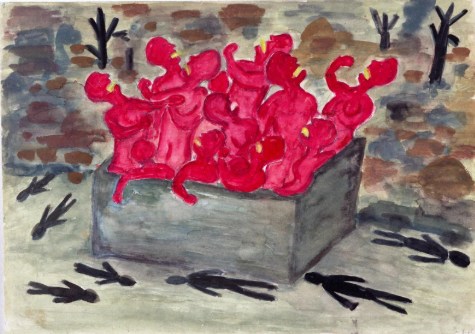
Sagami Ogawa, age 28, “Like Red Devils,” depicting burned bodies following the atomic bombing of Hiroshima. Courtesy of the Hiroshima Peace Memorial Museum.
A Devastating Irony
The destruction of Nagasaki carried a particularly haunting irony. After surviving generations of suppression under Japanese authorities, much of the country’s most historic Christian community was devastated amidst the catastrophic violence of modern industrial warfare.
As explored in OnePeterFive’s article on the bombing of Japanese Catholicism, the bombing effectively destroyed the heart of Japanese Catholicism in a single morning. The destruction of Urakami Cathedral became symbolic not only of the horrors of nuclear war, but also of the fragility of civilisation itself. Human progress, technological advancement, and modern science had culminated in a weapon capable of erasing entire communities within moments.
For many Christians today, this dimension of Hiroshima and Nagasaki remains surprisingly unknown. Public discussions surrounding the atomic bombings understandably focus on the immense suffering experienced by Japanese civilians as a whole, yet the specifically Christian story of Nagasaki often receives little attention.
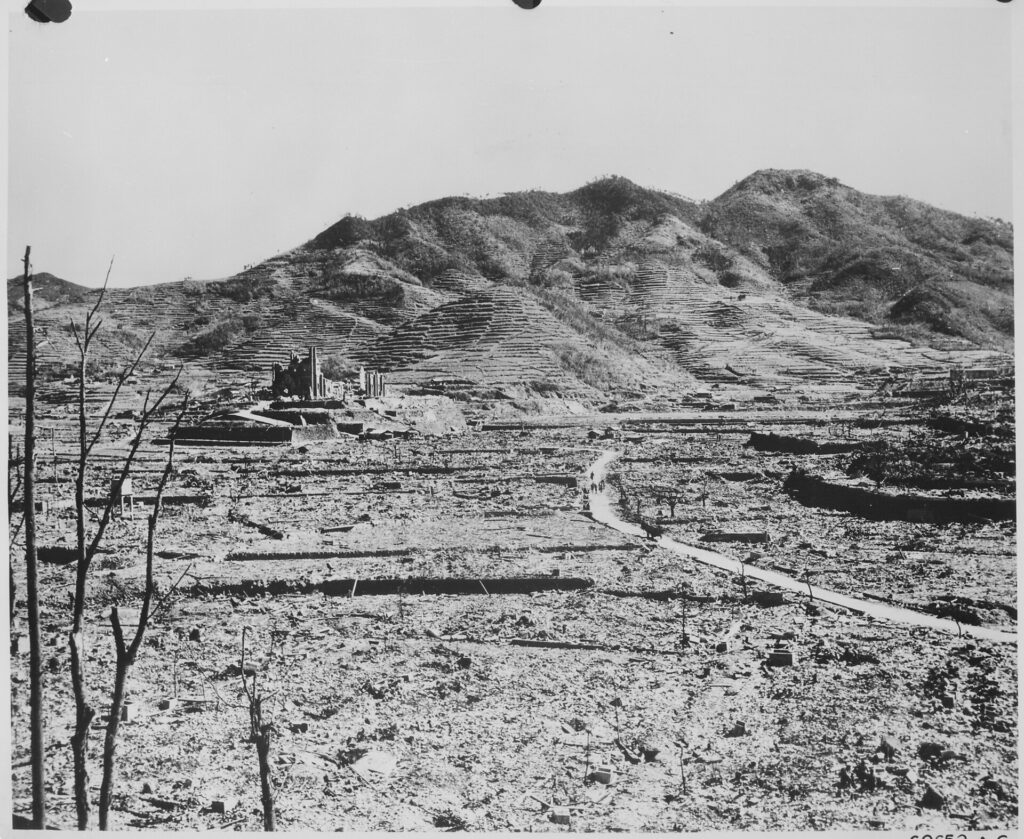
In the background, a Roman Catholic cathedral on a hill in Nagasaki, ca. 1945.
The history of the Hidden Christians, the endurance of Japanese Catholicism, and the destruction of one of Asia’s oldest Christian communities have gradually faded from broader cultural memory despite their extraordinary historical significance.
“The light shines in the darkness, and the darkness has not overcome it.”
— John 1:5
That verse feels especially fitting when reflecting upon the history of Christianity in Japan. Despite persecution, executions, isolation, and even the devastation of nuclear war, the faith endured. Christianity in Japan survived not through political dominance or cultural power, but through quiet perseverance amidst suffering.
Hidden believers preserved prayers, traditions, and fragments of worship across generations because they believed some truths were worth suffering for. Even after the destruction of Hiroshima and Nagasaki, Christian communities in Japan continued rebuilding their churches and practising their faith.
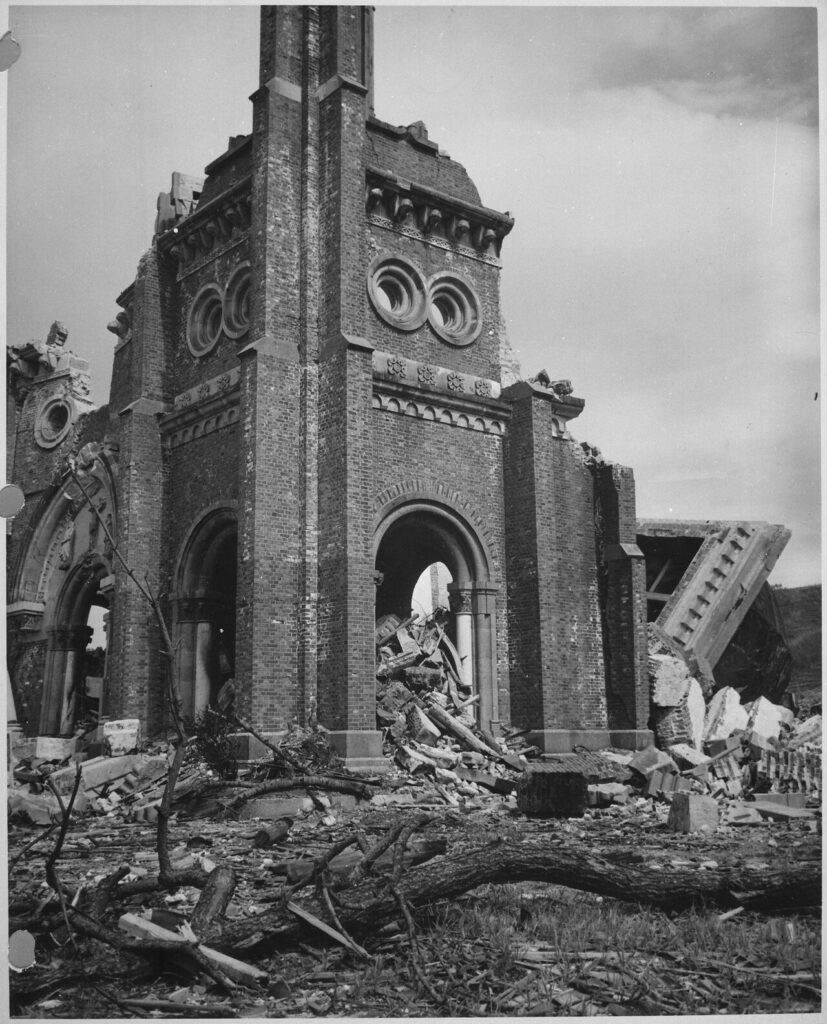
Nagasaki Cathedral after the atom bomb explosion.
Remembrance and Resilience
Remembering the Christians of Hiroshima and Nagasaki should not become an exercise in simplistic political judgment or historical tribalism. The closing months of the Second World War confronted nations with catastrophic choices amidst unimaginable destruction across the globe.
Yet remembrance still matters. Historical tragedies should never become mere statistics buried beneath larger geopolitical narratives. Behind every casualty figure were ordinary human beings — mothers, fathers, children, priests, worshippers — whose lives carried dignity and meaning long before history reduced them to numbers in textbooks.
The forgotten Christians of Hiroshima and Nagasaki remind us not only of the horrors of war, but also of the extraordinary resilience of faith amidst suffering. Their story stands as both a warning and a testimony: a warning about humanity’s capacity for destruction when technological power outruns moral wisdom, and a testimony to the endurance of belief even in the darkest moments of history.
“We are hard pressed on every side, but not crushed; perplexed, but not in despair; persecuted, but not abandoned.”
— 2 Corinthians 4:8–9
___
Republished with thanks to the Young Conservatives for Christ Substack.
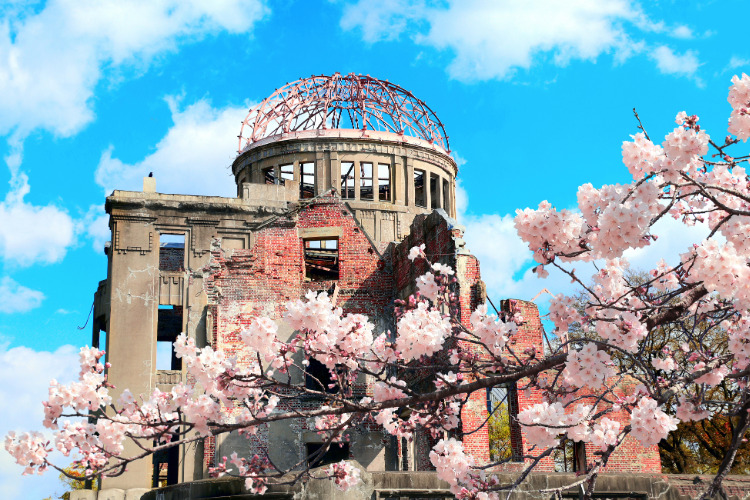
Featured image courtesy of Adobe: Atomic Bomb Dome, Hiroshima Peace Memorial, Japan.
6 Comments
Leave A Comment
Recent Articles:
26 August 2026
1.6 MINS
Victoria's cults inquiry report lacks clear definitions and religious freedom safeguards. ACL welcomes support for survivors but warns mainstream churches and homeschooling families could be wrongly caught up.
26 August 2026
4.5 MINS
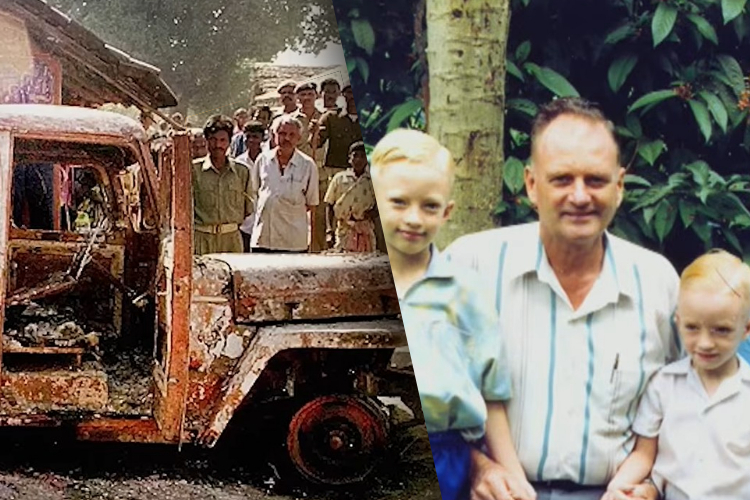
Hindu Dara Singh, convicted for burning missionary Graham Staines and his sons alive in 1999, is seeking early release. His case reopens questions about justice, remorse, and religious violence in India.

26 August 2026
6.1 MINS
The high-profile Sydney Swans AFL scandal reminds us that "respectable" sins are just as serious as the ones that make headlines.
26 August 2026
5.4 MINS
A review of Texas Senate candidate James Talarico's 2023 sermon rejecting religious exclusivism, examining his claims about God's universality through both logical and biblical arguments against religious pluralism.

26 August 2026
1.9 MINS
Socceroos winger Nestory Irankunda has sealed a $24.5 million move to Sporting CP, capping a stunning rise from a Tanzanian refugee camp to Europe's elite, powered by family, faith and raw talent.

25 August 2026
2.9 MINS
As Australians question whether this year’s Census will undercount Christians, the 2026 National Church Life Survey offers a more detailed picture of Christian belief and practice around the nation — one that leaders say is overdue after years of Covid disruption.

25 August 2026
10 MINS
When Sophie Cunningham's comments on transgender athletes in women's sports went viral, a WNBA sideshow became something bigger: a clash between two rival stories about creation, identity, and redemption.



was started by Jesuits .what is not known abt them is that they are underground terrorist’s.if you read they oaths you would know that.no way unfortunately are they real Christians. some might have been.
There were also many Franciscans, several of whom were martyred at Nagasaki, and the most famous modern one, St Maximilian Kolbe at Auschwitz. https://franciscanchapelcentertokyo.org/history-of-franciscan-friars-in-japan/
Jesuits survived the atom bomb while praying the rosary, a meditation on the Bible: https://catholicnews.in/the-rosary-miracle-in-hiroshima-the-life-of-four-jesuit-priests-who-survived-by-the-rosary-from-atomic-bombs/
Thank you for this important article …
“The Bells of Nagasaki” by Dr. Takashi Nagai a Japanese Radiologist, Catholic convert and survivor, who was in Nagasaki when the bomb destroyed the city, and “Song for Nagasaki” by Fr. Paul Glynn SM ,a Marist missionary priest are two excellent books about this incident and the Catholic community of Nagasaki.
Both the late Paul Glynn SM and his brother Tony Glynn SM, were missionary priests and outstanding Christian men.
For anyone interested, in the Japanese/Australia connection “Like a Samurai – The Tony Glynn Story “ by Paul Glynn is an enlightening account of the missionary work of reconciliation post WW2 between Australia’ and Japan , also “Smile of a Ragpicker” by the same author..
“Die like the Carp” by Harry Gordon about the Cowra Breakout is a good introduction to understanding the culture and society of the Japan that the Glynn missionary brothers were entering, serving and devote their lives to spreading the Gospel of Jesus.
Roger Bowen
I’ve studied military history and WWII specifically.
The A bomb attacks have been a highly debated issue.
In the end it was very much the lesser of two-evils.
Continuing the conventional war, especially when the Japanese plan was to fight on to regardless, in an attempt make the USA come to some negotiated settlement would have cost upwards of a million lives.
We know this to be true from imperial Japanese documents and interviews.
Even after the 2nd bomb, there was an attempt at a coup by hardliners who still wanted to fight on.
I have never been able to find a genuinely better viable alternate to the US actions in 1945.
There is a You Tube account of about 6 German Jesuit priests who survived right in the middle of town the atom bomb while they recited the Rosary. They were medically tested again and again over many years , but, showed no sign of any contamination or sickness !