



When Life is So Safe, We Forget What Real Courage Looks Like
Previous generations fought wars and risked everything for the lives we now enjoy. But so much safety and affluence has in turn caused us to forget what real courage looks like. How can our culture recapture its courage?
Recently I became fascinated by a quote from Frank Furedi’s 2019 book, How Fear Works: Culture of Fear in the 21st Century. A friend posted the excerpt on Facebook. These words of Furedi reverberate with ideas that have been swirling around in my mind for years:
“I have come to the conclusion that society has unwittingly become estranged from the values – such as courage, judgement, reasoning, responsibility – that are necessary for the management of fear.”
I wonder if it’s a “culture of fear” as much as a culture that has eliminated most of the dangers which cause fear. As a result, we now call the more minor issues that concern us almost daily “fears”. In truth, these minor issues do not require courage, yet many assign expressions of courage to them. Men and women of past generations who faced far worse dangers and hardships would be astonished at this strange development.
They Don’t Make Courage Like They Used To
Up until last century, war was the norm. Wars had followed a continuum throughout history, resulting in enormous casualties and deaths, culminating in the millions lost in World War II. Nowadays, any casualty in a theatre of war is considered front-page news.
Disease was also a constant threat, one that now is largely tamed by medical science. The Spanish Flu was the last great epidemic. It was also the first time humans were not required to face the potential of infection armed only with courage, since there was a medicinal antidote. In that era, we saw the beginnings of mass vaccinations (in Australia through the then newly established Commonwealth Serum Laboratories) and the precursor of today’s government regulations.
Even workplaces have virtually eliminated risk. Think of pictures of workers on the Sydney Harbour Bridge in the 1920s who used no safety gear. History records that 16 people died during that project, two of whom fell to their deaths. Now consider the vast occupational health and safety measures in place for those who work on the maintenance of the bridge today, or even the tourists doing the Bridge Climb.
These are, of course, all welcome outcomes. But they present us with a new problem: when real danger and risk are eliminated from our day-to-day lives, we must find lesser ways to display courage or to tell ourselves that we are courageous. In turn, our judgement, reasoning and sense of responsibility are turned to more mundane, even selfish, purposes. In this way, as Furedi puts it, we “unwittingly become estranged” from values like “courage, judgement, reasoning, responsibility”.
The Idols of Personal Peace and Affluence
For the longest time, I have been fascinated with Francis Schaeffer’s prophetic vision from the 1970s that in the future, there would only be two prevailing values: personal peace and prosperity (or affluence). In other words, “don’t bother me with all that stuff, I’ve got enough problems of my own to worry about” – and the never-ending accrual of possessions.
Schaeffer’s book How Should We Then Live? The Rise and Decline of Western Thought and Culture reads like a commentary of contemporary culture in the 2020s. It amazes me how, the more time that passes, the more relevant his predictions have become:
There is a… result of modern man’s loss of meaning and values which is more ominous, and which many people do not see. This… result is that the elite will exist. Society cannot stand chaos. Some group or some person will fill the vacuum. An elite will offer us arbitrary absolutes, and who will stand in its way?
Will the silent majority (which at one time we heard so much about) help? The so-called silent majority was, and is, divided into a minority and a majority. The minority are either Christians who have a real basis for values or those who at least have a memory of the days when the values were real. The majority are left with only their two poor values of personal peace and affluence.
With such values, will men stand for their liberties? Will they not give up their liberties step by step, inch by inch, as long as their own personal peace and prosperity is sustained and not challenged, and as long as the goods are delivered? The lifestyles of the young and the old generations are different. There are tensions between long hair and short, drugs and non-drugs, whatever are the outward distinctions of the moment. But they support each other sociologically, for both embrace the values of personal peace and affluence…
I believe the majority of the silent majority, young and old, will sustain the loss of liberties without raising their voices as long as their own lifestyles are not threatened. And since personal peace and affluence are so often the only values that count with the majority, politicians know that to be elected they must promise these things. Politics has largely become not a matter of ideals—increasingly men and women are not stirred by the values of liberty and truth—but of supplying a constituency with a frosting of personal peace and affluence. They know that voices will not be raised as long as people have these things, or at least an illusion of them.
Paul Simon On Our Existential Apathy
I also love Paul Simon’s take on this same issue, as heard in the last verse of his song, American Tune:
Oh, we come on the ship they call the Mayflower,
We come on the ship that sailed the moon,
We come in the age’s most uncertain hours
And sing an American tune.
Oh, but it’s all right, it’s all right,
You can’t be forever blessed.
Still, tomorrow’s going to be another working day
And I’m trying to get some rest,
That’s all, I’m trying to get some rest.
It seems that Simon, even more than Schaeffer, saw where the reduction of those values would lead. He understood that, once danger is removed, and personal peace and prosperity become our primary driving force, all that is left is a kind of existential apathy that can’t see past the needs of tomorrow’s “working day”.
Drawing Inspiration From the Truly Courageous
A lack of things to fear is what leads us to identify courage in uncourageous pursuits. Though this phenomenon is not the only cause for our malaise, it is a significant one. As Schaeffer prophesied, the loss of absolutes is what underpins it all:
Overwhelming pressures are being brought to bear on people who have no absolutes, but only have the impoverished values of personal peace and prosperity.
Christians therefore need to be watchful. We must not imbibe the spirit of the age, where we assign values like courage to actions that do not come close to putting life or limb on the line. To risk only one’s personal peace and affluence is not courageous, and we should not claim otherwise.
If the culture we inhabit should continue moving away from its Christian roots and become increasingly hostile to our message, that is when we will need to understand what true courage is.
It is therefore important for us to look to the everyday lives of Christians elsewhere in the world living under real persecution. They require real, raw courage to share the gospel. To pick the wrong person to witness to may cost their freedom or even their life.
In such situations is when “values such as courage, judgement, reasoning, and responsibility that are necessary for the management of fear” are put to the ultimate test. Perhaps that is the very reason the gospel thrives in those parts of the world.
Here is an irony we need to grasp: the places in the world that have a genuine reason to fear are often the very places that have overcome fear.
May we discover what they have learned before we are asked to pay the price they have paid.
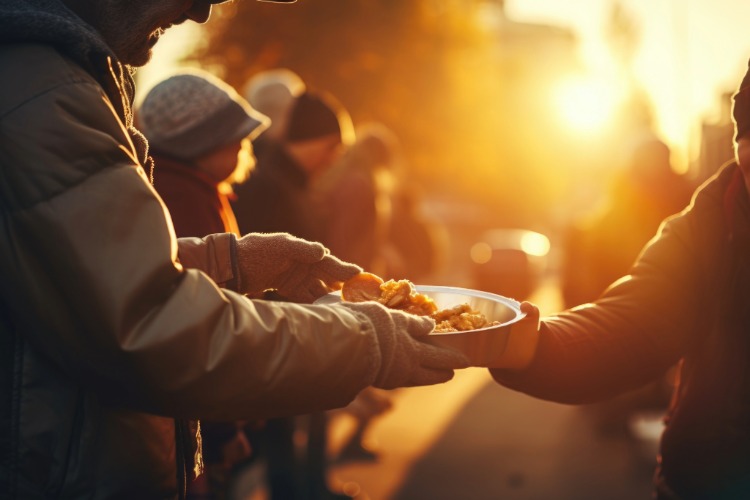
Image by McCall Alexander on Unsplash.
Recent Articles:
24 October 2026
3.3 MINS
When we ask God, "What is in my hand?", and see our possessions, money and time as seed that God asks us to sow, life becomes simpler.
23 October 2026
6.8 MINS
Hillsong UNITED’s Joel Houston reflects on fame, faith and the burden of ministry, questioning performative Christianity as he seeks a more authentic walk with God.
23 October 2026
13.1 MINS
Tasmania’s proposed conversion practices legislation raises serious questions about religious freedom, pastoral care and whether Christians can freely pray with those seeking to live according to their faith.
23 October 2026
3.1 MINS
As Western societies grow more hostile, could abandoning Christianity’s moral foundations be contributing to the rise of ideological extremism, political intolerance and violence?
23 October 2026
5.1 MINS
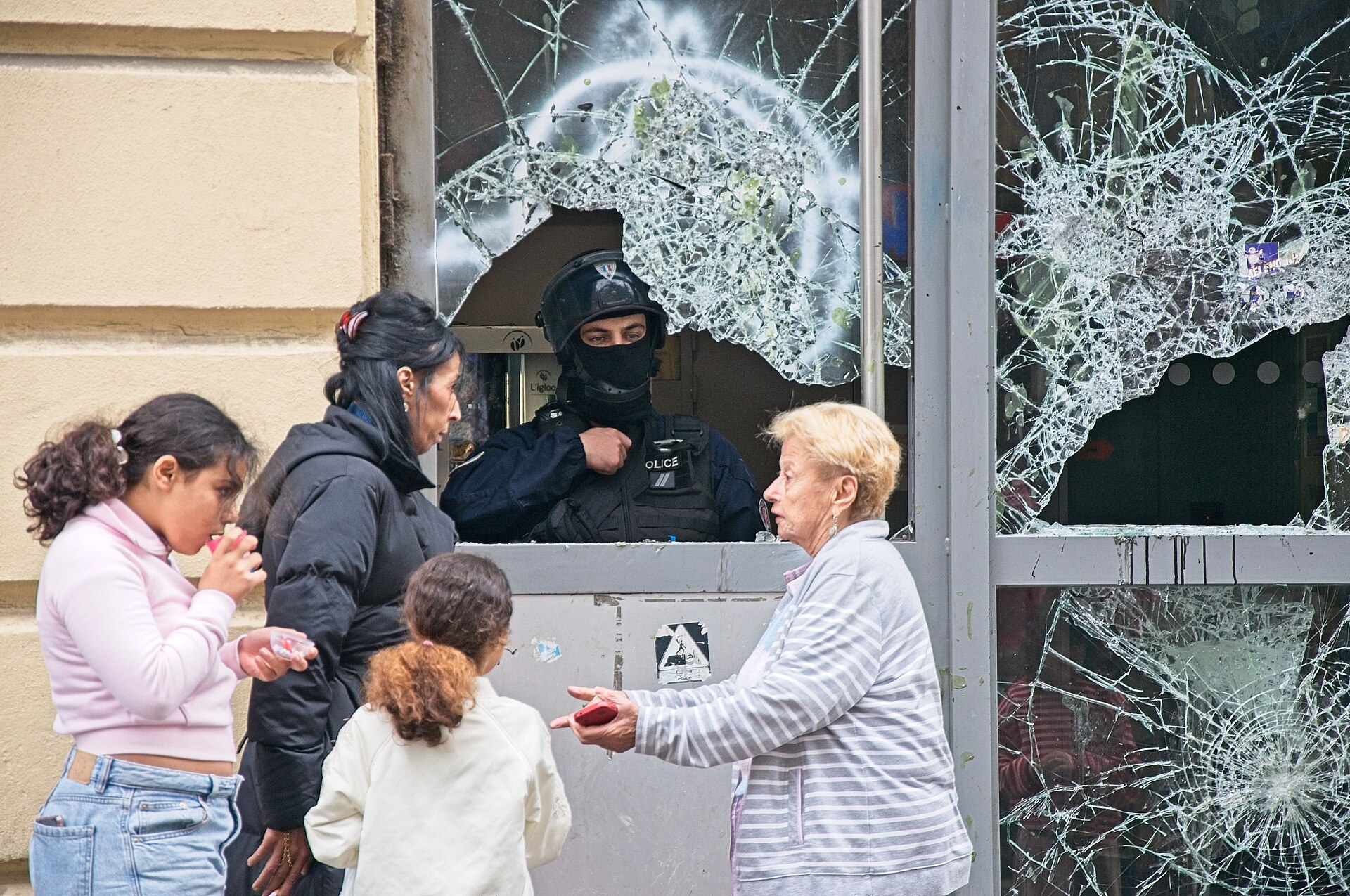
France’s escalating riots expose the dangers of political extremism, antisemitism and radical alliances, offering America a stark warning about the future of Western democracy.
23 October 2026
3.1 MINS
The one who is worthy of it all is awakening his Church to be captivated by him, so that we will honour one another and share his gospel with humility and courage.
22 October 2026
2.9 MINS
Victoria Labor’s promise to fund free abortions has drawn a forceful response from Presbyterian leaders, raising profound questions about unborn life, government priorities and Australia’s moral direction.


