



We Can Be Heroes
The Christian faith called us to be heroes, to lay down our lives for the sake of the Gospel and bring others into the Kingdom of God.
When I returned from walking our dogs the other day, my ailing wife said, “You’re a hero”. Little things done in love for others can often be regarded as heroic. The fact that we are in our 41st year of marriage might be considered heroic, especially in an age where many do not marry, and if they do, it does not last long.
I recently saw this headline: “Freedom Convoy leader Tamara Lich given hero’s welcome upon release from jail.” Yes, I think she is indeed a hero, as were so many of the truckers who stood against Trudeau’s ugly statism. Heroes can come in all shapes and sizes.
Yet sadly for many young people today, they are growing up in a world — at least in the West — that seems to be devoid of heroes. The ones often elevated are more like anti-heroes. Think of 20 years of the television program Keeping Up with the Kardashians. A bunch of filthy rich and narcissistic celebs are hardly the stuff of hero worship.
Inspiration
So we all need to have real-deal heroes in our life. And I have written on this topic before. See for example this piece from 15 years ago, or this more recent piece.
Here I want to look at a few more aspects of heroism, and draw upon a few books I have recently been perusing. One theme I have already hinted at above: ordinary people can be heroes. Let me offer one story. Now that my wife is dealing with cancer, I recall something that happened maybe 20 or 25 years ago.
A woman my wife knew had recently discovered she had cancer. She also had five small children, and her husband had just walked out on her. Imagine that: struggling with cancer and seeking to raise your children all on your own. So other folks came along and tried to help out. For a while there, I would take one or two of her girls to basketball practice. It was the least I could do, but it may have seemed to be a heroic effort for this poor mother.
The Greatest Hero
In his recent book How To Destroy Western Civilization, Peter Kreeft has a chapter on heroes. He says this in part:
We can be heroes. In fact, we must. The whole point of the greatest book of the twentieth century, according to its author, is to show the mutual dependence of little heroes and big heroes, of hobbits and warriors…
Middle Earth was saved by hobbits. The greatest hero in history was not a warrior or a wizard or an elf … He was like a little hobbit. He was a poor, obscure carpenter-rabbi who was born in a stable, never wrote a book, never traveled from His tiny country, and never entered politics. He was crucified as a criminal.
He was, by all worldly standards, a spectacular failure, like one of Gandalf’s firecrackers, that gave itself up, burned brightly for a moment, and then was no more. And yet He is so real and so alive that He split history in half forever, like a coconut, into B.C. and A.D., and inserted eternity into the crack.
Part of a Whole
 Another theme of heroism is how we need to see ourselves as part of a much bigger story. A few years ago, Tim Keesee penned a book called A Company of Heroes. In it, he discusses around 20 champions of the Gospel — some well-known and others not so well-known.
In his introduction, he mentions how he went to Albania a while ago, not long after Communism collapsed there in 1990. Having been under 50 years of godless Communist dictatorship, it had no churches then. But after a decade or two of evangelism, most cities did have congregations of believers.
He was asked to teach a short course on church history to some of these first-generation Christians. He spoke about ordinary men and women like Paul and Polycarp and Perpetua. He taught them about Luther and Hudson Taylor and Tyndale and Carey. He then writes:
When this reality took hold, light shown in their eyes and joy filled their faces! They had been told by family and friends that they were deceived and were part of a small cult of fellow fools who had drunk the same Kool-Aid. But now they saw that the church wasn’t just the forty or fifty people gathered in an apartment sitting on fold-up chairs.
Instead, they were inseparably part of something worldwide and wonderful. They were connected to the saving work that Jesus Himself started across the centuries and across the world as he gathered — and is gathering — his own from every nation and generation! Meeting this “company of heroes” from church history put iron in their souls and gave them greater perspective to endure the persecution and ridicule they faced.
Battlefields Are Not Beautiful
Another theme about heroes is that there are not always wins and victories, and setbacks can and will occur. In this same book, there is a chapter on Amy Carmichael and her incredible work in India.
Keesee tells of how a missionary society in England in the 1890s asked her to write a book about her ministry. She did, and sent it through to them. But they rejected her manuscript. It was not positive enough and uplifting enough. Thankfully friends later saw to it that it was published, and in 1903 it appeared as Things As They Are. Writes Keesee:
“In her plea for more workers, Amy Carmichael presented not alluring stories but ‘the truth — the uninteresting, unromantic truth.’ Her book was not one of despair — far from it. It was a clear-eyed view of the situation on the ground matched with confidence in the cross-centered power of the Gospel.” He quotes from her book:
More has been written about the successes than about the failures, and it seems to us that it is more important that you should know about the reverses than about the successes of the war. We shall have all eternity to celebrate the victories, but we have only the few hours before sunset in which to win them.
We are not winning them as we should, because the fact of the reverses is so little realized, and the needed reinforcements are not forthcoming, as they would be if the position were thoroughly understood. Reinforcements of men and women are needed, but, far above all, reinforcements of prayer.
And so we have tried to tell you the truth — the uninteresting, unromantic truth — the work as it is. More workers are needed. No words can tell how much they are needed, how much they are wanted here. But we will never try to allure anyone to think of coming by painting coloured pictures, when the facts are in black and white. What if black and white will never attract like colours? We care not for it; our business is to tell the truth. The work is not a pretty thing, to be looked at and admired. It is a fight. And battlefields are not beautiful.
One last theme about heroes is to emphasise the one, true hero. Keesee also says this in his introduction:
I’m always amazed at God’s choices in the book of Hebrews to illustrate enduring faith. The company of heroes in chapter 11 is an uneven and unlikely lot that ranges from Abraham the patriarch to Rahab the prostitute.
That’s because the chapter is not a gallery for displaying human greatness, but rather one that magnifies God’s grace. It’s as if everyone in Hebrews 11 is pointing down the line to the next chapter to the real hero of the story, “looking to Jesus, the founder and perfecter of our faith” (Heb. 12:2).
We can all be heroes. But we do this by keeping our eyes and hearts and minds focused on the world’s greatest hero.
___
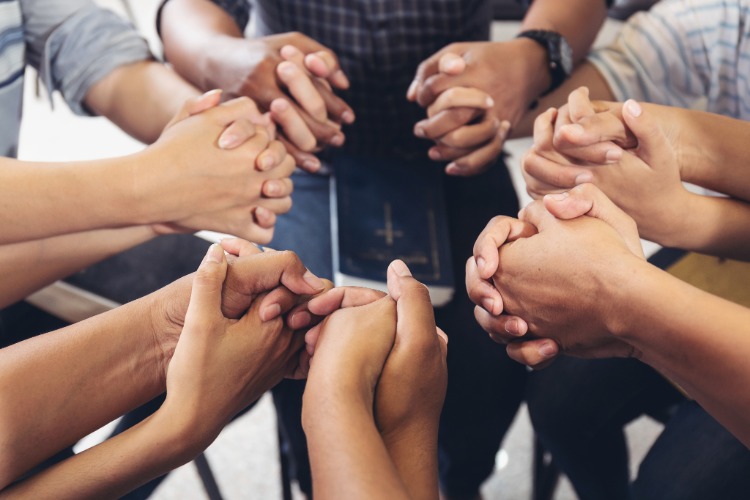
Originally published at CultureWatch. Photo by Engin Akyurt from Pexels.
Recent Articles:
11 October 2026
2.6 MINS
Jesus offers us intimate friendship, which produces great joy as we walk closely with him.
10 October 2026
4.1 MINS
When Jesus rebuked the Laodicean church, this was not a sign of his lack of love, but proof of it and how greatly he longs to reward and bless us. He is knocking — will we answer?
9 October 2026
1.3 MINS
Season 6 of The Chosen is releasing next month, and until 15 November, your church has the opportunity to host a free pre-release screening of Episode 1. Here's how.
9 October 2026
2.9 MINS
Angus Buchan’s remarkable journey from farmer to evangelist is brought to life in a new documentary now streaming, revealing the faith, family and challenges behind his public ministry.

9 October 2026
3.3 MINS
New South Wales healthcare workers who object to abortion and voluntary assisted dying face growing pressure, raising serious questions about conscience rights, employment and moral injury.
9 October 2026
2.9 MINS
God is intensely relational, and he puts us into a community of believers so we can use our gifts in service of Christ's body.
8 October 2026
3.6 MINS
John Anderson warns that Australia’s decline is rooted in spiritual and cultural disintegration, calling for a recovery of Christian foundations, social cohesion and national purpose.


