It’s a new year and, given the events of 2025, it is an appropriate time to review the status of the trilateral security agreement between Australia, the United Kingdom and the United States, known as AUKUS.
The AUKUS agreement was first announced in September 2021 by former Australian Prime Minister Scott Morrison and was primarily built upon two “pillars”. The first pillar involved the issue of Australia’s Future Submarine Program (FSP), as Australia sought to replace its aging fleet of Collins-class diesel-electric submarines with nuclear-powered attack submarines.
This pillar also included the interim requirement for rotational basing of U.S. and UK nuclear-powered attack submarines in Australia to facilitate training for the crews of Australia’s new nuclear-powered submarines. Crew training is critical to the agreement and cannot be supported by sending hundreds of Australian officers and crews to the United States and UK for long periods of time.
The second pillar focused on the collaborative development of advanced capabilities in six technological areas: undersea capabilities, quantum technologies, artificial intelligence and autonomy, advanced cyber, hypersonic and counter-hypersonic capabilities, and electronic warfare. Two broader functional areas were also included: innovation and information sharing.
The first pillar – namely the development of Australia’s follow-on nuclear submarines allowing for the retirement of the existing six Collins-class diesel-electric submarines – has received plenty of scrutiny. From concerns ranging from U.S. and UK capacity and capability to produce nuclear submarines to the anti-nuclear political forces within Australia, there have been mixed reviews about the future of AUKUS.
To begin with, it is important to understand that the Royal Australian Navy’s (RAN) Collins-class submarines are aging and nearing the end of their designed service life. The first of the RAN’s six Collins-class boats was laid down in 1990 and the last was commissioned in 2003.
The class had an original designed service lifespan of 25-30 years, even with proper maintenance. Thus the Australian Government had assessed that the class would have reached the point of needing to be replaced as early as 2026 – this year. This is of great importance as this would occur in what has been called the “Decade of Concern” (2020-2030) – the most likely time in which the People’s Republic of China (PRC) may conduct an amphibious invasion of Taiwan.
For this reason, the Australian Government has approved a Life of Type extension (LOTE) program for the class, slated to begin in 2026. The LOTE program is intended to add about ten years to the life of each Collins-class boat, which should help close any gap in Australia’s submarine capabilities throughout the remainder of this decade.
Thus, the issue of Australia acquiring a follow-on submarine for the Collins class has been well known to the Australian Government for quite some time. Unfortunately, it has also been a controversial topic, going back a decade, with the announcement by former Australian Prime Minister Malcom Turnbull that Australia had selected the French-built Barracuda-class submarine for the FSP in 2016.
The decision at that time was marked by controversy as the French out-manoeuvred Germany’s ThyssenKrupp Marine Systems and Japanese industrial giant Mitsubishi to clinch the deal with the promise of a design that had never actually been built before as a diesel electric boat.
Under the then $US38.5 billion ($A55 billion) deal, the French Direction des Constructions Navales (DCNS), now known as Naval Group, was to build 12 Shortfin Barracuda Block 1A submarines as part of Australia’s FSP. These French-supplied Barracuda submarines were unique, and unproven, as the deal called for replacing their nuclear propulsion plants by a diesel-electric system that was said to offer an at-sea range of 18,000 nautical miles and an undersea endurance window of about three months before needing resupply/refuel.
The original agreement that the construction of this first-of-its-kind diesel-electric version of the French Barracuda would begin in 2017. However, construction was predicated on them being built at a shipyard in Adelaide that would not be ready to start until 2018.
Thus, delivery would have been delayed until the first of the Collins-class boats decommissioned in the mid-to-late 2020s. A delay that proved unacceptable.
The reasons for this delay are beyond the scope of this paper, but suffice it to say, in 2021 the Australian government led by Scott Morrison decided to cancel the French deal. The decision received adverse international attention and put Australia in the unfortunate public position of having to choose an alternative path forward.
The situation was tenuous for the government as Collins-class readiness, as far back as 2010, was such that only one of the six Collins boats were operationally ready – a problem known to this writer as far back as 2009 and was documented in the Australian government’s Coles Report, “Study into the Business of Sustaining Australia’s Strategic Collins-Class Submarine Capability” in 2014.
While Collins-class readiness hit lows in the 2010s, the situation has improved since then, with as many as four boats being operationally available at any one time. Yet, even with the program technically meeting the RAN readiness benchmarks, the replacement for the Collins class remained an imperative for the RAN. Fortunately, the decision to explore nuclear options had preceded the cancellation decision for the French boats.
Which brings us back to the September 2021 AUKUS deal and the current issues of developing a workable plan for the rotation presence and deployment of U.S. and UK nuclear submarines from ports in Australia, and of achieving the long-term goal of having both the U.S. and UK provide Australia with its own nuclear submarines.
Given that the AUKUS deal was initially signed during the Biden administration, there was concern from some circles in Washington and Canberra that an incoming second Trump Administration might be inclined to scrap the deal – which would have been ironic given that the consultations for the AUKUS deal began under Donald Trump’s first administration.
Despite this history, this so-called “concern” was amplified in June 2025 when it was reported that the then incoming American Under Secretary of Defense (now War) for Policy, Elbridge Colby, intended to conduct an evaluation of the AUKUS agreement to ensure that the pact was in line with the “America First” policy platform. It is worth noting this American review was preceded by a UK review by the incoming Starmer Government.
Albanese-Trump Meeting
As was widely reported, those “concerns” were allayed in October 2025 during the head-of-state meeting between Australian Prime Minister Anthony Albanese and U.S. President Donald Trump at the White House. When asked about the status of the AUKUS agreement, President Trump emphatically stated, “full speed ahead” – noting that only minor “clarifications” were left to be made – which, according to the Congressional Research Service have been accomplished.
Yet it is the “minor” details that have the potential to become the “rocks and shoals” that could upend this agreement. Something that the Chinese Communist Party (CCP) was quick to point out following the Albanese-Trump meeting. According to the CCP’s main propaganda mouthpiece, the Global Times:
“The submarine deal, even if passes the ongoing review by the U.S. Administration, may not be fulfilled in full term as stipulated and the submarines cannot be delivered on time, considering the U.S.’s manufacturing capacity can hardly meet its domestic needs.”
The Global Times was also quick to point out that in September 2024, the U.S. Navy’s new Virginia-class submarines had slipped behind schedule two to three years and were projected to be over budget by some $US17 billion ($A24 billion) by 2030.
While it should come as no surprise that the PRC would seek to sow seeds of doubt about the AUKUS deal, since it is a threat to the People’s Liberation Army (PLA) Navy’s power in the undersea domain of the Pacific and Indian oceans, the reality is that there are serious challenges to the program that need to be resolved.
The most critical question is whether America’s nuclear submarine industrial base can deliver the additional nuclear submarines to Australia while meeting America’s requirements for a potential war at sea with the PLA Navy. For instance, the U.S. Navy has struggled to produce the two Virginia-class submarines needed annually for its own fleet, sometimes only managing only about one per year.
Thus transferring three, or more, Virginia-class boats to Australia, as planned, without a massive surge in shipyard capacity and skilled labour, could create a dangerous shortfall for the U.S. Navy precisely at a time when the PRC is expanding its own fleet and threatening regional stability.
Just this past month, U.S. Secretary of the Navy John Phelan has acknowledged that U.S. ship manufacturers will need another quarter of a million workers, of which many will be assigned to the increased numbers of Virginia-class nuclear submarines that are required. In addition to American shipyard manpower, there are requirements for more dry-docks and piers for the construction of nuclear submarines.
Likewise, recruiting, training and deploying crews for these new nuclear submarines must also be built, first in America, then in Australia. Thus, every Australian must understand that the success of the AUKUS agreement fundamentally rests upon America rebuilding its submarine industrial might.
Towards that end, Australia has made a $A3 billion investment in the U.S. industrial base, as well as executing a program to qualify Australian companies to produce parts for Virginia – several of which are already qualified.
‘Used Boats’
As such, President Trump’s strong endorsement of AUKUS, based on the favourable outcome of Elbridge Colby’s evaluation, as well as a second evaluation of America’s submarine industrial base by the former commander of Naval Sea Systems Command, Vice-Admiral Kevin McCoy, on behalf of Deputy Secretary of War Steve Feinberg, should be seen as both a strong commitment to this program as well as a positive evaluation of the practical feasibility to accomplish these numerous tasks.
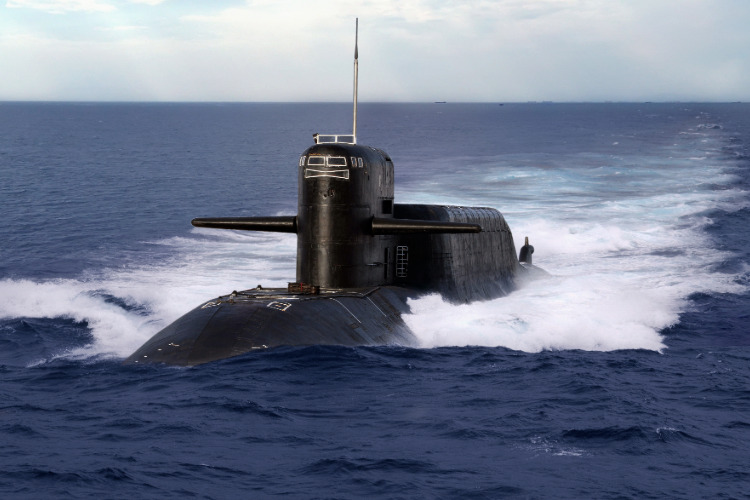
According to sources close to the plan, the first of the prior U.S. Navy Virginia-class submarines are planned to come to Australia in 2032, with one more in 2035 and another by 2038. More could be transferred at a later date depending on UK and Australian build rates.
So, yes, the U.S. Navy’s Virginia-class boats that will be sold to Australia will be “used boats”, somewhere around ten years old. This is because the Australian Government did not want to purchase the U.S. Navy’s latest block for various reasons having to do with standardisation, efficiency of maintenance and cost.
The predominant reason was that the U.S. Navy’s Virginia-class Block 5 and 6 nuclear attack submarines both have a four-missile tube module that makes them very difficult to support in Australia and are simply more expensive. As such, Australia will buy the older U.S. Navy Virginia-class nuclear submarines at a reduced price.
Meanwhile, the RAN must develop and execute the LOTE program for its Collins-class submarines. It is not yet clear how effective this will be, but it is critically important. This includes sustaining their diesel-boat crews, while concurrently recruiting, training and retaining a new generation of RAN submarine sailors and officers for the nuclear-powered boats.
Another task concerns the first RAN nuclear submarine under this agreement, the UK-designed SSN-AUKUS nuclear attack submarine. This boat, which is the replacement for the Royal Navy’s Astute-class nuclear-powered submarines, will not be operational before 2040.
And in January, according to The Sydney Morning Herald, retired Royal Navy Rear-Admiral Philip Mathias, a former director of nuclear policy with the UK Ministry of Defence and ex-nuclear submarine commanding officer, said that he feared that Australians were not adequately informed about how the troubles plaguing the British navy could sink both nations’ AUKUS ambitions. Chief among his concerns was the lack of personnel with “the right level of skills and experience”.
The Admiral went on to state that, while “the United States may sell some to Australia, there is a high probability that the UK element of AUKUS will fail, making the international row in 2021 over the cancellation of the plan for Australia to build French-designed submarines look like a non-event”.
Although the Admiral’s remarks are stark and should be paid attention to, the SMH reported that in June 2025 the UK, under Prime Minister Keir Starmer, announced that it would build up to 12 SSN-AUKUS attack submarines and affirmed its commitment to “double down on both pillars of the AUKUS agreement”.
There is still a lot of time to see how this effort plays out, but it is worth remembering the RAN’s submarine agencies’ own words: “The government has always been clear that this is an ambitious program, and we acknowledged the challenges involved when the optimal pathway was announced in 2023.”
And Australians should expect the PRC to unleash a full-throated propaganda campaign in social media and elsewhere, not just against the AUKUS deal, but also playing up the threat of having nuclear-powered submarines. This and other facets of the CCP’s “cognitive warfare” campaign will be used to defeat the agreement and drive a wedge between Australia and her allies in America and the UK.
Finally, here are some thoughts on AUKUS in relation to Australia itself.
With a tiny capital budget, a risk-averse and byzantine procurement system, and no political willingness to re-prioritise spending, Australia itself may not be on trajectory to accomplish what is required for this agreement – which is in its own self-interest.
For example, the continued indecision over an east-coast submarine base – seven years after the decision to acquire nuclear-powered submarines and still no site has been selected.
While an east-coast base will not be needed until the RAN has at least five nuclear boats (estimated around 2045), the Government has chosen not to have the political fight between the states (Queensland and New South Wales). And this is representative of a broader problem: a Government that wants the prestige of AUKUS without accepting the cost, discipline and expense required to deliver it.
If “continuity grounded in AUKUS” is the most probable outcome, as has been characterised as Australia’s default setting, the danger is that this complacency assumes that American tolerance is infinite, that the PRC’s quest for global domination is not real, and that geography alone will continue to buy time. All three assumptions are increasingly questionable and, if not repudiated, will likely put Australia at greater risk from CCP domination by 2049 – the centenary of CCP rule of China.
That said, with the strong endorsement of the Trump Administration, real, tangible actions from Australia and the UK, the AUKUS agreement should continue at full-speed ahead … just mind the rocks and shoals. The CCP is not playing a game – it is playing for keeps.













All in all, we can only hope that current and future enemies of Australia have the good manners to wait until we’re ready for a fight.
Too little , too late . We can’t rely on Islamic UK –look at the UK’s Christian track record . In WW2 it evacuated its own citizens from Singapore, leaving the Australians and Indians troops stranded to fight the Japanese. If the USA had not come to defend the Pacific and Australia, the Phillipines and Australia would now be Japanese. 2026- Trump assumed its old ally, the UK, would allow the USA to use its bases to fight Iran. Wrong ! It has even disposed of Diego Garcia. Without the USA , we’re cooked !Yes, 2049 would be the optimal date for China to invade Australia. In the meantime, we go down the path to moral and social ruin–our once Christian country on the road to becoming The Islamic State of Australia and Financial Collapse. It’s like the Last Days of the Roman Empire ! Heads in the sand, Immorality and Ignorance.