



Great Southland Revival: Of Mystics and Medieval Reformers
The following is an excerpt from Kurt and Warwick’s latest book, Great Southland Revival.
Throughout the Middle Ages (AD 500–1500), Christianity remained a dominant force in Europe. This political status quo enabled the gospel to spread freely within and beyond the continent’s realms, and allowed generations of Europe’s inhabitants to find Christ. It was also during this thousand-year period that the Western mind marinated in a biblical worldview, ultimately shaping the technology, science, compassion, human rights and democracy that Westerners take for granted today.[i]
Heretics or Revivalists?
As we have seen from other eras, there is a downside when the church gains political power. Medieval Christianity often tended towards formalism, apathy and neglect of the deeper spiritual life. Responding to this lack were many mystics and reformers who sought to reignite vital spirituality in their own lives and among their neighbours.
The official church felt threatened by some of these leaders and unfairly portrayed them as heretics in an effort to suppress them. In other cases, the movements that sprang up were indeed mixed with heresy and error. Given our distance from these events, it is not always possible to discern which was the case. R. E. Davies explains that “the Paulicians in the seventh century, the Bogomiles in the eleventh, and the Albigensians or Cathari in the same century may have been originally the result of genuine spiritual impulses, which were possibly corrupted”.[ii]
More notable—and less controversial—were the Waldensians, who originated in 12th-century France and were named after their founder, Peter Waldo (c. 1140–1205). Waldo preached as a layman in Lyon but was opposed by church authorities for his lack of theological training and his use of a non-Latin Bible.
The Waldensians, or ‘Poor Men of Lyon’ as they were also known, sought to follow Jesus in poverty, simplicity, and through preaching the gospel. They rejected a number of Catholic teachings, including infant baptism, purgatory, transubstantiation, the veneration of saints, prayers for the dead, and the clergy’s exclusive right to administer sacraments. The Waldensians saw the Bible as the only authority for doctrine. They believed that formal church buildings were unnecessary, and instead chose to worship God in homes, stables and other locations.[iii] Despite persecution, their movement spread rapidly to Spain, Germany, Italy, and even Poland and Hungary.
Francis of Assisi
Francis of Assisi (1182–1226), from central Italy, lived contemporaneously with Peter Waldo, though the two never met. Born into wealth, and living a frivolous life until his early 20s, Francis received a vision from God calling him to rebuild the church in his hometown. Over the coming years, he sold his possessions to carry out the task. He renounced his life of wealth, was in turn disowned by his father, and then devoted himself to a life of poverty and brotherly love.
In his late 20s, Francis gained approval to set up a new religious order that came to be known as the Franciscans. Inspired by his lifestyle, and moved by the call to forsake all and follow Jesus, many young men—and eventually, women—joined the order. The Franciscans conducted foreign mission work, with Francis himself trying to win an Islamic sultan for Christ.[iv] While the spiritual passion of his order faded over the centuries, Francis of Assisi sparked genuine spiritual awakening for many in the medieval church, and, along with it, cultural revitalisation which replaced the so-called ‘Dark Ages’ with the glories of the High Middle Ages.[v]
Francis of Assisi’s most famous follower was Antony of Padua (1195–1231), who saw even greater evidence of mass awakening than his mentor. During a series of Lenten sermons that Antony delivered in northern Italy in 1231, some 30,000 people gathered in an open field to hear him. Reconciliations and restitutions resulted among the people, and there were not enough clergy in the area to cater for the crowds who came to confess their sins.[vi]
Notable Catholic Revivalists
The Brethren of the Common Life was another renewal movement of this era that emerged in the Netherlands in the 14th century. Led by Catholic deacon and popular preacher Geert Groote (1340–1384), the brethren lived in common houses, shared meals over Scripture readings, and practised chastity, discipline and simple living. Groote called people to repentance and proclaimed the beauty of God’s love. It was said that his sermons were marvellous and that thousands hung on his words. The Brethren of the Common Life gave themselves to charitable work, nursing the sick, studying the Scriptures, and founding schools that became famous for their high standards of learning.
Two other Catholic missionaries of this era are worthy of mention.
Dominican preacher Vincent Ferrer (1350–1419), hailing from Valencia in Spain, travelled widely in western Europe and preached to enormous crowds, winning thousands of Jews and Muslims to faith in Christ. Ferrer protected Jews from persecution; got involved in politics; cared for the sick, especially during an outbreak of the plague in Genoa; and is said to have worked many miracles.[vii]
The Italian priest Bernardino of Siena (1380–1444) inherited Ferrer’s mantle. Appalled by Italy’s lawlessness and civil strife, Bernardino believed moral reform was possible if the people of his country were renewed in a personal love for Jesus Christ. He was widely regarded as the greatest preacher of his time, journeying across Italy, preaching directly to the public, and attracting crowds of up to 30,000. Bernardino confronted paganism, calmed strife-torn cities, sent missionaries to Asia, and had miracles attributed to him.[viii]
The Cost of Revival
Through the medieval period, it is clear the Holy Spirit never allowed the flame of revival to be extinguished. Those who pursued spiritual awakening without weighing in on official church matters—men like Francis of Assisi, Antony of Padua and Vincent Ferrer—were comfortably accommodated within the Catholic order and even achieved sainthood. Mystics like Catherine of Siena in the 14th century, and Catherine of Bologna and Catherine of Genoa in the 15th century, could be added to their number.[ix]
However, as the medieval church grew more corrupt, and the Holy Spirit summoned Christians to stand up and champion reform, conflict and persecution inevitably followed. The Waldensians had an early taste of this. Others were to follow in their footsteps.
Order your copy of Great Southland Revival here.
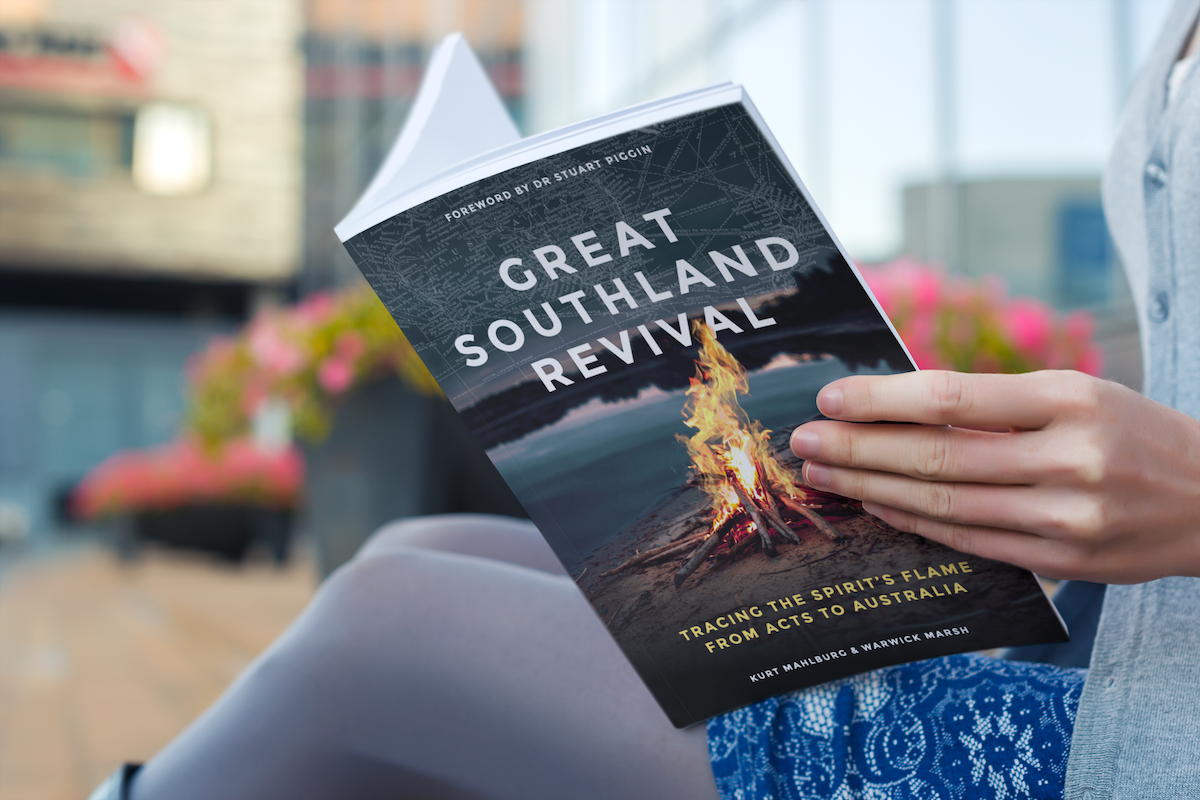
Article photo via Unsplash.
Notes
[i] Kurt Mahlburg, Cross and Culture: Can Jesus Save the West? (Unanderra: Australian Heart Publishing, 2020), 85-118. [ii] Davies, I Will Pour Out My Spirit, 60-61. [iii] Britannica, “Waldenses,” accessed July 26, 2022, https://www.britannica.com/topic/Waldenses. [iv] Barry Chant, This is Revival: A Fresh Look at Revival Reliving the New Testament in the 21st Century (Adelaide: Tabor Publications, 2013), 94-95. [v] G. K. Chesterton, Saint Francis of Assisi (London: Image Books, 1957), 25. [vi] Davies, I Will Pour Out My Spirit, 60. [vii] Ibid., 62. [viii] Franciscan Media, “Saint Bernardine of Siena,” accessed August 3, 2022, https://www.franciscanmedia.org/saint-of-the-day/saint-bernardine-of-siena. [ix] Davies, I Will Pour Out My Spirit, 62.One Comment
Leave A Comment
Recent Articles:
9 October 2026
1.3 MINS
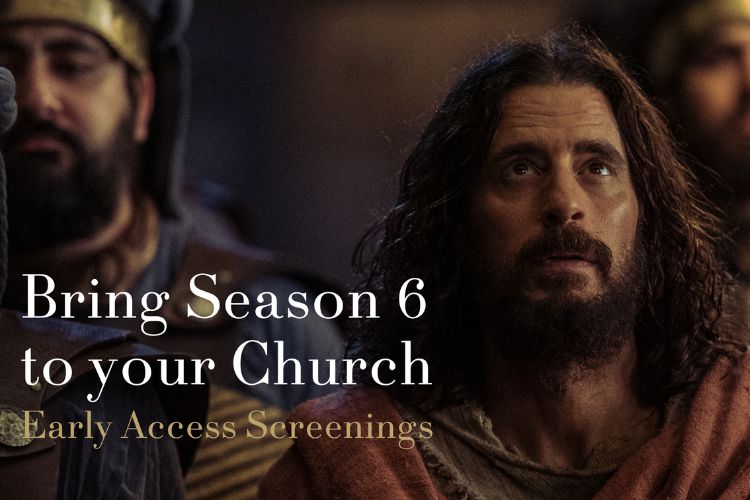
Season 6 of The Chosen is releasing next month, and until 15 November, your church has the opportunity to host a free pre-release screening of Episode 1. Here's how.

9 October 2026
2.9 MINS
Angus Buchan’s remarkable journey from farmer to evangelist is brought to life in a new documentary now streaming, revealing the faith, family and challenges behind his public ministry.

9 October 2026
3.3 MINS
New South Wales healthcare workers who object to abortion and voluntary assisted dying face growing pressure, raising serious questions about conscience rights, employment and moral injury.
9 October 2026
2.9 MINS
God is intensely relational, and he puts us into a community of believers so we can use our gifts in service of Christ's body.
8 October 2026
3.6 MINS
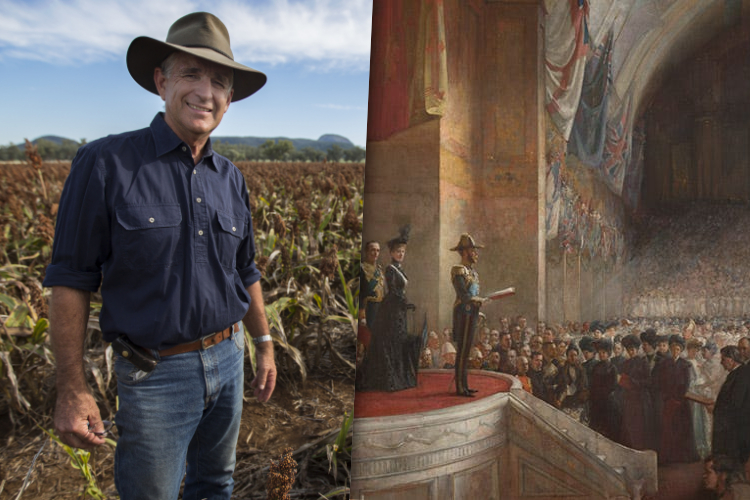
John Anderson warns that Australia’s decline is rooted in spiritual and cultural disintegration, calling for a recovery of Christian foundations, social cohesion and national purpose.

8 October 2026
4.1 MINS
Aboriginal communities in Central Australia already know the gospel message. What they need now, Robyn Murray writes, is discipleship, encouragement and Christians willing to pray and participate.
8 October 2026
4.1 MINS
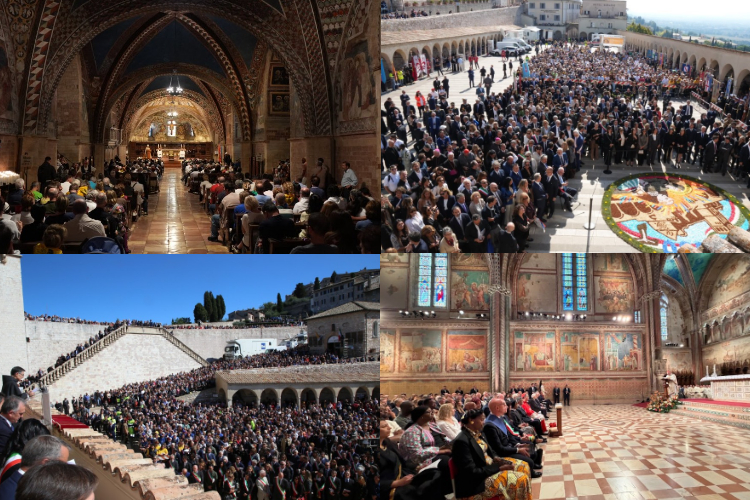
Italy honours St Francis of Assisi 800 years after his death, celebrating a saint whose devotion to Christ, radical simplicity and message of peace continue to shape generations.



A very enjoyable read. Look forward to more.