


Handel’s “Messiah”, A Prophetic Masterwork – Part 9: The Prophesied Overthrow of Death
We now move on to the penultimate section of Handel’s “Messiah”. In the wordbook from 1743 I mentioned previously this has the heading, “A Hymn of Thanksgiving for the final overthrow of Death”.
This, in turn, is broken down into another three sub-sections, the first titled, “The promise of bodily resurrection and redemption from Adam’s fall”.
As I’m typing this, it’s only a week or so since the passing into Glory of Pastor Timothy Keller, noted Christian apologist and theologian, who was the founding pastor of Redeemer Presbyterian Church in New York City. So many of his books, from his brilliant apologetic back in the days of the “New Atheists”, “The Reason for God”, to his astonishing, powerful and insightful books, “Prayer” and the “The Prodigal God”, have left a significant mark on my life. Bill Muehlenberg’s article also gave an excellent insight into seven more of his books that I don’t have in my library.
So, listening to this last section, especially this first piece, my mind is firmly fixed on Keller’s entry into his reward.
And what better way for Charles Jennens, who collated the text for “Messiah” from Scripture, to announce “the final overthrow of Death”, than with one of the oldest prophetic utterances in Scripture, from the Book of Job? Scholars are not certain of the exact time when Job lived, but it seems clear that his life either pre-dates that of Abraham, or that he was contemporary with one of the other Patriarchs up to the time of Jacob’s sons.
Job 19:25–26 – I Know My Redeemer Liveth
The passage used in this first piece is from Job 19:25–26. Then, to form a link with the beginning of that prophecy’s fulfillment, it is followed by 1 Corinthians 15:20:
“I know that my Redeemer liveth, and that He shall stand at the latter day upon the earth. And though worms destroy this body, yet in my flesh shall I see God.
For now is Christ risen from the dead, the first fruits of them that sleep.”
And I think I found the perfect video performance, with a young soprano who is blind, and as you can see in the video, she’s following the score through the use of Braille! How appropriate to have someone with such a condition to sing the words, “yet in my flesh shall I see God”! Because our physical advantage compared to her lack is nothing compared to our lack of spiritual “sight”, comprising knowledge, wisdom and insight, which were all corrupted and confused at the Fall, leaving us all spiritually blind.
In fact, I was reminded of the blind hymn writer, Fanny Crosby (1820-1915), who composed over 7,000 hymns. But it’s one which particularly came to mind when I saw this blind soprano. It’s called “Some Day the Silver Cord Will Break”, and the first verse and chorus speak to the same situation as Job:
Some day the silver cord will break
And I no more as now shall sing;
But, O the joy when I shall wake
Within the presence of the King!
And I shall see Him face to face,
And tell the story, saved by grace:
And I shall see Him face to face,
And tell the story, saved by grace.
I hope the video moves you as profoundly as it moved me!
1 Corinthians 15:21–22 – Adam and Christ
This is followed by the choir singing from 1 Corinthians 15:21–22:
“Since by man came death, by man came also the resurrection of the dead. For as in Adam all die, even so in Christ shall all be made alive.”
It’s a perfect couple of verses to set to music, which Handel does so graphically. The first half of each line is a hushed and sombre lament, while the second half is ecstatic and triumphant. Here is the Fall and our redemption distilled into a two line paradox.
1 Corinthians 15:51–53 – Death is Swallowed Up in Victory
We then move into the second theme within “the final overthrow of Death”, titled “the Day of Judgement and general Resurrection”.
First we hear the tenor soloist sing from 1 Corinthians 15:51–53:
“Behold, I tell you a mystery; we shall not all sleep, but we shall all be changed in a moment, in the twinkling of an eye, at the last trumpet. The trumpet shall sound, and the dead shall be raised incorruptible, and we shall be changed. For this corruptible must put on incorruption and this mortal must put on immortality.”
Here is one of Handel’s most musically descriptive pieces within “Messiah”, with the prophetic revelation of the apostle Paul regarding our future state of “incorruption” and “immortality”, with the trumpet soloist echoing the sung text.
We then come to the third and final part of the “overthrow of Death”, which in the 1743 handbook is titled, “the victory over death and sin”. It begins with a duet between the male alto (or counter tenor) and tenor soloists singing of prophecy being fulfilled with 1 Corinthians 15:54-56:
“Then shall be brought to pass the saying that is written: “Death is swallowed up in victory.” O death, where is thy sting? O grave, where is thy victory? The sting of death is sin, and the strength of sin is the law.” This is then reprised with the choir singing v. 57, “But thanks be to God, who giveth us the victory through our Lord Jesus Christ.”
Just think of it! Death is not the end, and it is “swallowed up”, never to be experienced again! In fact, never to even enter our minds again! I always think of Paul’s phrase in 2 Corinthians 5:4 in relation to this: “swallowed up by life”
For that reason I hear in the two questions a note of Jewish irony, the kind that so typifies Jewish humour down through the ages. There is almost mockery in the tone. It’s as though the speaker is scanning the horizon, yet not finding anything remotely resembling physical death. By doing so it’s mocking the one who is death personified, Satan, for his impotence in the one thing in which he took pride, introducing death and decay to God’s Creation
In this respect the passage brings to my mind a poem by the English Metaphysical poet, John Donne (1572-1631), “Death, Be Not Proud”, from his collection, “Holy Sonnets”:
Death, be not proud, though some have called thee.
Mighty and dreadful, for thou art not so;
For those whom thou think’st thou dost overthrow
Die not, poor Death, nor yet canst thou kill me.
From rest and sleep, which but thy pictures be,
Much pleasure; then from thee much more must flow,
And soonest our best men with thee do go,
Rest of their bones, and soul’s delivery.
Thou art slave to fate, chance, kings, and desperate men,
And dost with poison, war, and sickness dwell,
And poppy or charms can make us sleep as well
And better than thy stroke; why swell’st thou then?
One short sleep past, we wake eternally
And death shall be no more; Death, thou shalt die.
Romans 8:31, 33–34 – God is For Us
The final piece in “Messiah”, before the final scene is played out in Heaven, is taken from that triumphant utterance of Paul’s in Romans 8:31, 33–34:
“If God be for us, who can be against us? Who shall lay anything to the charge of God’s elect? It is God that justifieth, who is he that condemneth? It is Christ that died, yea rather, that is risen again, who is at the right hand of God, who makes intercession for us.”
These are the culminating verses of one of the greatest passages in all Scripture, where Paul weaves together the themes he has been building over the previous chapters. Just like the great composers, he brings them to a crescendo of triumphant assurance in these verses. First he establishes the full measure of our position and authority as the adopted “sons and daughters of God” (v.14). Then he addresses the “now and not yet” paradox that is our earthly reality as we await our Messiah’s ultimate victory over Death:
“For the eagerly awaiting creation waits for the revealing of the sons and daughters of God. For the creation was subjected to futility, not willingly, but because of Him who subjected it, in hope that the creation itself also will be set free from its slavery to corruption into the freedom of the glory of the children of God. For we know that the whole creation groans and suffers the pains of childbirth together until now. And not only that, but also we ourselves, having the first fruits of the Spirit, even we ourselves groan within ourselves, waiting eagerly for our adoption as sons and daughters, the redemption of our body. For in hope we have been saved, but hope that is seen is not hope; for who hopes for what he already sees? But if we hope for what we do not see, through perseverance we wait eagerly for it.” (Romans 8:19-25 NASB)
But instead of expressing this as a musical crescendo, Handel gives it to the clear voice of a solo soprano, with a very simple melody and accompaniment. And I wonder, as the tempo is strikingly similar to the orchestral shepherd’s “Pifa” near the start of “Messiah’, as well as that in “He Shall Feed His Flock”, if Handel had something similar in mind. Having begun with the earthly shepherds at the coming of Messiah to earth, then through His ministry on earth, is he bringing us to the musical expression of His full authority with a depiction of Messiah as the Shepherd King?
___
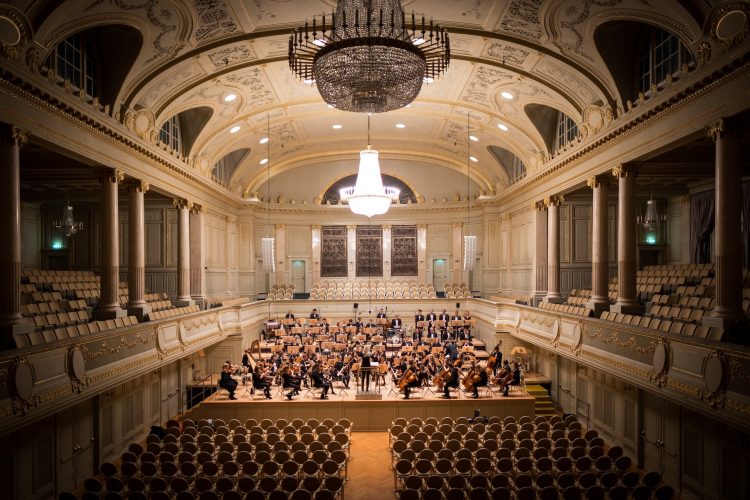
Photo by Manuel Nägeli on Unsplash.
Recent Articles:

4 October 2026
3.5 MINS
As children of the day, let us live freely out of our identity and awaken those around us from spiritual sleep. We carry more than faith for a great awakening — we are the awakeners.

3 October 2026
3.7 MINS
The Church is called to be counter-cultural not to be merely contrarian, but because we love God and people. In this world, that will mean going against culture that is contrary to God.
2 October 2026
3.4 MINS
New research highlights the strong links between active Christian faith, marital happiness, sexual satisfaction, family stability and the formation of future generations.
2 October 2026
3.3 MINS
The Lord wants us to pray from a place of faith and resting in him. We can't awaken the Church, but he can — and he wants to do just that.

1 October 2026
3.1 MINS
Christian schools in Western Australia can currently hire staff who share their faith. Under reforms flagged by the Cook Government, they may lose that protection wherever faith is not deemed an “inherent requirement” of the role.
1 October 2026
3.9 MINS
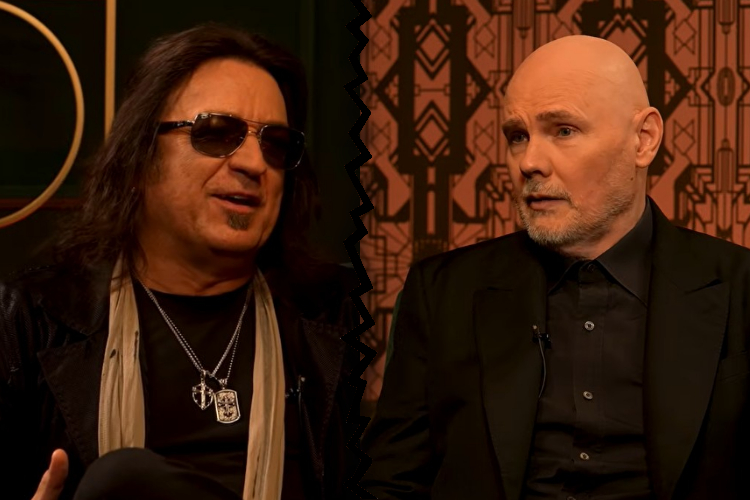
Billy Corgan and Michael Sweet discuss faith, fear and integrity as two rock frontmen explain why they refuse to hide their belief in Jesus.
1 October 2026
6.2 MINS
Britain’s mounting security failures, immigration pressures and restrictions on public expression raise profound questions about political leadership, national sovereignty and the spiritual state of the West.


