



We Should Heed What This Ex-Soviet Spy Says About Beauty … and Terror
by Rebekah Bills
“In the end, the only memorable stories, like the only memorable experiences, are religious and moral. They give men the heart to suffer the ordeal of a life that perpetually rends them between its beauty and its terror.”
These two sentences, written by Whittaker Chambers, quite literally stopped me in my tracks when I first came across them as a graduate student. I came across the quote again this summer on Intellectual Takeout’s Instagram and began to ponder anew Chambers’ incredible story, and the interplay between beauty, terror, and the human experience.
For those unfamiliar with Chambers’ story, he was an American communist spy for the Soviet Union. His conversion to Christianity caused him to question his communist ideals, and his spiritual awakening eventually prompted him to leave the communist party and become a champion for freedom and a fervent critic of communism and totalitarianism.
Divine Design
Key to his conversion to Christianity and retreat from communism was the birth of his daughter, recounted in his memoir, Witness. Chambers says that one day, as he was sitting and staring at his infant daughter,
“My eye came to rest on the delicate convolutions of her ear — those intricate, perfect ears. … Design presupposes God. I did not then know that, in that moment, the finger of God was laid upon my forehead.”
Witness offers a penetrating account of the journey of a man questioning the brutal, equalising god of atheistic communism and falling in love with the beauty and transcendence of Christianity and liberty. As Chambers puts it, “A Communist breaks because he must choose at last between irreconcilable differences — God or Man, Soul or Mind, Freedom or Communism.”
While there is a wealth of wisdom to be gleaned from Chambers’ incredible life and his memoir, perhaps one of the more relevant insights for today’s culture resides in his revelations about beauty and terror:
“In the end, the only memorable stories, like the only memorable experiences, are religious and moral. They give men the heart to suffer the ordeal of a life that perpetually rends them between its beauty and its terror.”
Chambers’ quote so profoundly and succinctly captures both the terrible and the miraculous nature of human existence by suggesting that our souls are constantly “rended” between life’s “beauty and its terror”, and that it is only through religion that we are able to weather the oscillation between the two.
I don’t think there is much dispute in the claim that we are witnessing the death of beauty in modern culture. But I believe, in accordance with Chambers’ own thoughts on the matter, we are in for a rude awakening as the reality of our human existence dawns on us; we will be either sustained by the beauty imbued by moral and religious experiences, or we will find existential despair and emptiness.
Lost
What is left when we forget to cultivate beauty?
Terror, according to Chambers. A world devoid of anything that makes us want to continue in it. Depression, fear, hopelessness — meaninglessness. Men with hearts that are not capable to “suffer the ordeal” of human existence. After all, Chambers, coming from the Soviet Union, would certainly know a thing or two about terror.
And yet, rather than terror that is externally wrought by a brutal government, Chambers’ conceptualisation of terror is existential and philosophical — something which threatens each one of us, a darkness and despair that pressures each and every human psyche.
Consequently, the mental health decline of our nation would not have surprised Chambers. He understood that without religious sensibility, the ability to appreciate the beauty and sweetness of life becomes dulled and eventually lost. Not surprisingly, depression and despair set in. Today’s culture has lost the religious and moral sensibility that gives us the capacity to suffer the beauty and terror of our existence, and to weave stories of meaning out of the troubling chaos of the cosmos.
We need not have gone through any long-suffering ordeal or suffer from depression to understand existential terror; most of us have tasted despair in one form or another at some point in our lives. None of us would wish for a life of hopelessness and despair, but this is exactly what Chambers says awaits if we eradicate religious sensibility and morality and the beauty that they bring to the human experience.
Wonder
How, then, do we avoid the despair that comes from a life devoid of religious and moral sensibility? By remembering that beauty is a compelling evangelism that points us toward things of deeper meaning. Consider Chambers’ own conversion, which he credits to something as mundane as his infant daughter’s perfect, tiny ear.
One needn’t become a Leonardo da Vinci to capitalise on this life-changing power of beauty. Chambers’ miraculous story gives us an unlikely answer: We can imbue meaning and hope into our lives by marvelling at something so ordinary and yet miraculous as a baby’s ear. In other words, by “stopping to smell the flowers”, as the saying goes. By tracing even such a small testament of beauty, like the perfection of a baby’s tiny anatomy, back to the Divine.
No thing of beauty or sweetness is too small to brighten existence and illuminate the goodness of the Creator, especially in contrast with the darkness within and around us.
Chambers’ story also reminds us that we should share the beauty we cultivate, however small, with the world, just as Chambers did when he penned his incredible testimony and memoir in Witness. Chambers became not just a witness to communist subterfuge, but more importantly a witness to others about finding beauty — and subsequently God — in the midst of evil.
If the small perfection of a baby’s ear could change the life course of a Soviet spy and rescue him from existential (and quite likely also physical) terror, there is no telling what even the most minute introduction of a beautiful creation or kind act may do in someone’s life.
Chambers serves as an excellent reminder that we should strive to impart life with a little beauty wherever we can so that we might together have the heart to suffer the ordeals — and the terror — of life.
___
Republished with thanks to Intellectual Takeout. Image courtesy of Adobe.
Recent Articles:
28 August 2026
5 MINS
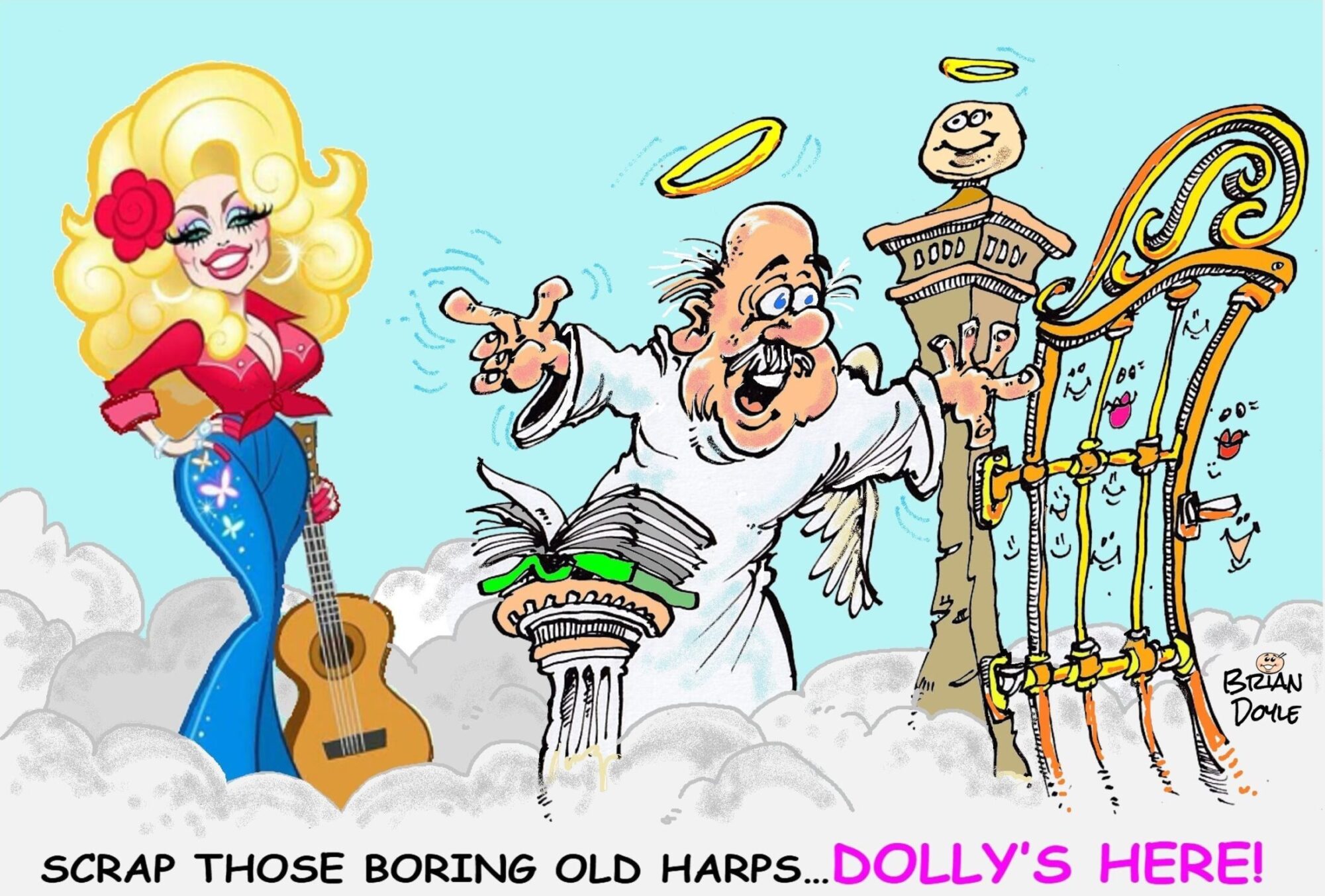
Dolly Parton has died at 80, leaving behind a legacy of faith, generosity, and music. Tributes are pouring in from celebrities, politicians, and everyday fans she touched.
28 August 2026
2.6 MINS
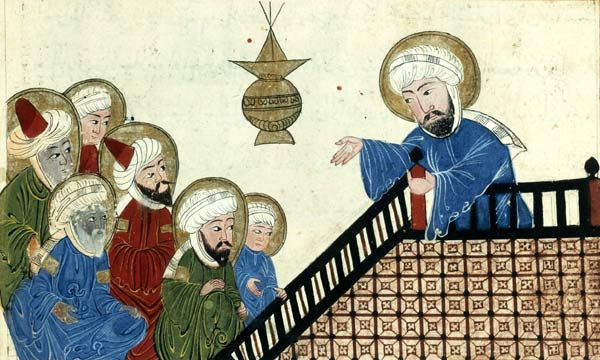
Thomas Aquinas questioned Muhammad’s credentials to speak for God. His question remains uncomfortably relevant.
28 August 2026
5 MINS
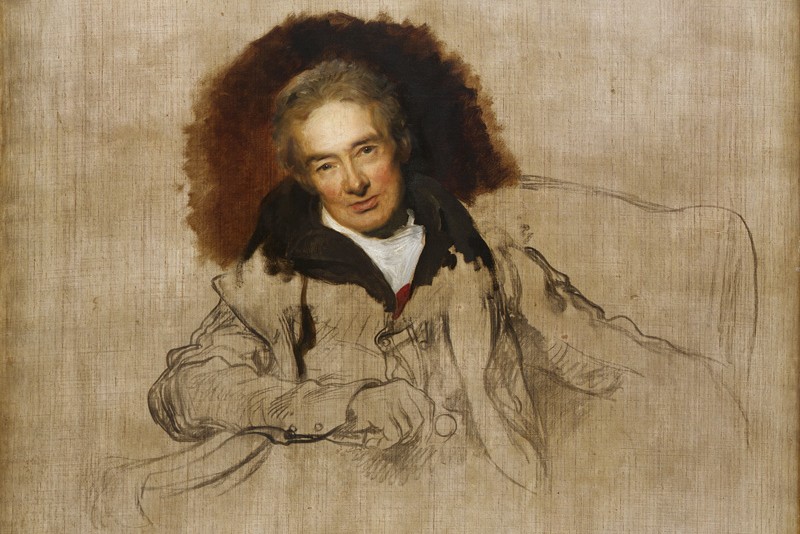
Politics feels exhausting and toxic, but William Wilberforce's story shows why Christians shouldn't retreat from public life. His crisis of faith and calling offers a model for today.

27 August 2026
4.8 MINS
Bishop Fulton Sheen argued Communism and capitalism share a common root—materialism divorced from morality. That affinity, this piece argues, explains China's persecution of Christians today.

27 August 2026
2.6 MINS
Religious leaders are urging Labor to exempt faith-based charities from its new 30 per cent discretionary trust tax, warning the reform could severely cut philanthropic funding for vulnerable Australians.

26 August 2026
1.6 MINS
Victoria's cults inquiry report lacks clear definitions and religious freedom safeguards. ACL welcomes support for survivors but warns mainstream churches and homeschooling families could be wrongly caught up.
26 August 2026
4.5 MINS
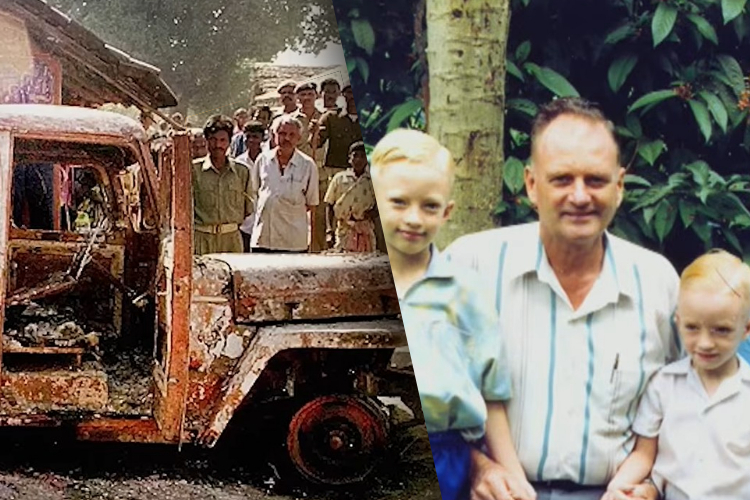
Hindu Dara Singh, convicted for burning missionary Graham Staines and his sons alive in 1999, is seeking early release. His case reopens questions about justice, remorse, and religious violence in India.


