


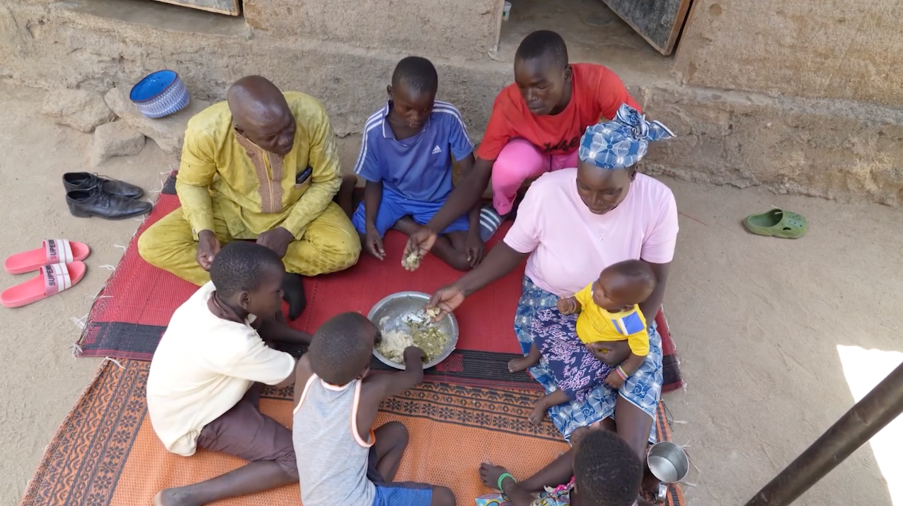
Faith on the Frontlines: Pastors Risk All to Shepherd Cameroon’s Christians
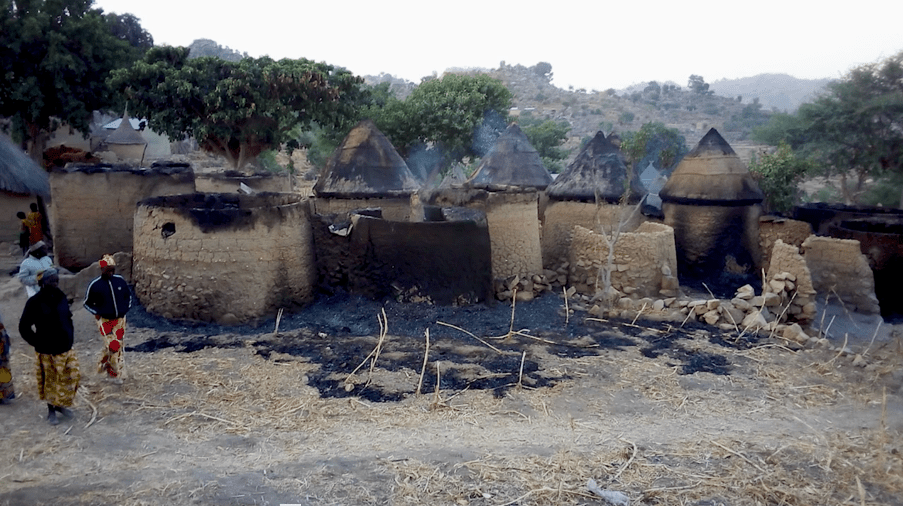
For the last 15 years, the mountainous area of Cameroon’s Far North region has been a place of violence and bloodshed for Christians. Each night comes with fear of attacks from the Islamic extremist group Boko Haram. These fighters hide in the mountains and, under the cover of darkness, launch raids to steal food and other belongings. And it is here where Pastors Mamoud and Hamza are following God’s call on their lives.
Desperate Decisions
Each weekend, the pastors travel to this area—once their home. This part of the Far North was attacked so often that they made the difficult decision to leave for the safety of their families. Pastor Mamoud vividly remembers the attacks … and the reason he finally fled.
“The first time [Boko Haram] came, they shouted ‘Allahu Akbar’ (‘God is most great’),” he says. “They always shout that phrase when they attack. If they catch you, they first give you a chance to convert to Islam. If you refuse, they kill you.
“We fled into the mountains, hoping the situation would calm down. Women and children hid far away. We, the men, hid closer to the village to see what happened, so that we could warn our wives if we saw danger. That is how we lived for two years.
“Until I saw the corpses. Some of the corpses were decapitated. Even more villages in my area were attacked. That’s what happened. My body looked like that of someone who is afflicted and dejected. All the places where we fled to were also attacked. Finally, we decided to flee very far.”
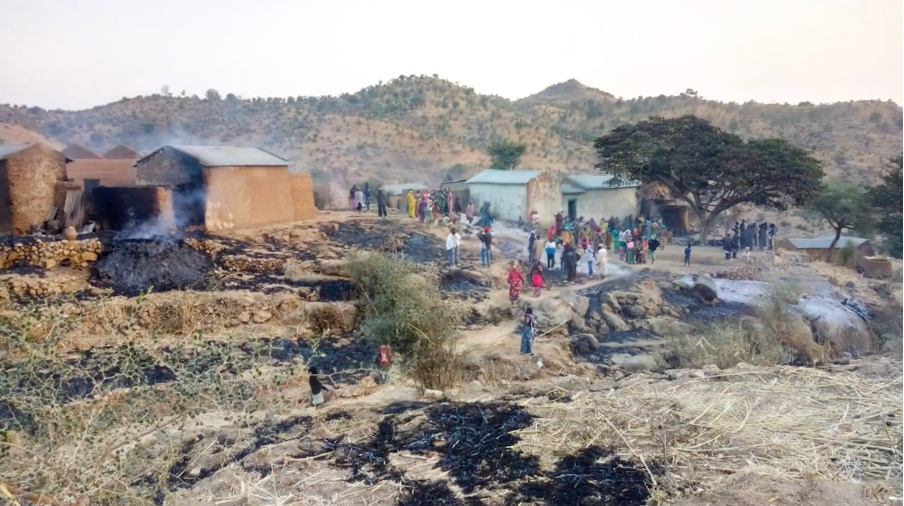
Pastor Hamza, another church leader from the area, remembers the day he was almost killed.
“They attacked my village, and I was running,” he says. “They chased me. I stumbled three times and fell. Quickly, I hid at the foot of a huge boulder. They climbed on top of it. They were firing their guns in every direction. Suddenly, I had to sneeze. At that point, I said, ‘My God, if You want me to die today, then I die. But if it is not my time yet, please prevent me from sneezing.’ Then God … how can I say it … made me salivate. I swallowed it, and the urge to sneeze stopped.”
Today, both pastors live in another village, in poor but safe conditions.
No Flock Without a Shepherd
Despite their decision to flee, Pastor Mamoud and Pastor Hamza have not turned their backs on their flocks who remain behind. Many of the Christians they ministered to didn’t have enough money to live as displaced persons, or they didn’t dare leave behind their properties and agricultural lands.
“I go back to my village because there are Christians there who have nowhere else to go,” Pastor Hamza says. “They can’t flee to another place for lack of money. They don’t have the means to flee.”
Many have also lost hope.
“They say, ‘If the militants kill us, it’s fine. If they don’t kill us, it is also fine.’ They have no hope anymore,” Hamza explains. “I go there and encourage them with the Word of God. I’ll not let them down. I am responsible for them. I can’t leave them.”
Pastor Mamoud echoes his friend’s resolve: “The Spirit of God drives me to go back there. I feel that I am obliged to lead church services because I am their pastor. It would be wrong if I lived here in this town safely and forgot about them.
“Even if there is only one Christian left, I will still go. They are my sheep. That gives me confidence to go.”
The Risk Remains
But that determination comes with very real risks. As long as the pastors are in a village, they face the same risks as the people who stayed behind. Moving around in the contested area is extremely dangerous.
“The militants dig holes in the road to hide mines,” Hamza shares. “If you step on a mine or if you drive over it, it explodes, and you die.”
Each weekend, the pastors’ families wait anxiously for their return. Pastor Mamoud’s wife, Faida, has accepted her husband’s wish to preach and visit his faithful every weekend. But there is always relief when he returns.
“Yes, it is true,” Faida says. “We are stressed when he leaves for the village. These days, even more than before, because the terrorists are now hiding bombs on the roads.
“And also, they used to attack only during the nights, but these days they kidnap and kill people even during daytime. So, now when he travels, we are all stressed at home. When he leaves, we pray to God to protect him on the road and to bring him back home safely.”
Mamoud shares: “What I ask my wife to do when I travel is this: ‘Please pray continuously for me, until I return. If I don’t return, then probably it is God’s will. Just pray for me.’”
Pray for Safe Travels
Open Doors’ local partners support Pastor Mamoud’s and Pastor Hamza’s families to help them with their weekly trips.
“We continue to go there because God’s Word encourages and strengthens us,” Pastor Hamza says. “There is also peace in God’s Word that we can share with Christians who have stayed there. They need those teachings.”
Open Doors is encouraging believers to sign the petition to stop the violence against Christians in sub-Saharan Africa. With the goal of one million signatures worldwide, the petition will be presented to the Africa Union, the United Nations and governments around the world, to better protect Christians like Pastor Mamoud and Pastor Hamza who are under attack.
Visit www.opendoors.org.au for more information about Christians in Sub-Saharan Africa and how you can help.
___
Images courtesy of Open Doors Australia.
Recent Articles:

6 October 2026
10 MINS
This powerful testimony recounts a lifetime of hardship, danger, illness and near-death experiences — and the unwavering faith that carried one woman through it all.
6 October 2026
3.4 MINS
Christians cannot afford to let headlines and social media shape their view of Israel. Scripture provides a foundation for understanding Israel, God’s promises and our response.

6 October 2026
6.7 MINS
Fresh revelations about the foiled FlyDubai terror plot expose the attacker’s alleged extremist history, while a courageous pilot’s actions prevented an unthinkable catastrophe.

6 October 2026
6.2 MINS
Britain’s grooming gang scandal exposes a devastating failure to protect vulnerable children, raising urgent questions about political correctness, accountability, immigration and the loss of moral courage.

6 October 2026
3.8 MINS
A grandmother’s disputed death has put Canada’s euthanasia regime under fresh scrutiny, as the Medical Assistance in Dying (MAiD) program passes 100,000 deaths with a further expansion slated for 2027.
6 October 2026
3.3 MINS
We often talk about church renewal as though we need more people, more programmes, more energy and more resources. But Jesus seems to start somewhere much smaller. With two or three.

5 October 2026
4.9 MINS
Free Speech Union co-founder Reuben Kirkham warns Australia’s proposed Digital Duty of Care could expand censorship powers, undermine free expression and bypass recent legal protections.


