


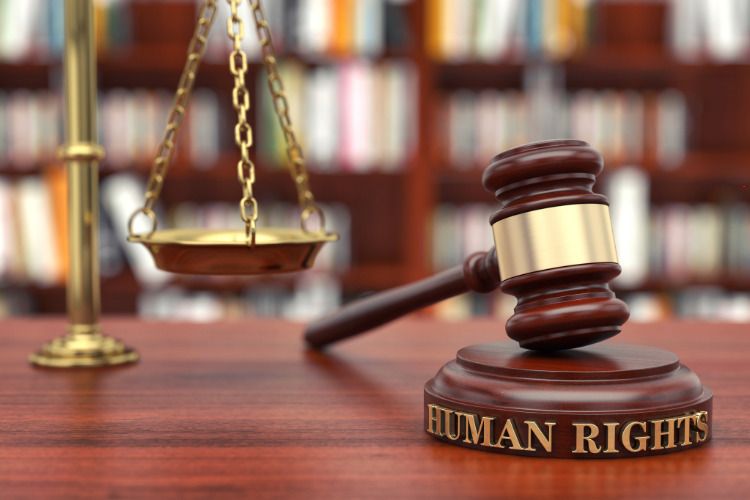
Bills of Rights Are Not All They Are Cracked Up to Be
Australia’s push for a bill of rights resurfaces—yet history, common law, and global cautionary tales raise serious doubts about necessity, clarity, and unintended consequences for freedom and governance.
There have been two attempts to enshrine human rights in the Australian Constitution. First, during the 1944 Democratic Rights Referendum, and second, during the 1988 Rights and Freedoms Referendum. Both were unsuccessful.
In 2009, the National Human Rights Consultation Committee of the Australian Human Rights Commission (AHRC), led by Father Frank Brennan, produced a report that led to the adoption of the first National Human Rights Framework (2010 Framework).
Then in 2011, The Human Rights (Parliamentary Scrutiny) Act 2011 was quietly passed. This act required that all new laws be accompanied by a Statement of Compatibility with the rights and freedoms recognised in seven core international human-rights treaties that Australia has ratified.
The latest proposal to consider a federal bill of rights came in March 2023, when the Australian Human Rights Commission (AHRC) launched its proposed model for a federal human-rights act, claiming “there are currently very few legal protections for the fundamental rights of Australians”. This despite the existence of anti-discrimination, equal-opportunity and vilification laws across Australia for a start. Is the AHRC feeling it needs to remain relevant?
The ACT Human Rights Act was passed in 2004. This was a first for Australia. Victoria passed the Charter of Human Rights and Responsibilities Act in 2006 under Labor Attorney-General Rob Hulls. Queensland passed its Human Rights Act in 2019.
In New South Wales, Greens MP Jenny Leong introduced a Human Rights Bill in October 2025.
Is a Bill of Rights Necessary?
Proponents argue that a bill of rights supports a culture of rights. Well, some of the most oppressive authoritarian regimes in the world have/had effusive statements of the rights of their citizens – Soviet Russia did, and China does.
Under Stalin, the Constitution of the Soviet Union provided:
Chapter X
FUNDAMENTAL RIGHTS AND DUTIES OF CITIZENS:
ARTICLE 124. In order to ensure to citizens freedom of conscience, the church in the USSR is separated from the state, and the school from the church. Freedom of religious worship and freedom of antireligious propaganda is recognised for all citizens.
ARTICLE 125. … the citizens of the USSR are guaranteed by law:
Freedom of speech.
Freedom of the press.
Freedom of assembly, including the holding of mass meetings.
Freedom of street processions and demonstrations.
ARTICLE 127. Citizens of the USSR are guaranteed inviolability of the person. No person may be placed under arrest except by decision of a court or with the sanction of a procurator.
Well, let’s just forget the Soviet’s Gulag Archipelago prison system, the persecution of Aleksandr Sozhenitsyn and the millions who died in the Ukraine famine (the Holodomor) of the 1930s.
China’s Constitution provides:
Chapter 11
THE FUNDAMENTAL RIGHTS AND OBLIGATIONS OF CITIZENS:
Article 35. Citizens of the People’s Republic of China enjoy freedom of speech, of the press, of assembly, of association, of procession and of demonstration.
Article 36. Citizens of the People’s Republic of China enjoy freedom of religious belief. … The state protects normal religious activities. (Note, however, that: “No one may make use of religion to engage in activities that disrupt public order, impair the health of citizens or interfere with the educational system of the state.”)
What about the long trail of human-rights disasters in China, including, among many others, the Great Leap Forward (1958-1960), the Cultural Revolution (1966-1969), the Tiananmen Square Massacre (1989), and the current repression of all unauthorised religions, the suppression of the Uyghurs. Falun Gong and the suppression of dissent in Hong Kong, including the recent conviction of Jimmy Lai.
Which Rights?
Another argument in favour of a human rights bill is that it would make clear which human rights are to be protected; would reduce ambiguity and help individuals to understand and assert their rights more easily; would avoid confusion.
It has been argued that a bill of rights would enable the law to keep up with “emerging rights and freedoms”.
How can a bill of rights be a clear and unambiguous statement of human rights if “emerging” rights and freedoms could impact rights that had already been understood to be guaranteed?
Advocates say that a bill of rights would improve government accountability and ensure Australian law upholds international obligations. Is that what a bill of rights is supposed to do? Surely it would be meant to ensure citizens the protection of their rights and remedy if their rights are infringed, rather than to ensure Australia upholds “international obligations”?
Certainly the International Declaration of Human Rights and the International Covenant on Civil and Political Rights are important guides for protection of human rights. However, sovereign nations have the responsibility to ensure how their citizens’ human rights are protected.
Laws Already Protect Rights
Australia already has laws protecting human rights. The criminal law protects the right to the inviolability of the human person from murder, assault; to liberty by providing for a fair trial and due process before a citizen can be detained; for protection of property against theft or fraud.
Further, our rights have developed organically through the Common Law and Parliament, allowing maximum freedom for individuals to respond to the challenges of our age. As former Prime Minister Robert Menzies said: “To live in a Common Law country is, in itself, the very best guarantee of the rights of the individual.” By setting and limiting our rights, a bill of rights hampers our freedom and creates uncertainties in our law.
Or again, as former Attorney-General George Brandis argued in 2008: “One looks to the Common Law for the recognition of most of our fundamental rights and freedoms, such as those protecting freedom of expression and belief, the right to liberty and security of the person, the right to freedom of movement and the right to a fair trial. The Common Law also enshrines important presumptions which protect substantive rights through the canons of statutory interpretation: for example, the presumption that penal provisions are to be construed in the favour of the accused and the presumption that Parliament did not, unless expressly stated, intend to limit personal liberty or freedom of speech.”
However, the more recent plethora of anti-discrimination, equal-opportunity, vilification and hate-speech laws have redefined the parameters of the right to freedom of belief and conscience, and their corollaries of freedom of speech and assembly. Are these laws encouraging complaints (with consequent costs of the time of tribunals and their personnel and legal costs), most complaints being about a person insisting that their chosen identity, or a person or group insisting that their point of view, be approved or acknowledged by everyone else? Is a review of these laws overdue?
Would a bill of rights, rather than clearing up ambiguity and allowing people to assert their rights more easily, add to and encourage a culture of litigious behaviour and “identity warfare”? How are conflicts of rights to be resolved?
Listing human rights in a bill of rights means then those rights must be defined. This will either limit them or, as George Brandis has said, “express them so broadly that the discipline that is inherent in all government and ordered society becomes impossible”.
Would rights not specifically included in such a bill be recognised?
Rights are best protected by proper separation of powers of the Executive, the Legislature and the Judiciary, each independently and properly exercising their functions. One of Australia’s pre-eminent jurists, former Chief Justice of the High Court Sir Harry Gibbs, said in 1984: “If a society is tolerant and rational it does not need a bill of rights.” And, ominously: “If it is not, no bill of rights will preserve it.”
Is There a Demand for a Bill of Rights?
A bill of rights seems geared to government telling citizens which enforceable rights they will have rather than the protection of and quiet enjoyment of those rights that are inalienable, that is, those that adhere to each human person because he/she, regardless of race, religion, ethnicity, sex or gender, is human.
What is the demand for a bill of rights? Is there a public demand? Or is it from special interest groups, academics, activists?
Which abuses of human rights are occurring in Australia that would make a bill of rights necessary? Would the murder of (mainly) Jewish people on Bondi Beach on December 14, 2025, have been averted if Australia had a bill of rights? Would those motivated to do such a thing be restrained by knowing it may breach a bill of rights?
Who Decides What Human Rights Are?
Shouldn’t the Australian public be consulted on whether the government of the day should decide what our human rights are? Should any such legislative defining of our human rights be bipartisan, not just legislated by a government of the day with the numbers or bargaining power to get it through the legislature? What the government gives, the government can take away.
Should the very notion of a bill of rights be put to the Australian people in a referendum? It is too important an issue to be left solely to a government of the day.
It is not just the Legislature (the Parliament) that is exercising enormous power here. Parliament sets out the list of rights, but the courts get the power to “read down” any legislation they interpret as inconsistent with the human-rights law. So, judges effectively end up becoming legislators in interpreting laws in a way consistent with a bill of rights. Would this entrench a “rights” culture, with increased propensity to litigation, and erode a sense of responsibility?
As noted above, Victoria and the ACT have already legislated to provide a version of a bill of rights, and there is currently a bill of rights proposal in NSW. At a federal level, the AHRC put forward its latest proposal in 2023.
It may seem like trying to close the barn door after the horse has bolted, but I think serious examination of how human rights are best protected is worthwhile.
___
Republished with thanks to News Weekly. Image courtesy of Adobe.
3 Comments
Leave A Comment
Recent Articles:

22 September 2026
6.3 MINS
A remarkable journey to Mount Ebal explores Joshua’s altar, fascinating archaeological discoveries and the enduring biblical significance of Samaria and Israel’s ancient heritage.

22 September 2026
3.8 MINS
Alex Antic’s grassroots victory gives South Australia’s Liberals a chance to rebuild from within — but federal intervention could turn renewal into rebellion.

22 September 2026
6.9 MINS
Ed Sheeran’s attempt to keep politics off his stadium tour unravelled when supporting acts turned concerts into political platforms, exposing tensions over music, activism and free speech.

21 September 2026
4.4 MINS
Forgiveness is a choice, not a feeling. That was the message Danny Abdullah brought to London's ARC conference, sharing how he and his wife chose to forgive the man who killed three of their children.
21 September 2026
2.4 MINS
It is truly concerning that this sort of incursion into free speech can even be suggested. Labor's Digital Duty of Care Bill is about controlling the narrative online, and must be defeated.

18 September 2026
4.5 MINS
Up to 10,000 rallied in Sydney for a ban on sex-selective abortion. Twenty-four hours later, the NSW Legislative Council defeated John Ruddick's bill 21–16. The fight, says Dr Joanna Howe, is just beginning.

18 September 2026
4.9 MINS
The government's $75 million deradicalisation program isn't working — and some wannabe terrorists have left more radical. So it's announced a new plan — which forbids identifying what's doing the radicalising.



If a society is tolerant and rational it does not need a bill of rights.
Funnily enough, you can still have a tolerant and rational society that has a bill of rights, just so long as the body administering the law is a toothless tiger.
Case in point – QHRC.
We don’t need a bill of rights as history shows that people always interpret them to meet their own needs.
If we want to go down this path then a Bill of Responsibilities that clearly spells out the responsibilities of people towards each other and the state would appear to me to be a far safer route to take.
It is inspiring to stand inside The Jefferson Memorial in Washington and read those great words of Freedom. It took years of bloody battles and great suffering of ordinary people before the Americans became independent when they defeated their British masters. Watch ” The Patriot ” starring Mel Gibson–people in a church burnt alive ! The problem with Australia is that you have never been invaded and have never suffered like my maternal ancestors under Islamic Rule and other family members under Communism, so, you have no idea what Loss of Freedom is like. I disagree. I think a Bill of Rights is better than no Bill at all ! I wish we had the American Constitution which gives the Right to Bear Arms and Freedom of Speech because we would not be facing under Labor the possible death of our Human Rights.