


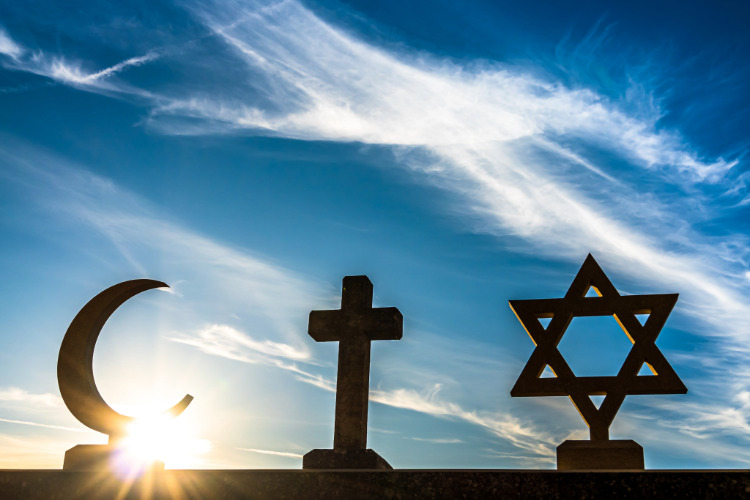
Biblical and Islamic Values: What is the Difference?
This is a speech delivered by Mark Durie at an Aspire Conference in Sydney, 25 February 2026.
___
Christianity is the seedbed of everything that makes the West what it is.
Without it, I worry where we may end up.
– Tom Holland [1]
I want to speak to you today about where we get our values from.
When Caesar conquered Gaul, the Roman legions reportedly killed one million Celts in battle, and another million Celts were captured and enslaved.
At the time, the Romans did not think there was anything ethically wrong about the killings themselves. Caesar was seen as a hero, not a war criminal and his victory a great triumph.
So what changed?
In his book Dominion: The Making of the Western Mind, Tom Holland asked this question. The answer he came to was that Western values came to be shaped by the Bible, through the influence of Christianity.
Religion Shapes Culture
Some say that politics is downstream from culture.
A point I want to make is that culture is downstream from religion.
And it matters which religion we follow.
Religion matters, for example, to how we understand marriage. Nations with a Muslim heritage permit polygamy. Nations with a Biblical heritage reject it. Some nations, like India or Lebanon, allow it for Muslims and prohibit it for Christians.
This is not a trivial distinction. The choice between monogamy and polygamy deeply impacts family culture, including the rights of women and children. And the cultural difference comes from a difference in religion.
The World Values Survey investigated the values that peoples hold all over the world. Cultural values were plotted in two dimensions: traditional versus secular-rational values, and survival versus self-expression values. [2] The results show that the values of nations cluster along religious lines: Protestant versus Confucian versus Catholic versus Christian Orthodox versus Islamic. Religion doesn’t determine everything, but it accounts for a great deal.
The cultural differences between, say, Norway and Saudi Arabia are largely because Norway has a Protestant Lutheran heritage and Saudi Arabia has an Islamic heritage.
Biblical Values
In the recent past, Australia has committed to high immigration, multiculturalism and religious pluralism. Which begs the question: Which religion is going to shape our national culture going into the future?
To show what I mean, let us consider some of the values – beliefs about ethics – that Biblical faith has influenced in Western nations.
In a presentation at the 2025 Alliance for Responsible Citizenship (ARC) Conference in London, Ayaan Hirsi Ali gave an address on the foundations of Western democracies. She pointed out the influence of the Bible on what she called the West’s ‘transcendental story’. But what is this influence?
- There is the influence of the Biblical doctrine of human sinfulness. As Solzhenitsyn put it, ‘the line dividing good and evil cuts through the heart of every human being’. [3] This doctrine informed limitations on state power and led to checks and balances to prevent tyranny. It was a Christian leader, the Archbishop of Canterbury Stephen Langton, who drafted the Magna Carta.
- Then there is the idea that humans have been created in God’s image. Genesis 1:27 says, ‘So God created mankind in his own image, in the image of God he created them; male and female he created them.’ This underpins our understanding of human dignity. It has influenced Western cultures to believe that all people are of equal worth and should be treated equally before the law.
- The Bible teaches that rulers and citizens are accountable to a higher moral law (Psalm 22:28; Romans 13:1-7), which implies that governments should act justly and fairly, and not overreach into areas of conscience.
- The Bible teaches believers to be loyal to the state without compromising their faith. The book of Jeremiah urged the Jews in exile to seek the wellbeing of the cities in which they found themselves. Saint Paul taught obedience to rulers (Romans 13). Jesus said, ‘Render to Caesar what is Caesar’s and to God what is God’s’ (Matthew 22:21), implying that there is a difference between the two, and that a sincere believer can, in principle, be loyal to both within limits.
- Then there is the doctrine of love for others. Leviticus 19:18 taught the Israelites to ‘love your neighbour as yourself’. This specifically included outsiders and foreigners (Leviticus 19:33–34).
- Jesus took this to another level with his command to ‘love your enemies’ (Matthew 5:44). This teaching implies a distinction between ideas and the people who hold them, which is a key part of the Western tradition. Salman Rushdie reported that during his time studying, he learned that although you should never attack a person for holding ideas you disagreed with, the ideas themselves were fair game: “At Cambridge University I was taught a laudable method of argument: you never personalise, but you have absolutely no respect for people’s opinions.”[4]
- Then there is the story of the crucifixion, which taught Western cultures important lessons: the importance of forgiveness; the value of sacrifice; that moral victory is more important than victory by force: as Jesus said, ‘Put away your sword’ (Matthew 26:52). Tom Holland in his preface to Dominion explained that the crucifixion taught Christian Europe that it is more honourable to be a victim of abuse than to be an abuser. [5] This was not at all the way ancient Roman culture saw things.
- Another legacy of the Biblical tradition is that what is judged to be right and true should be reasonable, not merely commanded. Christians hold reason and faith together, not in conflict, but in harmony. The individual conscience is believed to bear witness to the truth (Romans 2:15), the truth about God can be deduced from creation (Romans 1:19-20), and the truth can be tested by reason. Thus, Jesus commanded His followers to love God with their mind (Matthew 22:37), and the Bible urges believers to seek understanding and wisdom, and to test all things (Proverbs 4:5, 1 Thessalonians 5:21).
- The Bible also gives us the idea that people bear individual responsibility for their actions. The Biblical tradition, as developed by the later prophets, firmly rejected the idea of collective guilt and collective punishment (Jeremiah 31:29-30; Ezekiel 18).
- Our last ethical legacy of the Bible is that people should tell the truth, even when it hurts. Jesus declared that the truth sets people free (John 8:32), and believers are urged by Paul to “speak the truth in love” (Ephesians 4:15).
Competing Traditions and Values
Of course, there is resistance to the thesis I am putting to you. Some see religion as an irrelevancy. For example, Marx famously called religion the ‘opiate of the masses’. This relegated religion to a mere symptom of class oppression, or at most a tool of repression, but not a cause of anything in itself.
Some Western people see religion as nothing more than a camouflage for the ruthless pursuit of power. Others assume all religions are essentially the same, because they are assumed to be merely emanations of generic human experience.
These different rejections all have the effect of treating religion as irrelevant as a cause of anything.
If we do accept the thesis that culture is downstream from religion, it follows that nations with a shared religious culture will come to have shared values. Nations with diverse religious cultures will tend towards diverse, inconsistent values.
And if a nation has multiple religious traditions, then these traditions will compete to shape the dominant narrative.
What is the Plan for Unity?
In Australia, we have embraced multiculturalism. As part and parcel of this, we have embraced religious pluralism. This means we have, by default, bought into a competition of diverse values formed by religious traditions.
If a nation wants true unity, with one law for all and equal rights for all, based on shared values, this begs the question of which religion is to supply those values.
So how do we manage this? What is our grand plan?
Well may our education ministers call for shared ‘Australian’ values to be taught to our children – but which values, and from which religion? For example, will it be polygamy or monogamy? Will our guide be Jesus, Muhammad, Buddha… or Peter Singer?
The way the contest progresses may be almost imperceptible. For example, consider the doctrine of the separation of powers. This arose in a culture that accepted the Biblical idea of human sinfulness. Today, we can observe that this separation is being eroded in Australia. We have seen this when public prosecutors or police have used their powers to pursue political agendas. An example was the prosecution of Cardinal George Pell. Why is this happening?
One reason – a deep, subliminal reason – is that once people no longer believe in human sinfulness, the separation of powers will make less sense to them. They will happily accrue power without qualms. They will lose little sleep over the erosion of checks and balances.
When we lose a religious doctrine, we will most likely lose the values it taught.
Another example is the erosion of the distinction between a person and their ideas. There is a flood of personal attacks on social media, targeting people in highly personal ways because of something they have said. This is because ‘love your enemies’ is for many but a distant memory.
What won’t do is to pretend that some kind of universal human value system exists that can ride above the hurly-burly of religious differences. The Enlightenment tried that idea, but it has unravelled. The Holocaust disproved it. So did the Bondi atrocity. [6] So did the communist Gulag. Enlightenment values have not united us.
Islamic Values
Let me conclude by making some observations about Islam, which is a religion that aspires to shape national values.
The past 60 years of extensive migration of Muslims into Western lands have taught us that Islam’s utopian theological vision of a sharia-compliant society is resilient and has not gone away when immigrants have set foot on our shores. While some Muslims will adopt ‘Western values’ (which at their base are Biblical values), others will not. More than a few see the world through the ethical grid of the sharia, and hope to establish the sharia first for their own community and then for the whole nation. Words to this effect have been expressed many times by Muslim preachers in the West. [7]
At times, competing ethical worldviews can agree on some things. For example, secular humanists and Christians can agree on the value of individual liberty, for their own differing reasons.
But Islam projects a very different set of values from the Western, Biblical values I outlined earlier, with little room for compromise. Let us go through the ten items on the list.
- Islam’s anthropology is very different from the Bible’s view of the human person. It rejects the idea of inherent human sinfulness, teaching that people are born innocent, in a pure state known as the fitra. It is consistent with this that Islam concentrates all power in one office, following the example of Muhammad, who was king, high priest, chief justice and general of the army. Islamic cultures do not separate powers: they combine them.
- Islam does not teach that humans are made in the image of God and thus are equal in dignity. On the contrary, it insists that humans share no likeness to or similarity with God. [8] It also does not teach that all people are equal before the law. The sharia ranks Muslims above non-Muslims and men above women. For example, a non-Muslim’s testimony in a sharia court is generally invalid against a Muslim’s, and a woman’s testimony is worth half that of a man. It also imposes a form of legal pluralism, grounded in legal inequality, allowing other religions their own laws, but all under the dominance of the sharia.
- Islam does not distinguish divine from earthly authority. Islamic law does not recognise freedom of conscience. Some Muslims even reject democracy on theological grounds, because it is the rule of people instead of the rule of God. [9]
- The idea that Muslims should be loyal to a non-Muslim state, or even to a Muslim state, is problematic and contested within Islam. It has been a serious question in Islamic jurisprudence whether Muslims are allowed to become loyal citizens of non-Muslim nations. Judaism and Christianity settled this question thousands of years ago based on teachings in the Bible.
- Islam does not have a doctrine of love for non-Muslims. There is a doctrine of loyalty to Muslims but disavowal of non-Muslims. This doctrine is also known as ‘Loving and hating for Allah’s sake’. [10] Many Muslims take this to mean that they should prefer Muslims over non-Muslims and see Muslims as superior.
- Islam tends not to distinguish between people and the ideas they hold. There is no doctrine of ‘love your enemies’. A quarter of a century ago, when the Islamic Council of Victoria launched a vilification complaint against two Christian pastors, the Muslims’ submission insisted that when people attack Islam, they are attacking Muslims. In contrast, the Christians’ response insisted the opposite: that to criticise Islam is not an attack on those who follow the religion.
- Christianity has the story of the crucifixion, and Jesus’ command to ‘put away your sword’, which he said to his followers when he was arrested, submitting to the cross. Islam has Muhammad, the military leader who wielded the sword, and the Qur’an’s message that persecution of Muslims is worse than killing (Qur’an 2:191, 2:217). The Qur’an also commands Muslims to fight (to kill) non-Muslims until there is no more persecution (Qur’an 2:193, 8:39).
- Islamic law also rejects reason when it conflicts with divine command. The scholar Ibn Naqib taught that “the mind is unable to know the rule of Allah … except by means of His messengers and inspired books,” and “The good is not what reason considers good, nor the bad what reason considers bad. The measure of good and bad … is the Sacred Law, not reason.” [11] In other words, truth can only be revealed.
- Islam teaches collective culpability. [12] We have seen a symptom of this in the reactions of radical Muslim groups in Australia blaming Australian Jews for the war in Gaza.
- Islam has a complex relationship with the truth. Telling lies is a sin in Islam, but there are multiple exceptions. Sometimes lying is commended or even obligatory: for example, in Islam it is forbidden (haram) to confess your hidden sin to others. [13] In contrast, the Bible teaches Christians to confess their sins to each other (James 5:16). A contextual permission to use deception when vulnerable can have a damaging impact on Muslims’ relationships with non-Muslims.
The Need to Manage Religious Diversity
One thing is clear: ‘We don’t do religion’ is not an option. This is a strategy of the religiously illiterate and of those in denial about the nature of what we face.
Please also understand that I am not saying ‘Islam bad, Christianity good’. Christianity has had its flaws, when Christians have done evil in the name of their faith. My point is simply about the role of religion in determining cultural values. It is about where our values come from.
I would also point out that these reflections are not only based upon Islam’s canonical texts and the teachings of Muslim scholars. They have also been based on very practical considerations, working among Christian believers who were formerly Muslims, and observing the impact of a culture which condones lying under certain circumstances.
In the face of the contrasting values of a Biblical heritage and an Islamic heritage, I would say this to our leaders: ‘Our governments have done this to us. You, politicians, have established a plurality of religions in this land. If you accept that values are downstream from religion, then what is your plan for managing the resulting religious diversity? When will you wake up to this, your responsibility? Which religion will be the one to determine our values? How will you manage this?’
___
[1] Tom Holland, “Why I changed my mind about Christianity”
[3] Aleksandr I. Solzhenitsyn (1974), The Gulag Archipelago 1918-1956: An Experiment in Literary Investigation. London: Book Club Associates, 168.
[4] Salman Rushdie, 2005. “Defend the right to be offended.” openDemocracy.
[5] Tom Holland, “Why I changed my mind about Christianity”
[6] This is so, notwithstanding the intervention of brave individuals.
[7] See, for example, the many sermons documented by MEMRI.
[8] To attribute likeness to or partnership with God is considered an unforgivable sin in Islam (Qur’an 4:48).
[9] For one example of this teaching among many, see here.
[10] In Arabic, this doctrine is known as al-walā’ wa-l-barā’, ‘loyalty and disavowal’.
[11] Nuh Ha Mim Keller, trans. (1994) Reliance of the Traveller: The classical manual of Islamic sacred law ʿUmdat al-Salik by Ahmad ibn Naqib al-Misri (d769/1368) in Arabic with facing English text, commentary and appendices. Rev. edn., Beltsville, Maryland: Amana Publications, 2-3.
[12] See for example Sheikh al-Būṭī’s discussion of Muhammad’s collective punishment of Jews of Medina in response to alleged actions of individual Jews: M. Saʾīd Ramāḍan al-Būṭī, (2008) The Jurisprudence of the Prophetic Biography and a Brief History of the Rightly Guided Caliphate. trans. Nancy Roberts. Damascus: Dar Al-Fikr, 474–75.
[13] See, for example, Nuh Ha Mim Keller, trans. (1994) Reliance of the Traveller: The classical manual of Islamic sacred law ʿUmdat al-Salik by Ahmad ibn Naqib al-Misri (d769/1368) in Arabic with facing English text, commentary and appendices. Rev. edn., Beltsville, Maryland: Amana Publications, 744–48.
___
Republished with thanks to Mark Durie. Image courtesy of Adobe.
One Comment
Leave A Comment
Recent Articles:

18 September 2026
4.4 MINS
Up to 10,000 rallied in Sydney for a ban on sex-selective abortion. Twenty-four hours later, the NSW Legislative Council defeated John Ruddick's bill 21–16. The fight, says Dr Joanna Howe, is just beginning.
18 September 2026
3.5 MINS
Brothers Luke and Joel Smallbone have become one of the world's most loved Christian pop acts. As For King & Country, they have won four Grammys, 15 GMA Dove Awards and billions of song streams. And today they releasing their latest album.

18 September 2026
4.9 MINS
The government's $75 million deradicalisation program isn't working — and some wannabe terrorists have left more radical. So it's announced a new plan — which forbids identifying what's doing the radicalising.

18 September 2026
2.1 MINS
"Trans women are women." Repeat it enough and it starts to feel true. That's not an argument — it's a propaganda technique. And Australia's courts are now enforcing gender ideology.

18 September 2026
5.2 MINS
Nike picked a fight with half its customers, endorsed a man in a sports bra, and defended China's slave labor. Now it's bleeding $200 billion in market value. Turns out customers have a choice.
17 September 2026
3.9 MINS
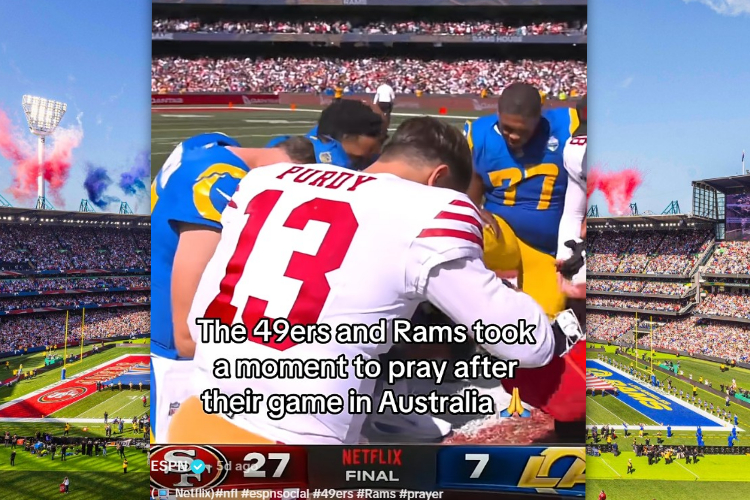
The NFL landed in Australia with a flyover, celebrities, and a 100,000-strong crowd. What caught the internet's attention was something the MCG hasn't seen much of lately: unashamed, public Christian faith.
17 September 2026
5.2 MINS
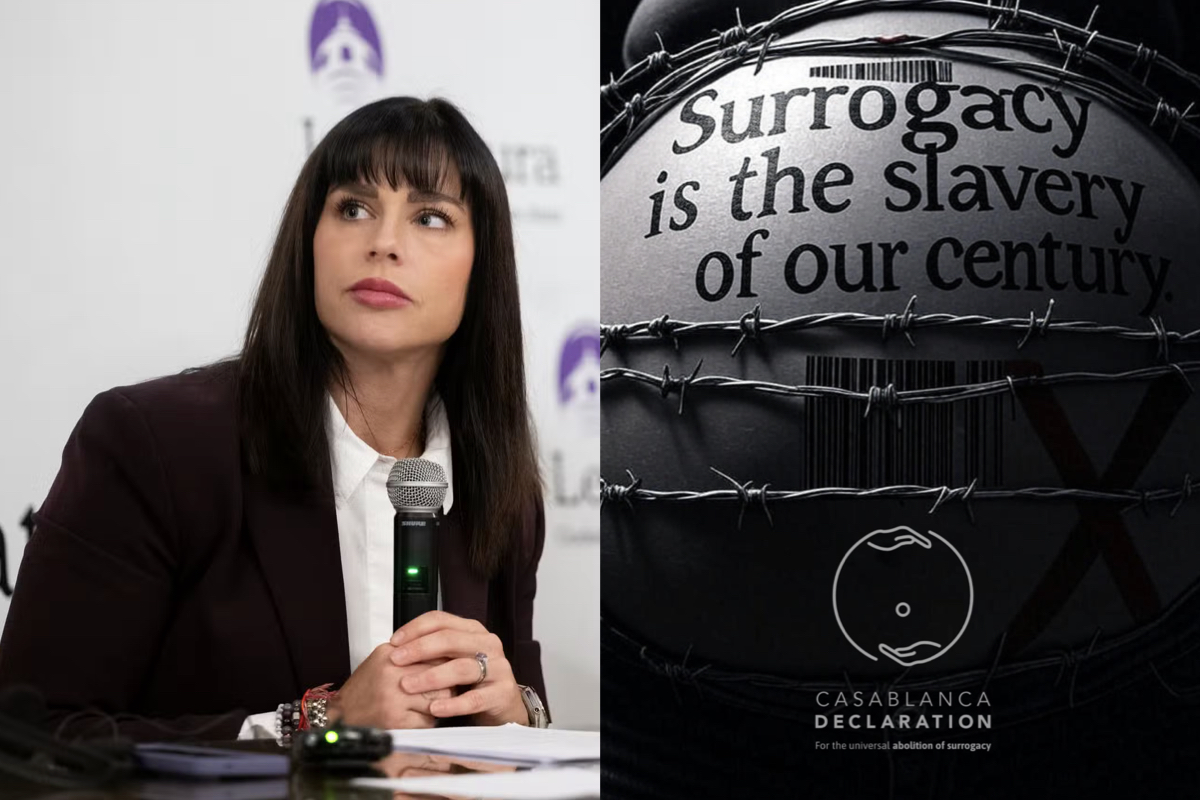
Surrogacy is often discussed through the hopes of adults seeking children. Meet the woman, born to a surrogate herself, who says the debate should begin instead with the experiences of surrogate mothers and children separated at birth.



Excellent article.