


Miracles and Neuroscience: When an Atheist Neurosurgeon Ran Out of Answers
How science leads atheists to faith.
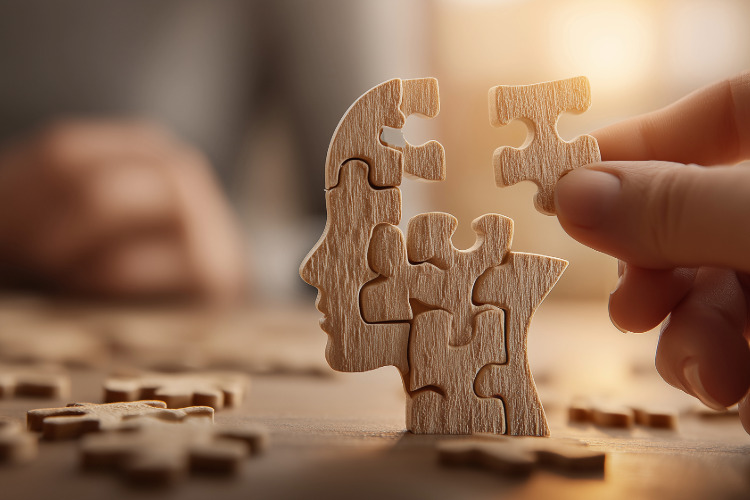
Throughout human history, most people understood that human beings are physical beings, but also spiritual. People have physical bodies, but they are also non-material beings, with things like a soul, consciousness, and a mind. But militant Darwinists and atheists have rejected that understanding of what it means to be human.
Most of them are naturalists who insist that we are physical beings only. They claim there are no supernatural and metaphysical realities. In fields such as neuroscience, many claim there is no such thing as a mind, only a brain. But that is really a philosophical presupposition as opposed to scientific fact.
I have written often on such matters, including this two-part piece: (1)(2)
Making the Scientific Case for the Soul
In that second article, I list over 70 volumes by scientists, philosophers, theologians and neuroscientists that seek to rebut the materialistic worldview assumptions that many hold to today. Some of the authors are religious or Christian, while some are non-religious.
Here, I want to look at one rather new book that also seeks to rebut philosophical naturalism and make the case for the reality of non-material realities such as the mind. In this case, the writers are Christians, but they make their case based on what the science is actually discovering and saying.
The book is this: The Immortal Mind: A Neurosurgeon’s Case for the Existence of the Soul by Michael Egnor and Denyse O’Leary (Worthy Books, 2025). O’Leary has written on matters of science and faith, while Egnor is a neurosurgeon, neuroscientist, and professor of neurosurgery in New York.
From the Operating Room to the Chapel
In future articles, I will discuss this important volume further, laying out the case they have made and quoting from the book. But here I simply want to look at the testimony of Egnor. He was an atheist, but his profession – involving 40 years in neurosurgery and 7,000 brain surgeries – has led him to faith.
Just two quotes from his Introduction – a short one and a long one – inform us of how his journey from atheism to Christian faith came about. The first one is this: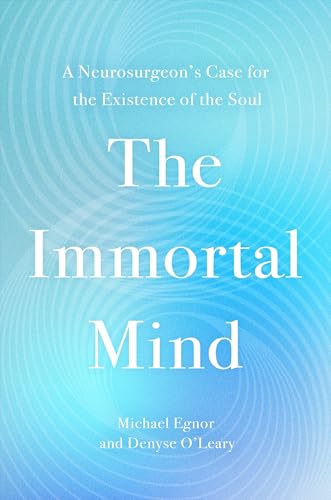
When I was a medical student, I believed that science could explain everything. I was sure that answers to the big questions—How does consciousness emerge from the brain? Do we have a soul? Do we continue to exist after death?—would be found in the laboratory and the operating room. And so I was surprised when, late one night, I found the answers on the floor of a hospital chapel.
This book is the story of what I learned after I got up off that chapel floor. It is about my search for the evidence that the mind is immortal and that, by extension, the human soul exists. (p. 1)
That actual story goes as follows:
When my son was a few months old, my wife and I noticed that he wasn’t smiling or making eye contact with us. He would look at objects with interest, but not at people. We started to face the possibility that he might be autistic. This terrified me—I had always dreaded autism. I knew it would be the worst agony to have a child you love who doesn’t know you or love you back. I had nightmares about my son as an older child sitting in a room, alone and rocking back and forth, while his schoolmates played baseball and enjoyed normal childhoods.
We took the child to an autism specialist, but he said it was too soon to be sure. We would have to wait before we could know more. But at nearly six months of age, he was still not responding to us. I found it harder each day to go about my daily tasks because I thought about him all the time.
One night, it all came to a head.
I was called to see a patient at a Catholic hospital in another town. As I was leaving the hospital, I passed the chapel. I thought, “I don’t believe in God, but I’ll do anything now. I just want my son to know me.”
I went into the chapel and knelt before the altar. “God,” I said, “I don’t know if you exist, but I need help. I am terrified that my son is autistic. It’s agony to have a child who will never know or love me.”
Then I heard a voice—it was the only time in my life I’d ever heard a voice in my head that was not mine—and the voice said, But that’s what you’re doing to Me.
I collapsed in front of the altar. The voice I heard had only spoken seven words, but I felt like He knew me intimately and had been watching me with love and wisdom all my life and that He knew me better than I knew myself. It was like a curtain was lifted, and the Source of my life was speaking to me directly. My heart burned in me.
When I recovered, I prayed, “Lord, I will stop doing it to You. I’m sorry. I won’t be autistic to You any longer. Please heal my son, and please heal me.” I walked out of the chapel a shaken man, and a different man.
The next morning, I called my local Catholic church (my epiphany had happened in a Catholic chapel, and I sensed that this is where He wanted to meet me) and asked to be baptized.
A few days after my prayer in the chapel, I went home in the evening to my son’s six-month birthday celebration. That night, he was behaving like a completely normal child, looking us in the eye, smiling and laughing. I knew I had experienced a miracle. It seemed as if, just as I had stopped ignoring the Lord, He had also allowed my son to see me.
The next Easter, I was baptized, along with my son and other members of my family. (pp. 7-8)
Why Sceptics Should Read Before They Scoff
People of faith will find this to be a very powerful and moving testimony. Even some non-Christians might be greatly impacted by this amazing story. But of course, critics and sceptics will likely scoff at all this, saying it is all so much baloney, and this guy is just some hillbilly whacko.
It is hard to see how someone with his background and expertise can be dismissed as just some religious nut. But before these misotheists go to war here, they should await more articles I will be posting, which look at the careful scientific and philosophical case that the authors make. Better yet, they should get this book and read for themselves just what these writers are saying.
___
Republished with thanks to CultureWatch. Image courtesy of Adobe.
5 Comments
Leave A Comment
Recent Articles:
23 October 2026
6.8 MINS
Hillsong UNITED’s Joel Houston reflects on fame, faith and the burden of ministry, questioning performative Christianity as he seeks a more authentic walk with God.

23 October 2026
13.1 MINS
Tasmania’s proposed conversion practices legislation raises serious questions about religious freedom, pastoral care and whether Christians can freely pray with those seeking to live according to their faith.
23 October 2026
3.1 MINS
The one who is worthy of it all is awakening his Church to be captivated by him, so that we will honour one another and share his gospel with humility and courage.
22 October 2026
2.9 MINS
Victoria Labor’s promise to fund free abortions has drawn a forceful response from Presbyterian leaders, raising profound questions about unborn life, government priorities and Australia’s moral direction.

22 October 2026
4.7 MINS
Western Australia’s proposed anti-discrimination overhaul has sparked warnings from Christian leaders that religious freedom, parental choice and faith-based schools’ ability to uphold their beliefs are at risk.

22 October 2026
2.9 MINS
An Israeli political candidate claiming a remarkable biblical identity has sparked questions about false messiahs, the Antichrist and how Christians should interpret prophecy.
22 October 2026
2.8 MINS
31 October is a historic day of reformation and revival. This end of month, let's gather together on this day which holds deep wells of revival, and ask God to do it again.



What an enlightening parallel, comparing neglecting God to a form of autism. Knowing and loving God is what we are made for.
The alarming spread of autism (children who can’t know and love their parents properly) among today’s children seems to be proportionate to the alarming neglect of our Father in heaven by today’s adults.
Let us pray that the world regains its religious sense as soon as possible.
What a wondrous and heart wrenching story. Thanks BIll.
Thanks Tony and Ian.
Thanks Bill for the wonderful heads up on this book.
Another neurosurgeon called Dr Eben Alexander, who also believed there was no metaphysical or after life, even though many of his patients experienced it, had an encounter with heaven, having a near death experience after contracting bacterial meningitis and in a coma for a week. This experience changed his life and attitude about human life as just being physical and nothing more. An incredible read as well, which should encourage all Christians around the reality and experiences awaiting in heaven.
Unfortunately Dr Alexander I think is mixed up in the New Age movement. So I hope he reads ‘The Immortal Mind” to get to know the only true & living God, the creator, Jesus.
Beautiful! Thank you, and welcomee to our family.
More unbelievers need to hear testimonies like this.
Blessings 🙏