



What Airport Security Teaches Us About The “Secular” Public Square
You can’t board an aircraft without going through airport security.
Everyone and everything that enters the plane is screened. Your luggage. Your backpack. Even you. Nothing gets through without security’s permission.
They’re the gatekeepers.
Now airport security is a powerful metaphor for understanding how our public square operates. That is, entering the secular public square is like going through airport security.
Especially if you’re religious.
Author Jonathan Leeman explains:
Imagine an airport metal detector standing at the entrance of the public square, which doesn’t screen for metal but for religion. The machine beeps anytime someone walks through it with a supernatural big-G God hiding inside one of their convictions, but it fails to pick up self-manufactured or socially constructed little-g gods.
He continues:
Into this public square the secularist, the materialist, the Darwinist, the consumerist, the elitist, the chauvinist, [the communist], and…the fascist can all enter carrying their gods with them, like whittled wooden figures in their pockets. Not so the Christians or Jews. Their conviction that murder is wrong because all people are made in God’s image might as well be a semiautomatic.
He concludes:
What this means, of course, is that the public square is inevitably slanted toward the secularist and materialist. Public conversation is ideologically rigged. The secularist can bring his or her god. I cannot bring mine because his name starts with a capital letter and I didn’t make him up.’ [1]
Leeman nails it. Our modern secular world is operating under an artificial distinction between formal religion (e.g. Christianity) and secular ideologies (a.k.a. beliefs). Secular beliefs are by and large welcome into this public square (and can be imposed on others as long as you get enough votes) but formal religious views are anathema.
The secular gatekeepers don’t want religion in public.
Of course, some religious views are welcome – especially if they align with the more ‘woke’ concerns of the cultural Left:
Women’s health issues should not be in the criminal code. #arrestus #nswpol pic.twitter.com/tqcrpcOV8k
— Fr Rod Bower (@FrBower) August 7, 2019
But any religious view that publicly upholds classical views of marriage or hell is likely to be silenced (Israel Folau, anyone?).
Calling the Ideological Bluff
So how should Christians behave in this environment?
First, let us not be silent. The last thing Gospel proclamation needs is permission from secular gatekeepers. The risen Lord Jesus Christ isn’t beholden to the whims of earthly powers.
Second, don’t be shy about showing up the inconsistency of the secular distinction between religion and ideology. All our moral and political views – especially views about right and wrong (justice) – are ultimately based on beliefs, or ‘faith commitments’. Whether the Christian’s beliefs or the Atheist’s beliefs. We can’t escape this. Our views on these issues can’t be proven by science or reason alone. There’s always a faith element involved.
And thankfully many secular philosophers are also coming to see the inconsistency. As Harvard philosopher Michael Sandel has noted about the topic of justice:
Justice is inescapably judgmental. Whether we’re arguing about financial bailouts…surrogate motherhood or same-sex marriage, affirmative action or…CEO pay…questions of justice are bound up with competing notions of honor and virtue, pride and recognition. Justice is not only about the right way to distribute things. It is also about the right way to value things.’ [2]
And “valuing things” is always based on beliefs about the purposes of life, human nature, right and wrong – all of which are moral and ‘religious’.
So the next time a co-worker or family member tells you to keep your religious views private, gently ask them if they could show the scientific or rational proof for their particular views. It will make for an illuminating conversation.
[1] Jonathan Leeman, Political Church – The Local Assembly as Embassy of Christ’s Rule (Downers Grove, IL: IVP, 2016), 14. [2] Michael Sandel, Justice: What’s The Right Thing To Do? (London: Penguin, 2009), 261.___
Originally published at AkosBalogh.com
Recent Articles:
8 October 2026
3.6 MINS
John Anderson warns that Australia’s decline is rooted in spiritual and cultural disintegration, calling for a recovery of Christian foundations, social cohesion and national purpose.
8 October 2026
1.6 MINS
A blackout at Australia’s $150 million Pre-COP climate summit in Fiji delivered an awkward lesson in energy reliability to delegates preaching the renewable transition.

8 October 2026
4.1 MINS
Aboriginal communities in Central Australia already know the gospel message. What they need now, Robyn Murray writes, is discipleship, encouragement and Christians willing to pray and participate.
8 October 2026
4.1 MINS
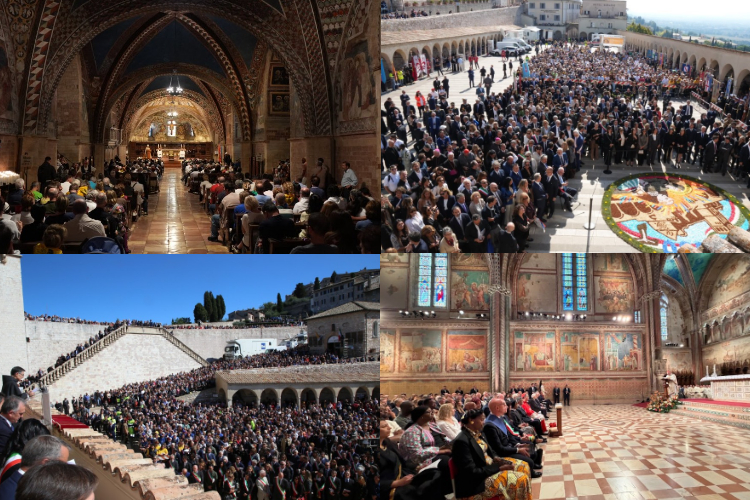
Italy honours St Francis of Assisi 800 years after his death, celebrating a saint whose devotion to Christ, radical simplicity and message of peace continue to shape generations.
8 October 2026
2.8 MINS
The MDBA’s case for further water buybacks rests on climate projections increasingly challenged by climate scientists, historical rainfall data and evidence of a greener Basin.
8 October 2026
4 MINS
Christ’s authority and concern is not limited to the four walls of the church. They extend to the life of the nation, and we are called to take up our part in seeking its righteousness.
7 October 2026
3.6 MINS
Victoria’s 18th March for the Babies will bring families together to peacefully affirm the value of every human life and call for a cultural change towards life.


