



Why Churches Are an Essential Service
There is a hidden cost to the social isolation being currently enforced in response to COVID-19, and that is the massive spike in suicide. Tragically, it has been estimated that there has been a 25% increase in people taking their own lives in Australia in 2020. According to journalist Shannon Molloy:
Assuming the current coronavirus death rate remains relatively the same, some 300 people could perish in Australia by the end of the first year of the pandemic.
During that same period, more than double the number are expected to die due to a secondary crisis that has been sparked by COVID-19.
It will be a largely silent death toll and little is being done to drive down the number of victims.
A mental health emergency has erupted in the months since Australia launched its unprecedented response to coronavirus, with anxiety and depression rates skyrocketing.
The consequences of that, coupled with the long-term psychological distressed caused by unemployment and its myriad side-effects, will see suicide rates jump sharply.
Confidential sources have informed from the health and funeral services have informed me that anecdotally this is sadly true, especially amongst the elderly in nursing homes who are restricted in seeing family during this time. What’s more, the increase in these types of deaths are not being reported in the mainstream media so as to not create social unrest.
And yet church gatherings are still being considered by the government as being a “non-essential service”. However, meeting together for corporate worship not only provides excellent social benefits but profoundly existential ones as well. Because not only does it provide the opportunity for emotional, practical and psychological support, but the spiritual resources to deal with the uncertainties of life.
At the heart of the Christian message in particular is hope in the face of death. Indeed, this is absolutely integral. As the apostle Paul says in 1 Corinthians 15:
12 But if it is preached that Christ has been raised from the dead,
how can some of you say that there is no resurrection of the dead?
13 If there is no resurrection of the dead, then not even Christ has been raised.
14 And if Christ has not been raised, our preaching is useless and so is your faith.
15 More than that, we are then found to be false witnesses about God,
for we have testified about God that He raised Christ from the dead.
But He did not raise Him if in fact the dead are not raised.
16 For if the dead are not raised, then Christ has not been raised either.
17 And if Christ has not been raised, your faith is futile; you are still in your sins.
18 Then those also who have fallen asleep in Christ are lost.
19 If only for this life we have hope in Christ, we are of all people most to be pitied.
My observation has been that the overwhelming majority of churches in Australia have been exemplary in their adherence to implementing the government guidelines around COVID-19. And when a case of transmission has occurred, they have responded both quickly and transparently.
But it’s time to challenge the narrative that religious gatherings are in any way “non-essential”. Yes, it’s crucial that out of love for neighbour we do everything we can to mitigate the risk that our neighbour could be harmed. But we are also a people who should face the future with faith and not fear.
Not only that, but even on a human level, our meetings provide an enormous psychological benefit to each other as well. They connect us not only with God, but also with each other. And that is something that not only gives us hope in the face of death, but the strength and joy to live meaningful lives in the here and now.
As those who have been made in the image of God, we have been created for relationship. Both with God and also each other. Hence, it is essential that we stay connected to both. For the tragic reality is that if we don’t, then many more lives will be lost to self-harm than from the virus of COVID-19.
[Photo by Andrea Piacquadio from Pexels]Recent Articles:
23 October 2026
6.8 MINS
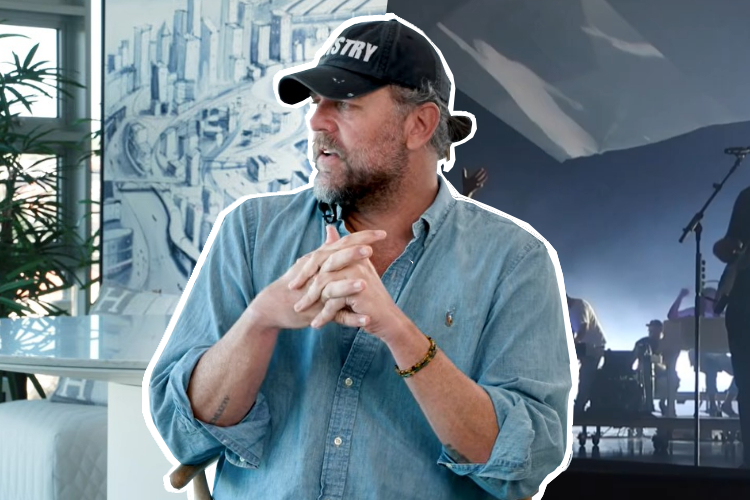
Hillsong UNITED’s Joel Houston reflects on fame, faith and the burden of ministry, questioning performative Christianity as he seeks a more authentic walk with God.
23 October 2026
13.1 MINS
Tasmania’s proposed conversion practices legislation raises serious questions about religious freedom, pastoral care and whether Christians can freely pray with those seeking to live according to their faith.
23 October 2026
7.7 MINS
Melbourne Catholic Archbishop Peter Comensoli has spoken out clearly against the deadly promises by both major parties in Victoria ahead of the election, drawing a comparison between abortion and capital punishment.
23 October 2026
3.1 MINS
The one who is worthy of it all is awakening his Church to be captivated by him, so that we will honour one another and share his gospel with humility and courage.
22 October 2026
2.9 MINS
Victoria Labor’s promise to fund free abortions has drawn a forceful response from Presbyterian leaders, raising profound questions about unborn life, government priorities and Australia’s moral direction.

22 October 2026
4.7 MINS
Western Australia’s proposed anti-discrimination overhaul has sparked warnings from Christian leaders that religious freedom, parental choice and faith-based schools’ ability to uphold their beliefs are at risk.
22 October 2026
5 MINS
Queensland’s newly released abortion statistics reveal the scale of the state’s abortion toll, prompting renewed calls for political accountability, protection of unborn life and an end to parliamentary silence.


