


Children Born Alive Protection bill reveals the incoherence of pro-choice arguments
“Truthful lips endure forever, but a lying tongue is but for a moment.” This idea has been on my mind today as I considered the Children Born Alive Protection Bill. This bill, similar to that which recently failed to pass in the United States, aims to ensure that “when a child is born alive as a result of a botched abortion, attending medical practitioners must take action to save the child’s life.”
What I found most interesting was that so many of the talking points raised in opposition clearly demonstrated the incoherence of the pro-choice argument. To be clear, I am not accusing opponents of a “lying tongue”. It is possible to support an untrue position without intentionally lying, and I believe most pro-choice activists sincerely believe that their position is the moral one and women who seek abortions sincerely believe they are making the right decision.
Rather, I believe that the claim “all children, even those in the womb, are made in the image of God and worthy of life” is a true statement. Therefore, to contradict it requires an incoherent and self-contradictory view of the world.
Allow me to elaborate.
Pro-choice advocates will defend their position by appealing to the concept that no-one can control their body without their consent, but if a baby is born alive, it could hardly be considered to be part of the mother’s body. Why the objection to the fundamental idea of the bill? Even the language of “failed abortion” to describe babies born alive suggests that the intent is the termination of the child, not the pregnancy.
Consider some other arguments against the bill from The Guardian’s reporting:
“the Nationals MP had proposed ‘policy for a circumstance that by the nature of the procedure wouldn’t occur.’”
This seems a strange claim when, in Queensland alone, over 200 babies were born alive after late-term abortions in 11 years. By this standard, could we undermine the pro-choice position and claim that decriminalisation of abortion in NSW was unnecessary, since charges were only brought 12 times in 25 years?
“this was ‘not a common clinical situation at all’”
But the same article states that “abortions beyond the 14-16 week mark are “very, very uncommon”. If the frequency of a situation is a good argument, then by this standard there is no justification to provide legal abortion after the 14-16 week period (with exceptions for life-threatening situations to the mother).
This incoherence is not limited to the current issue. Abortion is often referred to as a “termination of pregnancy”, yet a caesarean delivery in late term would also “terminate a pregnancy” without sacrificing the child. It is not the pregnancy that is terminated.
When pro-choice activists appeal to public opinion, they neglect that few people support abortion after the first trimester, or at the very least favour restrictions on such access. When they suggest men should not have an opinion on abortion, they neglect that views on abortion differ little by gender and ignore powerful women for life like Lila Rose or Allie Beth Stuckey.
While pro-choice movements champion the idea that women who get abortions do not regret it, they miss that “the vast majority of women who’d been denied abortions reported that they no longer wished that they’d been able to end the pregnancy.” And I’ve written previously on the different treatments of unborn humans and animals.
Most notably, the statements that it’s just “a clump of cells”, “a foetus” or “another medical procedure” are commonplace in the pro-choice movement, yet few would offer them as consolation to a grieving mother after a miscarriage. Even if we granted that it was not a unique human life (with which I strongly disagree), we should be able to agree that the unborn has value beyond being an inconvenient object to be removed.
My point is not an unreserved endorsement of the bill in it’s current form (e.g. I think some concerns in The Guardian’s article are justified). I’m not attempting to ascribe all these opinions to every pro-choice person, and I’m not suggesting pro-life people are free from such inherent contradictions (e.g. the idea that an unborn child has a right to life except when conceived in rape).
Most definitely, I’m not trying to shame women who have sought abortion for medical reasons or suffered through the trauma of watching a child be born alive, only to die minutes later. Such women deserve nothing but compassion and care, as do all women who find themselves in an unexpected pregnancy.
My point is that many of the pro-choice arguments appear to be internally inconsistent and fall apart on close examination. My goal in writing this is to urge all of us, pro-life and pro-choice and ambivalent, to deeply consider our assumptions and to seek truth.
What worldviews and assumptions have led us to our current viewpoint? Are they justified?
Do we know the motivations of the people on the other side (individually or collectively), or do we assume them?
Do we start with a conclusion and seek to justify it or do we approach the information openly?
Do we look deeper into what statistics mean, or do we just find those which support our ideas?
Are we consistent — do the standards we hold apply to all circumstances, or are we contradicting ourselves? Do we hold to our convictions even when unpleasant?
To finish as I started — I believe that only truth can persist. I believe that the pro-life cause is founded on truth, and its rationale is sensible, accurate and consistent. I believe the pro-choice attitude can’t be sustained under any sort of close scrutiny. My email, comments section or private messages are always open, and I believe that if we commit to seek truth and engage with one another in good faith, that ultimately truth will prevail.
[Photo by Jenean Newcomb on Unsplash]Recent Articles:
16 October 2026
4 MINS
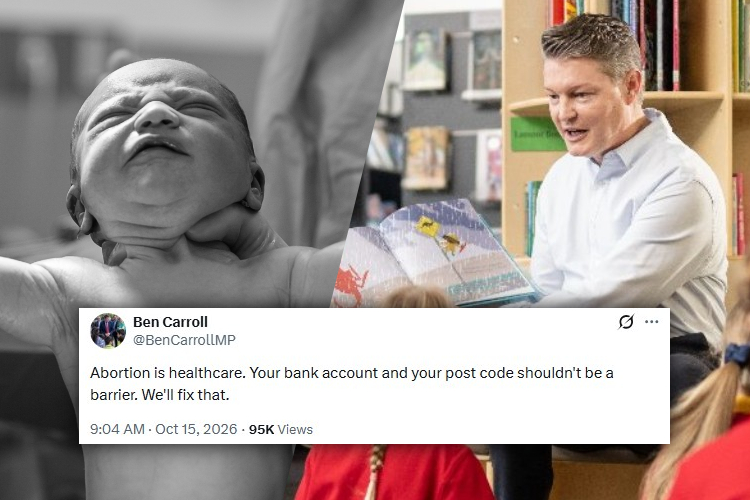
A desperate Victorian Labor Party is peddling taxpayer-funded abortions as free “healthcare”. In a shameless attempt to stay in power, they're willing to do anything — including killing the unborn and forcing taxpayers to pay for it.

16 October 2026
4 MINS
Katie Zacharia’s first days as White House Press Secretary have sparked fierce media criticism, but her remarkable testimony of surviving an abortion attempt tells a deeper story.
16 October 2026
3.4 MINS
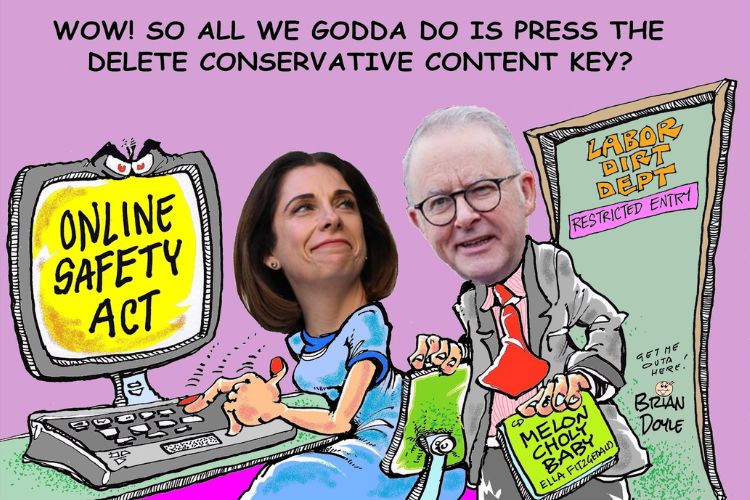
Australia’s proposed digital duty of care laws promise greater online safety and increased user control by switching off algorithms, but critics warn they could give ministers sweeping powers to restrict lawful content and threaten free speech.
16 October 2026
5.2 MINS
Christa Pike’s botched execution has sparked outrage across America, but critics argue that the same concern for human dignity is denied to abortion survivors.
14 October 2026
6.7 MINS
A national poll challenges claims that pro-life Australians are extremists, revealing broad support for abortion restrictions, protections for unborn babies and safeguards for vulnerable women.

14 October 2026
5.5 MINS
As Christianity fades from public life, Marxism or Communism offers a substitute faith built on oppression, liberation and political salvation — but at what cost?

14 October 2026
5.3 MINS
Marco Rubio’s Athens speech celebrates the Greek, Roman and Christian foundations of Western civilisation, warning that cultural self-loathing and radical ideologies threaten its future.


