



Euthanasia’s Kryptonite: Life is Worth Living
A young friend’s life and death in the loving care of her family is a demonstration of how life is worth living despite suffering and loss. Euthanasia, or assisted suicide, is an overly simplistic answer to the natural human experience of suffering and death. We can do better.
Recently, a school friend of mine passed away. She was only 32 years old, and spent the last eight years gradually losing the ability to walk, talk, eat, and finally, blink and breathe.
Diagnosed with amyotrophic lateral sclerosis (ALS) in 2014 — after experiencing difficulty swallowing, and losing over 15kg in one year — my friend saw her dreams of a fulfilling, “normal” future vanish into thin air. She was a dedicated social worker and keen horse-rider, and in a blossoming relationship with her Canadian boyfriend.
Loving Family
As her parents did not want her to spend the remainder of her days in the cold, clinical environment of a hospital, they chose to care for her at home in Singapore. Her mother (Ms Guo) tended to her every need, sleeping by her side.
MS News reports:
“Ms Guo shared that although Hui Yi could no longer speak, she was still very much herself. When she was feeling up for it, the family would often take her to the movies, dine out, and go for walks…
Hui Yi could no longer speak, but she could express herself through an electronic device. Every night without fail, she would wish her parents goodnight and tell them she loved them.”
Capable of Love
My friend’s plight reminded me of Fr Luis de Moya, a Spanish priest who became a quadriplegic after a car accident. “Mobility, obviously, is not the best part of being human,” he reflected.
“I feel like a millionaire who has only lost a thousand pesetas, because I can still do the most important things that a human being can do: to think and to love.”
Another person in a similar position is the young Xavi Argemí, who has been suffering Duschenne’s Muscular Dystrophy since he was three years old. He is well-supported by his family:
“They have always treated me as one of them, in a natural way. So I do what I can and they help me achieve what I can’t do. I share with them my sorrows, my sadness and my projects like any other member of the family. It has to be said that they also see me as a unifying bond in the family.”
Faith in God
Argemí shares:
“My faith is an important part of the meaning of my life. Christianity gives meaning to pain and hardship through the example of Christ. He understands how I feel even if I don’t know why.”
Fr de Moya likewise said:
“The characteristic virtue of a Christian is optimism. With the power and goodness of his Father God to lean on, a Christian is not afraid of life and not afraid of death.”
Euthanasia is Not the Answer
On the topic of assisted suicide, Fr de Moya stated:
“When someone who is incurably ill has palliative and adequate psychological support, he doesn’t ask for euthanasia. That is statistically proven and published. People want to die when they can’t find meaning to keep on living. But to overcome those difficulties there is a branch of medicine called psychiatry.”
Argemí observes:
“I think that in society there are very contradictory messages. On the one hand, they encourage you to overcome your contradictions and to fight to continue living and enjoying life; on the other hand, they give you a message that to live such a life, it is better not to live it as if it were a burden, that as your life is yours, you can do what you want without thinking of the consequences.
So, they offer you euthanasia as a solution to your physical and mental suffering, without giving you a clear alternative that allows you to continue enjoying life with the best possible quality of life.
In this sense, they want to make you see that taking your own life in a situation of advanced or incurable illness is a good thing, which is not the case because life is totally linked to the dignity of the person. We should neither limit life nor extend it by extraordinary means; just let nature take its course…
Euthanasia has a social dimension apart from the personal one. It may lead other people to do the same when in reality, euthanasia does not solve anything. I think that palliative care is a much better answer to alleviate both physical and mental suffering by tackling pain and giving the necessary support to continue to enjoy life by letting it take its natural course.”
My friend’s mother hopes that by sharing her daughter’s story, she can encourage people going through the same ordeal:
“She wishes for patients with the same diagnosis to not lose hope.
They can still live a worthwhile life by adjusting their mindset and getting the support they need.”
Life to the Fullest
There is a Japanese TV series on this topic, 1 Litre of Tears (2005), based on the diaries of a teenage girl (Kito Aya, 19 July 1962 – 23 May 1988) who suffered an incurable neurodegenerative disorder over ten years. It is a deeply moving portrayal of a young person learning to live fiercely in the face of certain death.
As Argemí notes:
“I try to live in the present without thinking too much about the future, although I am aware that I will probably die sooner rather than later: in fact, there is only one certainty in this life and that is that we will all die one day, we just don’t know when or how. Death is part of life.”
May we learn from the example of these courageous people and their compassionate families, to value human life in all its stages, and to face death with abiding faith, trusting that God is with us each step of the way.
Gloria Dei est vivens homo. Vita hominis visio Dei.
The glory of God is the living human.
The life of the human is the vision of God.
~ Irenaeus of Lyons
___
Photo by Mikhail Nilov.
One Comment
Leave A Comment
Recent Articles:

27 October 2026
10.3 MINS
As Tasmania and Western Australia consider conversion therapy bans, a former LGBT+ ministry leader warns of threats to religious freedom, personal choice and Christian discipleship.
27 October 2026
4.9 MINS
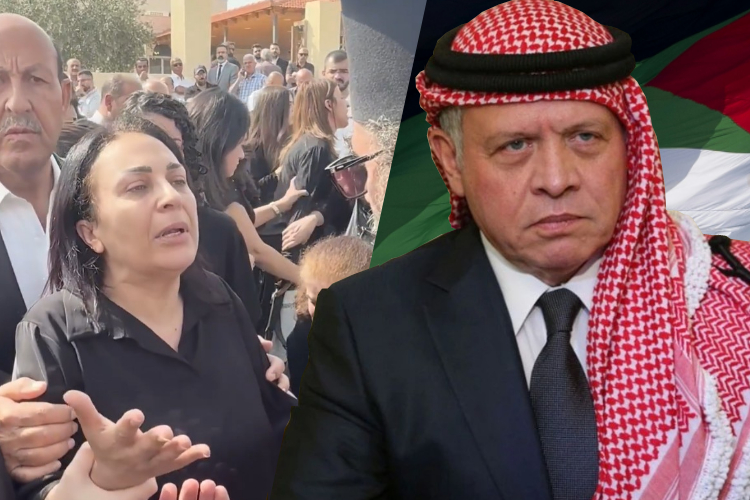
Nine Christians have been killed in a terrorist attack on a Jordanian church, prompting fierce condemnation, demands for justice and renewed concerns about religious persecution.

27 October 2026
3.6 MINS
For 25 years, the Mount Moriah Trust has supported struggling Christians across the Holy Land, bringing practical assistance, encouragement and hope to believers facing hardship and persecution.
27 October 2026
3.1 MINS
As the disciples discovered through a huge haul of fish, we can trust Jesus for a net-breaking, boat-sinking catch of people.
26 October 2026
2.9 MINS
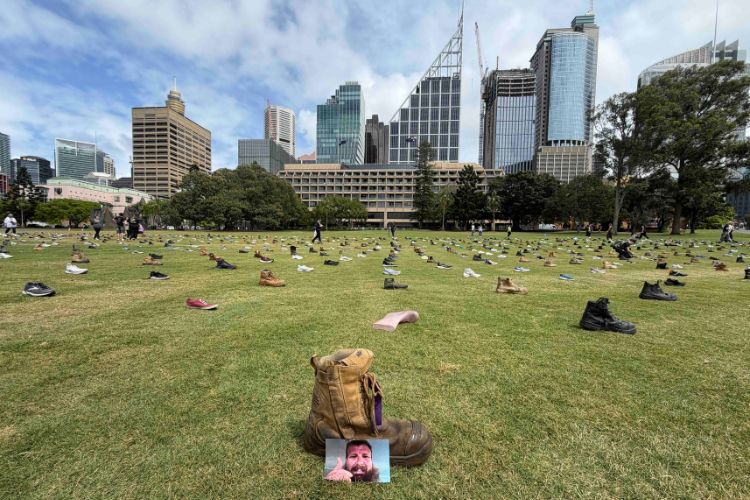
A powerful display of thousands of shoes highlights Australia’s escalating male suicide crisis, while Dads4Kids celebrates fatherhood, family connections and practical action to strengthen generations.
26 October 2026
3.2 MINS
Following Paul's example in Ephesians 1, let us pray for the Father to open the eyes of our hearts so that we may grasp the hope of his calling, the riches of his glorious inheritance in the saints, and the greatness of his power towards us who believe.

25 October 2026
4 MINS
Prayer is active partnership with God, and he is awakening his body to prayer, not by might or by power, but by his Spirit.



Thanks for sharing your friend’s story.