


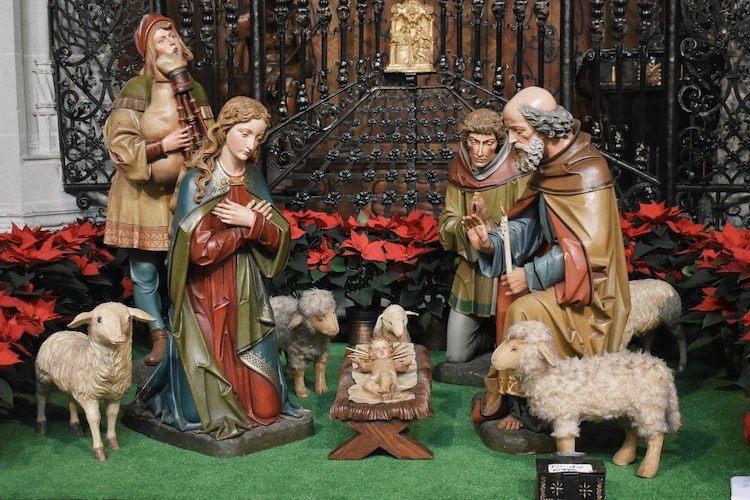
Handel’s “Messiah”, A Prophetic Masterwork – Part 4, The Announcement Fulfilled
In our journey through Handel’s Messiah, we’ve now arrived at the account of the Messiah’s birth in Bethlehem.
For many years, performing Messiah at Christmas has been a firm tradition all around the world. But that wasn’t always the case. In fact, it was originally conceived as a work to be performed at Lent, leading up to Easter.
In his book, Stories Behind the Great Traditions of Christmas, author Ace Collins gives us a potted history of the change of tradition from Easter to Christmas:
“By 1900, the Messiah was so closely linked to Easter that people began to expect to hear the oratorio each year. A performance of the Messiah was the surest way to fill up a church or a concert hall. In small English towns, as well as in large cities, the annual presentation of Handel’s work brought out throngs of people. It had become such a tradition that many could not imagine Easter without Handel’s Messiah.
The Messiah’s move to Christmas was based more on marketing than on anyone’s suddenly realising that the ‘Hallelujah Chorus’ and other parts of the oratorio would magnify the significance of the celebration of Christ’s birth. The large crowds that turned out each Easter to hear the oratorio prompted marketers to rethink the timing of the annual presentation of Handel’s work. Those raising money for charities knew that people’s spirit of giving was far greater at Christmas than at Easter. Another knock against Easter was its very short holiday season, which lasted only three days.
For some years, Handel’s oratorio was part of both the Christmas and Easter holiday experiences, especially in England. But by the 1960s, the Messiah had been almost completely transformed into a Christmas event.”
As Shepherds Watch
To prepare us for the account of the angelic announcement to the shepherds of Messiah’s birth, Handel chose a short two-minute orchestral interlude titled “Pifa (Pastoral Symphony)”. The word pifa proved a bit difficult to track down. But I found that the most likely interpretation is that Handel, being German, pronounced the name of the Piva, a Swiss and northern Italian bagpipes, as “Pifa”.
There is a tradition in Italy at Christmas where shepherds play in small ensembles including the Piva (in other regions known as the “Zampogna”), along with oboes and any other available instruments to accompany.
But just to confuse matters, the Italian word for “piper”, which would include not only the bagpipes but also any reed or wind instruments, is pifferaio.
You can hear in the tunes these shepherd ensembles play, that there is often a very similar note sequence (long-short-long-short) to the one which Handel used in his shepherd’s “Pifa”.
Here are a couple of examples that are probably no different to those Handel heard as he travelled down from Germany through northern Italy to Rome as a young man.
Angelic
The passage chosen by Jennens to portray the Messiah’s birth is very brief, covering just six concise verses, Luke 8-11, 13-14:
“There were shepherds abiding in the field, keeping watch over their flocks by night. And lo, the angel of the Lord came upon them, and the glory of the Lord shone round about them, and they were sore afraid. And the angel said unto them, Fear not; for, behold I bring you good tidings of great joy, which shall be to all people. For unto you is born this day in the city of David a Saviour, which is Christ the Lord.
And suddenly there was with the angel a multitude of the heavenly host praising God, and saying: Glory to God in the highest, and peace on earth, goodwill towards men.”
It should be obvious that the choice of this passage does away with any notion that Messiah is a work for performance at Christmas, as the use of this brief passage, delivered in a matter-of-fact manner, seems to be there just to note His arrival. But for me, it confirms the prophetic aspect of Messiah, as the angels are confirming to the shepherds the prophecies delivered in the previous section.
Also, this passage, because the focus is on the angels’ message, and not the shepherds, sets it apart. After all, Messiah is an extended meditation on Scripture, and there are no characters with their own voices, except the angels here. And their voices are heard merely for the sake of the announcement of the Messiah’s birth. That being the case, if Jennens had used other passages, for example, those where the Archangel appeared to Mary or Joseph, he would have introduced actors to his meditative drama, which would have disturbed the whole flow of the work.
Fulfilment of Judaism
As an appendix to this section, and as I’m writing this article on the Sunday before Christmas Day, I happened by chance to find out that today is the birthday of Charles Wesley (1707-1788), the younger brother of the founder of the Methodist Church, John Wesley. The Wesleys were slightly younger contemporaries of Handel, and according to one source I found, “Wesley befriended Handel during Handel’s last days and, perhaps inspired by Handel… composed Hark! The Herald Angels Sing.”
I think it’s also interesting, as the Messiah came first of all to redeem the Jewish nation, and ultimately all the Gentiles, that the tune adopted a few decades later for Wesley’s great Christmas carol was written by the German composer Felix Mendelssohn (1809-1847), who converted from Judaism to become a Lutheran Christian. This was a significant step when you consider that Felix’s grandfather was the German-Jewish philosopher and theologian Moses Mendelssohn, one of the leading lights of European Jewish culture in the late 18th century.
So it seemed appropriate for me to end this part of Messiah with the final verse of that great Christmas carol of Charles Wesley’s, and may we all hail the prophesied Prince of Peace this Christmas and every day!
Hail the heav’n-born Prince of Peace!
Hail the Sun of Righteousness!
Light and life to all He brings,
Ris’n with healing in His wings;
Mild He lays His glory by,
Born that man no more may die,
Born to raise the sons of earth,
Born to give them second birth.
Hark! the herald angels sing
Glory to the newborn King.
And a Blessed Christmas to all.
___
Photo by Phuc Tran.
Recent Articles:

24 August 2026
3.5 MINS
A recap of the Grandparenthood podcast chat on the impact of dads, and a preview of the 2026 Men's Summit at Stanwell Tops, highlighting the National Grandparent Conference happening the same weekend.

21 August 2026
2.9 MINS
Ardie Savea and Siya Kolisi, rival captains united in faith, worshipped together ahead of Rugby's Greatest Rivalry — revealing how Christ grounds each of them on and off the field.
21 August 2026
1.8 MINS
Archbishop Fisher accuses ABC of bias in voluntary assisted dying coverage, demands formal investigation into impartiality breaches over telehealth ban debate.

21 August 2026
4.4 MINS
I have been researching and studying the biomechanics of the human body for over 30 years, and have seen firsthand how modern scientific discoveries have confirmed that the human body is a design masterpiece.
20 August 2026
3.1 MINS
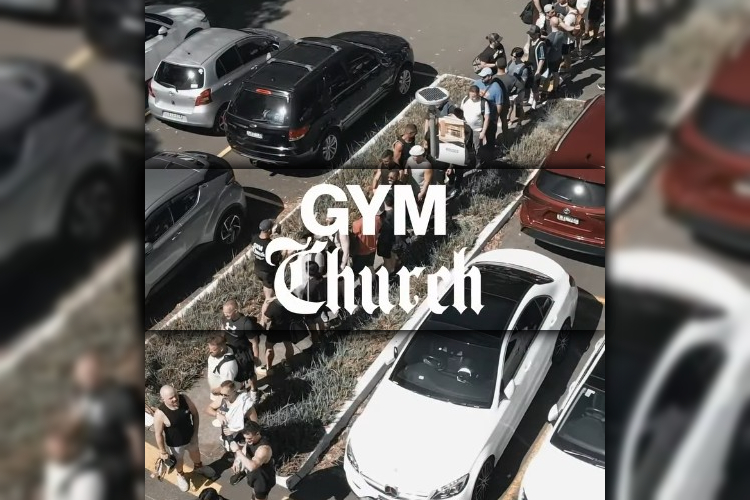
The ABC surprises with a balanced report on Gym Church, a Melbourne-born Christian fitness ministry now spreading nationally — exploring why Gen Z men are turning to faith.

19 August 2026
4 MINS
On 17 August, Parliament House witnessed historic momentum for the Human Rights (Children Born Alive Protection) Bill 2026. Record numbers of politicians attended and spoke publicly in support, while media coverage reached unprecedented levels — marking a significant shift in political engagement on this highly important issue.
19 August 2026
5.4 MINS
Mosques push for public loudspeaker calls to prayer across Western cities, but the adhan carries deeper historical and religious meaning than commonly assumed.


