


Ultimate Engineering in the Human Body
Editor’s note: This article first appeared in Evangelical Times, a UK Christian publication. You can try ET Premium membership free here.
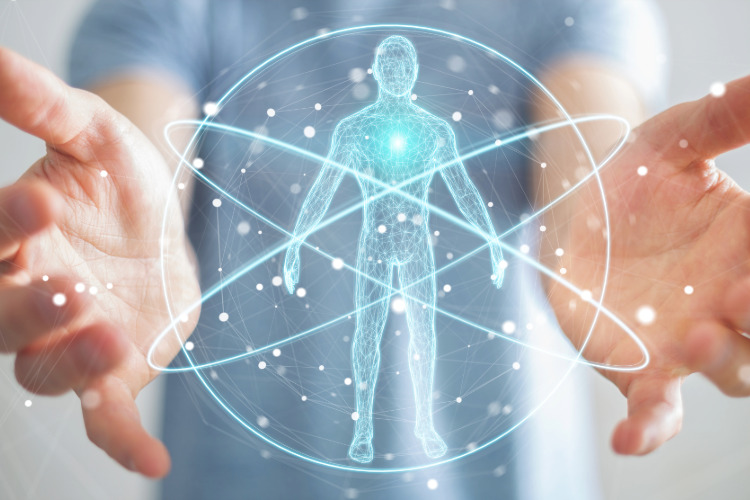
The psalmist David declared that the human body is fearfully and wonderfully made (Psalm 139:14). I have been researching and studying the biomechanics of the human body for over 30 years, and have seen firsthand how modern scientific discoveries have confirmed that the human body is a design masterpiece.
In February this year, I published a book called Ultimate Engineering (Discovery Institute Press) to present not just evidence for intelligent design, but evidence for ultimate levels of design that cannot be surpassed.
The human body has the best possible design concepts, the best materials, and the best control systems. There are ultimate levels of design resolution down to the molecular scale, and there are ultimate levels of fine-tuning. Engineers cannot even copy what God has achieved in the human body, let alone make any improvements.
Answering the ‘Health Problems’ Objection
Atheists often argue that health problems are a sign of bad design. However, health issues like diseases and genetic faults are a result of external attacks on the body and not a result of any defects in the original design.
In the Garden of Eden, Adam and Eve had a perfect design and did not experience any diseases or genetic faults. Following Adam’s sin and the curse on creation, Adam still had a body which was perfect in terms of design concept, but it was now subject to disease, aging, and death. In addition, the offspring of Adam would start to accumulate genetic faults as part of the decay of creation.
Lifestyle ailments are also not a sign of bad design. When people sit too much and get a bad back, that is not due to poor design but rather to poor lifestyle. The best car in the world will have problems if it is not looked after. In the same way, the human body develops problems when it is not used in the way it was designed to be used.
Ultimate Limb Joints
Sports such as gymnastics demonstrate how human limb joints can be incredibly dexterous and strong. The best-engineered prosthetic joints – like knees and wrists – are always poor replacements that cannot begin to match the performance of healthy human joints in terms of functionality, compactness, and longevity.
Engineers cannot replicate parts like ligaments, tendons, muscles, and the synovial lubrication system within joints. I have designed humanoid robotic joints and artificial muscles using human joints as inspiration.
One of the features of human muscle that I find astounding is its multifunctional capabilities. The 600-or-so muscles of the body are perfectly sized and located to perform the required movement of joints. And yet muscles do so much more than actuate joints. Muscles play a key role in thermoregulation in terms of how they heat blood.
They also create protective barriers for the body, with muscles concentrated in areas like the buttocks and base of the hands, where padding is most needed. Last but not least, muscles give a beautiful shape to the body. To create such perfect multi-functioning muscles requires the work of a genius.
Human joints are not just supremely dexterous; they are also remarkably robust. They can perform millions of movements over a lifetime of 80 years, heal from occasional injuries, and remain highly capable. At age 90, German pianist Menahem Pressler played to a very high standard with the Berlin Philharmonic and recorded albums of Mozart and Debussy.
The Ultimate Wiring System
One of the parts of the human body that most impresses engineers is the nervous system. The adult human body has been estimated to have 90,000 miles of nerve pathways. Laid out end to end, that would stretch more than three times around the earth. For comparison, the gigantic Boeing 747 jet has around 170 miles of wiring.
I am very familiar with the challenges involved in designing a wiring system, having designed the solar panel deployment system for the Envisat Earth satellite for the European Space Agency. One of the biggest challenges for such complex systems is to integrate the wiring so that it can reach every sensor and actuator. In the case of the human body, this task is unimaginably great.
The human body has nerve pathways from the brain to every cubic millimetre of the body. Millions of nerve pathways weave their way from the spinal cord into every muscle unit, every tendon, every ligament, every part of the digestive system, every part of the lungs, every part of the skin, and every other organ. Nerves have to reach every touch sensor, every pain sensor, every temperature sensor, and every position sensor. It is impossible to comprehend the level of wiring detail.
The Ultimate Pumping System
It is estimated that there are more than 60,000 miles of blood vessels in the adult body. There are around thirty trillion cells in the body, and, incredibly, cells throughout the body are typically no more than 0.1 mm away from a blood vessel. This staggering statistic is one reason engineers are in awe of the blood circulatory system.
The human heart is a pump that far surpasses any pump produced by engineers. The heart pumps around 2,000 gallons of blood every day and beats more than two billion times in an 80-year lifetime. The heart has to generate enough pressure to pump blood through the whole body, so it must be powerful and efficient.
Additionally, in order to deliver blood to the two circuits in the body (body circuit and lung circuit), the heart has to be a double pump with the two pumps precisely synchronised. Engineers have invested enormous amounts of time and money into developing an artificial heart.
Despite the skill of the best engineers, the best artificial hearts are no match for the real thing. A world-leading expert on the heart, Professor Sian Harding of Imperial College London, has said the following: ‘Nothing shows more clearly the perfect engineering of the heart than our own failed attempts to imitate it.’
Claims of Bad Design
Humanists such as Richard Dawkins and Alice Roberts have claimed that there is bad design in the human body. I address such claims throughout my book and show that their arguments are based on what evolution predicts rather than any scientific evidence.
I show that evolutionists like Dawkins are so committed to their naturalistic worldview that they ignore any evidence that points to intelligent design. I also show how leading experts in biomechanics and anatomy do not agree with the ‘bad design’ arguments.
Seeing God’s Perfection is Comforting
Recognising ultimate engineering in the human body is a challenge to the unbeliever. But it is also a comfort to the believer. The psalmist David knew that God’s ways are perfect (Psalm 18:30), and therefore, he could trust that God’s plan for his life would be perfect (Psalm 18:32). When we consider the perfection of design in the human body, we can be reminded and comforted that God’s ways are always perfect.
___
Republished with thanks to Evangelical Times. Image courtesy of Adobe.
5 Comments
Leave A Comment
Recent Articles:
22 October 2026
2.9 MINS
Victoria Labor’s promise to fund free abortions has drawn a forceful response from Presbyterian leaders, raising profound questions about unborn life, government priorities and Australia’s moral direction.

22 October 2026
4.7 MINS
Western Australia’s proposed anti-discrimination overhaul has sparked warnings from Christian leaders that religious freedom, parental choice and faith-based schools’ ability to uphold their beliefs are at risk.

22 October 2026
2.9 MINS
An Israeli political candidate claiming a remarkable biblical identity has sparked questions about false messiahs, the Antichrist and how Christians should interpret prophecy.

22 October 2026
2.8 MINS
31 October is a historic day of reformation and revival. This end of month, let's gather together on this day which holds deep wells of revival, and ask God to do it again.

21 October 2026
3.9 MINS
Evangeline Lilly walked away from Hollywood to pursue a deeper purpose. Today, her Christian faith, humanitarian calling and passion for human creativity shape her next chapter.

21 October 2026
7.9 MINS
A collection of sobering reflections on Western civilisation’s decline, the loss of Christian foundations and the dangers of cultural complacency, ending with a message of enduring Christian hope.

21 October 2026
3.4 MINS
If we want to avoid being compliant — even unintentionally — with ungodly ideas, we need to feed our souls with food that is in accord with God’s reality.



Agreed that the Human Body is a magnificent piece of engineering which cannot be improved by scientists. Only a few generations ago, a father and son (ancestors of mine) lived to 110 and 105 respectively without any doctor on the island or medication, and died peacefully of only Old Age. Modern Life with its constant work stresses, long hours, long distance to work, etc, Pollution of air, land , and sea, Poisons used to weed land used to grow food, Nano Plastics in all our bodies, adulterated “food”, use of medication adulterated with chemicals we were never meant to injest, the incompetence of many doctors, unnecessary and over-prescribed medicines and unnecessary operations rather than letting Nature heal itself (because insurance companies demand this), and the results (in some societies ) of generation after generation of inbreeding between cousins (and even marriages between niece and blood uncles) result in deformed or mentally or physically handicapped children who then have to be cared for life on the NDIS. These cousin marriages often result in various diseases or Haemophilia and its Carriers (eg the Russian Royal Family and Queen Victoria’s descendants ).Make cousin marriages illegal and ban weeding using poisons, etc and then you will have a healthy society like in the 1950sand 1960s before they were invented and Bromide was used in bread-making instead of Iodine –just one example of how Greed for massive profits dominates today’s society to the detriment of our health. Big Pharma , the enemy of our bodies, designed to keep people hooked for life on medications that do not cure the problem. Last, but not least—too much sugar, too much alcohol, smoking, Drugs like Cocaine, etc, over-eating . It’s not easy in the modern world to be healthy, but, it can be done if you can afford real, good food, but, govts have made the cost of real food prohibitive and permit food to be adulterated. We do not need scientists to “improve ” ie tinker with our bodies by altering our genetic make-up to create a Race of Zombies who will mindlessly do whatever govts want !
This is a fantastic article!!!!!!!
Excellent Article
I read “Fearfully and Wonderfully Made” and “In His Image” by Dr Paul Brand & Phillip Yancey, when I was a teenager. These books confirmed the wonder of the Creator God who we worship. This short article by Prof Stuart Burgess also acknowledges the the fact that we are ‘fearfully and wonderfully made.’ Thank you for this reminder that we can trust the God of creation because He ‘knit us together in our mother’s womb’ Ps 139:13
I read “Fearfully and Wonderfully Made” and “In His Image” by Dr Paul Brand & Phillip Yancey, when I was a teenager. These books confirmed the wonder of the Creator God who we worship. This short article by Prof Stuart Burgess also acknowledges the fact that we are ‘fearfully and wonderfully made.’ Thank you for this reminder that we can trust the God of creation because He ‘knit us together in our mother’s womb’ Ps 139:13