


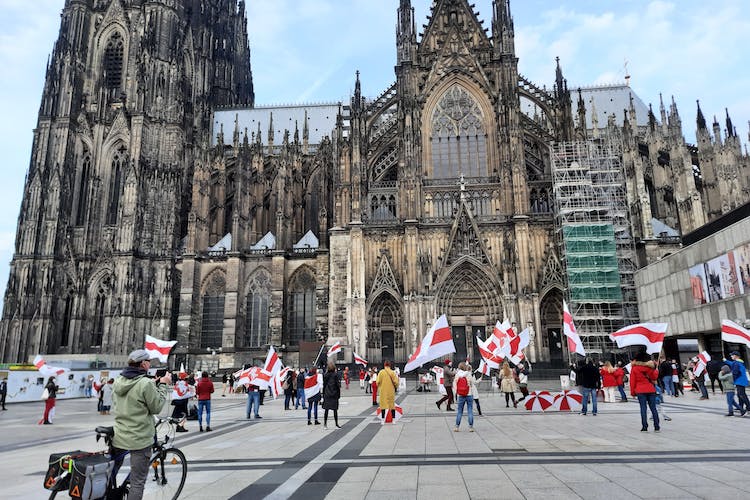
Worldviews and the Building of Cathedrals – and Civilisations
Would we still try to build things like cathedrals today?
In good measure, your view of life will determine what you do – or don’t do. If you have a very bleak and gloomy worldview or philosophy, you may not be too keen to invest time and energy into much of anything, be it building a new home or working on some other long-term project.
On the other hand, if you have a more optimistic and hopeful view of things, including the future, you might be more inclined to engage in such activities. Yes, these are generalities, but this can be true of both believers and nonbelievers. Your perspective on life can well determine what you do with it.
Consider for a moment the non-Christian. We know that, for the most part, religious people – including Christians – tend to have more children than non-religious folks. Larger families are not the sole domain of the religious, but generally, this is true – as research affirms. Atheists, for example, tend to have far fewer children.
If a secular person thinks this life is all there is, and they are consumed with fear and worry about all manner of things – be it COVID or climate change or overpopulation or whatever the latest scare is – they will be less keen on bringing about the next generation. ‘We are all doomed – we are all gonna die.’ If so, why bother having kids?
Existential Crisis
There is a real connection, in other words, between faith and demographics. Over a decade ago, an important book appeared by the economist and political commentator David Goldman. Called How Civilizations Die (Regnery, 2011), it looks at how cultures – just like people – can die from a loss of hope and a loss of a sense of meaning and purpose. At the time, I wrote this about it: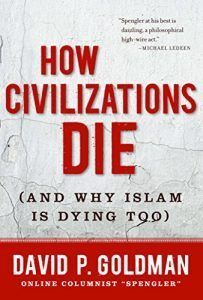
Says Goldman, “A good deal of the world seems to have lost the taste for life… Today’s cultures are dying of apathy, not by the swords of their enemies.” The degree of religious faith and human hope determine how nations fare. The more secular a nation is, the more likely its fertility rates will be plummeting.
A purely secular analysis will simply not do here: “Our strategic thinking suffers from a failure to take into account the existential problems of other nations. We think in the narrow categories of geopolitics, but we need to study theopolitics – the powerful impact of religious beliefs and aspirations on world events.”
I write all this because of a meme I recently found online. It shows a picture of the magnificent Cologne Cathedral in Germany and says this:
German poet Heinrich Heine was asked why men no longer build cathedrals. He replied: “People in old times had convictions; we moderns only have opinions. It needs more than an opinion to erect a Gothic cathedral.” Cologne Cathedral took 632 years to complete…
The question is, would people today engage in such long-term projects like this? Christians can also be asked this. I know I have to be careful here, because so many Christians want to go to war over their pet views on eschatology and the end times, but a few brief things can be mentioned.
Looking Ahead
One’s stance on theology and eschatology certainly can influence how a person thinks about things like cathedral building and civilisation building. Briefly and generally speaking, many in the premillennial camp will see things getting worse in this world, and may well be less inclined to bother with salvaging things.
Those holding to forms of postmillennialism will be more optimistic about the future, and what can be done with it. Sure, there are exceptions. As I often say, two key English evangelicals who were both up to their ears in social reform differed big time in their eschatology: Lord Shaftesbury was premil, while William Wilberforce was postmil. See more on this here.
One recent online debate about whether the great cathedrals would have been built by those committed to a premil view of things got a bit vigorous. Some tried to say that a premil view predominated then. Well, not quite: while chiliasm was held by many in the early church, it differed quite a bit from modern dispensational premil views, and by the time cathedrals were being built, postmil or amil views were in the ascendency.
Not meaning to run with just one version of events here, but some readers might want to take a look at a piece by Doug Wilson. He calls himself an “optimillennialist”, and this short article offers a bit of food for thought on these matters.
But as I say, I really do not want to rehash all those debates and revisit all those wars yet again! Yet there is some truth here about how eschatology can impact how we look at issues like culture-building and the like. And as I often remind folks, I prefer to go with Jesus here, Who told us to ‘occupy till He comes’.
That is, whatever our views are on end-time events, we all should be busy with the work of the Kingdom. As Martin Luther is reported to have said: ‘If I knew Christ was returning tomorrow, I would plant an apple tree today.’ Sure, if we knew for sure he was coming tomorrow, we might not start a major building project – like a Gothic cathedral. But we do NOT know for sure when he will return.
So we continue to be salt and light, and we continue to do the work the Lord has called each of us to do. Whether we will see any more great religious structures erected like the cathedrals of old remains to be seen. The Sagrada Familia basilica in Barcelona, designed by architect Antoni Gaudí (1852–1926), was begun in 1882 and is still not completed (it might be finished by 2040!).
But my general point here is that when a people have hope and a brighter view of the future (including the next life), that can result in all sorts of long-term projects being engaged in – even ongoing work on civilisations as well. Certainly, the Christian church of two millennia ago helped to give birth to Western civilisation.
The problem is, today, too many folks are more committed to seeing it torn down. But that is the stuff of another article. In sum, I for one, if I ever get back to Europe again, look forward to seeing many more of these magnificent structures. Yes I know, some Christians do not care at all for such things, but I have discussed that elsewhere.
___
Originally published at CultureWatch. Photo by Sonia Tack.
One Comment
Leave A Comment
Recent Articles:
23 October 2026
6.8 MINS
Hillsong UNITED’s Joel Houston reflects on fame, faith and the burden of ministry, questioning performative Christianity as he seeks a more authentic walk with God.

23 October 2026
13.1 MINS
Tasmania’s proposed conversion practices legislation raises serious questions about religious freedom, pastoral care and whether Christians can freely pray with those seeking to live according to their faith.
23 October 2026
3.1 MINS
The one who is worthy of it all is awakening his Church to be captivated by him, so that we will honour one another and share his gospel with humility and courage.
22 October 2026
2.9 MINS
Victoria Labor’s promise to fund free abortions has drawn a forceful response from Presbyterian leaders, raising profound questions about unborn life, government priorities and Australia’s moral direction.

22 October 2026
4.7 MINS
Western Australia’s proposed anti-discrimination overhaul has sparked warnings from Christian leaders that religious freedom, parental choice and faith-based schools’ ability to uphold their beliefs are at risk.

22 October 2026
2.9 MINS
An Israeli political candidate claiming a remarkable biblical identity has sparked questions about false messiahs, the Antichrist and how Christians should interpret prophecy.
22 October 2026
2.8 MINS
31 October is a historic day of reformation and revival. This end of month, let's gather together on this day which holds deep wells of revival, and ask God to do it again.



The wonderful cathedrals were an expression of faith in God. That they are no longer built reflects the decline in Christianity and Hope. Even my Scottish ex-Presbyterian husband, who had stopped believing in Christianity many years earlier, confessed to me he felt a ” Divine Power “in St Marks Basilica, Venice , and, “an aura of sanctity “in Milan’s cathedral .