



An Interview with Warwick Marsh about ‘Jesus: The Centre of It All’
After writing the foreword for ‘Jesus: The Centre of It All’, I interviewed Warwick Marsh, one of the co-authors, about the book’s central message.
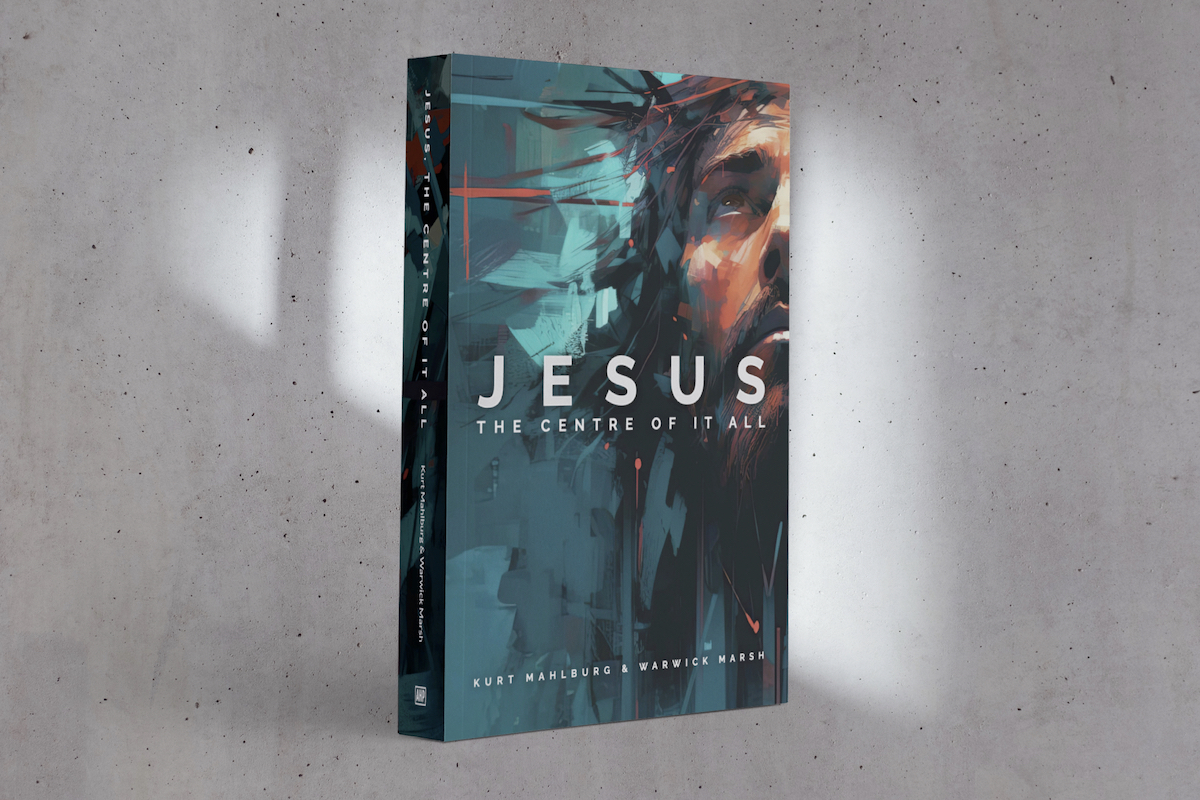
Recently, I interviewed Warwick Marsh about his new book Jesus: The Centre of It All, which he co-authored with Kurt Mahlburg. I had the opportunity to write the foreword for this new book, which appears below.
During my interview with Warwick, I was particularly interested in why Warwick believes Jesus is the most important figure in the history of the world. Check out our conversation below or on Spotify.
The Promised Christ
The remainder of this article is from the foreword of Jesus: The Centre of It All. Buy the book here.
Of the seven sayings Jesus uttered from the cross, only one is found in multiple Gospels. When it is, the author adds emphasis by also recording it in the original Aramaic.[i] Which saying am I referring to? The time Jesus said, “Eloi, Eloi lama sabachthani,” which means, “My God, my God, why have you forsaken me?”[ii]
Even when I was a child, I remember thinking, Why would Jesus say such a thing? Was He doubting what God the Father had planned for Him to do? I later came to realise the exact opposite was the case. Jesus was quoting from the opening verse of Psalm 22. This was a short-hand way of referring to the entire Psalm—a Psalm that chronicled how Israel’s King would suffer. What Psalm 22 described was eerily similar to what Jesus, as the promised Christ, experienced at the cross. Consider just some of the striking parallels:
- People insulted and mocked Him, challenging Him to save Himself.[iii]
- He unjustly experienced all kinds of horrific physical suffering, even though He was completely innocent of any wrongdoing.[iv]
- They pierced His hands and feet, and cast lots for His clothing.[v]
- Despite all this, He would ultimately be vindicated by conquering death itself, with people from every nation coming to worship Him.[vi]
- To top it all off, even future generations would be told about “His righteousness” and of His glorious victory—for “He has done it!”[vii]
Jesus Split Time in Half
There can be no doubt that the person and work of this obscure carpenter from Nazareth has changed the course of human history. Time itself is now rightly divided between B.C. for ‘Before Christ’ and A.D. for ‘Anno Domini’. The latter is not, as many people assume, an acronym for ‘After Death’. It is from the Latin and means, “in the year of our Lord”. Why? Jesus rose from the grave on the third day after His death, and subsequently ascended into heaven. So, every year since continues to be the day in which Jesus is Lord! We cannot escape the centrality of Jesus in our world.
If what I have written in any way whets your appetite for more, then you are in for a treat. Kurt Mahlburg and Warwick Marsh have written one of the most accessible, insightful and personable accounts as to why Jesus should be considered the “centre of it all”. A quick glance at the table of contents tells you why this is so. For Jesus is: the Messiah of Israel; God in Flesh, Friend of Sinners, Radical Revolutionary, Way to God, Saviour of All, Good Shepherd, Light of the World, Christ in You, and finally, the Coming King.
You may not agree with some—or even any—of those claims right now. But just give the authors the chance to present their case. They do so in a way that is compelling without being narrow-minded. These are men who not only love Jesus, but other people as well.
Take and Read!
In A.D. 386, the famous church leader Augustine heard the voice of a child singing a song in Latin: “Tolle, lege”—or in English, “take and read”. Augustine quickly perceived that it was actually God speaking to him through that child’s song.[viii] He found a Bible, opened it up and read the first passage he saw. Providentially, it was Paul’s letter to the Romans. Augustine said his heart was flooded with light, and he immediately came to a saving faith in God.
My prayer is that you will have the same kind of experience as you read this book. Just like Augustine did, I hope you “take and read”—because the person about whom Kurt and Warwick write is still alive today. And He can change your life, both now and into all eternity.
Buy Jesus: The Centre of It All here.
[i] Luke 23:34; Luke 23:43; Luke 23:46; John 19:26-27; John 19:28; John 19:30.
[ii] Matthew 27:46; Mark 15:34.
[iii] Psalm 22:7-8; Matthew 27:41-44; Luke 23:32-43.
[iv] Psalm 22:14-15; Isaiah 53; John 19:28-29.
[v] Psalm 22:16-18; Luke 24:39; Matthew 27:35.
[vi] Psalm 22:27-29; Luke 27:50-53; Matthew 28:16-20.
[vii] Psalm 22:30-31; Mark 16:19-20; John 19:30.
[viii] Psalm 8:2; Matthew 21:16.
Recent Articles:

18 October 2026
2.7 MINS
Every season of life belongs to Christ, and we don't retire from discipleship as we grow older. In fact, our older years hold unique gifts for the younger generations.

17 October 2026
3.4 MINS
Seeking the face of God means surrender, laying aside our agenda and wants. Revival begins when we want God himself more than we want the outcome.
16 October 2026
3.3 MINS
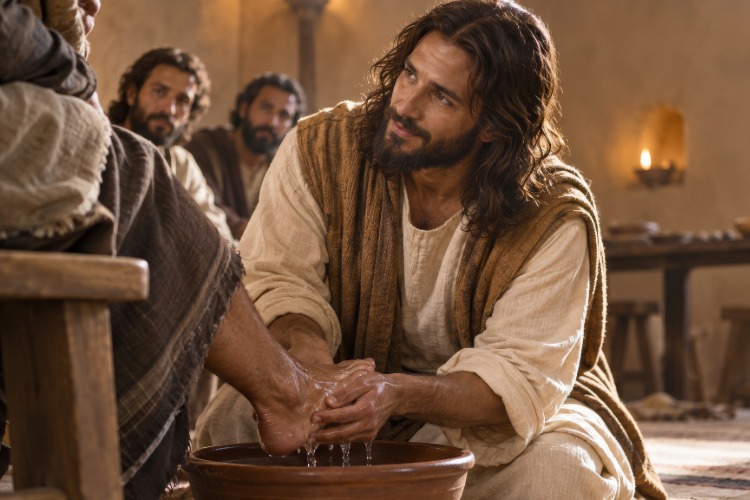
Jesus is calling us to love one another “just as I have loved you”. And if the Church does awaken to that agape (love), the world will see a great and powerful witness to Christ and his kingdom.
15 October 2026
3.6 MINS
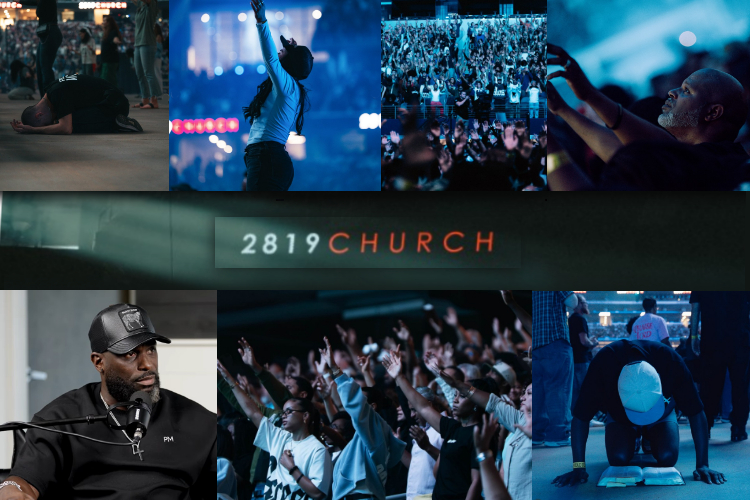
An 80,000-strong gathering in Texas signals a hunger for revival, as Pastor Philip Anthony Mitchell warns that Christian indifference could leave future generations without the faith.

15 October 2026
4.2 MINS
Many Australian Christians don’t know a single Aboriginal person. Robyn Murray argues that reconciliation begins with honest history, prayer and a shared life in Christ.

15 October 2026
6.1 MINS
Historian Frank Furedi warns that the West is waging a war against its own past, censoring books, rewriting history and severing future generations from their heritage.

15 October 2026
7.2 MINS
A man’s death in a tiger enclosure sparks chilling online reactions, exposing a growing willingness to judge human worth by usefulness, behaviour and ideology.


