


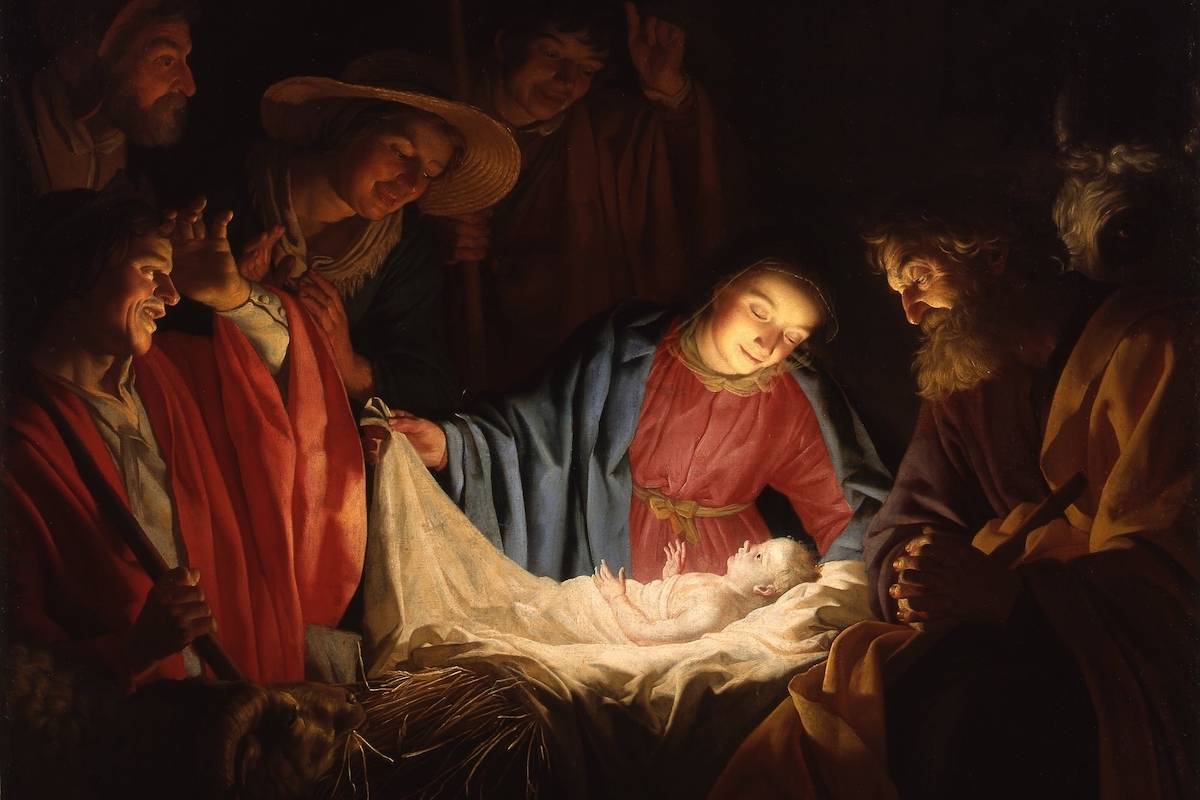
‘Rejoice in the Birth of a Brown-Skinned, Middle-Eastern, Undocumented Immigrant’?
Trendy phrases are often wheeled out at Christmas time suggesting the season can be wokeified. But Christmas is above politics. It belongs to all of us.
“Rejoice in the birth of a brown-skinned, Middle-Eastern, undocumented immigrant.”
You might have seen this message around the place in the lead-up to Christmas. Among its implications is the notion that the woke, thanks to their superior values, are are better placed to welcome baby Jesus at Christmas time.
I guess if everything can be wokeified, then surely the Christmas story is fair game, too?
Well, wait a minute.
As we read the account of Jesus’ birth in the Gospel of Matthew, we discover first of all that Jesus was a Jew. That makes him white-adjacent — and a coloniser. Problematic.
Then we’ve got an unplanned pregnancy, with all parties simply assuming Mary will go through with it, and no one defending her reproductive freedom.
Not to mention the account is peppered with patriarchal presumptions: a virgin betrothed, by her father no doubt, to a man she barely knows, who has unilateral rights to divorce her for any prenuptial promiscuity.
Then there’s the angel who has the gall to assign a gender to a baby yet unborn.
And don’t forget the kings journeying from the east, parading about their wealth and privilege, while inflicting cruelty on their caravan of camels — which no doubt emitted far too much methane and were to blame for most of the nativity’s carbon footprint.
You get the point.
I am not at all convinced that wokery would have ensured a red carpet was rolled out for Jesus, or even that his manger was padded with an extra layer of hay.
People of Every Persuasion Had No Room for Jesus
To be sure, at that first Christmas, Jesus wasn’t given a particularly great welcome by the non-woke either. Rural-conservative Bethlehem’s hospitality left much to be desired: no room in the inn, an animal shelter doubling as a maternity ward. Then King Herod, a fascist if you’ve ever met one, unleashed his bloody slaughter of the innocents in an attempt to snuff out any rival to his throne.
No, one of the key revelations in the Christmas story is that characters of every race, status and political persuasion had no room for Jesus.
That’s why the virtue-signalling rejoinder I quoted in the title rings so hollow.
In the words of a favourite Christmas song of mine by Casting Crowns, “there was no room for him in the world he came to save”.
Part of the human condition is the misguided belief that we don’t need God — certainly not a God born to peasants in a shed that smelt of donkey dung.
Let Every Heart Prepare Him Room
But the Christmas story is also about the hearts that opened up to make room for baby Jesus.
Joseph enduring the shame of marrying his pregnant fiancée out of selfless love for both mother and child.
Mary in her beautiful Magnificat declaring hope over fear: “My soul glorifies the Lord and my spirit rejoices in God my Saviour, for he has been mindful of the humble state of his servant.”
The support of extended family — Elizabeth and Zechariah most prominently — rejoicing with the young couple at what lay ahead.
Shepherds keeping watch over their flocks by night, who responded without hesitation on hearing the promise of the angels. “Let’s go to Bethlehem and see this thing that has happened, which the Lord has told us about.”
And of course the wise men with their impressive cross-continental odyssey and lavish gifts.
Here’s the point: the birth of Jesus is an invitation to people of every background.
Christmas is above politics, more enduring than passing fads, and belongs not to any particular social tribe but to the whole human race.
All that matters is how each heart responds.
To quote several better-known and dearly loved Christmas carols, “Let every heart prepare him room,” and, “Where meek souls will receive him still, the dear Christ enters in.”
God bless you as you open your heart wide to Jesus this Christmas.
Originally published at Mercator. Image credit: Gerard van Honthorst, “Adoration of the Shepherds”.
One Comment
Leave A Comment
Recent Articles:
18 October 2026
2.7 MINS
Every season of life belongs to Christ, and we don't retire from discipleship as we grow older. In fact, our older years hold unique gifts for the younger generations.
17 October 2026
3.4 MINS
Seeking the face of God means surrender, laying aside our agenda and wants. Revival begins when we want God himself more than we want the outcome.

16 October 2026
4 MINS
A desperate Victorian Labor Party is peddling taxpayer-funded abortions as free “healthcare”. In a shameless attempt to stay in power, they're willing to do anything — including killing the unborn and forcing taxpayers to pay for it.

16 October 2026
4 MINS
Katie Zacharia’s first days as White House Press Secretary have sparked fierce media criticism, but her remarkable testimony of surviving an abortion attempt tells a deeper story.

16 October 2026
3.4 MINS
Australia’s proposed digital duty of care laws promise greater online safety and increased user control by switching off algorithms, but critics warn they could give ministers sweeping powers to restrict lawful content and threaten free speech.

16 October 2026
2.6 MINS
Euthanasia accounted for 4% of all deaths in Belgium in 2025, with growing numbers involving people who were not terminally ill, dementia patients and psychiatric conditions.
16 October 2026
3.3 MINS
Jesus is calling us to love one another “just as I have loved you”. And if the Church does awaken to that agape (love), the world will see a great and powerful witness to Christ and his kingdom.



No Kurt, Joseph didn’t marry his ‘fiancee’. There was no such thing as an ‘engagement’ in New Testament times. Joseph and Mary were already married (‘betrothed’) when the angel visited Mary, before they had begun to live together. Her Heavenly Father would never have put Mary in such an invidious position as you suggest. You have done such a lot of research in other areas but you need to pay more attention to the circumstances of Jesu’s conception and birth. Perhaps a good Greek/English interlinear New Testament would help. Please don’t rely on shoddy modern translations of the New Testament.