



LGBT ‘Conversion Therapy’ Reduces, Not Increases, Suicide Risk: Study
Activists claiming that so-called ‘conversion therapy’ increases a person’s suicide risk have it backwards, according to new research.
In a finding that turns conventional wisdom on its head, a researcher has found that so-called “conversion therapy” aimed at reducing unwanted homosexual or lesbian attraction makes people less likely to consider suicide than those who continue to live the unbridled LGBTQ lifestyle.
Although transgender activists have linked conversion therapy — which its advocates prefer to call “change-allowing talk therapy,” or “Sexual Orientation Change Efforts” (SOCE) — the studies have gotten the results backwards, because they counted suicide attempts or suicidal ideation patients had before receiving conversion therapy care.
“‘Conversion’ therapy actually reduces gay suicide,” said Rev. Dr. Paul Sullins, a Roman Catholic priest and former professor of sociology, at a press conference attended by The Washington Stand. Those who claim “conversion therapy” increased the likelihood of suicide “made the fundamental error of attributing an effect to a cause that happened before the event,” he said. “We’ve known since Aristotle that causes have to precede effects.”
“The problem with their study is that most of the suicide morbidity that the participants expressed happened before they went” through change-allowing talk therapy. Nearly two out of three people who experienced suicidal ideation and half of those who had planned, intended, or attempted suicide did so before receiving therapy aimed at reducing unwanted same-sex attraction, Sullins’s research found.
“By their backwards logic, lung cancer could cause habitual smoking,” Sullins wrote. “Imagine a study that found … most people using anti-depressant drugs also suffered depression and breathlessly argued we should ban anti-depressants, because people who are exposed to them have more depression. That kind of study would have the same kind of backwards logic” as studies that “attempt to show us the harm” of conversion therapy.
The Key Fact Neglected By Previous Studies
Researchers worked with the same survey that asked whether LGBTQ-identifying people who received conversion therapy care ever thought about committing suicide, made a plan to take their own lives, intended to carry it out, or actually attempted to commit suicide. But the professor and cleric corrected previous studies by taking into account post-SOCE survey respondents’ answer to one question: “About how old were you the last time you received treatment to change your sexual orientation?” By correlating their answer to the age of their suicidal depression, he could eliminate cases that predated the LGBTQ-identifying person’s experience with SOCE.
After controlling for pre-existing suicidal ideation, Sullins found:
- After therapy, 36% of all people who had experienced suicidal ideation attempted suicide — but only 10% of those who had been through therapy;
- 43% of those who had made a suicide plan subsequently attempted suicide, compared with 10% of post-conversion therapy patients;
- 57% of those who intended to commit suicide attempted to take their own lives, compared to 12% of so-called conversion therapy patients; and
- 37% of those who had previously attempted suicide tried again, compared to 27% of those who had been through “conversion therapy.”
He later looked at the American Psychological Association and U.K.’s Government Equalities Office studies on the same topic and “found that all of them … had made the exact same mistake, or misbehavior.”
A separate researcher — Dr. Christopher Rosik, a clinical psychologist at Fresno Pacific University — reviewed all studies on the topic since 2009 and found none of the studies separated preexisting suicidal behavior from post-SOCE behavior.
Another Overlooked Fact in Prior Studies
The researchers also identified a second way studies skewed results against conversion therapy care: Dr. Rosik found nearly none of the studies included people who no longer identify as LGBTQ. “If you have a therapeutic effort … to change sexual orientation, and you only sample persons who have been through that effort who currently identify as LGBT, you’re systematically excluding from the sample anyone for whom that therapy may have been successful,” said Rev. Sullins.
Yet previous studies — and numerous stories, many later found to be invented — led 27 states to ban “conversion therapy” care/SOCE efforts. Among those who claimed to have experienced torture in the name of SOCE was Sam Brinton, who until recently worked for the Biden administration.
“Sam Brinton — a nonbinary, cross-dressing thief and liar — has ruined the lives of countless people,” said Dr. Jennifer Roback Morse, the president and founder of the Ruth Institute, which hosted the press conference. “He claimed that he was subjected to psychological and physical torture to overcome his homosexual tendencies” in testimony before the United Nations Committee Against Torture (CAT) in 2014.
“A specific ban on talk therapy would be unnecessary. Physical torture is already illegal,” said Dr. Morse. “Banning client-chosen, client-directed counseling is cruel.”
The Failure of Secular Approaches
Some states banned the practice by claiming it is ineffective. Despite widespread belief that sexual preference is inborn, such secular and pro-LGBTQ groups as the American Psychological Association state there is no consensus on what factors influence sexual attraction. Studies show those molested more likely to identify as gay or lesbian.
The American Psychological Association’s “Handbook of Sexuality and Psychology” noted “research on sexual minorities has long documented that many recall having undergone notable shifts in their patterns of sexual attractions, behaviors, or identities over time.” The Ruth Institute points to numerous cases of people no longer feeling controlled by unwanted feelings of same-sex attraction, including Charlene Cothran, Paul Darrow, Elizabeth Woning, and Hudson Byblow.
The U.S. Supreme Court this month declined to hear a case brought by a licensed therapist that Washington state’s ban on so-called “conversion therapy” violates the First Amendment. The free speech case, brought by the Alliance Defending Freedom, had the support of 12 states and Justices Clarence Thomas, Samuel Alito, and Brett Kavanaugh, who would have granted the petition but lacked a necessary fourth vote.
Others claimed SOCE/conversion therapy care proves too effective. These therapeutic practices “seek to eradicate same-sex sexual orientations and promote heterosexual orientations. This is already in and of itself a violation of both sexual rights and human rights,” wrote Jenna Marie Strizzi and Ezio Di Nucci. “The potential for these conclusions drawn by Sullins to be used nefariously in political and legislative debates can put sexual minority individuals in real danger if legislation allowing for these harmful practices is implemented or just debated.” (Emphasis added.)
“This is exactly how a dark curtain falls on the formerly bright light of science,” Sullins replied.
Dissatisfaction with the LGBT Lifestyle
Whatever the facts, there is clearly widespread dissatisfaction with the LGBT lifestyle. The data fueling both studies found that 10% of people who identify as LGBTQ agreed with the statement, “If someone offered me the chance to be completely heterosexual, I would accept the chance.”
The Biden administration has linked LGBTQ-identification, and behavior, with poor mental health. “LGBQ+ students, and students who had any same-sex partners were more likely than their peers to experience poor mental health and suicidal thoughts and behaviors,” said a report released by the Biden administration’s Centers for Disease Control and Prevention (CDC) in February.
Originally published at The Washington Stand. Image via Pexels.
Recent Articles:

13 October 2026
2.6 MINS
Allegra Spender’s proposed bill reignites debate over discrimination protections, religious freedom and the right of faith-based schools to uphold their beliefs and values.

13 October 2026
3.9 MINS
Tasmania’s proposed conversion practices law raises serious concerns for churches, parents and faith-based schools, with broad definitions, severe penalties and uncertain protections for religious freedom.

13 October 2026
5.5 MINS
Stephen Baldwin’s journey from drug addiction to sobriety, Christian faith and family life reveals how surrender, daily discipline and renewed hope transformed his life.

13 October 2026
2.8 MINS
The church in Ephesus had so much going for it. Yet despite their hard work, perseverance, endurance, and discernment, there was something deeply wrong: they had left their first love.
12 October 2026
4.6 MINS
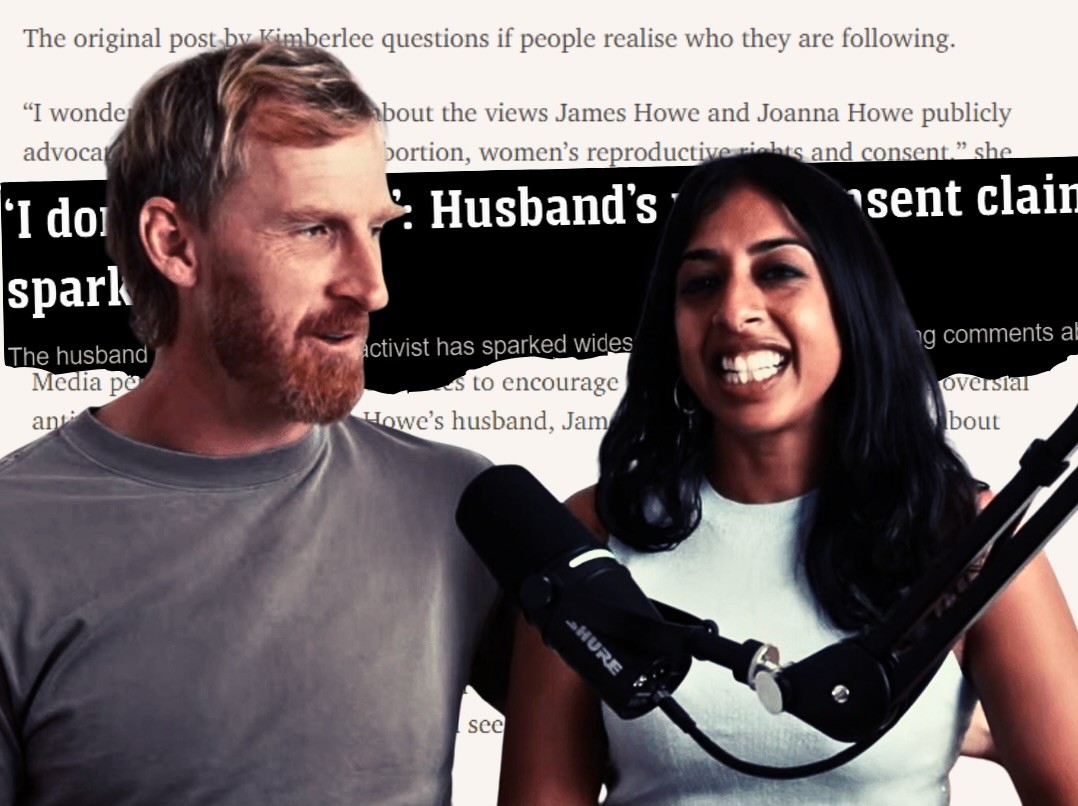
Learn how journalists use loaded language, selective quotes and misleading headlines to shape public opinion, using a controversial report about James and Joanna Howe as a case study.

12 October 2026
12.9 MINS
God’s judgement can seem difficult to reconcile with His goodness. But Scripture presents God’s perfect justice as something we can celebrate — and His present offer of mercy through Jesus as the good news.

12 October 2026
3.1 MINS
The proposed livestream of Nidal Hasan’s execution has reignited debate over justice, deterrence and public accountability, with critics comparing American justice to ISIS propaganda.


