



Cuban Christians and the Fight for Freedom of Expression
By Yoe Suarez
ICLEP is one of the most important independent organisations for freedom of expression in totalitarian Cuba. Meet Pedro, a brave evangelical Christian found among their number.
Pedro Luis Hernández sensed that something was wrong.
The National Revolutionary Police (PNR) patrol stopped near him on a street in the Playa municipality of Havana, around 9:40 in the morning. One of the soldiers demanded that he identify himself. The independent journalist extended his card. The uniformed officers made a call, and shortly thereafter, an officer from the Political Police appeared on the scene.
The work trip of the training director of the Cuban Institute for Freedom of Expression and Press (ICLEP) had been discovered. They took him back to the National Bus Terminal, where he was interrogated in an office. Why had he gone to Havana? Who sent him? Pedro Luis was silent again and again. In frustration, an officer pounded the table. With the blow still resounding, Ernesto, one of the officers, told Pedro Luis it was a “gusano” (“worm” in Spanish – a term the regime uses for those who oppose the system).
Meanwhile, in her hometown of Sancti Spíritus where Pedro Luis had left hours before, Orlidia Barceló was waiting for a security call that her husband would make. The agreed-upon time — one in the afternoon — had passed. The phone never rang.
Then, ICLEP launched an alert that demanded information from the military and explained: Pedro Luis “is an extremely peaceful person, he is a Christian and has no enemies, except for the repressors of the Cuban dictatorship, who persecute him to desist from the exercise of independent journalism.”
Pedro Luis studied philosophy in the Cuban education system, with a Marxist-Leninist approach typical of the decades before the fall of the Soviet Union. Little by little, he abandoned that paradigm, and found another lens to look at the world without resentment: faith.
Working for Justice
Today, he divides his time as director of ICLEP and leader of an evangelical congregation in Sancti Spíritus, which the state refuses to recognise. “We were born in the Full Gospel Church of God in Cuba years ago, but in 1995, we founded and led the independent Manantiales ministry in the desert, and my wife and I have remained working there,” he explained.
His work at ICLEP began in 2013 in Jatibonico. Both he and Orlidia wrote opinion articles and comments, initially under a pseudonym. Pedro Luis considers that there is a relationship between his beliefs, the work through journalism, and the opposition leadership: “A man of faith must be linked to just causes, and project himself against any injustice. In the times we live in, militancy as an evangelical believer and activism for the good of the country cannot be separated. ‘We cannot remain silent.’”
For example, one succinct article of his warned about the country’s surrender to the Russian business community through a leap toward oligarchy by the Cuban leadership. For Pedro Luis, that could happen in Cuba. Although it may seem outdated, the island’s former status as a Soviet satellite continues to mark the island. “New times impose radical changes, not mere reforms, whose intentions are different, very different from what Cubans expect. Let’s not be deluded; history seems to repeat itself, and the copies will only reflect the original.”
The reports from ICLEP are echoed in lists of organisations such as Reporters Without Borders, which have pointed out for years that the Cuban State was a violator of free expression. The Committee to Protect Journalists condemned the imposition by the communist regime of a new penal code, which “could seriously harm independent journalism.”
Back at the National Bus Terminal, in the midst of this oppressive atmosphere and the commotion on the networks, Pedro Luis’s cell phone was confiscated, and he was prohibited from returning to Havana under threat of legal consequences. After four hours of detention, officer Ernesto took him to a platform, and there he was sent back to Sancti Spíritus.
Speaking Up for the Common Folk
In that city, his wife Orlidia has directed El Espirituano ICLEP’s provincial newsletter since 2018, and coordinates the work of more than a dozen citizen reporters who see the publication as a way to expose the daily problems caused by Castroism in their locations.
ICLEP, founded in 2012, is the first and only nonprofit organisation of its kind that has managed to create and sustain a network of community media focused on citizen journalism thanks to clandestine distribution, both digital and printed. It has bulletins in Matanzas, Havana, Mayabeque, Artemisa, Pinar del Río, Villa Clara, and Sancti Spíritus.
The hyper-locality of Orlidia’s reporting, its network, and others of ICLEP present a different view from those expressed in large reports before international mechanisms. They focus on the neighbourhoods, the common people, and those who are fed up with scarcity and lack of freedom. The regime does not take lightly that basic and seemingly minuscule space. Under totalitarianism, free expression must be nullified by any means.
After covering a car accident in March 2020, the home of Orlidia and Pedro Luis — also home to Manantiales en el Desierto — was raided without a court order. That night, combined forces of the PNR and the Political Police broke into the house, searched the place, and arrested Pedro Luis, who was detained for 24 hours in a cell in the Sancti Spíritus Vivac.
Beyond their daily work, freedom of expression has also been endorsed by the pastoral couple of Orlidia and Pedro Luis. They signed the Declaration of the International PEN Club in July 2021 against the state’s systematic harassment of writers, artists, and journalists, among other civic documents.
Christian thinker Michael Ots notes that justice and the desire for freedom of expression are products of the Christian worldview, which “provides the philosophical foundations for the equality of all people, since we are created in the image of God and have infinite value.” For Ots, Christianity “has shaped our culture to such an extent that different points of view and ideas can be freely expressed and believed. This tolerance is not universally enjoyed by any stretch of the imagination.” Thus, it is not surprising that the most important independent organisations for freedom of expression in totalitarian Cuba, like ICLEP, have evangelical Christians among them.
___
Originally published at The Washington Stand. Image via Unsplash.
One Comment
Leave A Comment
Recent Articles:
8 October 2026
3.6 MINS
John Anderson warns that Australia’s decline is rooted in spiritual and cultural disintegration, calling for a recovery of Christian foundations, social cohesion and national purpose.
8 October 2026
1.6 MINS
A blackout at Australia’s $150 million Pre-COP climate summit in Fiji delivered an awkward lesson in energy reliability to delegates preaching the renewable transition.
8 October 2026
4.1 MINS
Aboriginal communities in Central Australia already know the gospel message. What they need now, Robyn Murray writes, is discipleship, encouragement and Christians willing to pray and participate.
8 October 2026
4.1 MINS
Italy honours St Francis of Assisi 800 years after his death, celebrating a saint whose devotion to Christ, radical simplicity and message of peace continue to shape generations.

8 October 2026
4 MINS
Christ’s authority and concern is not limited to the four walls of the church. They extend to the life of the nation, and we are called to take up our part in seeking its righteousness.
7 October 2026
3.6 MINS
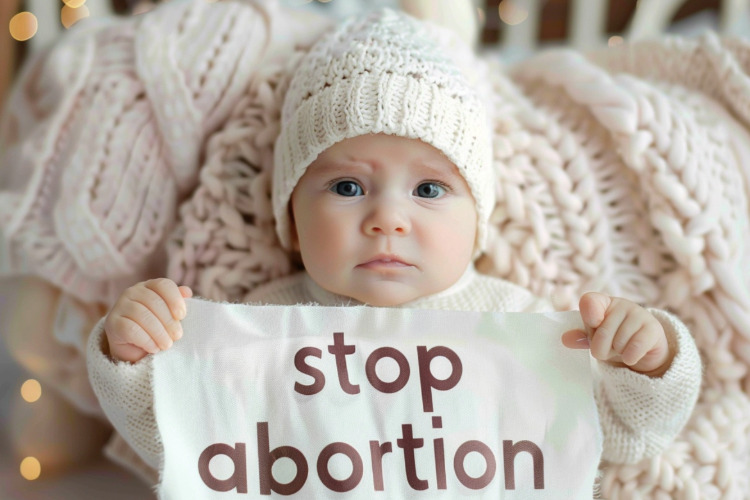
Victoria’s 18th March for the Babies will bring families together to peacefully affirm the value of every human life and call for a cultural change towards life.
7 October 2026
1.5 MINS
Across the Middle East, North Africa and Anatolia, Christianity once shaped entire civilisations. Could Britain’s Christian heritage likewise become a memory rather than a reality?



Castro is long since dead , but, Cuba is still a Police State.A good reason not to travel there. We should boycott travel and trade with all Communist or totalitarian countries, or, charge them high prices.