Strength, Weakness, and the God We Serve
Forget about your own strength – we need HIS.
Sometimes, for Christians, the best thing they can do is utter phrases such as this: ‘I just can’t go on anymore’ or ‘I can’t take it any longer’ or ‘I am coming to the end of my rope’.
When people come to the end of themselves, when people realise that they are not strong enough or good enough or talented enough or moral enough, and they simply cry out in despair, that is a very good place to be in.
When believers come to see that they are NOT sufficient in themselves, that leaves them with only one way left to turn – to God. Of course, they always should have been facing that direction, but it is just too easy to take our eyes off God and think that we have it all together, and we can do things by our own strength and ability. But that is dead wrong.
You see, it is a deep biblical truth and a vitally important principle that God works through our weaknesses. “His strength is made perfect in our weakness,” as Paul says in 2 Corinthians 12:11. That must always be the way it all works. It is His strength, not ours, that matters.
If we think that all the good things we do for God are because of our own strength, or wisdom, or ability, or whatever, then we easily slip into pride. God always resists the proud, so He has to humble us until we acknowledge that it is HIM, and HIS strength that we must rely on continuously.
So rejoicing in our weaknesses is a pretty good place to be in. Here I want to draw your attention to two individuals where we see these truths being played out – one negatively and one positively. One involves a king of ancient Israel, and the other involves a contemporary Christian woman.
Cautionary Tale
In 2 Chronicles 26, we read about the reign of King Uzziah in Judah. He started out quite well, as we read in the first five verses:
And all the people of Judah took Uzziah, who was sixteen years old, and made him king instead of his father Amaziah. He built Eloth and restored it to Judah, after the king slept with his fathers. Uzziah was sixteen years old when he began to reign, and he reigned fifty-two years in Jerusalem. His mother’s name was Jecoliah of Jerusalem.
And he did what was right in the eyes of the Lord, according to all that his father Amaziah had done. He set himself to seek God in the days of Zechariah, who instructed him in the fear of God, and as long as he sought the Lord, God made him prosper.
However, what we find in verses 16-21 tells us that he sadly went off the rails later in life:
But when he was strong, he grew proud, to his destruction. For he was unfaithful to the Lord his God and entered the temple of the Lord to burn incense on the altar of incense.
But Azariah the priest went in after him, with eighty priests of the Lord who were men of valor, and they withstood King Uzziah and said to him, “It is not for you, Uzziah, to burn incense to the Lord, but for the priests, the sons of Aaron, who are consecrated to burn incense. Go out of the sanctuary, for you have done wrong, and it will bring you no honor from the Lord God.”
Then Uzziah was angry. Now he had a censer in his hand to burn incense, and when he became angry with the priests, leprosy broke out on his forehead in the presence of the priests in the house of the Lord, by the altar of incense.
And Azariah the chief priest and all the priests looked at him, and behold, he was leprous in his forehead! And they rushed him out quickly, and he himself hurried to go out, because the Lord had struck him.
And King Uzziah was a leper to the day of his death, and being a leper lived in a separate house, for he was excluded from the house of the Lord. And Jotham his son was over the king’s household, governing the people of the land.
Emphasis belongs on verse 16: “As he grew strong, he grew proud, to his destruction.” But let me be clear here: in one sense it is good to be strong. It is good to be a strong king, a strong parent, a strong Christian or a strong worker. But what happened to Uzziah was that he relied on his own strength and forgot the Lord.
In particular, as Eugene Merrill explains, he sought to do things his way, instead of God’s way:
Uzziah’s very strength led to his weakness and to the indictment closing out an otherwise illustrious career. Here, however, there is no hint of moral failure but what appears to be an egregious crossing of well-marked boundaries of authority and responsibility. He became “haughty” and entered the temple to offer incense.
He was stopped in his tracks by the bold but proper high priest Azariah and eighty of his priestly cohorts who reprimanded him by reminding him of Torah limitations to his liturgical rights (Num. 16:39-40). They demanded he leave the holy precincts immediately because he was acting in violation of Torah. Failure to do this would, among other things, remove him the “glory of the Lord God” (v. 18).
That is, there can be no glory in attempting to worship Yahweh in a manner inconsistent with His word, and therefore Uzziah’s usurpation of privilege reserved to the priestly office would result in his loss of the special glory that inhered in Davidic royalty.
Uzziah’s sin, then, was not in his being in about the temple, but in offering incense, a rite limited to only Aaronic priests. Uzziah, indignant over his insubordination, went into a rage but at that moment was struck by leprosy…
Peter Leithart in his commentary speaks further to this, highlighting the great reversal that had taken place:
Uzziah experiences his own reverse exodus and reverse conquest. Leprosy is like an Egyptian plague, and Uzziah’s life is marked by this plague for the rest of his life. He is cast out – not from the land but from the temple. Stricken with leprosy, he cannot even assemble in the temple courts for worship or return to his own palace.
With Uzziah living in a separate house, his son Jotham takes over royal responsibilities. Even in death Uzziah is excluded: he is buried with his fathers, not in the city of David, but in the “field of the tomb,” since he is a leper.
Uzziah’s sin throws his life into reverse. He begins like a David, fighting and building and organising and growing and harvesting. Because he acts with an “exalted heart,” he dies like Saul, a king who committed a sacrilege and was excluded from royal privileges. Uzziah is an Adam, seizing forbidden privileges. His life limps to the end in a series of Adamic exclusions.
Kenosis
Contrast the sad story of Uzziah with that of one vibrant Christian woman who would have every reason to be angry with God and seek to shun him. Most of you know the story of Joni Eareckson Tada. The adventurous young girl had a diving accident when she was just 17, became a quadriplegic as a result, paralysed from the shoulders down.
For 57 years now, she has been confined to a wheelchair, but she has shared her story with millions of people worldwide in books, speaking engagements, interviews and so on. Those who do not know all that much about her can find out more about her incredible story and massive Christian witness here.
I mention her because I recently saw her on television giving yet another interview. Not too many years ago, she appeared on the Christian show, A Very Tall Man, hosted by Gary Hoogvliet. The moving 27-minute interview can be seen here:
Especially at the 11-minute mark and beyond she speaks of her own weakness and constant need of Christ. At one point, the host says, “You seem so strong, Joni… there is such a strength about you.” (14:52 mark)
She replies:
“I am an extremely weak person. I hate this disability. My flesh doesn’t like it one bit. But that’s my secret: because when I am weak, and when I admit it, then I can be strong in Christ.”
She continues:
“I wake up in the morning and say, ‘I cannot do this. But Jesus, You can, so do it through me… I can’t do it, so show up, Jesus.’ So you see, my weakness has become the key to my strength, and I think that’s what the whole New Testament is all about. That’s why the apostle Paul then says, ‘OK then, boast in your weakness, glory in your infirmity, delight in your limitation, for then you know Christ’s power rests on you’.”
Along these same lines, here is one quite powerful quote from her 2010 book, A Place of Healing. She speaks of how, in her early years of paralysis, she wanted to be independent and self-sufficient. As such, she was a reverse image of Uzziah: she started out proud and independent, but ended up humble and fully dependent. She says this: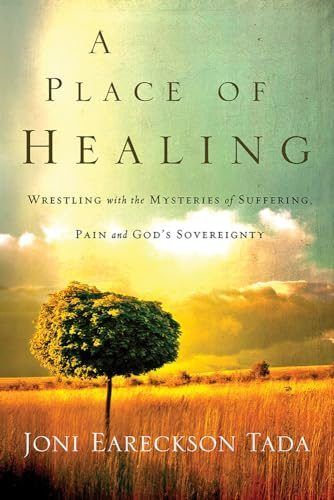
The truth is, I didn’t want anyone to see me as “weak” or “needy.” As a consequence of this mind-set, there was one particular Scripture verse I never wanted anyone to quote in my presence. It was 1 Corinthians 12:23, where Paul says to treat the weaker parts of the body with special honour.
I looked at that verse as nothing more than a pity-the-poor-unfortunate perspective on people like me in wheelchairs. Treated with special honour? No, sir. Not me. I was young and strong. I was on my own. I wasn’t weak. I could handle it. Get the picture?
Years later, God’s wisdom began to seep into my soul — it takes a while sometimes, doesn’t it? — and I began to see the real truth behind 1 Corinthians 12. It’s not a pity-the-poor disabled verse at all.
On the contrary, I think the whole chapter makes the point that we are all weak, all needy, whether we like to admit it or not. And what is it that we need? We need each other in the body of Christ. It just happens the weaknesses of some people (like me) are more evident.
People who have obvious disabilities more readily get what it means to be weak and feel needy. As a result, maybe the light goes on a little sooner for us when we hear the Apostle say, “I will boast all the more gladly about my weaknesses, so that Christ’s power may rest on me… For when I am weak, then I am strong.” (2 Cor. 12:9,10)
There’s that theme again: strength out of weakness. Profound life direction growing right out of seemingly immovable obstacles in our path. (pp. 83-84)
Amen to all that. She knows all about the strength of Christ and she knows full well about her own weakness and inability. And that is the place all Christians need to be in. We either exalt in our infirmities, weaknesses and utter dependency, or we foolishly try to make it on our own.
That latter path is a recipe for destruction. Let us learn from both Uzziah and Joni.
___
Republished with thanks to CultureWatch. Image courtesy of World.
Recent Articles:
11 October 2026
2.6 MINS
Jesus offers us intimate friendship, which produces great joy as we walk closely with him.
10 October 2026
4.1 MINS
When Jesus rebuked the Laodicean church, this was not a sign of his lack of love, but proof of it and how greatly he longs to reward and bless us. He is knocking — will we answer?
9 October 2026
1.3 MINS
Season 6 of The Chosen is releasing next month, and until 15 November, your church has the opportunity to host a free pre-release screening of Episode 1. Here's how.
9 October 2026
2.9 MINS
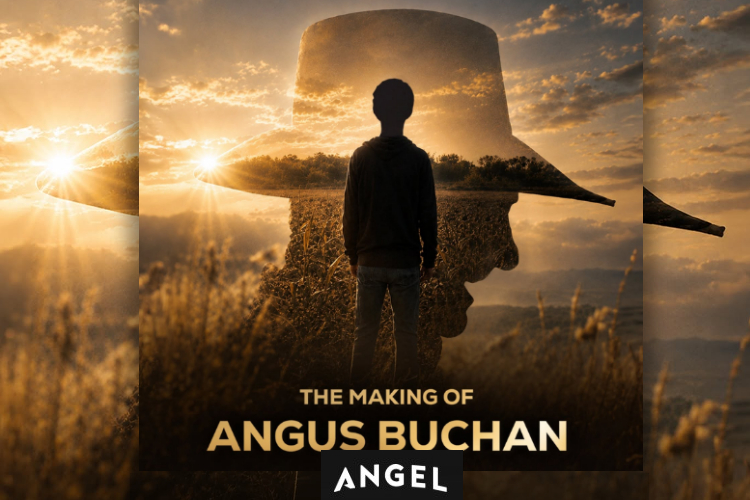
Angus Buchan’s remarkable journey from farmer to evangelist is brought to life in a new documentary now streaming, revealing the faith, family and challenges behind his public ministry.

9 October 2026
3.3 MINS
New South Wales healthcare workers who object to abortion and voluntary assisted dying face growing pressure, raising serious questions about conscience rights, employment and moral injury.
9 October 2026
2.9 MINS
God is intensely relational, and he puts us into a community of believers so we can use our gifts in service of Christ's body.
8 October 2026
3.6 MINS
John Anderson warns that Australia’s decline is rooted in spiritual and cultural disintegration, calling for a recovery of Christian foundations, social cohesion and national purpose.