



The Power of Identificational Repentance in Corporate Prayer
On Sunday 21 June, during the regular Canberra Declaration Sunday-night Zoom prayer, I taught on the power of identificational repentance when praying for Australia and other nations. It was a powerful evening of prayer. This led me to write this item on this very powerful prayer weapon.
Identificational repentance is a form of corporate, priestly (1 Peter 2:9) prayer in which believers stand in the gap for their family, church, city, or nation by naming the sins that have shaped a people, confessing them before God, and turning from those patterns in heartfelt humility. It is not pretending to be guilty for what others did long ago; rather it is a willing identification with the continuing effects of those sins and a personal admission of how we, as a people and as individuals, have perpetuated them.
This posture echoes the prophetic intercession of Scripture — leaders who, under the conviction of the Spirit, confess the corporate brokenness of their people and plead for God’s mercy. Isaiah’s cry in the presence of God (Isaiah 6:5), Daniel’s confession (Daniel 9:4-19), Nehemiah’s lament (Nehemiah 1:6), and the call to humble prayer in 2 Chronicles 7:14 provide the biblical pattern for this ministry.
Why Identificational Repentance Matters for Nations
Nations carry stories, structures, and spiritual legacies. When sin becomes woven into a culture — through injustice, violence, idolatry, perversions, or systemic greed — its consequences can persist across generations. Identificational repentance addresses those consequences by acknowledging both the original wrong and the ways later generations have continued or benefited from it.
This is not a political exercise but a spiritual one: it invites God to break cycles, to remove the footholds the enemy has gained, and to release healing and blessing where curses or wounds once held sway. The practice has been used in contexts as varied as post-conflict cities and communities seeking change through repentance, where public confession and blessing have opened doors for gospel advance.
Identificational repentance is a powerful weapon that brings breakthrough for the Ekklesia (the Greek word translated as ‘church’ in English Bibles) and the nations, including Australia. I know that identificational repentance is a critical weapon in dealing with national sins like abortion, the rainbow and trans agendas, etc.
How to Use Identificational Repentance in Prayer
It is important to use identificational repentance in a corporate setting, as it is a form of spiritual warfare prosecuted by the Ekklesia (the Greek word translated as Church that has a meaning of God’s people gathered with governmental authority).
1. Listen and discern. Begin in silence and Scripture. Ask the Holy Spirit to reveal the root sins — not merely surface symptoms. Roots might be pride, fear, greed, dehumanization, or idolatry. Let Scripture guide your language and your humility (Psalm 139; James 1:5).
2. Name what God reveals. Speak plainly: identify the sin, the historical pattern, and the present manifestation. Use “we” language: “We confess…” or “We acknowledge…” This is not theatrical; it is honest corporate confession modelled by Daniel and Nehemiah (Nehemiah 1:6; Daniel 9:4–19).
3. Confess and repent. Confession must be specific and accompanied by a turning of the will. Say what you will stop doing and what you will begin to do instead. Repentance includes a resolve to change — personal and communal.
4. Apply the blood and claim forgiveness. Proclaim the work of Christ: his blood cleanses, his cross breaks curses, and his resurrection brings new life (1 John 1:7; Colossians 2:13–15). Receive God’s forgiveness and declare freedom over the land, the institutions, and the people.
5. Bless in place of curse. Speak blessings that are the opposite of the confessed sin — peace where there was fear, justice where there was oppression, reconciliation where there was hatred. Blessings are prophetic declarations of God’s intended good. (Ref: The Awesome Power of Blessing)
6. Walk in obedience. Prayer without obedience is incomplete. Follow the Spirit’s leading to practical acts of repair: advocacy, restitution, service, reconciliation initiatives, or structural change. This demonstrates that repentance is real and not merely symbolic.
The Need to Have Your Own Heart Right Before God
Identificational repentance begins inwardly.
The Bible repeatedly links national healing to the humility and holiness of God’s people: “If My people who are called by My name will humble themselves, and pray and seek My face, and turn from their wicked ways…” (2 Chronicles 7:14). The prophets modelled this: they did not confess for show but from a broken, repentant heart (Jeremiah 14:20; Isaiah 6:5).
Before we intercede for a nation, we must examine our own lives — our prejudices, compromises, and hidden sins — and bring them into the light (Psalm 139:23–24). When our hearts are right, our prayers are not manipulative attempts to control outcomes but authentic petitions offered by a people who have turned back to God. This inward work safeguards against pride, political grandstanding, or a superficial “ritual” that lacks transformation.
Biblical Foundations and Examples
- Nehemiah prayed with confession for the people and their ancestors: “Both my father’s house and I have sinned” (Nehemiah 1:6). His prayer combined confession, appeal to God’s character, and a resolve to act.
- Daniel modelled corporate confession and petition: “we have sinned and done wrong… we have not obeyed the voice of the Lord our God” (Daniel 9:5–19). His prayer led to revelation and divine response.
- Jeremiah acknowledged generational guilt: “We acknowledge, O Lord, our wickedness, and the iniquity of our fathers” (Jeremiah 14:20).
- 2 Chronicles 7:14 stands as a covenantal promise linking humility, prayer, and national healing. This is the most quoted passage when it comes to interceding our nation.
These passages show a pattern: recognition of sin, confession, appeal to God’s mercy, and a readiness to change. Identificational repentance follows that same arc.
The Call to Action as God Leads
Repentance must bear fruit. Jesus said, “By their fruits you will know them” (Matthew 7:20).
When God moves in response to humble prayer, he often calls his people to tangible acts: reconciliation meetings, restitution where possible, policy advocacy, community development, or sacrificial service to those harmed.
Galatians 6:2 — “Bear one another’s burdens, and so fulfill the law of Christ” — is a practical mandate: repentance without repair is incomplete.
In many modern examples, prayer teams who repented and then engaged in acts of blessing—prayer-walking, public apologies, or service projects — saw doors open for gospel witness and social renewal. These actions confirm that repentance is not an escape from responsibility but the beginning of costly discipleship.
Prayers Answered
I have seen prayers answered when standing in the gap for Australia. Droughts have ended, cyclones dissipated, political changes have happened, and so forth. God is faithful and true.
We must trust in the Lord for the breakthrough we know Australia needs.
A Practical Template for National Intercession
- Gather a humble, diverse group of believers.
- Read Scripture that convicts and comforts (e.g., 2 Chronicles 7:14; Daniel 9; Isaiah 6).
- Listen for the Spirit’s specific convictions.
- Confess using “we” language and specific wording.
- Apply the blood of Christ and declare forgiveness.
- Bless the people, leaders, and institutions with counter-statements to the confessed sin.
- Act on God’s leading—repair, serve, advocate, and continue to pray.
Closing Exhortation
Identificational repentance is a humble, priestly calling for the Church. It is not a political stunt or a way to avoid personal holiness; it is a spiritual discipline rooted in Scripture and shaped by obedience.
When God’s people confess with clean hearts, plead for mercy, and then move in love to repair what can be repaired, they position their communities to receive God’s healing.
As Isaiah answered God’s call — “Here am I! Send me” (Isaiah 6:8) — so may we step forward, ready to represent Christ for our families, our cities, and our nations. Let us pray, repent, and then walk in the costly yet beautiful reconciliation we have with God through Christ (2 Corinthians 5:18–19).
Scriptures for Reflection
Isaiah 6:8; 2 Chronicles 7:14; Nehemiah 1:6; Jeremiah 14:20; Daniel 9:16–19; Galatians 6:2; 1 John 1:7; Matthew 5–7.
Join Canberra Declaration in Prayer on Zoom
Join us every Sunday, Monday and Wednesday at 8 pm (AEST) as we pray for Christian faith, freedom, family and life via this Zoom link.
12 Comments
Leave A Comment
Recent Articles:

27 October 2026
10.3 MINS
As Tasmania and Western Australia consider conversion therapy bans, a former LGBT+ ministry leader warns of threats to religious freedom, personal choice and Christian discipleship.

27 October 2026
4.9 MINS
Nine Christians have been killed in a terrorist attack on a Jordanian church, prompting fierce condemnation, demands for justice and renewed concerns about religious persecution.

27 October 2026
3.6 MINS
For 25 years, the Mount Moriah Trust has supported struggling Christians across the Holy Land, bringing practical assistance, encouragement and hope to believers facing hardship and persecution.
27 October 2026
3.1 MINS
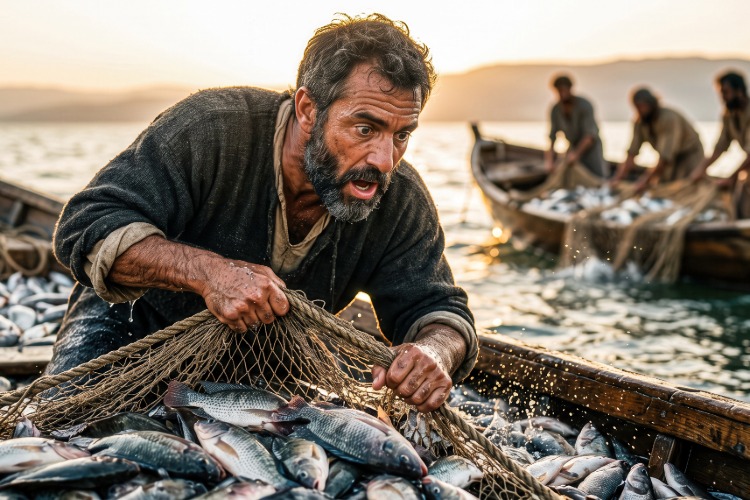
As the disciples discovered through a huge haul of fish, we can trust Jesus for a net-breaking, boat-sinking catch of people.
26 October 2026
3.2 MINS
Following Paul's example in Ephesians 1, let us pray for the Father to open the eyes of our hearts so that we may grasp the hope of his calling, the riches of his glorious inheritance in the saints, and the greatness of his power towards us who believe.

25 October 2026
4 MINS
Prayer is active partnership with God, and he is awakening his body to prayer, not by might or by power, but by his Spirit.

24 October 2026
3.3 MINS
When we ask God, "What is in my hand?", and see our possessions, money and time as seed that God asks us to sow, life becomes simpler.



Amen Thanks Kym for this very timely word for the Nation to engage the Ekklesia in the nation in prayer especially in this Kairos time
Thanks so much Kym – I’ll be sharing this widely. It is beautifully worded, with a very clear practical application. Praise the Lord!
Thank you, Kym, thoughtful and helpful
Thanks Meryl Lee, Teri, and Stephen. We use this often on Zoom etc. We appreciate your support.
A timely renewal in instruction and guidance in understanding prayer protocols. Especially for the next generation to be trained and equipped as the Ecclesia Watchmen intercessors .
Thank you for being a Teacher and astute watchman prophet for the Kingdom of God .
Thanks Molly. You know this key very well.
Thankyou Kym for such succint and poweful teaching. Also for highlighting that Nehemiah, Daniel and Jeremiah offer a blue print on how to pray for a nation and Israel
It’s well worth studying the passages I outline in detail. Key for breakthrough,
Amen. Powerful! Will reread and study the scriptures in the morning. Will apply to my family and the Nation. Many thanks Kym. ❤️🙏❤️🙏❤️🙏❤️
Thanks Pearl. Use this a prayer group, not just alone.
WOW,writing in notebook so Holy SPIRIT written with practical steps , Bible verses , true heart repent, we confess or acknowledge , please forgive and to change we will do this God’s way,GOD’S. RESULTS.BRillant,yes we do this personal, with others with healing rooms, national and with kyb Bible studies weekly . PRAISE GOD,NEW LIFE❤️
Having just completed BSF study (Exile and Return), how inspiring and challenging are the prayers of Nehemiah, Daniel, Jeremiah, Ezekiel spoken thousands of years ago yet so relevant for today’s world. Thank you Kym for the excellent teaching and clear guidelines for effective prayer that can be used in large or small groups … and for Israel – Am Yisrael. Chai!