



God Comes Down, But He is Not Condescending
God willingly stoops to our level.
There is no greater being than God, yet He is not aloof from us, nor does He despise being among us. He is not condescending – He does not have or display an attitude of patronising superiority. Even though He is great, mighty and exalted above all, He does not deign to be with us.
Of course, in the world of men, we all know of those who ARE condescending, who do look down on us mere plebs, and who do despise mingling with the hoi polloi. Be they political elites or Hollywood celebs or millionaires or rock stars, there are many (but not all) of the rich and famous, the high and mighty, who really want nothing to do with the masses.
These arrogant snobs clearly show in their words and actions how much they dislike being with those of us who are not in their league. They want nothing to do with us, and they despise and look down on us. And examples of elitism and snobbishness have always been with us.
One could simply look at cases of this as found in literature. Sadly, my wife, who was a terrific reader of fiction, is no longer with us. If she were, she could quickly give me plenty of examples to use here. So, let me simply stick with one book (or rather, a collection of multiple books in one): the Bible.
The Lowly
In the Bible, we find clear examples of out-of-touch elites and snobs who preferred to stay well clear of the great unwashed. The Pharisees were religious elites who thought they were so much better than everyone else. And they certainly did not want to become ‘contaminated’ by hanging around most mere mortals,
So when Jesus came along with a completely opposite mindset and set of behaviours, this spooked the Pharisees right out. ‘Look, he hangs around with sinners and even eats with them – shocking!’ There was nothing condescending about Jesus.
But this notion of one so great and powerful who also is willing to move amongst the lowly and needy, was not just first revealed in the Incarnation. God has always been this way. The Old Testament makes this just as clear as the New Testament. Consider just a few passages on this. Here are three such texts from the Psalms:
Psalm 102:19-20 ~ The Lord looked down from His sanctuary on high, from heaven He viewed the earth, to hear the groans of the prisoners and release those condemned to death.
Psalm 113:4-9 ~ The Lord is high above all nations,
and His glory above the heavens!
Who is like the Lord our God,
Who is seated on high,
Who looks far down
on the heavens and the earth?
He raises the poor from the dust
and lifts the needy from the ash heap,
to make them sit with princes,
with the princes of his people.
He gives the barren woman a home,
making her the joyous mother of children.
Praise the Lord!Psalm 138:6 ~ Though the Lord is exalted, He looks kindly on the lowly;
though lofty, He sees them from afar. (NIV)Psalm 138:6 ~ For though the Lord is high, He regards the lowly,
but the haughty He knows from afar. (ESV)
As can be seen from the two English versions I offer of that last Psalm, there is some ambiguity in the original text, but either way, the point still stands. And consider these two passages from Isaiah, which certainly make my case:
Isaiah 40:28-29 ~ Have you not known? Have you not heard?
The Lord is the everlasting God,
the Creator of the ends of the earth.
He does not faint or grow weary;
His understanding is unsearchable.
He gives power to the faint,
and to him who has no might, He increases strength.Isaiah 57:15 ~ For this is what the high and lofty One says – He who lives forever, whose name is holy: “I live in a high and holy place, but also with him who is contrite and lowly in spirit, to revive the spirit of the lowly and to revive the heart of the contrite.”
In theological terms, we speak of God’s transcendence and His immanence. The first has to do with His greatness and how far He is removed from everyone and everything else. The holy, infinite and eternal God is so far exalted over the created order.
But He is also immanent. God is near to us and close to us. Unlike the teaching of deism, which states that God made the world but has basically left it to run on its own with no involvement from Him, the Bible teaches us that God is wholly present with and ever active in all that He has created.
God Incarnate
The five passages I offered above show how both go together; He is fully transcendent and yet fully immanent. And as already noted, the Incarnation is the supreme example of this. Jesus, the eternal son of God, left the comforts of Heaven to be with us.
Think of the King of Glory who was born in a manger, sat with children, ministered to prostitutes and tax collectors, and washed the disciples’ feet. But He also performed so many amazing miracles, including defeating death by rising from the grave. God became man so that we sinful creatures could get back in relationship with God.
The Lord’s Prayer ties this together so very nicely: “Our father (immanence) in heaven (transcendence)…” (Luke 11:2). And in all this, He serves as an example for us. As Paul put it in Philippians 2:5-11:
Have this mind among yourselves, which is yours in Christ Jesus, who, though he was in the form of God, did not count equality with God a thing to be grasped, but emptied himself, by taking the form of a servant, being born in the likeness of men. And being found in human form, he humbled himself by becoming obedient to the point of death, even death on a cross.
Therefore God has highly exalted him and bestowed on him the name that is above every name, so that at the name of Jesus every knee should bow, in heaven and on earth and under the earth, and every tongue confess that Jesus Christ is Lord, to the glory of God the Father.
A God who is near yet far. A God who is humble yet mighty. A God who is happy to be close to us yet is completely distinct from us. A God who is a bridegroom, a father, a shepherd, a husband, yet is a warrior, a judge, a king, and a master. As C. S. Lewis has put it in The Problem of Pain: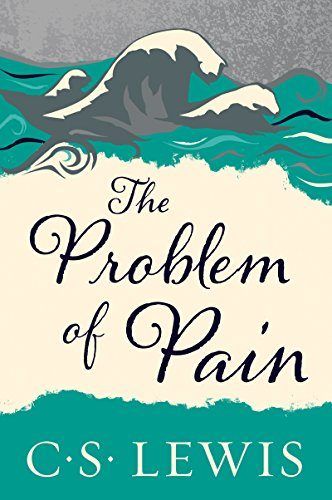
The relation between Creator and creature is, of course, unique, and cannot be paralleled by any relations between one creature and another. God is both further from us, and nearer to us, than any other being.
He is further from us because the sheer difference between that which has Its principle of being in Itself and that to which being is communicated, is one compared with which the difference between an archangel and a worm is quite insignificant.
He makes, we are made: He is original, we derivative. But at the same time, and for the same reason, the intimacy between God and even the meanest creature is closer than any that creatures can attain with one another.
Our life is, at every moment, supplied by Him: our tiny, miraculous power of free will only operates on bodies which His continual energy keeps in existence — our very power to think is His power communicated to us. Such a unique relation can be apprehended only by analogies: from the various types of love known among creatures we reach an inadequate, but useful, conception of God’s love for man.
And in Miracles, he put it this way:
In the Christian story God descends to re-ascend. He comes down; down from the heights of absolute being into time and space, down into humanity… down to the very roots and sea-bed of the Nature He has created. But He goes down to come up again and bring the ruined world up with Him.
One has the picture of a strong man stooping lower and lower to get himself underneath some great complicated burden. He must stoop in order to lift, he must almost disappear under the load before he incredibly straightens his back and marches off with the whole mass swaying on his shoulders.
Or as he put it in The Lion, The Witch and The Wardrobe:
‘Is – is he a man?’ asked Lucy. ‘Aslan a man!’ said Mr. Beaver sternly. ‘Certainly not. I tell you he is the King of the wood and the son of the great Emperor-Beyond-the-Sea. Don’t you know who is the King of Beasts? Aslan is a lion, the Lion, the great Lion.’
‘Ooh,’ said Susan, ‘I thought he was a man. Is he – quite safe? I shall feel rather nervous about meeting a lion.’
‘That you will, dearie, and make no mistake,’ said Mrs. Beaver; ‘if there’s anyone who can appear before Aslan without their knees knocking, they’re either braver than most or else just silly.’
‘Then he isn’t safe?’ said Lucy. ‘Safe?’ said Mr. Beaver; ‘don’t you hear what Mrs. Beaver tells you? Who said anything about safe? ‘Course he isn’t safe. But he’s good. He’s the king, I tell you.’
Praise God: we serve a God Who stoops.
___
Republished with thanks to CultureWatch.
2 Comments
Leave A Comment
Recent Articles:

24 October 2026
3.3 MINS
When we ask God, "What is in my hand?", and see our possessions, money and time as seed that God asks us to sow, life becomes simpler.

23 October 2026
6.8 MINS
Hillsong UNITED’s Joel Houston reflects on fame, faith and the burden of ministry, questioning performative Christianity as he seeks a more authentic walk with God.

23 October 2026
13.1 MINS
Tasmania’s proposed conversion practices legislation raises serious questions about religious freedom, pastoral care and whether Christians can freely pray with those seeking to live according to their faith.
23 October 2026
3.1 MINS
The one who is worthy of it all is awakening his Church to be captivated by him, so that we will honour one another and share his gospel with humility and courage.

22 October 2026
2.9 MINS
Victoria Labor’s promise to fund free abortions has drawn a forceful response from Presbyterian leaders, raising profound questions about unborn life, government priorities and Australia’s moral direction.

22 October 2026
4.7 MINS
Western Australia’s proposed anti-discrimination overhaul has sparked warnings from Christian leaders that religious freedom, parental choice and faith-based schools’ ability to uphold their beliefs are at risk.

22 October 2026
2.9 MINS
An Israeli political candidate claiming a remarkable biblical identity has sparked questions about false messiahs, the Antichrist and how Christians should interpret prophecy.



Always appreciate your articles. It becomes part of my spiritual daily bread.
Many thanks Ian.