



Hebraic Prayer is About Conforming to God’s Will
An important feature of Hebraic prayer is that it puts God’s will at the centre and requires us to seek Him for the empowerment to obey His call.
“Now, Lord, look on their threats, and grant to Your servants that with all boldness they may speak Your word…” Acts 4:29
In this last and final instalment of our teaching series on Hebraic prayer, we discover that prayer is not about making God conform to our wishes, but rather about us conforming to His will.
A family member of ours is deeply into New Age teachings. Over the years, she has witnessed God answering the prayers of my Mum and I, so now whenever she faces a crisis she is quick to come to us and ask for prayer. In a nutshell, her prayer requests are always about making God bring about her plans for her life and family. And this is the essence of much of the New Age and occult world, where the worshipper attempts to undertake certain actions or say certain prayers in order to make the spirits or gods do what they want.
Christian prayer should not and cannot be like this. Here in Acts chapter 4, the disciples give us an amazing example of a very different approach to prayer.
Your Kingdom Come, Your Will Be Done
The disciples were facing intense threats of persecution, jail, torture, and even death. Yet remarkably they didn’t pray for their own safety, nor did they pray that the persecution would stop. Their prayer was centred around God’s will being done, and specifically that the preaching of God’s Word would not stop.
In other words, the disciples knew it was God’s will for them to preach the gospel, and this was their unshakeable and primary commitment. However, they also knew their own human weakness in the face of these threats and looked to God to enable them to do His will.
Too often, people treat prayer as an opportunity to present wish lists to God. Yes, it is true that Jesus encouraged the disciples to ask that they might receive, however, the focus of prayer should not be asking for our own blessings. Rather, our prayers should be about committing ourselves to God’s will and seeking Him for the enablement and empowerment to obey His call.
Western Christians today are shocked as they hear of increasingly anti-Christian laws and sentiments in our societies. But first-century believers, in the words of Peter, did not ‘consider it strange’ (1 Peter 4:12). Maybe this is another reason they did not pray against persecution. After all, they knew persecution would come (see 2 Timothy 3:12), and they had counted the cost when they decided to follow Jesus.
What was the result of their prayer? The Bible tells us that God heard their prayer and the place they were in shook as they were filled afresh with His Spirit. New boldness and power came upon the disciples, enabling them to continue to speak the Word of God without fear or hesitation.
Many of us wish to see such powerful answers to prayer. But if we are to see similar results to our prayers, we have some serious adjustments to make. Our prayers must be centred on the fulfilment of God’s will.
A Summary of the Series
In this series on Hebraic prayer, we have learnt how the early disciples modelled prayer that is:
- God-focussed rather than problem-focussed
- Scripture-based
- More corporate than personal
- Conformed to God’s will above all else
And as we pray like this, in line with God’s will, the answers will certainly follow.
Let us close with these words from John the apostle:
Now this is the confidence that we have in Him, that if we ask anything according to His will, He hears us. And if we know that He hears us, whatever we ask, we know that we have the petitions that we have asked of Him. (1 John 4:14-15).
___
Image courtesy of Unsplash.
6 Comments
Leave A Comment
Recent Articles:

17 October 2026
3.4 MINS
Seeking the face of God means surrender, laying aside our agenda and wants. Revival begins when we want God himself more than we want the outcome.
A Million Women Movement Marks Second Anniversary: “Look What the Lord Has Done! Ishtar Has Fallen!”

16 October 2026
2.8 MINS
Two years after A Million Women gathered in Washington for ten hours of prayer and fasting, organisers point to victories they believe reflect God’s answers to intercession.
16 October 2026
3.3 MINS
Jesus is calling us to love one another “just as I have loved you”. And if the Church does awaken to that agape (love), the world will see a great and powerful witness to Christ and his kingdom.
15 October 2026
3.6 MINS
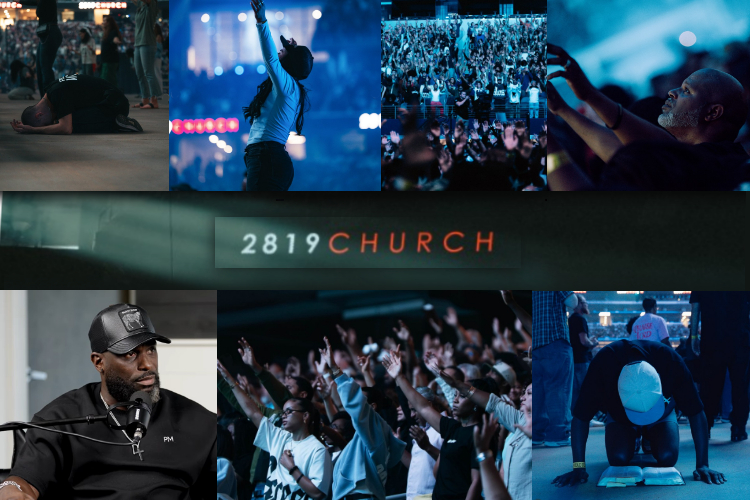
An 80,000-strong gathering in Texas signals a hunger for revival, as Pastor Philip Anthony Mitchell warns that Christian indifference could leave future generations without the faith.

15 October 2026
4.2 MINS
Many Australian Christians don’t know a single Aboriginal person. Robyn Murray argues that reconciliation begins with honest history, prayer and a shared life in Christ.

15 October 2026
7.2 MINS
A man’s death in a tiger enclosure sparks chilling online reactions, exposing a growing willingness to judge human worth by usefulness, behaviour and ideology.
15 October 2026
2.6 MINS
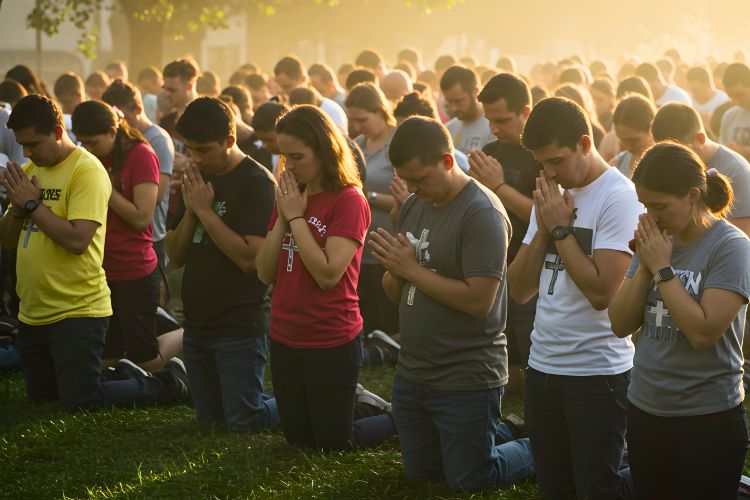
Before anything else, we must make prayer central. I urge the Church in Australia to awaken to, first of all, prayer.



Thank you Enoch , for important writings on prayer ….Amen to your points
Enoch, brilliant! A very timely reminder, thank you.
Marvellous! Thy will be done! Only You know what’s best. My eyes are on You dear Father in Yeshuas Name Amen!
Thank you Pastor Enoch. I think this could be the most helpful, inspiring teaching on prayer that I have heard in over 40 years as a believer. We so need to understand the Hebraic context of Jesus’ life and biblical teachings. So good!!
Prayer should be about daily worshipping and thanking God .
Thank you Enoch. Well spoken a great help. I love the simplicity and clarity of your teaching.