


The Cost of Compliance
It begins quietly. A notice in a job offer. A line in a university placement agreement. A policy on a workplace intranet. Somewhere in the fine print, you’re told that to work here, to study here, to complete your training, you must have this medical procedure. Decline, and you are shown the door. Not because you lack ability, intelligence, passion, or moral character, but because you fail a new compliance test.
During the Covid era, vaccine mandates were pitched as temporary public health measures. Yet they left something far more enduring: a precedent. Employers and universities have been emboldened to make access to a career contingent on undergoing certain medical procedures. This is not just about Covid, nor just about vaccines. It is the principle that erodes medical ethics, narrows our talent pool, and quietly shifts our workforce towards compliance over conscience.
Where does it stop? If we accept the ‘greater good’ argument without question, why not require sterilisation in certain jobs to reduce absenteeism from parental leave? Why not mandate genetic editing to remove traits deemed costly to the health system? These might sound extreme, but history tells us that bad ideas rarely arrive fully formed. They creep, step by step, until the unthinkable becomes the new normal.
Firefighters Grounded, Students Barred
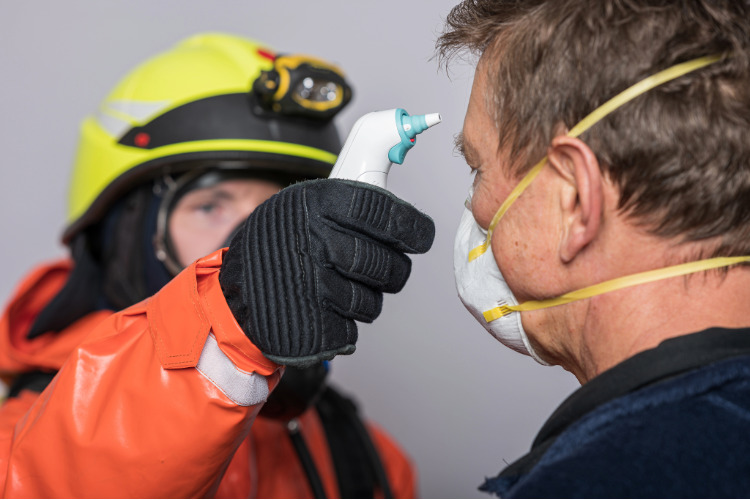
Perhaps nowhere has this creeping authoritarianism been more starkly suggested than in the Victorian firefighting service. This year, after over four years of exclusion, dozens of fully trained, healthy firefighters have finally been allowed back to work. Their offence? Declining the Covid vaccine.
In October 2022, an ‘Interim Measure’ — effectively a mandate by another name — required all staff to be ‘fully vaccinated’ to remain on duty. Government health orders had long since been lifted, but the service chose to maintain the rule anyway, citing its own workplace safety assessment. And so, over four long summers, crews ran short-staffed, knowingly placing extra strain on those on duty and potentially putting communities at greater fire risk, all while experienced firefighters sat at home, sidelined by a policy untethered from official mandate.
The message was clear: comply or forfeit your career. I can only imagine how devastating this policy might have been during the 2020 summer fires. But the firies stood firm. They did not comply. They did not forfeit. They waited, lobbied, and appealed. Years of lost income, strained families, and missed purpose, until the measure was finally lifted. The victory is theirs, but the cost to them and to the community is great. Trust has been broken and will take a long time to be restored. This is what stubborn bureaucracy looks like when it decides it would rather break people, and put communities at risk, than admit it was wrong.
One of the most insidious aspects of these ‘medical requirements’ is that many of them, when challenged, are revealed to be ‘paper tigers’ — policies that sound ironclad but crumble under scrutiny. A student I know was told they must be vaccinated against Covid to complete a placement for their health course. They pushed back, citing informed consent, current immunisation guidelines, and the absence of any government mandate for students in clinical placements. They pointed out that the university’s own placement agreement allowed for refusal, and that the Faculty of Health provided a formal ‘Decline to Vaccinate’ form.
That polite, well-reasoned letter asked for their decision to be respected and offered to comply with alternative safety measures such as PPE or testing. They asserted their rights — and in doing so, reminded the institution of its own obligations. It was a textbook example of how informed citizens can dismantle arbitrary barriers. But here’s the catch: many people never make it that far. They self-select out. They see the policy and assume it’s immovable. The opportunity dies before the fight even begins. And when that happens, the institution doesn’t just lose an applicant; society loses the contribution of another independent mind.
This isn’t just a local story. In the US recently, student Sarah Doe won the right to return to school after her school rejected all seven valid medical exemptions to a vaccination provided by her doctors. The case underscores how precarious the situation has become, and highlights both the fragility and the importance of exemptions. It also raises the troubling question of how a school could overrule the judgement of treating physicians. Once these protections are removed, they rarely return without a fight.
Crippling Consequences
Meanwhile, some jurisdictions are moving to lock in protections before the next crisis hits. Idaho recently passed a Medical Freedom Act which prohibits discrimination in employment, education, or public services based on a person’s medical choices. It recognises what should be obvious: that bodily autonomy is a cornerstone of a free society, not a bargaining chip to be traded for access to work, services or study. Many countries have no such protections at a national level. And until they do, citizens will remain vulnerable to the same creeping authoritarianism that took root during the pandemic.
The downstream effect of the compliance-entry-gate is concerning. If we allow this precedent to harden, the consequences over the next decade may well be profound, for both individuals and communities.
Intelligent, questioning individuals will be screened out early, never even entering certain professions. Their absence diminishes diversity of thought and weakens the culture from within. Many potential applicants won’t challenge the requirement but will instead choose to silently surrender. They will walk away quietly, careers unstarted, dreams unrealised, and no one will even know they were missing, but for the ever-reducing number of applicants.
And what about responsibility for medical risk? Mandated procedures are never without risk. If someone suffers harm, who is accountable for their care and compensation? As many vaccine-injured individuals discovered during the Covid era, responsibility is too often avoided, leaving patients to navigate the consequences, and the costs, on their own.
Finally, those who do comply to enter the profession will have, by definition, already demonstrated their willingness to submit to institutional pressure. If that is the case, who will challenge authority from the inside? Who will blow the whistle next time something’s wrong?
When I speak to those who say, ‘It’s just a jab, what’s the problem?’, I ask them to consider:
♦ What if having the jab made the person more likely to transmit the disease?
♦ What if it increased the chance of sick days, putting the workforce under greater strain?
♦ What if it protected only the person, and no one else?
♦ What if it cost more to society than it saved?
♦ What if the risks outweighed the benefits?
If any of those scenarios were true – as was the case in Covid – is it reasonable to make that jab a condition of employment or education? The point is not the specifics of the vaccine, but the danger of granting blanket permission for medical coercion without evidence or accountability.
At best, we are drifting into a system where the entry point to a profession is a compliance test designed to weed out those with heterodox views or the courage to challenge orthodoxy. At worst, we are on a path towards a Gattaca-like society, where the ‘in-valids’ are quietly excluded from meaningful participation, and the community loses the creativity, humanity, and diversity of thought that drive progress. Skills matter, yes, but so do minds. And when we narrow who can enter a profession, we are also narrowing how that profession will think, act, and evolve. Ultimately, it is society that suffers.
Protect and Defend
The plight of the Victorian firefighters should be a warning to all of us. Their service was prepared to run short-staffed through multiple seasons rather than allow healthy, trained personnel to return without a jab. They gambled that these men and women would either give in or give up. They were wrong. The authorities lost and paid the price in terms of public trust and safety along the way.
These firefighters stood their ground not only for themselves, but for the principle that medical procedures must remain voluntary. Their fight was not just about a vaccine; it was about the right to serve without surrendering bodily autonomy. And in the end, it was about the kind of society we want to live in: one that values compliance above conscience, or one that understands the danger of silencing dissent before it even walks in the door.
There are two obvious tracks out of this mandate madness. Firstly, we should challenge the ‘paper tigers’ by knowing our rights, asking for the legal basis and evidence of any medical requirement. Many of these ‘requirements’ crumble when pressed. Secondly, we should lobby to build legal protections for medical freedom. Without safeguards, people will remain at the mercy of policy-makers who, in the next crisis, may again decide that bodily autonomy is optional.
We cannot undo the damage already done to careers, reputations, and communities. But we can ensure that the next time a crisis comes, we do not reflexively slam the gate on those who think differently, question authority, or simply value their right to choose. Because the truth is, a profession that excludes its independent thinkers is like a fire crew that leaves its best firefighters at home during fire season. You might get through a few years without disaster, but when the big one comes, you’ll wish you had them beside you.
___
Republished with thanks to The Quadrant. Image courtesy of Adobe.
3 Comments
Leave A Comment
Recent Articles:

25 October 2026
4 MINS
Prayer is active partnership with God, and he is awakening his body to prayer, not by might or by power, but by his Spirit.

24 October 2026
3.3 MINS
When we ask God, "What is in my hand?", and see our possessions, money and time as seed that God asks us to sow, life becomes simpler.

23 October 2026
6.8 MINS
Hillsong UNITED’s Joel Houston reflects on fame, faith and the burden of ministry, questioning performative Christianity as he seeks a more authentic walk with God.
23 October 2026
13.1 MINS
Tasmania’s proposed conversion practices legislation raises serious questions about religious freedom, pastoral care and whether Christians can freely pray with those seeking to live according to their faith.

23 October 2026
7.7 MINS
Melbourne Catholic Archbishop Peter Comensoli has spoken out clearly against the deadly promises by both major parties in Victoria ahead of the election, drawing a comparison between abortion and capital punishment.
23 October 2026
3.1 MINS
As Western societies grow more hostile, could abandoning Christianity’s moral foundations be contributing to the rise of ideological extremism, political intolerance and violence?

23 October 2026
5.1 MINS
France’s escalating riots expose the dangers of political extremism, antisemitism and radical alliances, offering America a stark warning about the future of Western democracy.



Thanks Dr Julie for important article ….our family and extended family have been challenging employers over mandates and compliance this past number of years and seen policy changed in a number of instances ,because of challenge ,
even as recent as a few months ago
.it is amazing how many govt and non govt organisations still had mandates this year
Thanks Dr Julie – Well thought out and presented.
I especially like your quote: “This is what stubborn bureaucracy looks like when it decides it would rather break people, and put communities at risk, than admit it was wrong.”
Hello Julie,
A very emotive article.
Your five “What if …. ” statements are fall in the same category of your criticism of people who say, ‘It’s just a jab, what’s the problem?’.
Please supply us, the readers you are trying to convince that you are right, with your list of scientific &/or medical research papers published in quality peer-reviewed journals, etc.
Are you a doctor in the medical field? If you are a medical doctor, surely you have spoken to emergency department colleagues &/or infectious disease researchers, I have.
Lock-downs were undeniably difficult for people to negotiate, but to have our hospitals, with their constant understaffing issues, overwhelmed in the early months of would have been damaging with long-term consequences.
Covid has been scientifically proven to be an insidious disease, with many parts of the body being chronically affected, especially in long-covid suffers. Please read & keep up with the on-going medical research.
May we Australian learn that we may have to show true ANZAC spirit if a more serious pandemic (like Ebola with potential death rates of over 90%) reaches our nation.
Perhaps our nation’s covid response will prove to be a good practice run – though I pray we will never need it.
Yes, mistakes were made by both sides of the vaccination & lock-down debate, however the anti-vax, anti-government zealots still proliferate hearsay, mythology, fake-statistics, etc. Surely it is time to turn to true scientific &/or medical facts; and to stop the criticism & fear-mongering.