


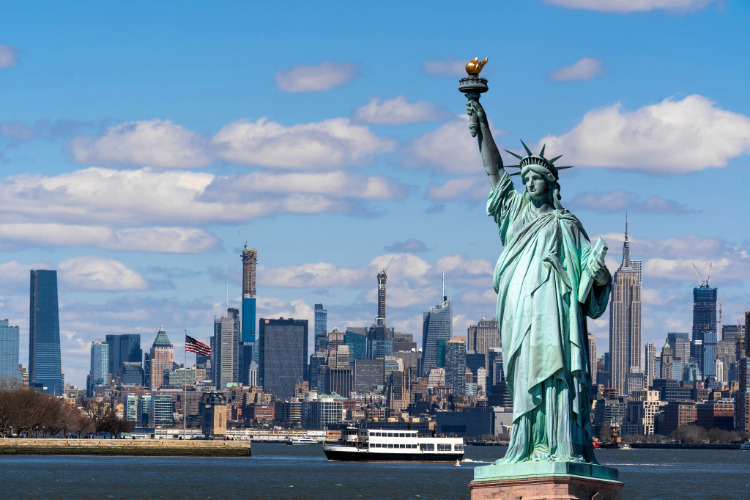
America Without the Church: How a Nation Loses Its Soul
The relationship between America and the Church has always been one of shared dependence but unequal necessity. America, for all its achievements, cannot long endure without the moral and spiritual framework that Christianity provides.
The Church, meanwhile, benefits from America’s freedoms, its protection of conscience, speech, and worship, yet the Church’s existence is not contingent on any nation. The Church was born long before America and will outlast it. Still, within the unfolding of history, these two entities have been providentially intertwined.
America’s experiment in liberty was possible only because of a Christian moral imagination that valued virtue over license and truth over power. But as that moral foundation weakens, the nation risks forgetting what made it both free and good.
In this article, I will explore that delicate balance: how Christianity shaped America’s founding, how the Church must preserve its prophetic voice, and why the health of both depends on a renewal of faith and conscience.
America Without Christianity Loses Its Soul
America did not emerge from a vacuum. It was born from a moral vision shaped and sustained by Christianity, which insists every human being is created in the image of God and therefore possesses inherent dignity and worth.
The Founders’ concept of liberty owed more to the Protestant Reformation’s theology of conscience than to Enlightenment rationalism. They believed that freedom was not an entitlement but a stewardship, a sacred trust that required moral discipline. As John Adams once wrote, “Our Constitution was made only for moral and religious people. It is wholly inadequate to the government of any other.” Likewise, George Washington warned in his Farewell Address that “of all the dispositions and habits which lead to political prosperity, religion and morality are indispensable supports.”
America’s founding principles, equality, justice, and freedom, were not spontaneous ideas; they sprouted from the soil of a Christian moral imagination. To forget this is not simply to misread history but to misunderstand why our experiment in ordered liberty has endured as long as it has. When we conflate biblical virtue with civic virtue, we risk confusing common grace with saving grace.
The American Revolution was not merely a political rebellion; it was a moral reformation rooted in an understanding of God and man. The Declaration of Independence’s appeal to “the Laws of Nature and of Nature’s God” was not a poetical flourish; it was a theological claim. Freedom was understood to be endowed by the Creator, not conferred by the state. Without that transcendent reference, rights become political privileges, contingent on the will of those in power.
Christianity offered a vision of liberty grounded in moral duty rather than self-expression, in service rather than self-sovereignty. That is why the American experiment, at its best, depends on a morally formed citizenry, and why its decline so often follows the Church’s retreat from shaping moral imagination.
Freedom Needs the Moral Framework of Faith
If Christianity provided freedom’s origin, it also provides its maintenance. The notion that liberty is universal and self-sustaining has proven dangerously naïve. Efforts to “export democracy” to regions without the moral and cultural foundations that support it, as seen in Iraq and Afghanistan, revealed the limits of secular optimism. Freedom thrives only where people believe in truth, responsibility, and moral accountability. Those are not secular virtues; they are theological ones.
Alexis de Tocqueville saw this clearly nearly two centuries ago. Observing early America, he wrote that liberty could not survive without faith because faith “restrains men from excesses of liberty” and provides the moral glue that laws alone cannot. Decades later, C.S. Lewis warned of the same danger in The Abolition of Man: when society severs moral truth from spiritual reality, freedom degenerates into the “abolition of man”.
True freedom, as Augustine understood, is not the right to do as we please but the ability to do what is right. That truth sits at the heart of the American ideal. The crisis we’re living through now, the confusion, the cynicism, the loss of trust, isn’t really a failure of democracy; it’s a failure of discipleship. We’re learning the hard way that freedom, when it’s cut loose from faith, can’t hold itself up for long.
The Church Needs America’s Freedoms, But America Needs the Church’s Faith
The Church rightly cherishes the freedoms America provides, which include the liberty to worship, to preach, to serve, to build communities of faith without state interference. These are extraordinary blessings, not to be taken for granted. Yet America’s need for the Church runs far deeper than the Church’s need for America.
A nation’s moral strength, its belief in human dignity, and its ability to govern itself all depend on the steady presence of a faith that teaches virtue and accountability. Without the moral weight of Christianity holding it steady, America drifts towards relativism, consumerism, and the politics of self-interest.
The Church’s role is not to make the nation “Christian” by law, but to remind it that liberty without virtue is liberty in decay. A Christian public theology must serve the common good, not to privilege believers. The rationale is to bless our neighbours. The Church’s public witness must sound less like a demand for privilege and more like an invitation to human flourishing.
When the Church’s formative role weakens, we see the consequences in civic life: the decline of integrity in public office, the breakdown of family stability, and the evaporation of trust in institutions. Character cannot be legislated; it must be cultivated. The Church is the primary school for that moral formation, not through coercion, but through persuasion and example.
The Prophetic Voice: Speaking Truth Without Political Captivity
To keep that light burning, the Church has to recover its prophetic independence from political parties. It should have the freedom to call out both Republicans and Democrats when truth demands it. The prophets of old didn’t flatter kings. Instead, they faced them. Their authority didn’t come from politics, but from walking closely with God. In the same way, the Church today must resist the pull to trade its prophetic clarity for political power.
A recent example of this tension is Turning Point USA’s decision to feature Tucker Carlson as a keynote voice at its events. What started as a movement to rally young Christians towards cultural and civic engagement now risks being pulled into the same partisan machinery it once challenged.
Charlie Kirk, the founder, spoke with conviction about confronting antisemitism and stood firm in his defence of Israel, a position shaped by both moral clarity and theological conviction. But as Tucker Carlson’s influence has grown, and as some, like Dinesh D’Souza, have noted his effort to become the movement’s public face, something has shifted. The focus seems to be drifting from prophetic conviction towards political convenience.
Under Kirk’s leadership, Turning Point had the urgency of a prophetic voice, calling young believers to wrestle seriously with faith, freedom, and responsibility. When the Church lets outrage speak louder than truth, it trades moral power for cultural approval. And when a movement starts giving its platform to those who thrive on outrage rather than conviction, it risks losing its moral compass altogether.
Staying truly independent takes spiritual discipline and humility. Regular confession reminds the Church that it stands under the same judgement as anyone else. Sound theology keeps our convictions rooted in Scripture instead of ideology. And when believers from different traditions unite around what really matters, it helps us rise above tribal loyalties and bear a stronger, more faithful witness to the truth. History gives us examples, from the prophets of Israel to Martin Luther King Jr and the Black Church during the civil rights movement, of what that looks like: courageous, compassionate, and uncompromisingly free.
When the Church Withdraws, Idols Rush In
There is, however, an equal and opposite danger. In an effort to avoid political entanglement, many churches have withdrawn from public life altogether. But silence is not neutrality; it is abdication. When the Church retreats, it leaves a vacuum that other ideologies rush to fill — ideologies that often deify politics, power, or personal freedom. When faith retreats, the vacuum isn’t merely moral but spiritual. The idols that rush in — identity, power, comfort — promise transcendence but deliver tyranny. Only the Gospel dethrones idols without destroying people.
To love your neighbour means more than kindness in theory; it means caring about the moral and social conditions that shape real lives. When we engage in public life with integrity, that’s one way we love our neighbours well. The Church isn’t called to conquer culture but to serve within it — to be salt and light wherever God places us, including in the public square, as Jesus said in Matthew 5.
Today, when Christians withdraw from local politics, schools, or media, those spaces do not remain empty; they are filled by voices with other moral visions. This represents a conscious decision to fulfil the mandate to be salt and light. A striking example of other moral visions filling the vacuum can be seen in figures like New York Assemblyman Zohran Mamdani, whose worldview openly redefines justice apart from any biblical grounding and replaces moral absolutes with ideological activism. His rise, and the growing popularity of such frameworks among younger generations, shows what happens when the Church surrenders its moral voice.
The Incarnation itself should remind us that faith is public — God entered history, not abstraction. Christ’s ministry didn’t stay inside the temple walls. He walked the streets, entered homes, and met people where they lived and worked. The Church has to find that kind of courage again — to be present, to be seen, to speak into the moral imagination of our nation. Public faith and private devotion were never meant to compete with each other; they belong together. We’re not called to withdraw. We’re called to show up — to be a redemptive presence right where the world needs light the most.
America Needs the Church to Recover Its Conscience
America’s moral crisis goes deeper than politics. You can feel it — in the cheapening of life, in the way truth slips through our fingers. No policy’s going to fix that. Only repentance will. What we need is a renewal of conscience, and that’s the Church’s job.
The Church isn’t supposed to bless America’s habits, and it’s not here to roll its eyes at her failures either. It’s meant to be her conscience, the voice that reminds us that greatness isn’t about wealth or power, but about righteousness and mercy. That kind of calling takes humility to admit where we’ve failed, and courage to speak truth even when it costs something. Only a repentant Church can call a nation back to repentance.
If the Church is to be that conscience, it must be morally whole, caring about the sanctity of life, the dignity of every person made in God’s image, and the integrity of truth and justice in every sphere of life. It cannot speak boldly against abortion while remaining silent about racism, nor condemn injustice in society while excusing the destruction of the unborn. Both are offences against the Creator, both wound His image in humanity, and both call for a prophetic response, one that speaks truth with compassion and courage, without regard for political cost.
Our response must be simple and faithful: to love our neighbour. That love takes shape in action, protecting the vulnerable, defending the oppressed, and confronting sin wherever it takes hold, whether in individual hearts or within public systems. When the Church fractures its witness on these truths, its moral authority weakens; but when it stands together, it reflects the heart of Christ Himself, who came to bring both justice and mercy.
A Church that is purified and grounded in truth, yet alive with love, can still remind this nation of what it was meant to be — and, by God’s mercy, what it can become again. The renewal of conscience won’t start in Washington. We must remember that renewal starts with God. Therefore, it starts in worship. When this happens, hearts finally break open again, and repentance brings about freedom. The Church’s hope isn’t that America survives; it’s that Christ reigns. But if we truly seek His Kingdom first, we may yet find that what’s redeemed in us can still redeem the nation we love.
___
Image courtesy of Adobe.
2 Comments
Leave A Comment
Recent Articles:

24 October 2026
3.3 MINS
When we ask God, "What is in my hand?", and see our possessions, money and time as seed that God asks us to sow, life becomes simpler.
23 October 2026
6.8 MINS
Hillsong UNITED’s Joel Houston reflects on fame, faith and the burden of ministry, questioning performative Christianity as he seeks a more authentic walk with God.

23 October 2026
13.1 MINS
Tasmania’s proposed conversion practices legislation raises serious questions about religious freedom, pastoral care and whether Christians can freely pray with those seeking to live according to their faith.

23 October 2026
3.1 MINS
As Western societies grow more hostile, could abandoning Christianity’s moral foundations be contributing to the rise of ideological extremism, political intolerance and violence?
23 October 2026
3.1 MINS
The one who is worthy of it all is awakening his Church to be captivated by him, so that we will honour one another and share his gospel with humility and courage.
22 October 2026
2.9 MINS
Victoria Labor’s promise to fund free abortions has drawn a forceful response from Presbyterian leaders, raising profound questions about unborn life, government priorities and Australia’s moral direction.

22 October 2026
4.7 MINS
Western Australia’s proposed anti-discrimination overhaul has sparked warnings from Christian leaders that religious freedom, parental choice and faith-based schools’ ability to uphold their beliefs are at risk.



Great article Tim!
Kevin, Michelle & Samuel, can you please supply us readers of your definition of a Christian?
This is vital for us to try and understand where your arguments & criticisms are coming from.
Thank you.