



Israel’s Covenant Identity Isn’t Salvation: The Tension Christians Have Missed
Over the past month, several people have expressed concern about one recurring theme: that Israel and the Jewish people are God’s covenant people. Some assumed I meant that Jewish people do not need salvation through Jesus. In this article, I want to show clearly why that is not the case.
God’s Choice of Israel in the Scripture
Most Christians have never noticed the scandal hidden in plain sight inside their own Scriptures, that God’s story is not finished with Israel and the church is far from complete. People speak as though Israel has faded from God’s concern, yet Paul shouts into that darkness that God has not rejected His people whom He foreknew (Rom. 11:1–2). My goal is to provide a direct challenge to centuries of Christian assumptions. And once you allow this truth to rise to the surface, you feel something shift, as though the ground beneath the church’s self-understanding begins to tremble. For too long, believers have read a story missing its central tension. They have treated Israel as a relic, when Scripture treats Israel as the key that unlocks the climax. Everything in the biblical narrative depends on whether Israel returns to her Messiah.
Israel’s story begins in the mystery of God choosing a wandering man under a silent sky, a choice sealed by covenant promise rather than human worth (Gen. 12:1–3, Gen. 15:5–18). Abraham’s descendants become the people through whom God intends to bless the world. Not because they’re stronger, not because they’re somehow better, but because God ties Himself to them with a loyalty that doesn’t snap. Paul makes this explicit when he says the gifts and calling of God are irrevocable—and he’s talking about Israel’s calling, not some floating spiritual generality (Rom. 11:29). That loyalty doesn’t shrink as the centuries pile up. It holds steady through rebellion, through exile, even through Israel’s refusal of the Messiah. And that brings up a question the church has tiptoed around for a very long time: if God refuses to let go of Israel, why has the church spoken as if their story simply stopped mattering?
A lot of Christians never realised the interpretations they inherited came with a history of their own, and those assumptions have shaped their reading more than the text itself. Some just assume the church replaced Israel altogether—even though Paul tells Gentile believers, bluntly, not to brag over the branches or imagine themselves the new owners of the tree (Rom. 11:17–21). Others assume Israel’s unbelief signals God’s rejection even though Paul rejects this view with passionate force (Rom. 11:1). These assumptions were born in eras when Christians distanced themselves from Jewish identity for cultural and political reasons, not because the Bible demanded it. And these assumptions have created a thin and distorted vision of the church. Once exposed, they cannot survive the light of Scripture. And once they fall, the story opens in ways many have never imagined.
Holding the Biblical Tension
Paul cuts through the confusion when he writes that not all who descend from Israel belong to Israel (Rom. 9:6). He is naming the tension that has echoed through Israel’s history, that covenant identity is one thing and salvation is another. Israel as a nation carries a calling time can’t scrub out. But that doesn’t mean individuals get a pass. They still have to respond to the Messiah in faith—Paul makes that painfully obvious when he describes Israel chasing righteousness apart from Christ (Rom. 10:1–4). And that tension isn’t new. You see it in the wilderness generation dying on the wrong side of trust (Num. 14:1–11). You hear it in the prophets, exhausted, pleading with a people who refuse to hear (Isa. 1:2–4; Jer. 7:23–28). Scripture doesn’t try to smooth this over. It holds the contradiction in its bare hands. The New Testament simply pushes it to the edge.
When Jesus steps onto the scene, He doesn’t cancel Israel’s calling—He sharpens it. He says outright that He’s been sent to the lost sheep of Israel (Matt. 15:24). Israel is still the vessel meant to carry blessing to the nations, the line tracing back to Abraham’s promise (Gen. 12:3). But the promise now stands in front of them in flesh, and Israel has to recognise Him. Has to. Because salvation isn’t floating around in alternative forms (Acts 4:12).
The early church lived inside that tension. It wasn’t a theory to them. Instead, it was day-to-day reality, because they both felt it and breathed it. But later on, people started looking for ways around it. Some blurred Israel into the church until you could hardly tell one from the other. Others swung the opposite direction and came up with a separate path of salvation for Israel that didn’t run through Christ at all. Either way, the story gets pressed flat. It loses its depth. They drain it of the shape Scripture insists on. Because Scripture won’t budge on this: Israel is chosen, and Israel needs the Messiah.
Paul’s olive tree was never meant to be a gentle devotional image. It’s a working diagram of God’s plan (Rom. 11:16–24). The root is Abraham’s covenant. The cultivated tree is Israel. And Gentile believers are grafted in—wild branches taking in promises that were never originally aimed at them. That’s mercy, not replacement. Mercy that widens the story without erasing where it began. Gentiles share the blessing, but they don’t become the tree, and certainly not the root (Rom. 11:17).
And when Jewish people believe, Paul doesn’t say they’re added the way Gentiles are. He says they’re grafted back into their own tree—the place that belonged to them from the beginning (Rom. 11:23). The church isn’t a new plant God started after the first one failed. It’s a broadened household built around an ancient covenant that still stands, pulsing underneath the whole story.
This is where things get uncomfortably concrete. For centuries, Christians treated Israel’s unbelief as proof that God had rejected them. Some even weaponised that conclusion. This is despite the fact that Paul’s explicit warning that Israel’s stumbling is neither total nor final (Rom. 11:11). Paul insists that Israel’s partial hardening isn’t God slamming a door. Instead, it’s part of God’s strategy to extend mercy to the nations (Rom. 11:25). And that mercy, once it reaches Gentiles, is meant to circle back and rouse Israel again—a movement of grace returning to its starting point.
Israel’s Return to Messiah at the Climax of the Story
Paul doesn’t present this as wishful thinking. He speaks like someone reporting what God has already set in motion. This will happen, though nothing in Scripture tells us when. And when Paul says that all Israel will be saved, he isn’t using dramatic language or adding a poetic touch. Instead, he is identifying the high point of the covenant story itself (Rom. 11:26), which is that Israel’s future hasn’t been absorbed into the church or reduced to symbolism. It still stands ahead of us, a real event on the horizon, waiting for its moment to break into history. If Israel’s calling really is irrevocable, and if their future turning is not just hinted at but promised, then the church is not the final form of God’s people. Not yet. The church is the people in the in-between—caught in the tension between Israel’s ancient election and Israel’s still-coming awakening. Israel’s restoration isn’t some footnote tacked onto the end of the plot; it’s the moment the covenant finally fills its lungs and breathes.
So the church leans toward Israel—sometimes unsure of its footing, sometimes with a kind of desperate hope—waiting for the return of the first chosen people. When that day finally comes—however it unfolds, even if it blindsides us—the covenant doesn’t change course. It doesn’t become something different. It expands into the very thing it has been moving toward since Abraham first stood there, stunned, hearing God call his name. And the church’s identity is tied directly to that moment, because who the church is depends on Israel’s awakening. Scripture doesn’t give us some secret alternate ending if that part feels inconvenient.
And if that’s the case, then a fair bit of Christian theology has been reading the map upside down. The church’s future is tangled up with Israel’s, and the story doesn’t hit its real climax until Israel turns back to her Messiah (Rom. 11:26). That realisation knocks loose our tidy categories—mission, unity, identity, all of it. It forces believers to admit we’re not in the epilogue; we’re still somewhere in the thick of the plot, pages smudged, tension unresolved. It shows that God has been steering everything toward a moment the church can’t create, vote on, strategise into existence.
The church doesn’t replace Israel. The church waits for Israel. And when Israel returns, the unfinished story—that long, aching arc of God—finally lands. Not cleanly, maybe, but truly.
___
Image via Adobe.
7 Comments
Leave A Comment
Recent Articles:

27 October 2026
1.5 MINS
Labor’s Digital Duty of Care Bill threatens free speech, empowers covert online surveillance, and imposes potentially burdensome regulations on Australian businesses.

27 October 2026
10.3 MINS
As Tasmania and Western Australia consider conversion therapy bans, a former LGBT+ ministry leader warns of threats to religious freedom, personal choice and Christian discipleship.

27 October 2026
4.9 MINS
Nine Christians have been killed in a terrorist attack on a Jordanian church, prompting fierce condemnation, demands for justice and renewed concerns about religious persecution.
27 October 2026
3.6 MINS
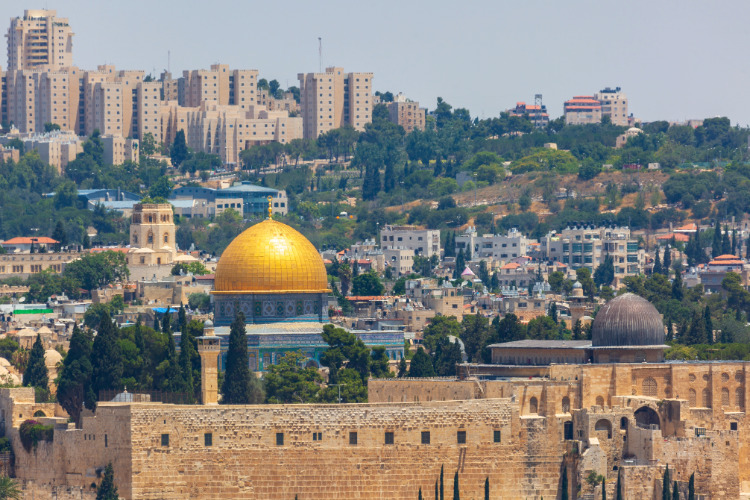
For 25 years, the Mount Moriah Trust has supported struggling Christians across the Holy Land, bringing practical assistance, encouragement and hope to believers facing hardship and persecution.
27 October 2026
3.1 MINS
As the disciples discovered through a huge haul of fish, we can trust Jesus for a net-breaking, boat-sinking catch of people.

26 October 2026
3.2 MINS
Following Paul's example in Ephesians 1, let us pray for the Father to open the eyes of our hearts so that we may grasp the hope of his calling, the riches of his glorious inheritance in the saints, and the greatness of his power towards us who believe.

25 October 2026
4 MINS
Prayer is active partnership with God, and he is awakening his body to prayer, not by might or by power, but by his Spirit.



Thank you for such a detailed and well explained article. I looked up all the scriptures in Romans and you have explained it very clearly.
Strong articulation personified.
Thank you Dr Tim.
Wow! Thank you for that1 I say “YES!” Yes, Yes, yes! – for joining up the dots (the Scriptural ones)!
Thanks so much Tim. This was the tension that Luther couldn’t cope with in the end and so descended into antisemitism when the Jews he knew would not convert. Those of us who have fellowship with believing Jews in Israel and here are so blessed to see God’s purposes at work. Praying for our believing friends and families (and ourselves) to have our eyes opened where they have been shut to God’s truths.
This is a wonderful summary of the Biblical truth. My prayer is that it will be taught in our Bible and theological colleges so that the disease of replacement theology will be exposed.
Amen, Dr Bruce Searle!
Excellent unveiling of Scripture. May it be spread far and wide.