


Pope to the Priesthood: “Don’t Use AI to Write Sermons”
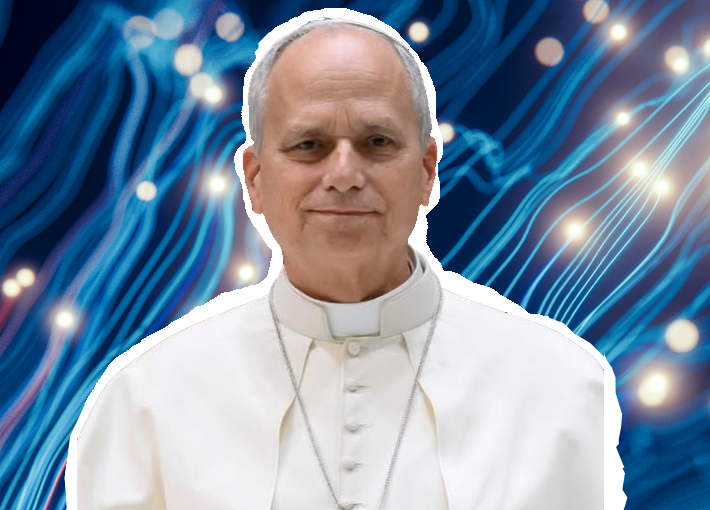
Pope Leo XIV has warned clergy against using AI to write sermons, urging pastors to engage real people, exercise their intellect, and prioritise authentic pastoral care over digital shortcuts.
Pope Leo XIV has told clergy not to use artificial intelligence to write sermons.
Using AI, he argued, undermined pastoral care and a pastor’s intelligence.
“The brain needs to be used,” he said.
“Just as all the muscles in the body die if we do not use them, intelligence needs to be exercised a little so as not to lose it.”
Pope Leo’s remarks were made during a question-and-answer session in Rome.
His focus was on encouraging clergy to sharpen the cure of souls (care of souls).
Pastoral Care Requires Real-World Presence
Consequently, Pope Leo’s overall directive consisted of telling clergy to get off the internet and get back to work, learning the lived reality (context) of those in their community.
“Knowing their reality, being close to them in this sense, accompanying them informs witness, empowers example and better connects the community with evangelism.”
“Let us call them, let us go and visit them. Let us also make an effort to help these people who are isolated and suffering.”
“Today, with fewer priests and more elderly people, it has become a matter of: ‘Oh well, let’s send the lay people, they’ll do it.’”
While lay people do a great job, Pope Leo explained, “this doesn’t mean priests can stay at home looking at the internet.”
“If we can offer a service that is, let’s say, enculturated, in the place, in the parish where we are working, people want to see your faith, your experience of having known and loved Jesus Christ and His Gospel.”
“This is something we must cultivate continuously.”
Connecting offline is a “very important form of pastoral care.” Especially, “living out a closeness with those who suffer.”
“AI will never be able to share the faith!” he exclaimed.
Therefore, “resist the temptation to prepare homilies with AI!”
Pray, seek dialogue and ground the experiences of life authentically in the Lord. From here, “we can offer something that is not ours,” he added.
Faith Cannot Be Shared by Algorithms
Believing we are practising real-world engagement online is “often an illusion of the internet,” he said.
“‘I have so many followers, so many likes, because they see what I’m saying.’”
Reminding pastors that their goal is to preach the Gospel, not to farm likes, shares and comments, Pope Leo said, “If you’re not transmitting the message of Jesus Christ”, you’re doing it wrong.
“We need to reflect very carefully and with great humility on who we are and what we are doing.”
Elsewhere, clarifying what he meant by humility, the Pope stated that this is an,
“attitude of wanting to recognise that it is not me, it is the Lord who gave me life, it is the Lord who accompanies me and carries me in his arms, even in those moments when I am weakest.
“The Lord is there with us. And living with this spirit gives life, hope.
“With this attitude of love, service, humility and listening, we can truly discover what we can do to respond to the community where we are called to serve.”
On the subject of smartphones, the Pope admitted he had one.
He also suggested that he had an app about prayer, then added the caveat, saying he didn’t consult it in order to pray.
“With the famous smartphone, which probably all of us carry in our pockets today, we live alone. Even if they say, ‘No, my friend is here’, there is no human contact.”
From Online Followers to Genuine Relationships
We all “live in a kind of distance from others, a coldness, without knowing the richness and value of truly human relationships.”
“So there too we must seek to offer young people another kind of experience of friendship,” Pope Leo instructed.
By “sharing the Gospel little by little, with communion, we can invite them to know Jesus, who invites us to be not his servants but his friends.”
“To do all this takes a lot of time, sacrifice, and reflection,” he sympathised.
Pope Leo’s AI remarks are consistent with his call to “reignite the gift of God and rediscover pastoral zeal.”
He said he understood the pressures on ministers.
Being worn down by “fatigue, the burden of routine, and discouraged by the world’s disaffection with faith, only proved this gift of God had to be fuelled and revived constantly.”
Pope Leo’s directive is about adopting the new to fan the flames of the old.
This isn’t about banning technology. It’s about dependency on AI making clergy unfit for ministry.
“A life of links without relationship, or likes without affection, disappoints us,” the Pope later wrote on Instagram.
“We are made for truth: when it is missing, we suffer.”
Hence, the former admonition: don’t use digital shortcuts.
___
Image background courtesy of Unsplash.
7 Comments
Leave A Comment
Recent Articles:
8 October 2026
3.6 MINS
John Anderson warns that Australia’s decline is rooted in spiritual and cultural disintegration, calling for a recovery of Christian foundations, social cohesion and national purpose.

8 October 2026
4.1 MINS
Aboriginal communities in Central Australia already know the gospel message. What they need now, Robyn Murray writes, is discipleship, encouragement and Christians willing to pray and participate.
8 October 2026
4.1 MINS
Italy honours St Francis of Assisi 800 years after his death, celebrating a saint whose devotion to Christ, radical simplicity and message of peace continue to shape generations.

8 October 2026
4 MINS
Christ’s authority and concern is not limited to the four walls of the church. They extend to the life of the nation, and we are called to take up our part in seeking its righteousness.
7 October 2026
1.5 MINS
Across the Middle East, North Africa and Anatolia, Christianity once shaped entire civilisations. Could Britain’s Christian heritage likewise become a memory rather than a reality?
7 October 2026
6 MINS
What can Tucker Carlson’s interview with Jacob Rees-Mogg teach us about political disagreement? Their clash over war, Russia and national defence highlights the importance of listening carefully and understanding an opponent’s position before attempting to refute it.

7 October 2026
8.5 MINS
Gerald McDermott’s work challenges Christians to approach Israel through Scripture first, exploring God’s covenant faithfulness, Christian Zionism, Jewish identity and antisemitism.



Well said, Pope Leo ix! Lazy Clerics preaching AI sermons is a “No, No “.The Pope wants priests to visit and help persons in need and the elderly , not leave it exclusively to Lay Persons, while the lazy priests watch their phones or computers.
We are very blessed to have a very Godly and prayerful man of God in Pope Leo. Great article Rod!!!!
Sacred Heart of Jesus, please bless our Holy Pope, Pope Leo! Cover and seal him with your Most Precious Blood that pours out from Your Sacred Heart, and protect him from all dangers of body, heart, mind, soul and spirit!
Viva iL, Papa!
I think the pope is being too simplistic.
I was a ‘B’ grade student and was surprised when someone recently described me as ‘intelligent’.
When I was at school being ‘intelligent’ meant you had the ability to read boring books and successfully answer exam questions about them.
On reflection I realised I am not ‘intelligent’; — I am ‘open minded’ and ‘curious’. AI is the definition of ‘intelligent’ but it can’t be open minded or curious.
Imho, priests should definitely use AI to help them write sermons. They will do it much quicker and better. They can then use the time they have saved ministering to their congregation.
I have recently been forced to get information from AI, and from the bit of info that I already knew on the subject, I could see that AI was wrong in part of it’s so called intelligence.
For Priests to trust this source for truthful sermons that are to help their congregations, is gross folly.
Thank you for that information. I would be really interested in more details because I am currently studying AI and presenting my observations to a group of elders at the University of the Third Age (U3A).
I think AI has very interesting implications for Christianity.
My email is info@robmckilliam.com.au.