


Have We Given Up on Modesty? Leadership Without Shame
Is modesty dead? Is it an idea whose time has come and gone? There are, of course, many ways to try and answer this. However, as a start, we can observe that the level of public sensuality has increased significantly in the last fifty years.
We have seen it in the media in blatant ways — nudity, sexual intimacy, and different pairings of people have grown more common by the decade. What was once unthinkable in terms of public display is now seen everywhere. If you doubt any of this, simply visit an Australian beach on any summer’s day, or look around at what people are wearing at shopping centres.
Modesty: A Reversal of Public and Private
There has been a great reversal. That which was to be done in private (our personal intimacies) is now done in public, while that which was to be done in public (like discussions about the basis of our morality) is now only to be undertaken in private.
This is why the concept of honour in public office also seems to be waning. In NSW, a premier resigned over forgetting to declare a bottle of wine given to him as a present. Now politicians and bureaucrats will cling to their office despite any lies they might have told or any failures in their actions.
But why? Why is it that we are increasingly moving towards insensitive patterns of intimacy in speech and actions, which leads to a loss of honour?
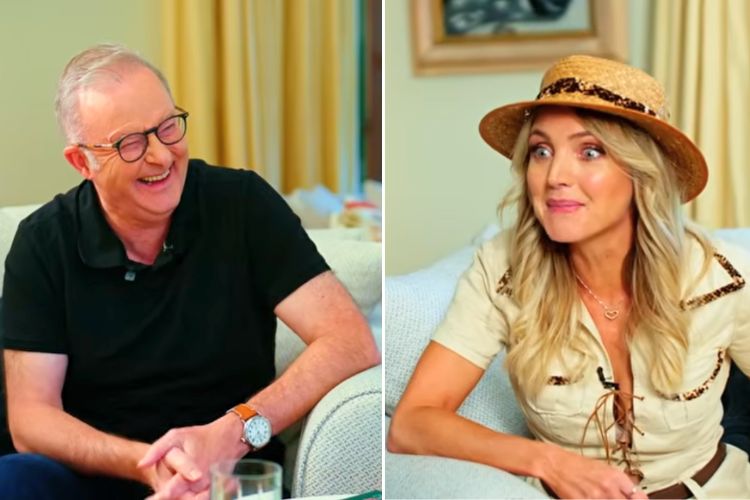
For example, we now have come to the situation of our Prime Minister making lewd and sexually demeaning comments towards a music star and a foreign leader. He then publicly discussed his intimacy habits with his wife.
Understanding the Reversal
Some people have tried to play this last event down as the PM just being playful, but maybe unwise in his political assessment. Others have been enraged by the crassness of it all (I suggest, appropriately so). Others have noted the apparent rank hypocrisy given the PM’s previous comments about never belittling or objectifying women.
However, authors such as Carl Trueman have written extensively on this pattern of increasingly politicising our sexual identity, like others through the 20th century. C. S. Lewis warned of the loss of any absolute moral standards if our ethics became relativised (e.g., “My morals are what I feel they are”).
Lewis’ friend Owen Barfield warned that if humans give up on understanding the non-material aspect of life, we will become nothing but objects to ourselves and each other, to be used as we see fit.
Theologically, J. I. Packer, after writing his well-known Knowing God, then wrote Knowing Man to warn of the reductionist implications of secularised humanism.
More recently, the Christian philosopher J. P. Moreland similarly warned of the dangers of ‘soft and hard scientism’, where people only used ‘the science’ to decide moral questions, thus ignoring that we are spiritual as well as physical beings.
In this latest book (The Desecration of Man), Trueman uses the history of ideas to explain how the desecration of God has led to the desecration of humanity. It is a fine read. In particular, his explanations of how the West progressively moved to a different ‘social imaginary’ (which, simply put, summarises how people imagine their daily lives together in terms of purpose and usual ways of relating) that has moved us from being transcendently focussed (on the Creator and his ways) to being immanently focussed — what is the good life, as defined for us by us?
In summary, we now live in an emotionally oriented individualistic society that is focussed on one’s personal interpretation of identity through a lens of politicised sexual categories — or Critical Identity Theory for short. This focus encourages feelings-based decisions that celebrate the tearing down of traditional norms of family, sexuality, and therefore modesty. Some describe this as being the ‘anti-hero.’
Scripture on Sacredness and the Body
However, there are other clues that come from a much older source. The apostle Paul warned new followers of Jesus in Rome of the danger of ignoring God. In doing so, he was applying principles that were well established in the Old Testament Torah and the teachings of Jesus, the Christ. His applications were clear and relevant when he wrote them, and are still so today.
For example, in Romans 1 Paul wrote that when people take good parts of God’s Creation and use them while ignoring him, their thinking would be meaningless (“futile”). Paul further explains that, given the eternal weight of those godless ideas and actions, they lead to debased living rather than fruitful lives — contrary to how God made us to live.
As Jesus summarised it, to be more than clever, we not only have to know about his ways, but we must put them into practice (see the story of building on the rock and not on the sand in Matthew 7).
Why then are we surprised when people who disregard the sacredness of the Creator disregard the sacredness of their bodies? Does this not logically lead them to be disrespectful in what they display before others — and thus disrespectful to their own bodies as well?
I know this discussion can decline into claims of being prudish and legalistic — but modesty, like all our relational lives, is about learning to live God’s way. That means not putting in others’ way what we know is not the best for them. Is blatant sexual flaunting good for others? Does that kind of action remind us that everyone is made in God’s image to be doing his good work in safety and care? Or does such action objectify them because when we dress provocatively, we are feeding our own base desires?
Here is a hint — when people in public office will not take their oaths on the Bible, what does that say about what their morals are based upon? When I write to them, it often reveals that they either do not know or do not want to say what they really believe, beyond simplistic political motherhood statements.
A Better Way Forward
Perhaps those who do have a reasonable faith, like Christianity, need to do more to teach it to the young of today, so that they understand how good it is to live more closely to how we are made to live.
And here is a simple test to use if you are connected to a Christian church or school — do the students learn any part of the Bible in depth that explains God’s ways of living? For example, the Ten Commandments, the Beatitudes, the Parables of Jesus, or any significant part of Scripture?
If Greg Sheridan is right (in his Why God is Good for You), we have not done this very well at all for the current generations.
So, the choice may be simple — what is the better life? Leaders joking about ‘shagging’? Or knowing the joy of a godly, loving commitment expressed thoroughly, deeply, and discreetly?
___
Images via screenshots of YouTube.
3 Comments
Leave A Comment
Recent Articles:
18 October 2026
2.7 MINS
Every season of life belongs to Christ, and we don't retire from discipleship as we grow older. In fact, our older years hold unique gifts for the younger generations.
17 October 2026
3.4 MINS
Seeking the face of God means surrender, laying aside our agenda and wants. Revival begins when we want God himself more than we want the outcome.
16 October 2026
4 MINS
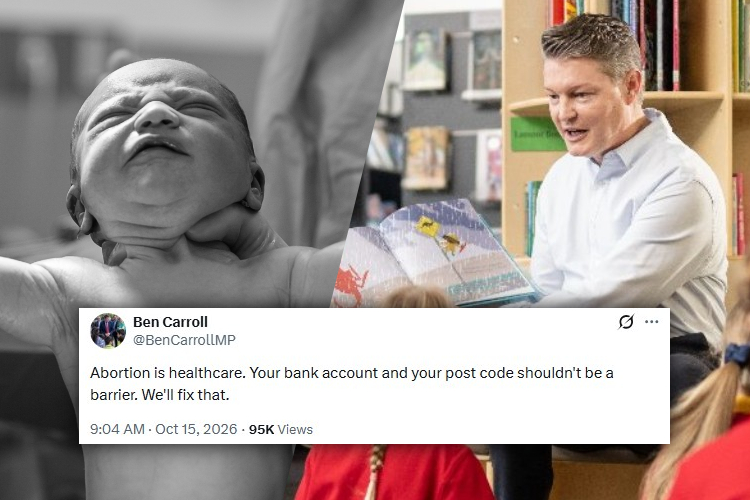
A desperate Victorian Labor Party is peddling taxpayer-funded abortions as free “healthcare”. In a shameless attempt to stay in power, they're willing to do anything — including killing the unborn and forcing taxpayers to pay for it.

16 October 2026
4 MINS
Katie Zacharia’s first days as White House Press Secretary have sparked fierce media criticism, but her remarkable testimony of surviving an abortion attempt tells a deeper story.
16 October 2026
3.4 MINS
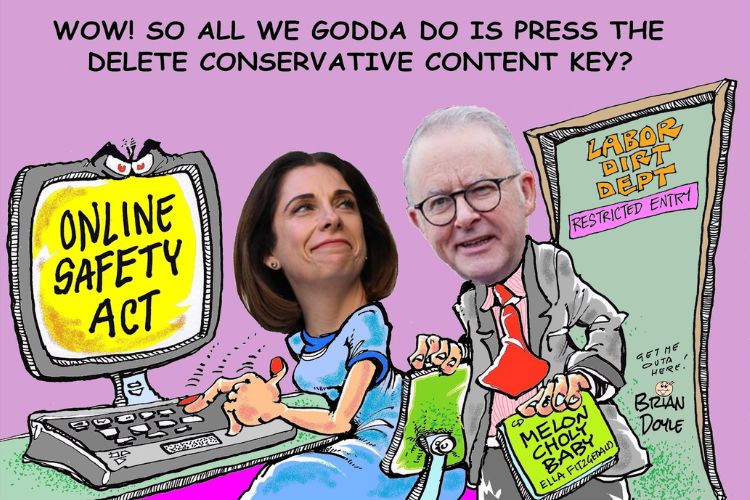
Australia’s proposed digital duty of care laws promise greater online safety and increased user control by switching off algorithms, but critics warn they could give ministers sweeping powers to restrict lawful content and threaten free speech.
A Million Women Movement Marks Second Anniversary: “Look What the Lord Has Done! Ishtar Has Fallen!”
16 October 2026
2.8 MINS
Two years after A Million Women gathered in Washington for ten hours of prayer and fasting, organisers point to victories they believe reflect God’s answers to intercession.

16 October 2026
2.6 MINS
Euthanasia accounted for 4% of all deaths in Belgium in 2025, with growing numbers involving people who were not terminally ill, dementia patients and psychiatric conditions.



Thanks Stephen – well written.
What a joy to read about purity and the benefits it brings to society.
In my opinion Albanese is a Disgrace to the office of Prime Minister which demands Dignity, but, what can you expect , because “The apple does not fall far from the tree ” .P.S I have omitted factual remarks which I wanted to print because of fear he would sue me .
In my opinion , Albanese ,our Worst PM ever –worse than Labor Whitlam , Keating, Gillard and Liberal John Howard, the man who disarmed us, sold our Gold Reserves, flooded Australia with more Mass Migration without proper background checks , and instigated the jailing of Pauline Howard on False Charges. His venomous,vindictive attacks on her continue ! Albanese, the self -labelled ” Cultural Catholic ” = no Christian because “by their fruits, ye shall know them ” , and, his government has passed more anti-Christian Laws than any previous Australian Govt.The sooner he and his incompetent, Woke team are gone, the better life for ordinary Australians will slowly become . All these govts have done their best to ruin Australia’s economy and our once peaceful way of life with little or no consequences for bombings , violent home invasions, shootings in public, loss of Freedom and the annual approx . $900, 000 millionin Foreign Aid for amongst other things — “Climate Compensation ” to places like Afghanistan, Bangladesh , etc, which, in reality, pays for dowries to enable forced marriages of Child Brides , who, become, with their children, the Property of their husbands who have power of life and death over them! This contribution, the UN insists we pay. Conclusion :_ Albanese , not only disgusts me by his fantasy of “shagging ” which equals Mental Rape, but, he shows his contempt for the sufferings of females and young children, who live in some of the World’s most repressive societies, by assisting men in their rape and physical harm of pre-pubescent girls, the subjugation of Female Human Rights by financially making the injustice towards easier by lavishing money on their Male Oppressors. Any real Feminist should be appalled and vote Albanese and his Govt OUT !