


Albanese Government Adopts 35 of 54 Malik Report Recommendations on Islamophobia
An Islamophobia Education Taskforce and a national anti-racism framework for universities are among the measures the Albanese government confirmed this week, despite warnings earlier this year that Malik’s recommendations would favour one religion over others in Australian public life.
The Albanese government has adopted 35 of 54 recommendations from a national Islamophobia report, confirming a February warning that its measures would embed compulsory religious content and conduct rules tied to a single faith across Australian institutions.
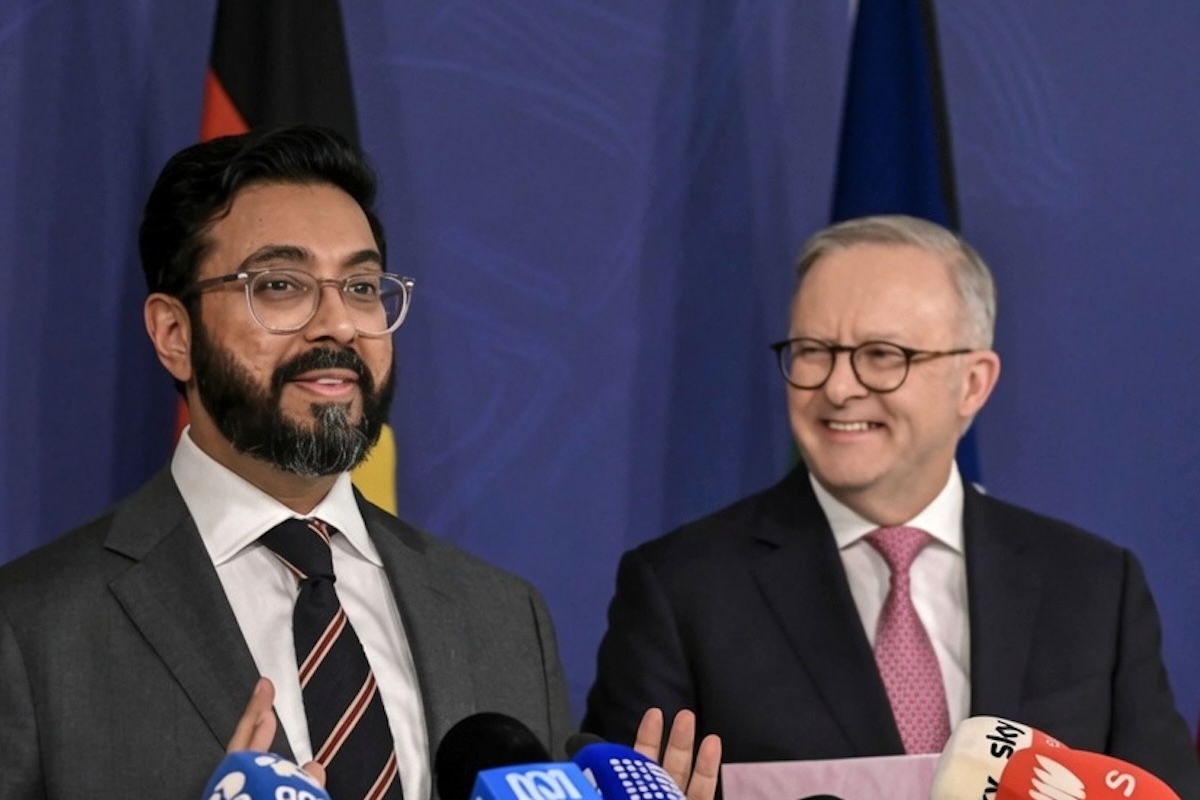
Prime Minister Anthony Albanese announced the package at a Sydney press conference on Saturday, calling it “practical action to keep communities safe and strengthen our social cohesion,” built on the four themes Special Envoy Aftab Malik set out in his report. “We’re already progressing recommendations while continuing work on the remaining ones,” Albanese said.
Multicultural Affairs Minister Anne Aly said the response was a milestone moment, and that Islamophobia was “dangerously close to becoming normalised”.
Aftab Malik, who submitted his report in September 2025, used the same press conference to urge the government towards “stronger and more consistent legal protections” and “further national examination of Islamophobia”.
He acknowledged that government “must balance competing priorities” and “navigate complex legal and policy questions”. But he added that Muslim Australians “should not be expected to bear the cost of that complexity indefinitely,” and that his report remained “the benchmark against which progress should be measured”.
Recommendations Adopted Despite February Warning
As part of its response to the Malik report, the Albanese government has announced it will establish an Islamophobia Education Taskforce and a Social Cohesion Education Advisory Council. It will also direct the Australian Curriculum, Assessment and Reporting Authority to review school curriculums for “opportunities to strengthen racial and religious tolerance”. A new Social Cohesion Framework for schools will follow.
The Advisory Council will also implement a national anti-racism framework for universities.
The government will strengthen Commonwealth regulation of higher education so the Tertiary Education Quality and Standards Agency can monitor universities’ compliance with “anti-discrimination obligations”.
Funding will also flow to embed “anti-racism, cultural safety and diversity best practice” into early learning and school-age care through the National Quality Framework, alongside a new online Social Cohesion Education Hub for educators and parents.
An independent review published earlier this year by education researcher Dr Terry Harding warned that, if implemented, the Malik report’s recommendations would see Islamic content mandated in state school curriculums and give one religious group influence over parliamentary conduct rules.
Harding noted that religious education in Australian state schools has held “opt-in” status since 1872, and argued the Malik report’s curriculum recommendations would reverse that principle for one faith. He wrote that mandating Islamic content across school subjects “gives the appearance… of a government-preferred religion soon to be inhabiting what has been deemed to be a secular school system.”
On Parliament, Harding pointed to the Senate’s suspension of Senator Pauline Hanson in November 2025 over her protest against the wearing of burqas as evidence existing conduct rules were already being enforced. “No single religious group of Australians should be empowered to scrutinise and influence the Australian Parliament in pursuit of its own vested interests,” he wrote.
In comments provided exclusively to The Daily Declaration, Dr Terry Harding said the Albanese government’s package would bring “major changes to Australia’s democratic culture” through what he called “nationally-institutionalised preferments of one religion and its adherents”. He said Albanese was “hiding the details of his intention in these four broad, generalist categories”.
Harding pointed to the government’s plan to develop “Australia’s first Islamophobia Index, to measure trends, drivers and impacts of Islamophobia.” He said the format echoes that of the Australian Christian Freedom Index, published by the Canberra Declaration, which has yet to prompt a comparable government response.
Harding told The Daily Declaration he sought a recommendation-by-recommendation breakdown of the 35 adopted and 19 unadopted measures from his local MP, the Prime Minister’s Sydney and Canberra offices, and contacts across the political spectrum. He said even Labor could not produce one.
Recommendations Yet To Be Adopted
Malik’s report asked the Prime Minister’s department to “conduct an independent review of counter-terrorism laws, policies and practices to investigate potential discriminatory application and effect,” specifically examining “the potential discriminatory application and effect on Muslim-Australian communities”.
It also proposed the Attorney-General’s Department clarify “that the ethno-religious category within the definition of race in the Racial Discrimination Act 1975 (Cth) includes Muslims, the same way it includes Jews and Sikhs,” and asked Home Affairs to “make clear the Minister’s ability to refuse visas for visitors promoting hate speech, including those with a history of promoting Islamophobic hatred.”
None of these three measures appears among those the government has confirmed adopting, though Albanese signalled the outstanding recommendations remain live. “We’re already progressing recommendations while continuing work on the remaining ones,” the Prime Minister said.
Malik said he will continue monitoring the government’s progress on adopting the recommendations in his report, adding that where recommendations “remain outstanding, I will continue to advocate for them.”
The Australian Federation of Islamic Councils welcomed the government’s recognition of Islamophobia as a “serious national problem” but said its response doesn’t go far enough.
AFIC president Dr Rateb Jneid questioned why the government had not published “a public recommendation-by-recommendation response setting out the status of all 54 recommendations”.
He said the package combined “a limited number of new commitments” and gave “no funding amount for most of the newly announced” measures.
Jneid said Islamophobia “is also embedded in institutional practices, public policy, political rhetoric and systems that produce unequal outcomes,” adding that the government’s response gave “insufficient attention to structural racism and institutional Islamophobia” — including the counter-terrorism, legal and hate-crime measures proposed by Malik.
___
Image courtesy of OSECI.
2 Comments
Leave A Comment
Recent Articles:

22 July 2026
4 MINS
Although FIFA is finished for 2026, when the replays begin, this year’s tournament should be remembered as the World Cup for Christ. FIFA WC26 saw a record number of Christian players put their faith on the field.
22 July 2026
5.4 MINS
Also known as “Uncle Lindsey” among the democratic Iranian-Australian community, Senator Graham was a man known for his relentless pursuit of democratic values throughout the world.
22 July 2026
3.3 MINS
Senator Andrew Bragg asserts that Muslim terrorism has nothing to do with Islam. It’s all down to a mutation in their own mind. But why aren’t Baptists, or Presbyterians, suffering this same mutation of the mind that leads to acts of violence?
22 July 2026
2.7 MINS
We need to talk about the situation in Tasmania and how we desperately need prayer. The Greens have introduced a “Conversion Practices Prohibition Bill” into the Tasmanian Parliament that will have devastating ramifications for Christians, parents, and all those who, of their own volition, want to break with the current cultural state-sanctioned morality.
21 July 2026
5.6 MINS
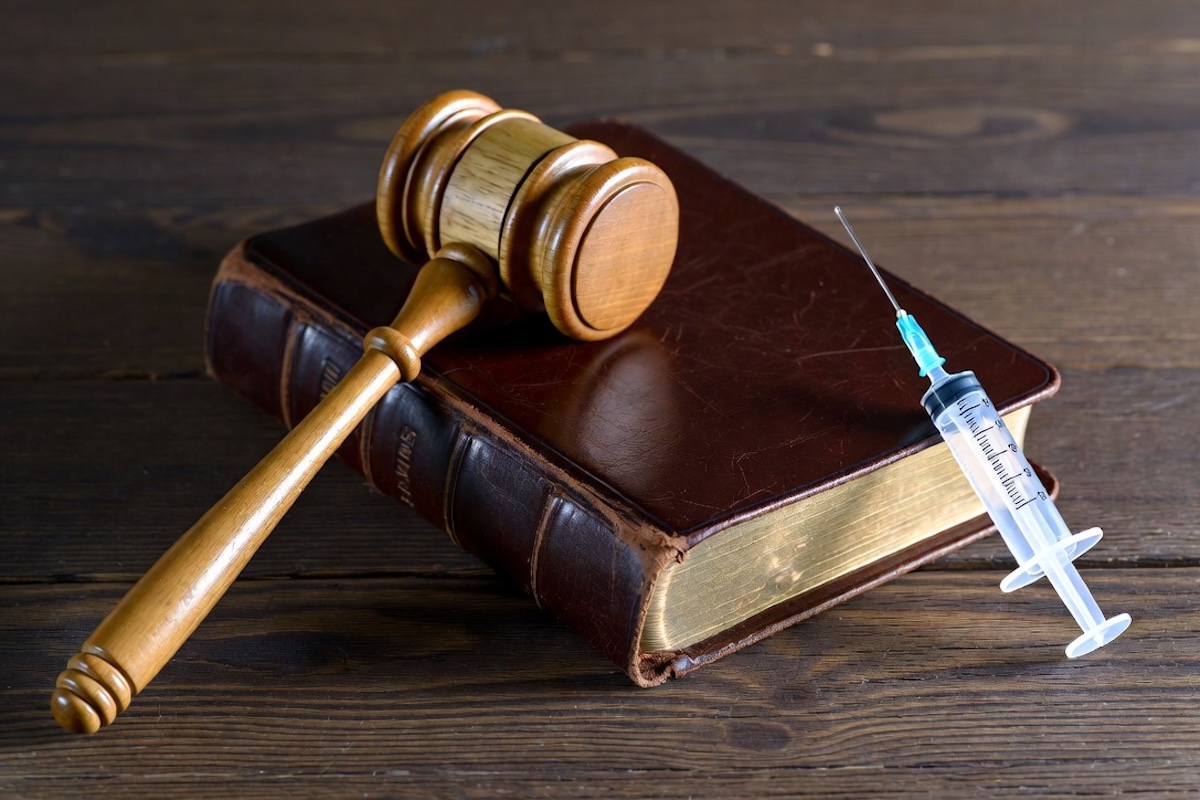
The Queensland government has failed for a sixth time to have a Christian’s religious freedom case against COVID-19 injection mandates thrown out of court, with a tribunal member describing part of the government’s argument as “difficult to understand”.
21 July 2026
2.5 MINS
The ABC was quick to mock Malcolm Roberts' conspiracy theories — but strangely incurious when Liberal senator Andrew Bragg rewrote biology.
21 July 2026
10.3 MINS
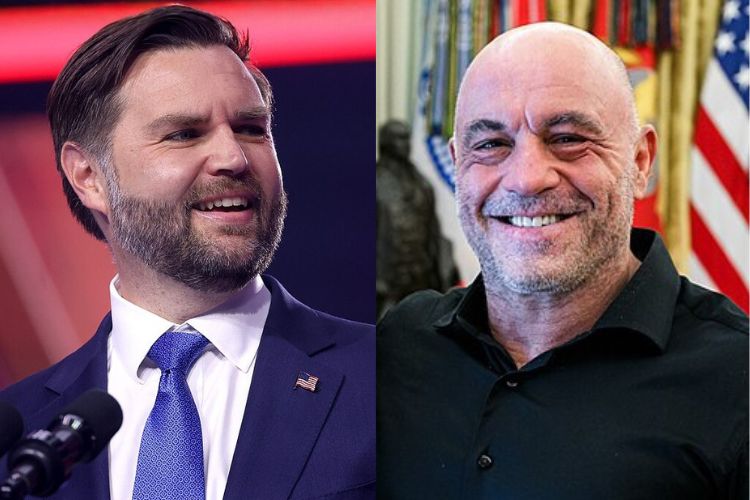
In an age of performative outrage, a UFC fighter makes a crude joke and it becomes national news. A comedian's one-liner ignites days of social media fury. Vice President J.D. Vance and Joe Rogan agree: America has built an entire economy around manufactured scandal, and it's poisoning our ability to have real conversations about real problems.



Islam is peace?
We need to understand the Islamic definition of peace.
In order to have Dar al-Salam (house of #peace) you must have Dar al-Islam (house of #Islam).
Where you don’t have Dar al-Islam you have by definition Dar al-Haram (house of #war).
So #Muslims have to ultimately kill or convert all #infidels in order to reach peace.
This is where the Islamic Ideology (aka the islamic political system) and Aussie values really clash.
It has little to do with religion.
I do not accept the word Islamophobia.
It’s a word that was invented by the Muslim Brotherhood to suppress all criticism of the Islamic world in order to enable an agenda of Islamisation and Islamic conquest.
The term Islamophobia is itself oppressive, and violent.
islam is an evil and cruel political ideology wrapped in a false religion based on a false prophet, false ‘holy’ texts, and a false god/ allah.
islam is death.
Here is a consolidated list of 20 major terrorist organisations active today, drawn from GTI (Global Terrorism Index https://reliefweb.int/report/world/global-terrorism-index-2026) data and corroborating sources. (All groups listed are responsible for severe harm, mass violence, and human rights abuses.)
GTI 2026 shows 70% of global terrorism deaths come from just four groups: IS, JNIM, TTP, and Al Shabaab.
Top 20 Terrorist Groups in the World Today (2025–2026)
1. Islamic State (IS / ISIS) — Deadliest group globally; active through affiliates in the Middle East, Africa, and Asia.
2. Jamaat Nusrat al Islam wal Muslimeen (JNIM) — Dominant jihadist coalition in the Sahel (Mali, Burkina Faso).
3. Tehrik e Taliban Pakistan (TTP) — Driving Pakistan’s sharp rise in terrorism.
4. Al Shabaab — Somalia based; responsible for mass casualty attacks across East Africa.
5. Islamic State West Africa Province (ISWAP) — IS affiliate; responsible for most terrorism deaths in Nigeria.
6. Boko Haram — Nigeria-based jihadist group; continues attacks despite fragmentation.
7. Allied Democratic Forces (ADF) — IS affiliate in the DRC; rising violence targeting civilians.
8. Taliban — Although governing Afghanistan, still designated terrorist by several states; linked to regional destabilisation.
9. Al Qaeda — Decentralised global jihadist network; active via affiliates.
10. Al Qaeda in the Islamic Maghreb (AQIM) — North African jihadist group; now largely merged into JNIM.
11. Al Qaeda in the Arabian Peninsula (AQAP) — Yemen-based; historically responsible for major international plots.
12. Hamas — Designated terrorist organisation by multiple governments; responsible for mass casualty attacks including Oct 7.
13. Palestinian Islamic Jihad (PIJ) — Iran-backed militant group active in Gaza.
14. Hezbollah — Lebanon-based; designated terrorist by many governments; operates regionally.
15. Balochistan Liberation Army (BLA) — Separatist group driving attacks in Pakistan.
16. Khorasan Province (ISKP) — IS affiliate in Afghanistan; responsible for high fatality attacks.
17. Ansar al Sunna — Mozambique insurgent group linked to IS.
18. Hay’at Tahrir al Sham (HTS) — Former al Qaeda affiliate controlling parts of northwest Syria.
19. New People’s Army (NPA) — Communist insurgent group in the Philippines.
20. ELN (National Liberation Army) — Marxist guerrilla group active in Colombia and Venezuela borderlands.