


Albanese Government Adopts 35 of 54 Malik Report Recommendations on Islamophobia
An Islamophobia Education Taskforce and a national anti-racism framework for universities are among the measures the Albanese government confirmed this week, despite warnings earlier this year that Malik’s recommendations would favour one religion over others in Australian public life.
The Albanese government has adopted 35 of 54 recommendations from a national Islamophobia report, confirming a February warning that its measures would embed compulsory religious content and conduct rules tied to a single faith across Australian institutions.
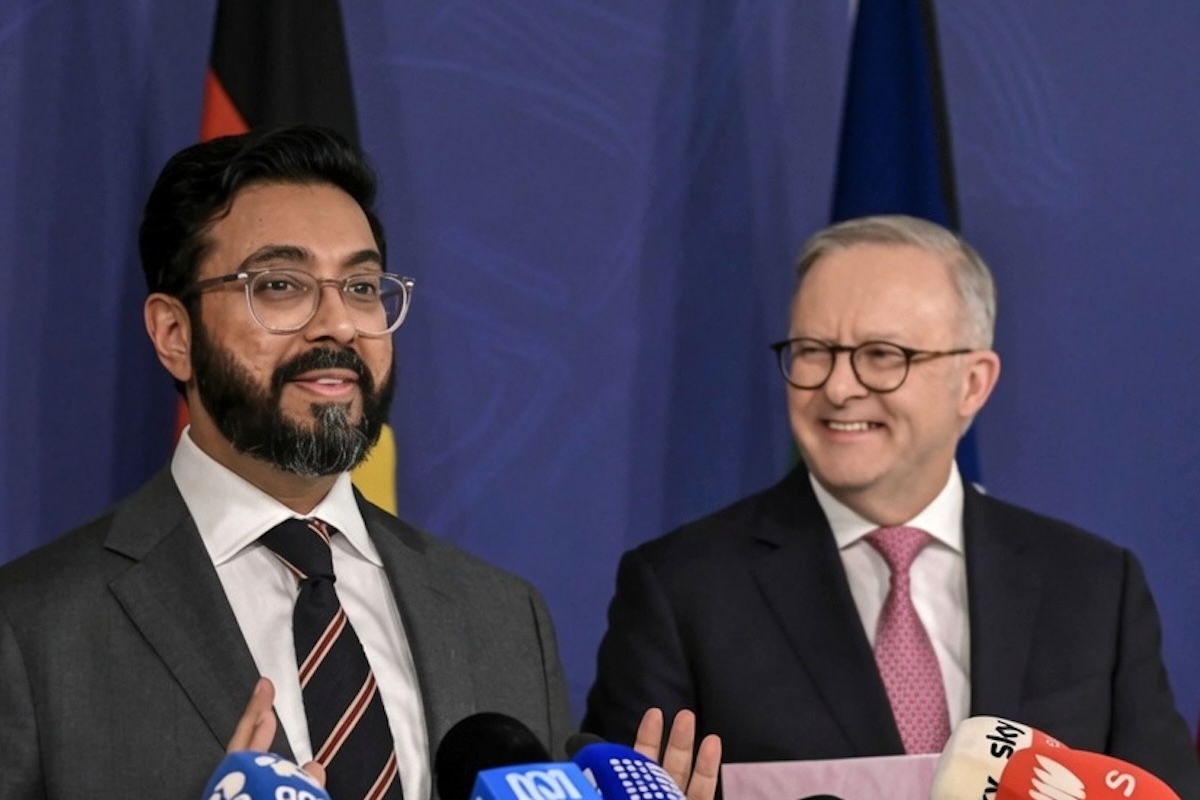
Prime Minister Anthony Albanese announced the package at a Sydney press conference on Saturday, calling it “practical action to keep communities safe and strengthen our social cohesion,” built on the four themes Special Envoy Aftab Malik set out in his report. “We’re already progressing recommendations while continuing work on the remaining ones,” Albanese said.
Multicultural Affairs Minister Anne Aly said the response was a milestone moment, and that Islamophobia was “dangerously close to becoming normalised”.
Aftab Malik, who submitted his report in September 2025, used the same press conference to urge the government towards “stronger and more consistent legal protections” and “further national examination of Islamophobia”.
He acknowledged that government “must balance competing priorities” and “navigate complex legal and policy questions”. But he added that Muslim Australians “should not be expected to bear the cost of that complexity indefinitely,” and that his report remained “the benchmark against which progress should be measured”.
Recommendations Adopted Despite February Warning
As part of its response to the Malik report, the Albanese government has announced it will establish an Islamophobia Education Taskforce and a Social Cohesion Education Advisory Council. It will also direct the Australian Curriculum, Assessment and Reporting Authority to review school curriculums for “opportunities to strengthen racial and religious tolerance”. A new Social Cohesion Framework for schools will follow.
The Advisory Council will also implement a national anti-racism framework for universities.
The government will strengthen Commonwealth regulation of higher education so the Tertiary Education Quality and Standards Agency can monitor universities’ compliance with “anti-discrimination obligations”.
Funding will also flow to embed “anti-racism, cultural safety and diversity best practice” into early learning and school-age care through the National Quality Framework, alongside a new online Social Cohesion Education Hub for educators and parents.
An independent review published earlier this year by education researcher Dr Terry Harding warned that, if implemented, the Malik report’s recommendations would see Islamic content mandated in state school curriculums and give one religious group influence over parliamentary conduct rules.
Harding noted that religious education in Australian state schools has held “opt-in” status since 1872, and argued the Malik report’s curriculum recommendations would reverse that principle for one faith. He wrote that mandating Islamic content across school subjects “gives the appearance… of a government-preferred religion soon to be inhabiting what has been deemed to be a secular school system.”
On Parliament, Harding pointed to the Senate’s suspension of Senator Pauline Hanson in November 2025 over her protest against the wearing of burqas as evidence existing conduct rules were already being enforced. “No single religious group of Australians should be empowered to scrutinise and influence the Australian Parliament in pursuit of its own vested interests,” he wrote.
In comments provided exclusively to The Daily Declaration, Dr Terry Harding said the Albanese government’s package would bring “major changes to Australia’s democratic culture” through what he called “nationally-institutionalised preferments of one religion and its adherents”. He said Albanese was “hiding the details of his intention in these four broad, generalist categories”.
Harding pointed to the government’s plan to develop “Australia’s first Islamophobia Index, to measure trends, drivers and impacts of Islamophobia.” He said the format echoes that of the Australian Christian Freedom Index, published by the Canberra Declaration, which has yet to prompt a comparable government response.
Harding told The Daily Declaration he sought a recommendation-by-recommendation breakdown of the 35 adopted and 19 unadopted measures from his local MP, the Prime Minister’s Sydney and Canberra offices, and contacts across the political spectrum. He said even Labor could not produce one.
Recommendations Yet To Be Adopted
Malik’s report asked the Prime Minister’s department to “conduct an independent review of counter-terrorism laws, policies and practices to investigate potential discriminatory application and effect,” specifically examining “the potential discriminatory application and effect on Muslim-Australian communities”.
It also proposed the Attorney-General’s Department clarify “that the ethno-religious category within the definition of race in the Racial Discrimination Act 1975 (Cth) includes Muslims, the same way it includes Jews and Sikhs,” and asked Home Affairs to “make clear the Minister’s ability to refuse visas for visitors promoting hate speech, including those with a history of promoting Islamophobic hatred.”
None of these three measures appears among those the government has confirmed adopting, though Albanese signalled the outstanding recommendations remain live. “We’re already progressing recommendations while continuing work on the remaining ones,” the Prime Minister said.
Malik said he will continue monitoring the government’s progress on adopting the recommendations in his report, adding that where recommendations “remain outstanding, I will continue to advocate for them.”
The Australian Federation of Islamic Councils welcomed the government’s recognition of Islamophobia as a “serious national problem” but said its response doesn’t go far enough.
AFIC president Dr Rateb Jneid questioned why the government had not published “a public recommendation-by-recommendation response setting out the status of all 54 recommendations”.
He said the package combined “a limited number of new commitments” and gave “no funding amount for most of the newly announced” measures.
Jneid said Islamophobia “is also embedded in institutional practices, public policy, political rhetoric and systems that produce unequal outcomes,” adding that the government’s response gave “insufficient attention to structural racism and institutional Islamophobia” — including the counter-terrorism, legal and hate-crime measures proposed by Malik.
___
Image courtesy of OSECI.
9 Comments
Leave A Comment
Recent Articles:
12 October 2026
4.6 MINS
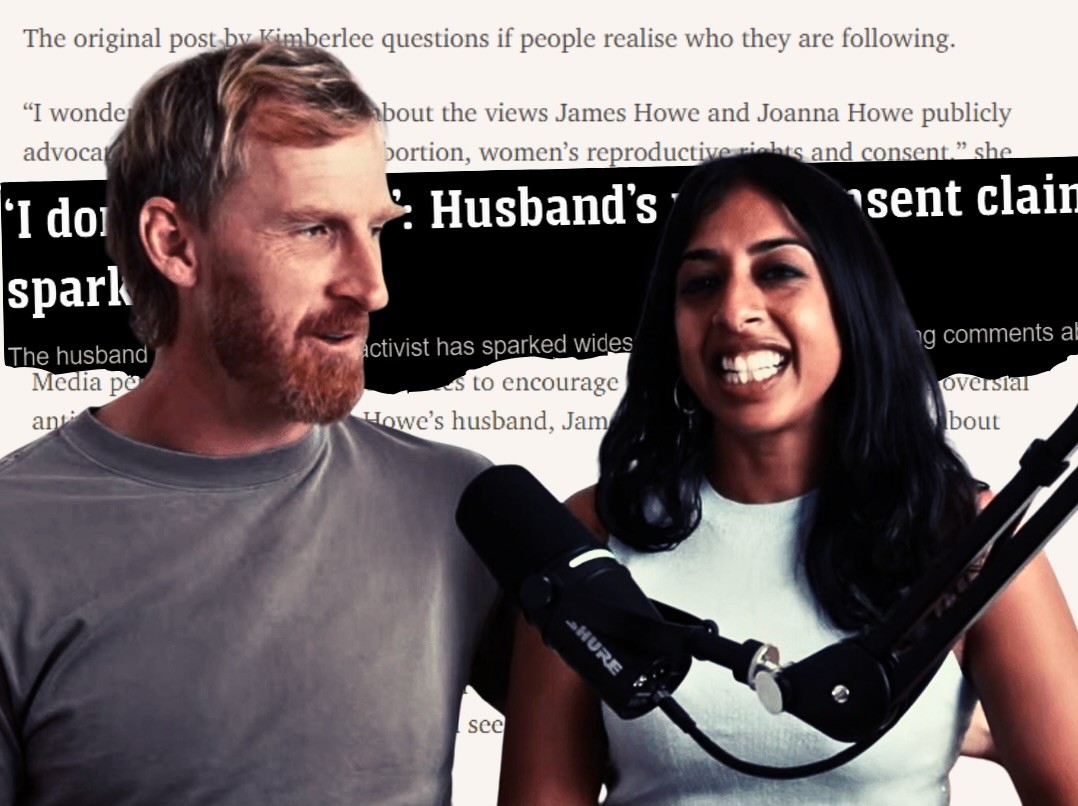
Learn how journalists use loaded language, selective quotes and misleading headlines to shape public opinion, using a controversial report about James and Joanna Howe as a case study.
12 October 2026
12.9 MINS
God’s judgement can seem difficult to reconcile with His goodness. But Scripture presents God’s perfect justice as something we can celebrate — and His present offer of mercy through Jesus as the good news.
12 October 2026
3.1 MINS
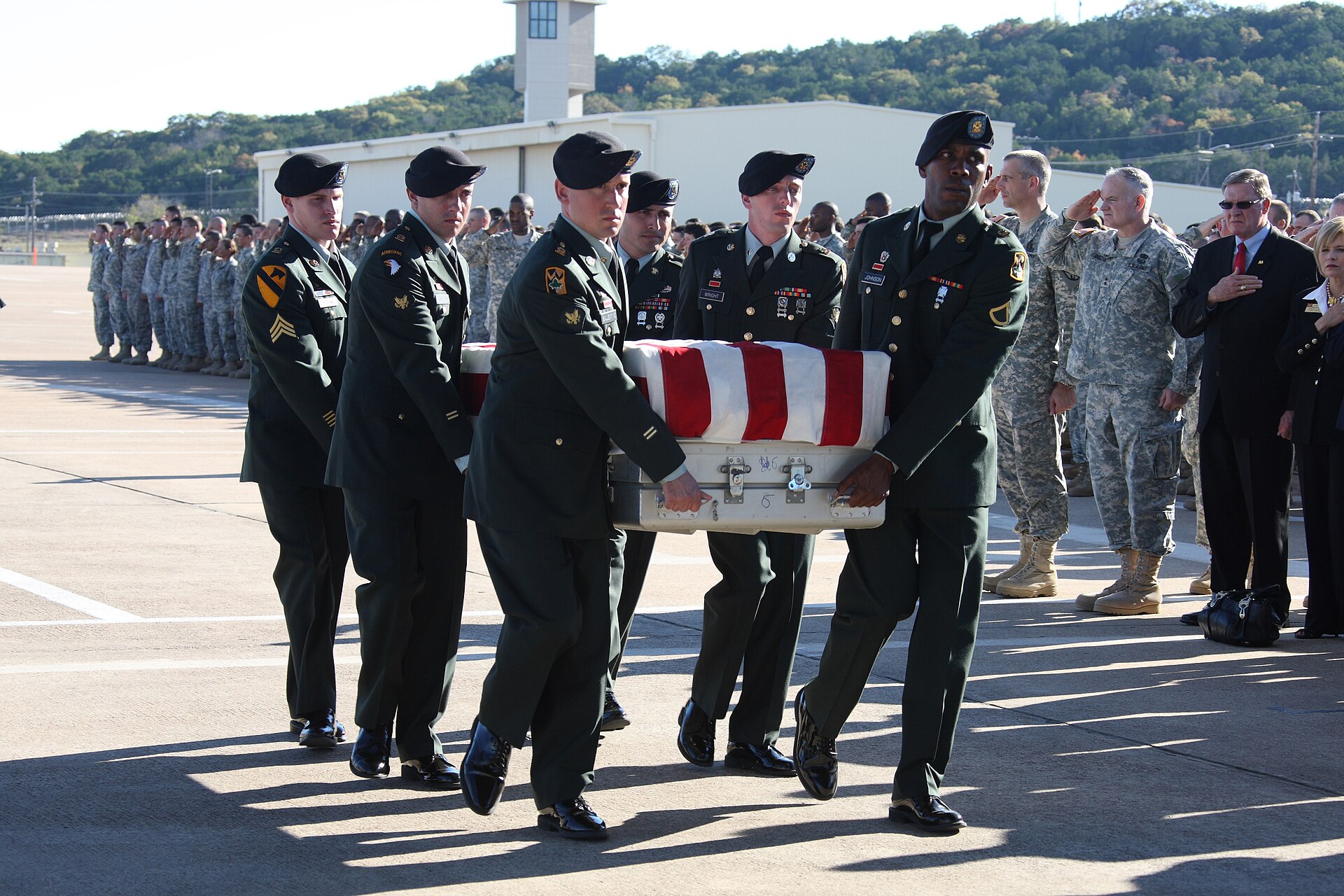
The proposed livestream of Nidal Hasan’s execution has reignited debate over justice, deterrence and public accountability, with critics comparing American justice to ISIS propaganda.
12 October 2026
3.7 MINS
An EU court case over baptismal records could pit data protection laws against religious freedom, raising serious questions about whether governments can compel churches to erase sacramental history.
12 October 2026
3.3 MINS
In the week leading up to Christ’s crucifixion, Jesus' soul was troubled. He responded with a bold prayer, and his example challenges us to that same boldness.
11 October 2026
2.6 MINS
Jesus offers us intimate friendship, which produces great joy as we walk closely with him.
10 October 2026
4.1 MINS
When Jesus rebuked the Laodicean church, this was not a sign of his lack of love, but proof of it and how greatly he longs to reward and bless us. He is knocking — will we answer?



Islam is peace?
We need to understand the Islamic definition of peace.
In order to have Dar al-Salam (house of #peace) you must have Dar al-Islam (house of #Islam).
Where you don’t have Dar al-Islam you have by definition Dar al-Haram (house of #war).
So #Muslims have to ultimately kill or convert all #infidels in order to reach peace.
This is where the Islamic Ideology (aka the islamic political system) and Aussie values really clash.
It has little to do with religion.
I do not accept the word Islamophobia.
It’s a word that was invented by the Muslim Brotherhood to suppress all criticism of the Islamic world in order to enable an agenda of Islamisation and Islamic conquest.
The term Islamophobia is itself oppressive, and violent.
islam is an evil and cruel political ideology wrapped in a false religion based on a false prophet, false ‘holy’ texts, and a false god/ allah.
islam is death.
Here is a consolidated list of 20 major terrorist organisations active today, drawn from GTI (Global Terrorism Index https://reliefweb.int/report/world/global-terrorism-index-2026) data and corroborating sources. (All groups listed are responsible for severe harm, mass violence, and human rights abuses.)
GTI 2026 shows 70% of global terrorism deaths come from just four groups: IS, JNIM, TTP, and Al Shabaab.
Top 20 Terrorist Groups in the World Today (2025–2026)
1. Islamic State (IS / ISIS) — Deadliest group globally; active through affiliates in the Middle East, Africa, and Asia.
2. Jamaat Nusrat al Islam wal Muslimeen (JNIM) — Dominant jihadist coalition in the Sahel (Mali, Burkina Faso).
3. Tehrik e Taliban Pakistan (TTP) — Driving Pakistan’s sharp rise in terrorism.
4. Al Shabaab — Somalia based; responsible for mass casualty attacks across East Africa.
5. Islamic State West Africa Province (ISWAP) — IS affiliate; responsible for most terrorism deaths in Nigeria.
6. Boko Haram — Nigeria-based jihadist group; continues attacks despite fragmentation.
7. Allied Democratic Forces (ADF) — IS affiliate in the DRC; rising violence targeting civilians.
8. Taliban — Although governing Afghanistan, still designated terrorist by several states; linked to regional destabilisation.
9. Al Qaeda — Decentralised global jihadist network; active via affiliates.
10. Al Qaeda in the Islamic Maghreb (AQIM) — North African jihadist group; now largely merged into JNIM.
11. Al Qaeda in the Arabian Peninsula (AQAP) — Yemen-based; historically responsible for major international plots.
12. Hamas — Designated terrorist organisation by multiple governments; responsible for mass casualty attacks including Oct 7.
13. Palestinian Islamic Jihad (PIJ) — Iran-backed militant group active in Gaza.
14. Hezbollah — Lebanon-based; designated terrorist by many governments; operates regionally.
15. Balochistan Liberation Army (BLA) — Separatist group driving attacks in Pakistan.
16. Khorasan Province (ISKP) — IS affiliate in Afghanistan; responsible for high fatality attacks.
17. Ansar al Sunna — Mozambique insurgent group linked to IS.
18. Hay’at Tahrir al Sham (HTS) — Former al Qaeda affiliate controlling parts of northwest Syria.
19. New People’s Army (NPA) — Communist insurgent group in the Philippines.
20. ELN (National Liberation Army) — Marxist guerrilla group active in Colombia and Venezuela borderlands.
Sounds like apartheid to me…
Our Prime minister is dangerously misled, and unable to see the threat of Islam and has not read the Koran or studied the way Islam has infiltrated many Western nations using the Govt, universities, schools and protests marches, social media and mosques in order to spread the cause of radical Islam.
If he were to read the Koran or study the situations overseas and reports by ASIO he would understand that radical Islam has come into Australia under many guises but the root issue is ignored – that it is an aggressive religion that must seek dominance over all citizens. As soon as there is a 20% majority in a country it is regarding as being their possession, or if formerly there was evidence of Islamic people being in that land (eg. camels were imported into Australia so that even the central desert of Australia is seen as a legitimate claim for Islam).
Our Prime minister and Federal Govt have missed the point that the Koran teaches that Mohammed’s followers must kill the Jews and infidels in each country they infiltrate and overtake. Instead placing strict boundaries on immigrants and those who may pose a threat in Australia we are told ‘there is nothing to see here.’ We have many crying out ‘we see danger’ in the Opposition parties but such cries will continue to be stifled by the Prime Minister’s ‘Islamophobia’ laws.
This means The Federal Govt is blinded the consequences of liberal, progressive laws that don’t carry out strict screening of who comes in, how long they sat and what activity they are engaged in. The lack of national protection means all caution is thrown to the wind… May God help us as we pray for our Govt to start to face the truth situation and to protect the democratic rights of the nation that the constitution was built on.
This government is so delusional in so many areas. Islam is probably the worst cult that this government has allowed into this nation. God help Australia 🇦🇺 if this continues. 🙏✝️📖
Hmmmm it looks like our PM may be playing straight into the hands of other parties who would be absolutely opposed to this proposal. Interesting.
Ah, the intersectionality of marxist critical theory and islamism.
No surprise that Albo’s marxist government has agreed to adopt most of the recommendations, apparently with the remainder still under consideration. I wonder what the total will be when done.
I also wonder how the antisemitism recommendations went. I’ve a hunch less of those will be adopted.
As God gain me a brain, I consider that I am allowed to think. I consider I am allowed to make an intellectual critique of any, and all religions, philosophies and ideologies, Islam being no exception. It seems to me that the Albanese government has given favoured treatment to small selections of the Australian community enabling them to work against the best interests of Australians as whole. I recall George Orwell’s words in one of his previous classics to the effect: “All pigs are equal. It’s just that some pigs are more equal than others”!
May God move mountains of ignorance concerning the tennets of the Koran and the blinding that is upon our nation and the West concerning the true aims of Islam. As said above by Kym, it is not a religion of peace. It is in fact a religion of everlasting war and all who belong to the regimes across the world are taught to infiltrate and then to ‘conquer.’
The Christian view is to respect others and keep the peace but only to worship the Lord God Almighty of love and the Bible and to follow His word and Jesus example. The ideals include living side by side with others if you can but not joining them . (Like Daniel-who never bowed down to a false god)
The opposite is true of Islam- its all about killing the jews first and then the infidels, Sharia law and imposing the Koran on all.
In contrast Jesus gave a choice to each person he approached. He also said ‘love your enemies’ and pray for them…just as Jesus did on the cross. He was a suffering servant demonstrating the love of God for the world, dying on a cross – not trying to fight with a sword to take over a country.