


Rising Above Racism: Ps Sir Doug and Lady Gladys Nicholls
Pastor Sir Doug and Lady Gladys Nicholls were a compelling double act, working throughout their lives for the human rights of Indigenous Australians without rancour, despite the injustices they witnessed and experienced.
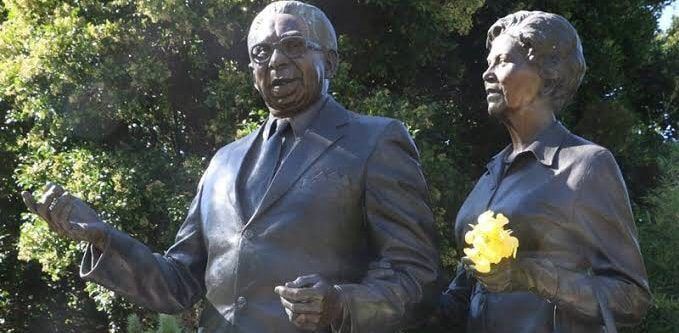
In December 2007, a crowd of 500 people outside Victoria’s Parliament building gave lengthy applause as one of Australia’s most unusual statues was unveiled. The bronze figures of a husband and wife stand arm in arm – he with a welcoming smile, an open stance and a hand extended — she, erect beside her man, looking at him with an expression of love and pride.
Sculptor Louis Lamen had gifted Australia with a warm and lasting image of one of the most unique teams in its history. A journalist dubbed them ‘a compelling double act’ and he was right — they were! The memorial describes them as:
‘River People who turned the tide of history and injustice to progress the rights of Aboriginal and Torres Strait Islander peoples.
This is the first memorial statue in Melbourne dedicated to two Aboriginal community leaders, Pastor Sir Doug and Lady Gladys Nicholls. They vigorously fought for the rights of Aboriginal and Torres Strait Islander peoples across this country and are an eternal symbol of our ongoing history and commitment to human rights in Australia.’
 Doug and Gladys had every reason to be bitter about the treatment of their people which they had witnessed since childhood in the early part of the 20th century. As a boy living at Cummerugunga Mission on the Murray River, Doug had witnessed his sister torn away from his parents and sent away to a distant girls’ hostel.
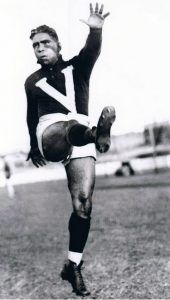
As a young man, he experienced terrible racism in workplaces, as a runner and boxer in backcountry Victoria, and later on the football field. In 1935 he represented the VFL as a state player — an extraordinary achievement. When he went on to play 53 games with Fitzroy from 1932-37 he was the only Aboriginal playing at the top level. In 2016 the AFL recognised his pioneering role by naming the Indigenous Round in his honour.
Haven
Gladys, and her first husband Howard (Doug’s brother), had been part of the walk-off from Cummeragunga in protest against the harsh conditions and poor treatment experienced by residents of the Mission. Following Howard’s tragic death, she married Doug and they moved to Fitzroy in Melbourne where Doug was serving as pastor of the first Aboriginal Church of Christ. There they expressed their commitment to following the teachings of Jesus and their home became a refuge for young indigenous people, lost and desperate in a city that shunned them.
That was the beginning of a brave and productive 37-year partnership where both of them were active on the political front. In the early 1930s, Doug had been trained in activism by indigenous leader William Cooper. He attended the Day of Mourning protest for Aborigines held in Sydney on 26 January 1938, declaring, ‘After 150 years our people are still influenced and bossed by white people. I know we can proudly hold our own with others if given the chance.’
Maintaining the stance of a political moderate, he did not bear grudges and sought to build bridges between black and white. He remained at the forefront of the extended push for citizenship rights until it climaxed in the resounding ‘Yes’ vote of the 1967 Referendum.
Solid Support
Gladys used her skills as a seamstress and businesswoman to generate funds through opening opportunity shops and grocery stores supporting Aboriginal people in Victoria. She taught Sunday school, undertook endless fundraising and welfare work beside her husband, and became his greatest supporter and financial manager. Her compassion drove her to open hostels and organise holidays for country children. She was a strong and respected spokeswoman on behalf of indigenous women.
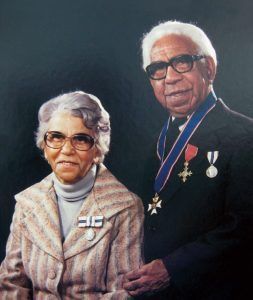
As the effectiveness of their combined ministry grew, affection and recognition expanded with it. Doug was eventually presented an OBE and an MBE and was then knighted by the Queen. Gladys was made a Commander of the Order of St John for her extended efforts to help the underprivileged. The honours climaxed in South Australia when Doug was made Australia’s first Aboriginal State Governor.
Call to Service
At the unveiling of their memorial in 2007, Pastor Neville Lilley read a favourite passage that Sir Doug had written on the cover of a small Bible — a signature item he carried wherever he went. It spoke of the sense of having a “high calling.” On the same day, Aborigines Advancement League president Alf Bamblett declared the Nicholls’ legend stemmed from their willingness to acknowledge a calling when it came knocking. “You can answer the call or you can walk away. In Doug and Gladys, we have two people who answered the call in a mighty, mighty way.”
In spite of all the honours given them, the Nicholls remained very clear on the nature of that call. It was one they had heard in childhood at the Murray River mission school from their teacher Thomas Shadrach James. It helped them rise above the call to retaliation because of the prolonged racism they experienced. It was stronger than the seductive call of political success and public acclaim.
Doug always insisted that his proper title was ‘Pastor Sir Douglas Nicholls.’ It was his way of saying he was first of all a servant, a shepherd. With Gladys, he had heard a voice that called them to leave offence and pride behind, and to humbly serve the very least in society.
In the Cummeragunga graveyard, this unique Australian couple had the words of their shared ambition carved into the granite of their headstone. It declares,
LADY GLADYS MURIEL NICHOLLS C ST J 1907-1988
PASTOR SIR DOUGLAS NICHOLLS K.C.V.O. OBE. 1907-1988
‘WE PRESSED TOWARDS THE MARK
FOR THE PRIZE OF THE HIGH CALLING OF GOD IN CHRIST JESUS’
It’s noticeable that their lifespans were made identical, even though Gladys predeceased Doug by several years. Was this a way of signalling a partnership that even raised them above death? Now that would make it a compelling double act indeed!
___
Originally published at The Outback Historian.
2 Comments
Leave A Comment
Recent Articles:

4 October 2026
3.5 MINS
As children of the day, let us live freely out of our identity and awaken those around us from spiritual sleep. We carry more than faith for a great awakening — we are the awakeners.

3 October 2026
3.7 MINS
The Church is called to be counter-cultural not to be merely contrarian, but because we love God and people. In this world, that will mean going against culture that is contrary to God.
2 October 2026
2.6 MINS
NSW Libertarian Gemma Noiosi is challenging taxpayer-funded activist events, arguing government grants should not bankroll controversial projects or private cultural ventures.
2 October 2026
11.6 MINS
New evidence challenges prevailing assumptions about adolescent sexuality and gender medicine, urging parents, clinicians and Christian leaders to prioritise honest inquiry, careful care and scientific integrity.
2 October 2026
4.3 MINS
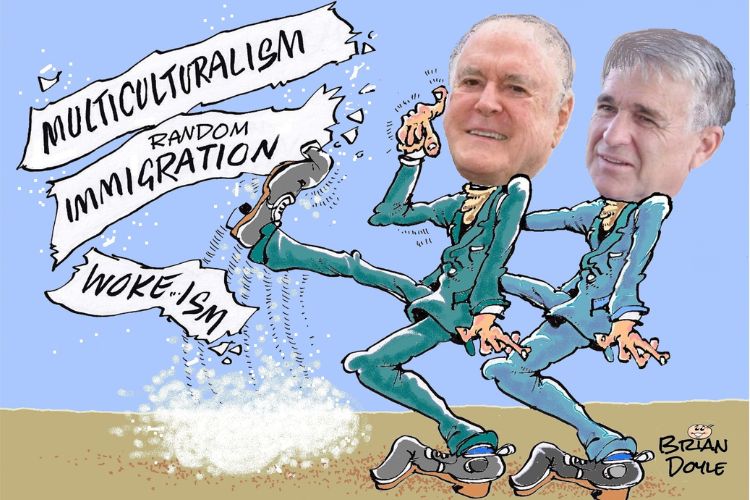
John Cleese’s views on multiculturalism, Christianity and criticism are resurfacing, offering a provocative challenge to assumptions about immigration, cultural identity and the West’s Christian foundations.

2 October 2026
5.2 MINS
Rising male unemployment, loneliness, pornography use and fatherlessness are compounding one another, raising serious questions about men’s wellbeing, family stability and the future of Western society.
2 October 2026
3.3 MINS
The Lord wants us to pray from a place of faith and resting in him. We can't awaken the Church, but he can — and he wants to do just that.



Thanks Paul, great article, perhaps you could do a piece on 19th century missionary Daniel Matthews the man who was a major influence on William Cooper, William Ferguson and Pastor Doug Nicholls.
John. Sorry to be slow in responding. I’m just putting a couple of pieces up on YouTube that I filmed at Cummerugunga and Echuca and am about to write a blog on Daniel Matthews. They’ll be up on The Outback Historian webpage soon. Great stories to tell and they need telling! Thanks, Paul.