



Queensland Bill Will Create a New Vilification Minefield
The Queensland Government may have backed down from plans to remove exemptions for faith-based schools from the state’s anti-discrimination act, but its revised draft bill creates a vilification and sexual harassment minefield, along with new investigative powers and a duty to eliminate discrimination and harassment.
The Government has dropped its draft bill to rewrite the state’s Anti-Discrimination Act 1991, which would have imposed draconian requirements on faith-based schools, such as effectively removing their freedom to enrol students and enrol staff in accordance with their religious beliefs about the nature of sex, marriage and family.
The Government has now released the replacement to that bill, the Respect at Work and Other Matters Amendment Bill.
Laws are meant to provide certainty. This bill creates uncertainty and is bound to have a silencing effect on public discussion and debate on important issues.
Two Forms of Vilification
First, the bill provides that it will be illegal to “engage in a public act that a reasonable person would consider hateful towards, reviling, seriously contemptuous of, or seriously ridiculing the other person or members of the group” on the basis of a person’s gender identity, sex, sex characteristics, sexual orientation, age, race, religion or impairment. (S 124C)
There is no definition of what is “hateful”. It has many ordinary meanings that include arousing hate, deserving to be hated, full of expressions of hate, or even simply being unpleasant, dislikeable, or distasteful.
More concerning, a reasonable person is said to mean a “person who has the same age, gender identity, impairment, race, religion, sex, sex characteristics or sexual orientation” as the person bringing the vilification charge. Is not the process heavily weighted in a complainant’s favour rather than being impartial? How is a judge/commissioner hearing a complaint to ascertain what a person of the same “age, gender identity…” as the complainant would find “reviling, seriously contemptuous of, or seriously ridiculing”?
If a drag queen brings a vilification charge against an alleged offender, will only drag queens judge whether an act is hateful, reviling, seriously contemptuous or ridiculing of another person? Will only Catholics be considered reasonable persons to judge if a complaint is hateful towards Catholics on the basis of their religious beliefs?
Second, the bill says that another form of vilification can be where there is “conduct that is likely to incite hatred towards, serious contempt for, or severe ridicule of, a person or group” on the basis of protected attributes like sex, gender identity, sexual characteristics and sexual orientation. (S 124D)
Why the lesser standard of “likely to” rather than the more definite standard of conduct that “does” incite hatred, etc? The word “likely” means “probably, but not certainly”, meaning that what one person may regard as “likely” to incite vilification and harm, another would regard as “not certain” to cause harm.
Is this not an objectively low, highly subjective standard that would allow for complaints to be made without being obliged to provide evidence that the conduct would incite hatred and cause harm?
In both cases, across society, there would be widely different interpretations of what would constitute harm. Both forms of vilification are subjective and ambiguous.
Exemptions
The bill does provide exemptions for what is “done reasonably and in good faith, for academic, artistic, scientific or research purposes or for other purposes in the public interest, including public discussion or debate about, and expositions of, any act or matter”. However, there are no exemptions for religious discussion and debate.
In the end, the bill leaves a grey zone between these exemptions and the bill, primarily requiring consideration of what members of the same identity group would consider as vilification, or what some may see as “likely” to be vilification.
In neither case is it required to show actual harm has occurred.
Harassment
The bill also makes it illegal to engage in “unwelcome conduct of a demeaning nature” in relation to another person’s “sex” or “a sex the other person has been, even if the person is not that sex at the time of the conduct.” (S 120)
Here, “sex” has been broadened from its biological meaning to include the sex a person “has been”. Does change of sex mean only change to the opposite sex, or to any number of possible gender identities?
Uncertainty here is further compounded by the very low bar set for “harassment”, which is said to be conduct of a “demeaning nature” and with the “intention of offending, humiliating or intimidating” another person.
In Tasmania in 2015, a charge was brought under the state’s anti-discrimination act against Catholic Archbishop Julian Porteous for “offending” a transgender person by distributing a pamphlet stating the Catholic Church’s teaching on marriage.
This illustrates how, in the broad discussions and debates between the biological and gender-fluid worldviews, each side can anticipate, or construe, the other’s position as offending and demeaning because of the deep and wide conflicts between sex-based rights and transgender-based rights.
Biological males who identify as females claim the same rights to female sports, toilets, showers and change rooms as biological females. How can the law protect both sides when these rights are inherently conflicted?
Yet under this bill, almost any debate or disagreement on these matters could trigger charges even when a person acts unintentionally or incidentally. The punishment is in the process of having to defend yourself, often at great financial cost, against the complaint being brought in the first place.
Further, faith-based organisations or schools could be accused of “harassing on the basis of sex” by consistently teaching their beliefs about sex, which it may be argued could reasonably be anticipated to offend those holding to the gender-fluid worldview.
Moreover, while exemptions are made for “the training or education of people seeking ordination or appointment as priests, ministers of religion or members of a religious order” (S 109), this may not protect individuals teaching about their faith and beliefs from prosecution by those holding contrary and contentions views. Theological colleges and institutes also teach lay people who are not studying to be ministers of religion or religious orders.
Nor are the exemptions likely to protect teachers expressing their biological world beliefs in a religious school from charges being made by other teachers, staff and students who find those views offensive.
Investigative Powers
The bill also empowers the Anti-Discrimination Commissioner to investigate any organisation, and for a tribunal to enforce on an organisation a “positive duty” to take “reasonable and proportionate measures to eliminate the discrimination, sexual harassment, harassment on the basis of sex or other objectionable conduct as far as possible”. (S 131H)
This raises the same concerns as described above, but with the additional positive requirement to change how an organisation functions in order to prevent so-called “harassment”.
Victimisation
Concerns raised by this bill are added to by the existing victimisation clauses of the current Anti-Discrimination Act.
The Act prohibits “victimisation”, that is, to do or “threaten to do an act to the detriment of another person” who has either brought a discrimination or vilification or harassment complaint, is involved in, or intends to be involved in a complaint. (Clause 87)
What is most draconian about a “victimisation” charge is that the “offence” of victimisation continues even if a complaint is not pursued, not dealt with, or is withdrawn. (Clause 88)
A complaint of discrimination, vilification, inciting of hatred or victimisation must be brought within two years of an alleged contravention. (Clause 100)
A victimisation complaint and penalty stands, even if the original complaint (for discrimination, vilification or inciting of hatred) is not pursued, withdrawn or if there was a determination, innocent or guilty. (Clause 88)
Silencing Effect
While the current exemptions clauses of the federal Sex Discrimination Act would have continued to protect Queensland’s faith-based schools from state discrimination charges had the proposed new state Anti-Discrimination Act not granted any exemptions, it is unlikely that the federal Act will protect people in religious institutions from the proposed state vilification and harassment proposals, or from the current state victimisation provisions.
These new Queensland provisions deal with matters that are subjective and highly contentious, where people have very differing views and beliefs, which makes it impossible for the law to deal with these matters with certainty.
The bill threatens to pit one minority/identity group against another and to have a silencing effect on public debate, particularly on people manifesting their deeply held beliefs, religious or irreligious, on the nature of sex, natural marriage and family.
___
Republished with thanks to News Weekly. Image courtesy of Adobe.
One Comment
Leave A Comment
Recent Articles:

1 October 2026
3.1 MINS
Christian schools in Western Australia can currently hire staff who share their faith. Under reforms flagged by the Cook Government, they may lose that protection wherever faith is not deemed an “inherent requirement” of the role.
1 October 2026
3.9 MINS
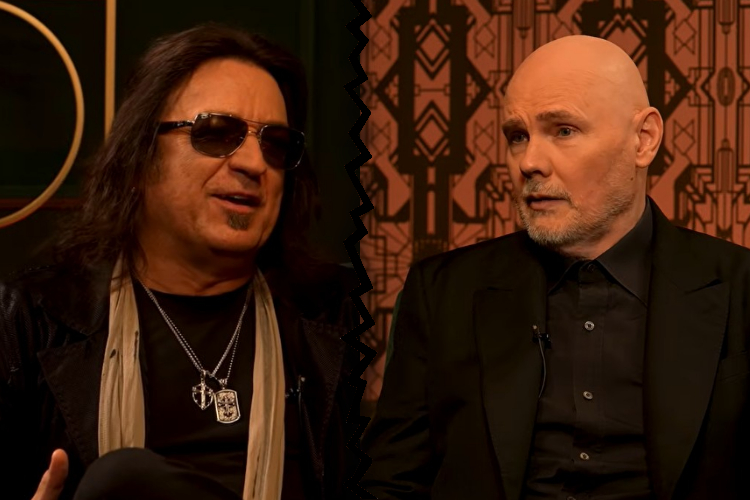
Billy Corgan and Michael Sweet discuss faith, fear and integrity as two rock frontmen explain why they refuse to hide their belief in Jesus.

1 October 2026
6.2 MINS
A foiled terror plot at RAF Fairford highlights the vigilance of local residents, heightened threats to Western military bases, and growing concerns over Iran’s role.

1 October 2026
6.2 MINS
Britain’s mounting security failures, immigration pressures and restrictions on public expression raise profound questions about political leadership, national sovereignty and the spiritual state of the West.

1 October 2026
3.2 MINS
A major Australian religious freedom conference has highlighted growing tensions over conscience, faith-based education, speech, public safety and social cohesion.

1 October 2026
3.7 MINS
A revived Church is the only hope for a dying world. As Billy Graham (1918–2018) said, “An awakened Church is the greatest evangelistic tool in the world.”

30 September 2026
2.8 MINS
Steve Grace’s Eternity Truck is bringing music and the Gospel beyond church walls, taking a mobile concert stage to remote communities and country towns.



Thank you Patrick for disseminating the wheat from the chaff for us. It appears that much is chaff, worthy to be burnt up and the ashes tossed on the dung heap.
Let’s let the Christian voice be heard, such that the draft never sees the light of legal day.