



Insights from Hebraic Prayer
We read in Acts chapter 4 how the disciples gathered to pray after receiving multiple venomous threats from the priestly authorities. The power of their prayer was such that when they had finished praying, the place where they gathered was shaken, they were all filled afresh with the Holy Spirit and they were empowered to boldly proclaim the message of the Gospel.
Drawing on our own church experiences, it is easy for us to visualise this prayer meeting in terms of the styles and methods of prayer to which we are accustomed. But to best understand this prayer meeting, we need to view their gathering through the lense of the Jewish approach to prayer prevalent in their day. What would their prayers look like in the Jewish context of the day, and what traditional aspects of Jewish prayer were incorporated into this prayer of the early church?
By studying the text and a traditional Hebraic understanding of prayer, we can gain insights into how the disciples prayed and perhaps how we, too, can be more effective in prayer.
Hebraic Prayer Starts with Exalting God
“… they raised their voice to God with one accord and said:
‘Lord, You are God, who made heaven and earth and the sea, and all that is in them…’”
~ Acts 4:24 (NKJV)
In response to repeated and stern threats from the leaders of Jewish community, Peter and John gathered the disciples together for an earnest time of prayer. Surprisingly, the disciples did not start their prayer by addressing their present alarming circumstances. Yes, they were going to pray about it, but they were following the tradition of Jewish prayer by always, first exalting the Lord as the Almighty Creator.
The Lord’s prayer similarly begins with ‘Our Father who art in heaven, hallowed be Thy name.’ (Matt. 6:9)
This is a classic feature of Hebraic prayer, where most, if not all, prayers begin by blessing God and proclaiming His greatness and power, often particularly focusing on Him as the all-powerful Creator of all.
When we approach God in prayer, we need to remind ourselves of His awesome power and majesty. We need to be reminded that we are in the presence of the God who created all things and upholds all things by the Word of His power (Heb. 1:3). By beginning their petitions this way, the Hebrews remind themselves that no matter how great a challenge lies before them, God is infinitely greater and well able to deal with any problem they are facing.
Faith Over Fear
Similarly, the Psalmist says that we enter ‘His gates with thanksgiving” (Ps. 100:4). Thanking God for what He has done and is doing is an essential starting point – too often neglected – as we come before Him with our requests. This too refocuses our attention on the greatness of God above all else.
Some years ago, I was facing pressing personal challenges, and set aside time to ‘pray through’ the problems. However, by the end of my extended prayer time, I felt more drained, more confused and more troubled about the problem than I did when I first started praying! Why? Because I simply kept reiterating the problem before God in prayer, and the more I talked about the problem, the ‘bigger’ it became.
As we focus excessively on the challenges and struggles, unbelief and fear can creep in, and the problems can seem even greater than God’s ability to move in our lives. But as we instead exalt the Lord God of Creation first and focus on His power and might, faith grows in our hearts that God indeed can and will move on our behalf. The seeming mountains of challenges lying before us are transformed into minor speed bumps as our focus is corrected and as we gaze upon the majesty and greatness of our Creator.
From Hebraic prayer, we therefore learn to begin our prayers by lifting our eyes up to the One who is so much greater than any challenge. We learn not to magnify our problems and let them drag us down, but rather to exalt our Lord who is truly on the throne. And as we do, faith will arise in our hearts too, and is more than able to resolve the problems we face.
In the next part of this series on prayer, we are going to examine how Hebraic prayer is Scripture-focussed.
___
Ps Enoch and his family are doing an Australia-wide ministry trip for 2025,
and are available to speak on these and similar themes.
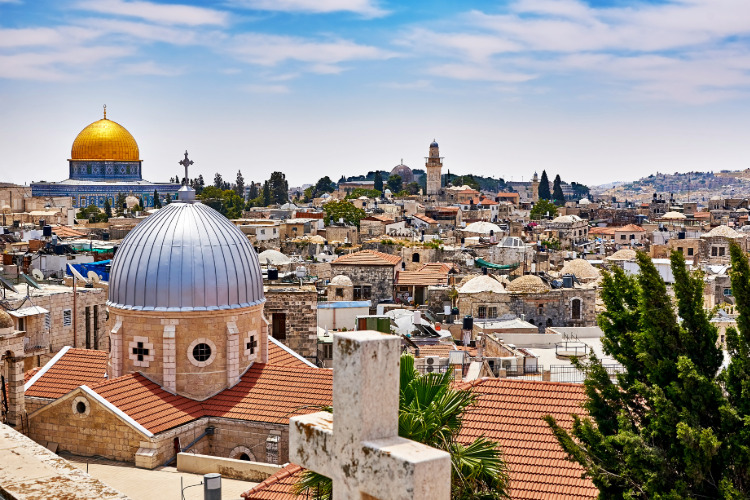
Image courtesy of Adobe.
Recent Articles:

6 October 2026
10 MINS
This powerful testimony recounts a lifetime of hardship, danger, illness and near-death experiences — and the unwavering faith that carried one woman through it all.
6 October 2026
3.4 MINS
Christians cannot afford to let headlines and social media shape their view of Israel. Scripture provides a foundation for understanding Israel, God’s promises and our response.

6 October 2026
3.8 MINS
A grandmother’s disputed death has put Canada’s euthanasia regime under fresh scrutiny, as the Medical Assistance in Dying (MAiD) program passes 100,000 deaths with a further expansion slated for 2027.

6 October 2026
3.3 MINS
We often talk about church renewal as though we need more people, more programmes, more energy and more resources. But Jesus seems to start somewhere much smaller. With two or three.

5 October 2026
7.3 MINS
DJ, composer and trance music icon, Tyson Illingworth aka tyDi shares his testimony in coming (back) to Christ in this exclusive interview with Aaron Duff from Australian Christian Records.

5 October 2026
3 MINS
The Church is the salt of the earth. But if salt becomes tasteless, it is useless — and thrown out.

4 October 2026
3.5 MINS
As children of the day, let us live freely out of our identity and awaken those around us from spiritual sleep. We carry more than faith for a great awakening — we are the awakeners.


