


The Australia Day Debate: 7 Questions for Those Who Want to Change the Date
Before considering a change of date for Australia Day, I need a few questions answered…
A full 76 per cent of Australians want to continue celebrating Australia Day on 26 January, according to the latest poll by the Institute of Public Affairs.
Notably, that’s a rise of seven percentage points from last year.
Also notably, the poll pegged young Aussies as the most patriotic, with a whopping 83 per cent of 18-24-year-olds supporting Australia Day in its current form.
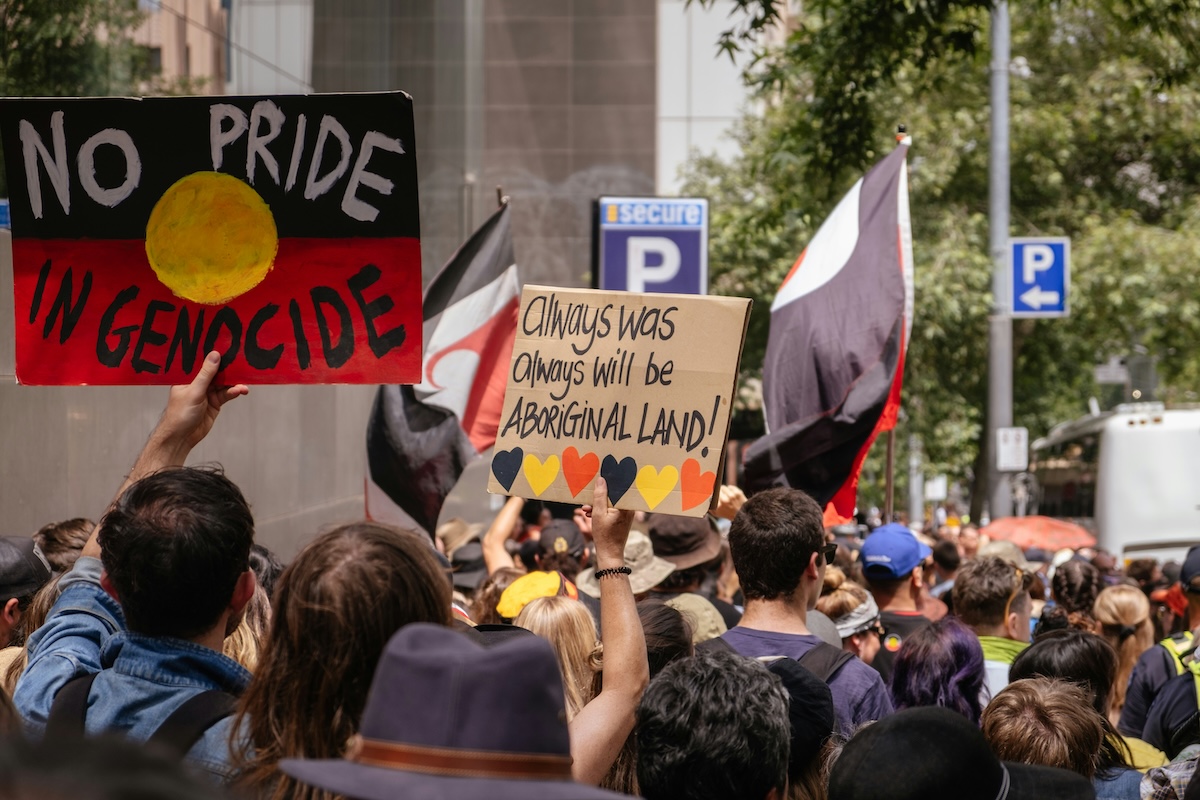
Each year, we’re told the date of Australia Day must change; that the arrival of the First Fleet marked the ‘invasion’ of Australia; that we can’t have national unity until this historic wrong is made right.
Before I accept these propositions as true, I need a few questions answered. Here they are:
1. Why change a date most Australians support?
An overwhelming — and growing — majority of Australians support our national holiday. If Australia is a democracy, and democracy is a good thing, and the opposite of a democracy is a dictatorship, isn’t it undemocratic — dictatorial even — to override the will of Australians on this matter?
2. How long before ‘stolen’ land becomes home?
The basis of the change-the-date argument is that Australia was built on stolen land. If that’s true, will changing the date of Australia Day mean we can move on, put the (alleged) theft behind us, and consider Australia our shared home? If not, why not?
If not, when does our national redemption come?
3. Why are we being cast as avatars of our ancestors?
Those who say we must change the date of Australia Day because of invasion and theft are not merely making assertions about history — they’re staking claims in the present.
Specifically, they’re dividing Australians into indigenous and non-indigenous, and assigning perpetual victimhood to the former and perpetual guilt to the latter. In short, we’ve all been cast as avatars of our ancestors.
But how is this fair?
How can a preschool-aged white kid be held responsible for events that happened hundreds of years ago and about which they have no comprehension?
In what way is an accomplished, city-dwelling indigenous Aussie more disadvantaged than a poor white labourer struggling to survive in the regions?
If only a fraction of someone’s ancestry is indigenous, why should that fraction determine their moral superiority when the majority of their white lineage bears (alleged) guilt for historical wrongs?
How many generations must transpire before settler bloodguilt fades?
These are only some of the conundrums we create when we divide our societies by indigeneity. But there are more.
4. How long until people become indigenous to their own country?
My father’s parents migrated to Australia from Germany. My mother’s side, who were also of German descent, have been in Australia much longer. Australia is the only homeland I’ve ever known, yet I am not considered indigenous to Australia. If I’m not indigenous to Australia, where am I indigenous to? Germany? This seems doubtful.
More practically, how much longer until my descendants can be considered indigenous to Australia?
I’m not trying to be cute with this line of questioning.
The Peramangk people, who once lived on the land I now call home, didn’t always live here either. Based on what we know of inter-tribal warfare before European contact, they likely took this land from a prior group by conquest, who probably did the same. Indeed, Australia’s entire Aboriginal population ultimately traces its ancestry back beyond this continent via ancient migration routes through Southeast Asia and the Middle East.
In other words, the Peramangk became indigenous to this land but didn’t always enjoy that status. If they can gain it, why can’t I?
5. Why do migrants belong before native-born Australians do?
Modern immigration adds another layer to this confusion. We readily confer full Australian identity on people who arrived only recently, even as we question the belonging of Australians whose families have lived here since the eighteenth or nineteenth centuries.
To paraphrase a meme that recently made the rounds on social media, “Why is a North African who migrated here ‘Australian’ while I’m living on stolen land 240 years later?”
The inconsistency on these issues makes the change-the-date campaign feel less like a call for unity and more like a grudge against Aussies with European ancestry.
6. Is the problem the date or the fact that Australia exists?
It was only recently that I realised how many dates each year have already been set aside to mourn injustices committed against Aboriginal Australians, including:
13 February | Anniversary of the National Apology
21 March | National Close the Gap Day
21 March | Harmony Day
26 May | National Sorry Day
27 May | Anniversary of the 1967 Referendum
27 May — 3 June | Reconciliation Week
3 June | Mabo Day
1 July | Coming of the Light
7–14 July | NAIDOC Week
4 August | National Aboriginal and Torres Strait Islander Children’s Day
9 August | International Day of the World’s Indigenous Peoples
7 September | Indigenous Literacy Day
13 September | Anniversary of the UN Declaration on the Rights of Indigenous People
Given all that has been done to atone for Australia’s past, is it really believable that making one more tweak to the national calendar will succeed where all prior efforts have failed?
More pointedly, are those calling for a change of date looking for a solution — or a problem?
Indeed, given the movement’s decolonisation rhetoric, we’re right to ask if the end goal is to abolish Australia Day or abolish Australia in its current form.
7. Why is this debate creating a more divided nation?
More positively, people calling for a change of date usually frame it as a step towards national unity and reconciliation. However, after watching this debate for many years, I’ve seen little evidence of that.
“Maybe changing the date will resolve the disunity,” I hear my detractors say. But given how unpopular the idea remains with the Australian public, that seems singularly implausible.
The fact is, the change-the-date campaign has made Australia more divided than ever. It’s achieving precisely the opposite of what it claims.
It’s time we applied Stafford Beer’s principle: the purpose of a system is what it does (POSIWID). Outcomes speak louder than promises. After years of driving division rather than unity, it’s clear the Australia Day debate has run its course. It’s time we moved on.
Despite our faults, past and present, Australia is a nation for which we can feel incredible love and pride.
So happy Australia Day — and enjoy celebrating our great country!
___
Image courtesy of Unsplash.
17 Comments
Leave A Comment
Recent Articles:

15 October 2026
4.2 MINS
Many Australian Christians don’t know a single Aboriginal person. Robyn Murray argues that reconciliation begins with honest history, prayer and a shared life in Christ.

15 October 2026
6.1 MINS
Historian Frank Furedi warns that the West is waging a war against its own past, censoring books, rewriting history and severing future generations from their heritage.

15 October 2026
7.2 MINS
A man’s death in a tiger enclosure sparks chilling online reactions, exposing a growing willingness to judge human worth by usefulness, behaviour and ideology.

15 October 2026
3.9 MINS
Canada plans to legalise euthanasia through advance requests, raising concerns about consent, dementia patients’ rights and whether earlier decisions should determine the circumstances of death.
15 October 2026
2.6 MINS
Before anything else, we must make prayer central. I urge the Church in Australia to awaken to, first of all, prayer.

14 October 2026
6.7 MINS
A national poll challenges claims that pro-life Australians are extremists, revealing broad support for abortion restrictions, protections for unborn babies and safeguards for vulnerable women.

14 October 2026
2.8 MINS
Queensland recorded 1,082 assisted suicide and euthanasia deaths in 2025–26, as the review board called for consultation on potentially widening eligibility criteria.



Very good questions Kurt …these should be circulated throughout Australia as these questions help one navigate the divisive actions and words coming out even in our Senate .
Question 8
When are those non aboriginal Australians who join in the chorus of “always was always will be” going to hand their home and land its on over to Aboriginals? They’re in possession of stolen property.
It will never stop, they’ll find another gripe the very second one is resolved. This will go on well beyond our generation.
It’s secularism. No forgiveness, no resolve, perpetual seeking of revenge and conflict. How many actual true Christians do you think are taking part in these protests and chants!?
The issue that is never discussed is the ordained acts of God. It was God who ordained the First Fleet to bring Christianity to these shores (mainly through the Reverend Richard Johnson) to free its scattered, divided, warring tribes from the darkness of devil inspired worship. In addition, the land was not being productive and God sent British know-how to open up the country to productive practices. The result is a productive country with Christian values (now being constantly eroded to be replaced by secular humanism and ethics). If the date of Australia Day is to be changed, it should be changed to the first Sunday in February which is National Christian Heritage Sunday and commemorates the first church service in the country (attended by all who came in the First Fleet) and commemorates the coming of the Gospel of Jesus Christ to these shores.
Excellent point David. Thanks!
Yes, the great commission is critical and it’s often missed in these discussions as it goes against the narrative and is often seen as colonialism.
Colonialism has brought health, education, and wealth to many people; but also some grief as well.
Yes Kym I agree.
While the black armband narrative may suggest otherwise, what Colonialism brought was a better life.
And the message of salvation!
It was God who ordained the First Fleet to bring Christianity to these shores (mainly through the Reverend Richard Johnson)
I was sitting in church this morning listening to Col Stringer spout this sort of stuff and we just have to realise it’s all just a bunch of jingoistic rubbish.
So they found the name of a chaplain onboard and all of a sudden they are ascribing some kind of revival to him? Really? So he preached the Holy Ghost fire to them on the boat and they all arrived slain in the Spirit and speaking in tongues? Really?
What rubbish.
He also preached that it was from Australia that the Gospel then spread to New Zealand, the Islands and Singapore. Who is this guy?
New Zealand had it’s first Christian service in 1769… well before Australia.
Please don’t buy into this Richard Johnson evangelist narrative that he somehow brought some sort of revival to Australia. There is absolutely no evidence of that.
If you were born in Australia you are indigenous! It’s sad that we have this division in Australia between “First Nation people” and those of us who arrived later, and I wonder what situation this country would be in if another nation had settled here and not the English! However, I ask the question! “Does Australia “belong” to any particular people group?” The Bible tells us in Psalm 24 that “The earth is the Lords and everything in it. The world and all its people belong to Him. For He laid the earths foundation on the seas and built it on the ocean depths.” (Psalm 24:1,2). No matter what people group we belong to, we are here on this earth to care for each other and this planet on which we live!
If you were born in Australia you are indigenous!
What a load of rubbish.
What if a Québécois couple stop over here and the wife, heavily pregnant, still intent on having her baby in Quebec, suddenly goes into labour has her baby here.
That child maybe born here, but certainly is not indigenous to here. That child will grow up speaking French.
How is that Australian?
Apart from aspects of point 1, your arguments have little to no relevance when discussing the date of Australia Day. The argument for changing the date is very simple – 26 January represents, for many in our population, a day of mourning. If you don’t agree then fine, but there’s nothing positive to be gained by clouding the issue with grievances about identity and belonging. Regarding point 1 – campaigning for change is not dictatorial, it’s the very essence of a democracy! My view: I think we should change the date, but not until there is majority support as well as a meaningful alternative.
Agree totally Phil.
The tone of the article seems to suggest that ‘I don’t care if 25% of the population find the day offensive’ the majority should just steamroll over them.
This is completely Unchristian. We should care for the least of them. The minorities.
Great article Kurt!!!
Excellent article Kurt. Thank you.
Given CD’s fascination with the whole Great South Land of the Holy Spirit thing, I’m surprised we’re not advocating May 14 as the day.
Time for a fresh beginning, where we can celebrate our national day as a holy day rather than just a big booze-up. That’s why I’m surprised that CD have aligned themselves with Jan 26, seeing as it is just such a drunken day of decadence and debauchery.
Sure there’s currently vast majority in favor of Jan 26 at the moment, but that can be changed. Look at how quickly we reversed the massive 80% support for the Voice to less than ½ of that in the space of six months back in 2023.
I’ve never quite understood the argument that Christians should just tag along with whatever majority.
Always is always was ….God’s land. Great comments guys!
Australia Day was practically invisible when I was a boy fifty years ago. It was the informal marker of the end of the summer holidays. The Governor General would make a speech, a few lines of which might get to air on the evening news. Otherwise it was barely on the radar.
The anti faction don’t seem to realise that much of the celebration they despise was a response to their denigration of the date.
Nah man.
It was when it became a national public holiday in 1994. That’s when it declined and denigrated into a day of drunkeness, decadence and debauchery.
All right Kurt. And I want to do this respectfully, but I was out in the garden today and I know that some of the plants in my garden are native to here and some are introduced. And yet all were ‘born’ here’. There’s a canetoad problem where I live. All the toads were born here, but none of them are indigenous to here.
That McDonald’s down the road that I saw rise up out of the ground. Yeah sure it was ‘born’ here, I saw it born with my own eyes. But McDonalds is not indigenous to Australia is it?
There’s a pine tree across the road from me. Is it indigenous to Australia?
I know I’m labouring the point, but when you look at the definitions of indigenous:
1. originating or occurring naturally in a particular place; native.
2. (of people) inhabiting or existing in a land from the earliest times or from before the arrival of colonists.
No, just being ‘born here’ doesn’t cut it.
Australians love Coca-Cola, it has been made here for decades. Each little individual can or bottle is born right here. That does not make them indigenous to Australia.
How long until people become indigenous to their own country?
I don’t think a pine tree will ever be considered indigenous to Australia, but we have plenty of them here, next to the McDonalds that sells Coco-Cola.
If you’re suggesting that a person of German heritage becomes indigenous at birth here in Australia then I suggest you’re using the Pauline Hanson definition of indigenous rather than the dictionary one.