


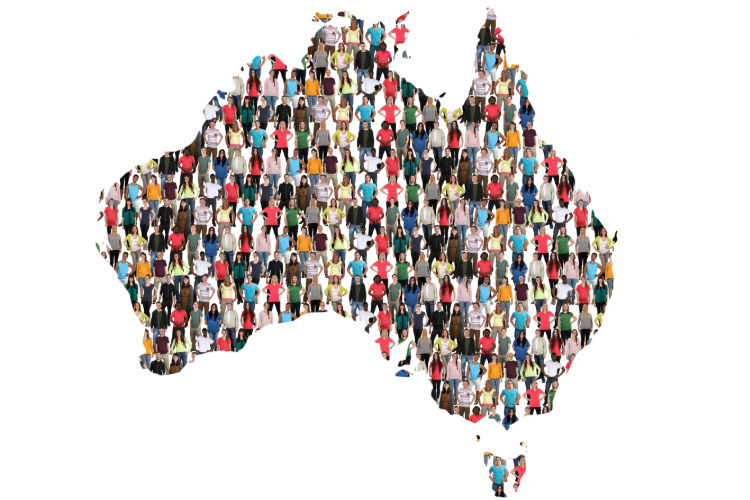
Multi-What?
What is the point of intentional multiculturalism? If we reject it, are we bad people? Are there better ways to try and achieve what we have been told is the right action to take?
I was recently reminded of these questions when I read this quote by economist Thomas Sowell:
The central doctrine of multiculturalism – the equality of cultures – cannot be sustained when that means equality of concrete achievements – educationally, economically, or otherwise.
Don Carson (in his Christ and Culture Revisited) referred to this quote when he was making the point that there is no even-handedness in the debates about how we should live together when we have so many different belief systems present in one society. Of course, the reason for these different beliefs is our different cultural inheritances.
He also noted that “culture” was the preferred word people used when they wanted to treat social practices in a positive light. “Ideology” was the term he suggested people use when rejecting a belief system that impacted how we lived together. Carson suggested that the reason for this skewed way of discussing multiculturalism was that it was “for no other reason than to preserve the indefensible mantra of many cultural anthropologists: no culture is superior or inferior to any other.”
The Myth of Cultural Equality
This claim – that no culture is superior or inferior – is one of those clever lies. That is, it is somewhat close to the truth, but far enough away from it to move into being mischievous at best, and downright dangerous at worst.
Why? The ‘closeness’ to the truth is that we, in our Judeo-Christian heritage, do not want to be judgmental towards others. That is good, of course.
But being harshly and legalistically judgmental towards an individual, and judging what is good and true, evil and false in our society, are two very different activities. One can see this, to use Sowell’s language, when we look at relative concrete achievements across cultures. They vary, and sometimes dramatically, in terms of educational achievements (including in science, philosophy and technology), and in economic advancements (including in the government and legal structures enabling such improvements in standards of living).
Yet we currently seem to have a fear of judging what is good and true across cultures. I see this continuously in teaching first-year students in their undergraduate degrees (and sometimes in the post-grad ones). Australian Indigenous issues inevitably arise in one discussion or another because the students have been trained to think of this part of life quite consistently and continuously.
To help move the students to an understanding of why it is good to evaluate all cultures and ideologies, I ask this question: “What difficulties did the Australian Aborigines have as a society before any contact with Europeans?” After asking this question for almost a decade, the score is only five out of hundreds have had anything to describe – and they were all mature-age students.
These students have been systematically and purposefully lied to about the nature of these societies. It is an active and intentional ‘sin of omission’ – that is, the good aspects of this culture are very well described (and each culture, in God’s common grace, has aspects that are colourful, creative and clever) – but in my experience, there is nothing that is being taught of the harshness, inequality, and bruteness of traditional tribal life, even in Christian schools.
Thus, these students are thoroughly timid in attempting to think critically about the need for some criteria against which we can judge our own and others’ actions as a society. This current cultural deficit has been again highlighted in our recent broader national discussions about multiculturalism, and in our more targeted recent reflections on what is being called ‘extreme Islamism’.
Multiculturalism and Australia’s Moral Framework
These discussions have shown that we have been caught in the web of our own woolly ideas. I think when multiculturalism was initiated in Australia, the ‘good feeling’ about it was that we wanted to be a welcoming nation to those from different backgrounds. The hope was that we would continue to learn from each other in some kind of ‘big melting pot’ as the 1970s song suggested. But the idea that cultures carry beliefs that are grounded in different trust paradigms (also called different faiths), which might put strain on our Judeo-Christian traditions, was rejected.
What we hoped for is actually a multi-ethnic society where people’s common core beliefs cut across their backgrounds and circumstances. That is the Judeo-Christian principle based on all people being made in the image of God, no matter their physical capacities or social standing.
However, what happened was that we learnt what happens when belief systems have some common ideas about life but vary at critical points. Interestingly, even though Carson’s book is almost twenty years old, he gave a clear example of this, which seems even more pertinent (in Australia) than perhaps back then.
His mini case study is of a devout Christian and a devout Muslim comparing notes about liberal democracy. They would probably be surprised at how much in common their assessments may be. Both may well agree that the almost unbridled expressions of sensuality in the name of liberalism are a step too far.
However, Carson also clearly described at least one point of difference that would not only cause an irretrievable rift between faith systems, but would also be an irreconcilable point of difference within a civil and tolerant society. The issue Carson identified was the use of violence as part of spreading the respective belief system.
Carson used the term ‘devout’ to indicate that he was describing people who not only believed their core scriptures but who were also willing to live and act in accordance with those beliefs. He summarised this dynamic this way:
We [devout conservative Christians] reserve the right to proclaim Christ, and we will give our lives to maintain that right; but we have no interest in the ostensible “conversions” achieved at sword-tip, and we distance ourselves from forebears who did not see that point clearly.
What might this mean for Australia, currently? Functionally, if we cut ourselves off from our Judeo-Christian heritage, we will lose the capacity to judge well in terms of the ‘rightness and wrongness’ that has built this society in the last two hundred years. We will increasingly become, like many of our leaders, everyday pagans, accepting and participating in different religious ceremonies and rituals, because ‘they are all the same’, so let’s just keep the people we are with happy.
Without a set of core beliefs grounded in universal respect, we will find no civic good that is common anymore. We will wander in the fog of despair and increasingly stimulate our senses to convince ourselves that we are OK. The mist of our lives will make us blind to the real needs of our youth and elderly.
Given that it is not the law that makes good people, but it is good people that make good society possible, what are those who still believe in the Giver of Good to do? Carson expressed it well when he wrote that perhaps:
… the most attractive outworking by far is found in the individual Christian or group of Christians who, precisely because they live out their faith, become involved not only in bold witness but also in ways of helping others in the community that cross many thresholds normally controlled by government agencies.
Or, as the apostle Paul wrote, we are saved by grace through faith to do the good works God has planned for us (Ephesians 2:8-10) – and this, quoting Paul’s founder, is to be our offering of salt and light to our world, right here, right now.
___
Image courtesy of Adobe.
2 Comments
Leave A Comment
Recent Articles:

24 August 2026
3.5 MINS
John Anderson joins Karl Stefanovic to unpack Australia's mounting challenges — from Cultural Marxism and youth values to Net Zero, farming pressures, defence gaps and Labor's economic mismanagement.
24 August 2026
1.9 MINS
Five Sydney Swans players face serious allegations after a hotel party scandal. But watch how quickly "five players" became "all men" — without a shred of extra evidence.
24 August 2026
7.6 MINS
A controversial UK government guide telling asylum seekers about sexual consent has sparked fierce criticism over immigration, public safety and government accountability.
24 August 2026
2.3 MINS
Live Action is fighting back against a cease-and-desist letter accusing it of defaming abortion advocates. Backed by the Thomas More Society, the pro-life group says it will keep calling abortion "killing."

24 August 2026
3.5 MINS
A recap of the Grandparenthood podcast chat on the impact of dads, and a preview of the 2026 Men's Summit at Stanwell Tops, highlighting the National Grandparent Conference happening the same weekend.
21 August 2026
3.8 MINS
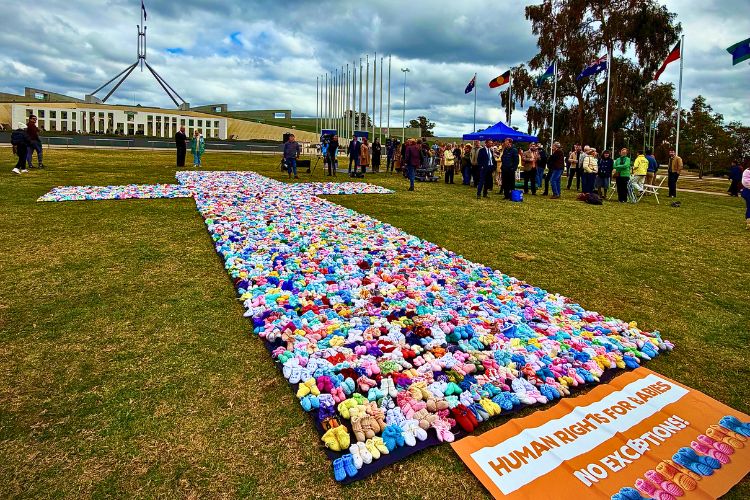
On Monday, more than 10,000 baby booties were laid in the shape of a cross on the lawns of Parliament House in Canberra, all pointing towards the chamber where that same morning, Nationals MP Llew O’Brien introduced the Human Rights (Children Born Alive Protection) Bill 2026.
21 August 2026
1.8 MINS
Archbishop Fisher accuses ABC of bias in voluntary assisted dying coverage, demands formal investigation into impartiality breaches over telehealth ban debate.



The judeo element needs to be qualified. History shows that it was a necessary path but up to a point. Jewish views on say, abortion, are incompatible with Christianity.
It’s a mixed bag. Much like we have here.
Most major Jewish religious movements discourage abortion, except to save the life of a pregnant woman, authorities differ on when and whether it is permitted in other cases.
There are strong Pro-Life groups in Israel like Be’ad Chaim https://www.beadchaim.com/ which we support through https://celebrate-israel.org/