


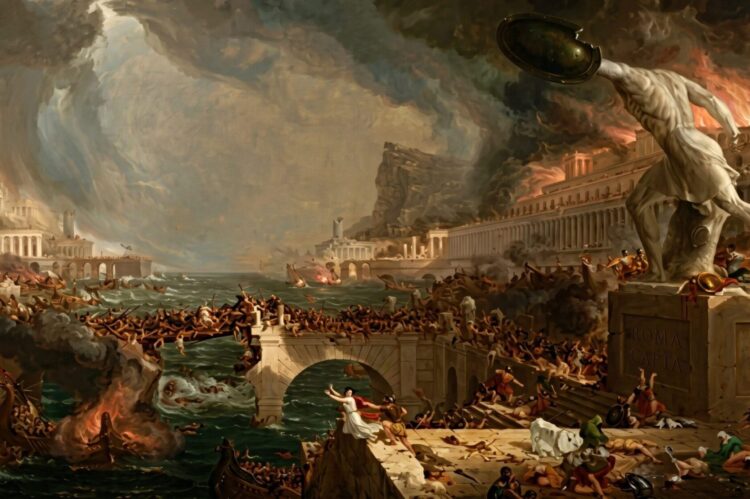
ARC 2026: The West’s Decline Is Not Its Destiny
After riding the tube from Heathrow, I boarded a bus to my London hotel only to enter a confronting scene: an unkempt gentleman who decided to lecture his fellow passengers about the evils of Western civilisation.
Announcing his immigrant bona fides, he proceeded to rail against colonisation and white supremacy, before singling out a young Chinese woman, a native British couple and yours truly for a side of race-based insults — all the while assuring his shell-shocked audience that he wasn’t a racist himself.
My mind replaying the recent murder of Henry Nowak, I kept my head low and couldn’t get off that bus quickly enough.
I was well aware of the deteriorating social milieu in the UK before flying in for ARC 2026 but I wasn’t quite prepared to taste it first-hand so soon after arriving.
It wouldn’t be the last time.
Walking to the conference on the first day, I was forced to slip sideways through a crowd of anti-Jewish protestors shouting ‘FASCISTS!’ at those of us brave enough to attend.
Mercifully, the atmosphere inside ARC was far more pleasant.
Needless to say, that the event’s premise — that the West is in the throes of its own self-demolition and is sorely in need of renaissance — hardly needed to be underscored.
ARC Conference and the Future of Western Civilisation
For those unfamiliar with the Alliance for Responsible Citizenship, it is an annual summit of some 4,000 culture-makers from across the globe who refuse the verdict that decline is inevitable, or that cultural self-hatred is a virtue. Instead — in the words of ARC’s founders — “by drawing on our moral, cultural, economic, and spiritual foundations, we hope to develop a more hope-filled vision for the future and re-lay the foundations of our civilisation”.
I have long followed, from a distance, great minds like Konstantin Kisin, Ayaan Hirsi Ali, Rod Dreher, Michael Shellenberger and Katy Faust. It was quite something else to see them in person, prosecuting the case for why — in the face of so much mainstream despair — we have every reason for hope.
As dozens of speakers reminded us, the West may not be perfect but it is the cauldron of humanity’s highest aspirations — from universal literacy to the free market to the industrial revolution and representative self-government. Ours is the civilisation that invented the individual, pioneered the university, birthed modern science, eradicated slavery and globalised human rights.
No civilisation’s faults are beyond critique. What defies all reason are blanket denunciations of the West, so fashionable today, that run in parallel with an amnesia about its countless blessings and a refusal to judge other civilisations by the same impossibly high standards.
The crisis before us, ARC argues, is one of deconstruction. “Generations of Westerners have been taught to hate their own civilisation,” as Kisin put it in the event’s first session. “They’ve been taught that up is down and that good is evil.” Our liberalising impulse, he argued, “has mutated from the pursuit of freedom from tyranny to the pursuit of freedom from reality.”
Worse still is that those sponsoring the West’s demolition offer nothing substantive in its place. Speaking to ideologies like critical theory, Net Zero, DEI and post-colonialism, Sir Paul Marshall explained:
“Almost all of these ideas and narratives are parasitic. They feed off an historic body of good foundational ideas but then pervert and erode them. None come from a place of optimism. None of them bring unity. None of them set out a path to human flourishing.”
In my view, there is no one with more clarity or hard-won insight to interrogate our modern maladies than Ayaan Hirsi Ali, who fled Islam in Somalia in her 20s to become one of the West’s foremost apologists. True to form, she did not disappoint at ARC this year.
In a sit-down interview with Kisin, Ali described the conditions she escaped: violence, forced marriage, compulsory religion, a scapegoating reflex that blames all ill fortunes on the West or the Jews, schools as indoctrination machines, police as agents of state terror.
On securing asylum in the Netherlands, Ali explained, she was floored to discover a world untold — of women able to choose their own husbands and careers, people free to worship or not worship as their conscience led, schools that imparted knowledge and formed character, police whose goal was to help, journalism that held governments to account, and a society that resolved conflict without brutality.
This is the unparalleled bounty of Western civilisation, she told ARC’s audience — and it’s precisely what we risk losing unless we adjust our current trajectory.
In pressing home just one example, Ali explained that when she first came to the West, “I could walk day and night freely, bicycle about 24 hours a day if I wanted to, wearing whatever I wanted to. And now, a few decades on, we’re in a place where women are afraid to go out.” As evidence, she invoked Britain’s rape gang scandal that victimised up to 250,000 young people, according to a recent report.
In short, the third worldism from which our civilisation originally set itself apart is one we can expect to return to if we refuse to correct course.
Europe’s Self-inflicted Decline and Climate Alarmism
As though the concreteness of this claim needed further reinforcing, this year’s ARC conference happened to coincide with a heat wave that put Europe’s self-inflicted decline on full display.
Through no fault of ARC’s organisers, the venue’s air conditioning system failed to work for the first two days of the conference, making for sweltering afternoon sessions. But it wasn’t just one venue. Tube temperatures soared, London hospital wards hit 35°C, supermarket fridges failed across the city, and one overland train I boarded was such a hot box that I stepped right off again.
Local commentary predictably blamed global warming, and argued that northern Europe’s stoic rejection of widespread air-conditioning is morally superior to the approach in America, whose sins against the climate even include the cooling of sports stadiums.
There was even online dialogue — some of it in jest, some apparently serious — equating air con with right-wing politics.
As someone who has lived for several years in tropical Indonesia, I can attest, by contrast, to the many practical and well-documented benefits of air conditioning — from improved sleep quality to better cognitive performance to vastly improved worker productivity. Singapore’s founding Prime Minister Lee Kuan Yew thought so highly of the invention that he credited air con, alongside multi-ethnic tolerance, with Singapore’s stunning rise from poverty to prosperity, stating:
“Air conditioning was a most important invention for us, perhaps one of the signal inventions of history. It changed the nature of civilization by making development possible in the tropics. Without air conditioning you can work only in the cool early-morning hours or at dusk. The first thing I did upon becoming prime minister was to install air conditioners in buildings where the civil service worked. This was key to public efficiency.”
As one stateside journalist noted over the weekend, the tens of thousands of heat-related deaths that take place in Europe each year dwarf America’s much amplified mass shootings — and are almost entirely avoidable if human welfare were put ahead of climate hysterics and deindustrialisation.
Or in the words of another X user from the US, “We’re building frontier AI and catching reusable rockets while Europe is debating whether or not air conditioners are safe.”
The air conditioning debate passed as soon as the heat wave did, but the underlying trends and mindsets are hard to deny. In 2008, the economies of America and Europe were roughly on par. In the years since, the US economy grew by 87% while Europe barely managed 13.5%.
Sir Paul Marshall outlined the stakes in his ARC address, “The United States is forging ahead into this new era of prosperity and abundance. Sadly, Europe and the UK seem to be mired in bureaucracy and risk aversion.”
Reversing Western Decline
But this is not about the New World versus the Old. Termites have eaten away at the West’s foundations on both sides of the Atlantic, and in my beloved Australia, too.
ARC’s great contribution to the debate is to show how all of these currents — social, technological, economic, ideological — are intrinsically linked. They converge, not by historical happenstance, but as manifestations of a single overarching narrative: a story we tell ourselves about the civilisation that produced us.
For decades, that story has been one of declension, denunciation and despair. Just ask my friend on the bus.
Another invaluable contribution of ARC is to clearly name the spiritual pathology that underpins all our other ones. Cutting our civilisation’s umbilical cord from Christianity has ultimately proven disastrous. Our high view of humanity and what we can achieve can only endure if we recover the Imago Dei — the biblical insight that every human life has inestimable worth and untapped potential because we have been made in God’s image. The West’s foundations are as much in Jerusalem as they are in Athens or Rome, ARC contends, and the task of rebuilding will depend on a recovery of this enduring truth.
But perhaps the most valuable contribution of ARC is its emphasis on solutions over mere diagnoses. Reconstruction isn’t just needed: it’s eminently possible. We have all the tools at our disposal, tools we know worked the first time around, if only we’re humble enough to pick them up again. The West can be restored, not by replicating the past but by building a better future on the successes of those who went before us.
In those famous words of writer and revolutionary Thomas Paine, whose country celebrated its 250th birthday on 4 July, “These are the times that try men’s souls.”
Even so, “We have it in our power to begin the world over again.”
___
Republished with thanks to Our Civilisational Moment.
Image via Wikimedia Commons.
2 Comments
Leave A Comment
Recent Articles:
25 September 2026
3.1 MINS
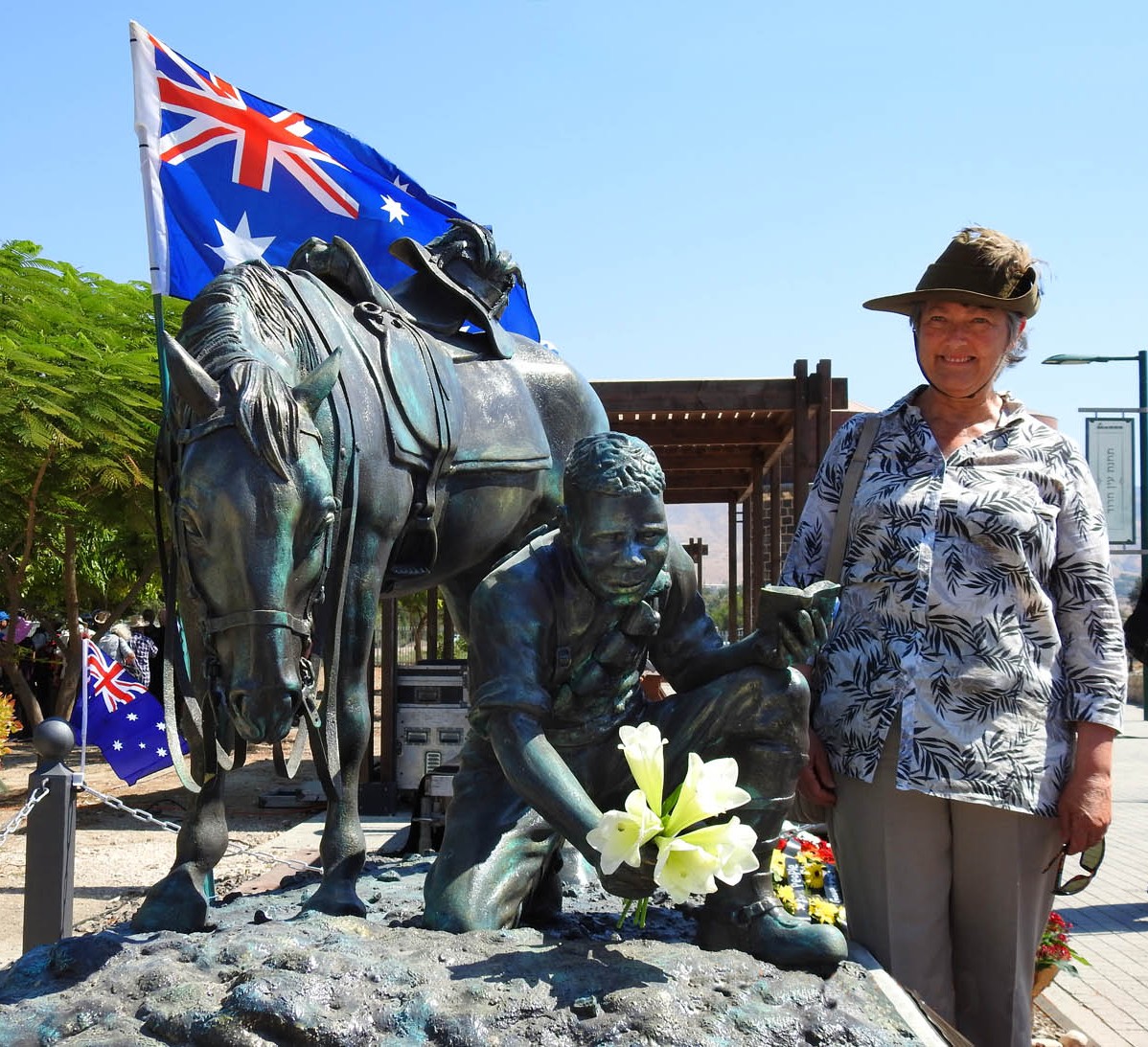
Australian and New Zealand mounted troops continued their Holy Land campaign beyond Beersheba, culminating in the fierce battle at Semakh and the defeat of Ottoman forces by the Australian Lighthorse and the New Zealand Mounted Rifles.
25 September 2026
6.7 MINS
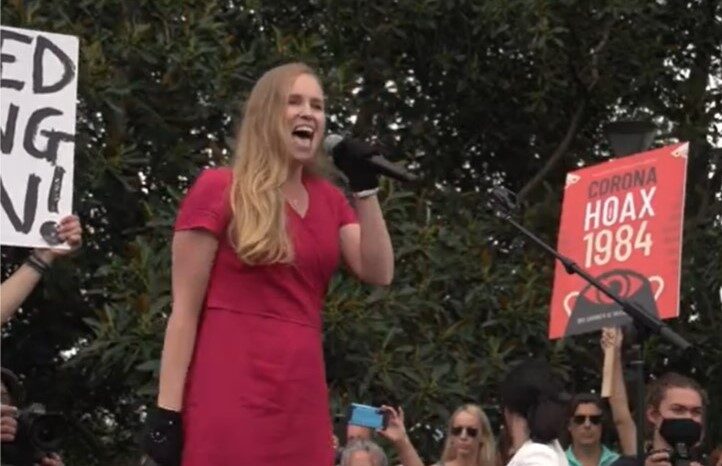
Monica Smit celebrates the abolition of Victoria’s Group Voting Ticket system while setting her sights on mandatory voting, sparking a fresh debate over electoral reform.
25 September 2026
3.5 MINS
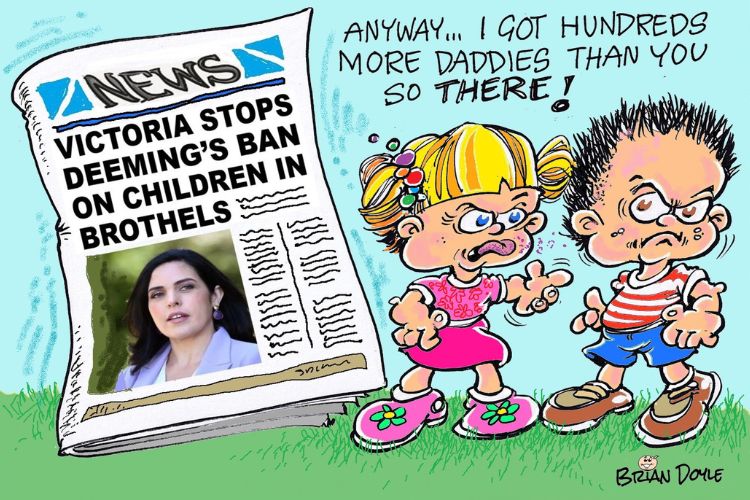
Labor and the Greens voted down a motion by Moira Deeming MP that would have banned children from being present during in-person commercial sex work, including in private homes.
25 September 2026
1.9 MINS
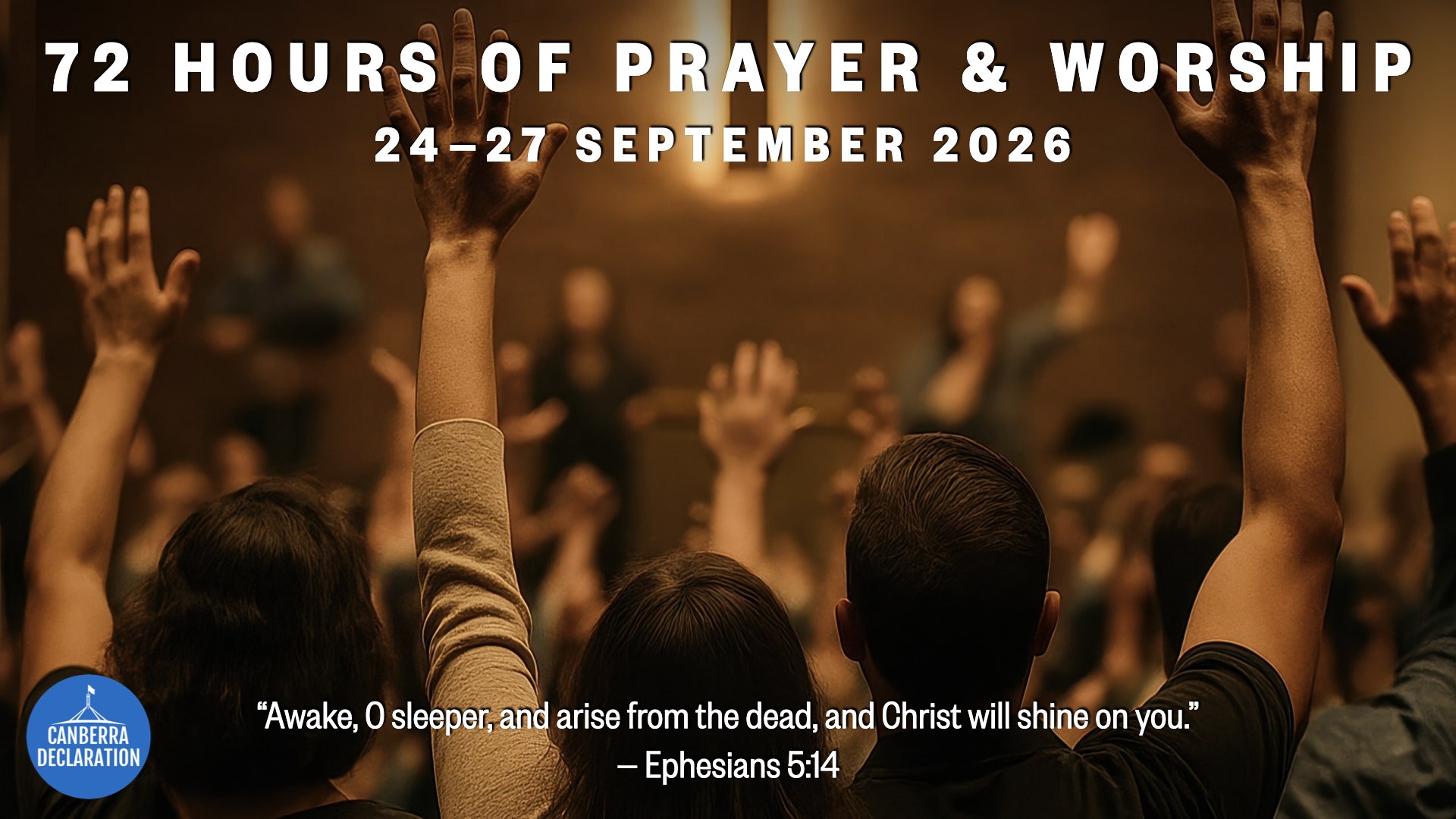
The Church is God's choice to reach Australia. But is the Church largely asleep? Join the Canberra Declaration during 72 hours of prayer and worship to renew our love for God and prepare for 31 days of prayer for the Church in October.

25 September 2026
2.9 MINS
Samuel Adrián’s arrest in Colombia has intensified a growing debate over freedom of expression, transgender ideology, and the protection of children.

24 September 2026
3 MINS
The US warns that Labor’s Digital Duty of Care bill could see platforms suppress independent journalists and commentary on “sensitive or controversial topics”, and would encourage platforms to engage in “pre-emptive censorship to avoid the risk of liability”.

24 September 2026
3.6 MINS
All Blacks and Springboks players united in prayer after their Baltimore clash, while Christian captain Siya Kolisi and Ardie Savea continue to testify openly about Jesus.



I was in Northern Europe during this years “heat wave” and experienced lack of air flow, the only available fans were desk fans! There was no encouragement to stay out of the sun, drink more, open the windows (if they did open) at night etc all simple things we Aussies have learned to do when we have a heat wave…but don’t ask us to deal with the cold of winter in the north!
Thank you , Kurt and John Anderson for attending ARC and writing this article. Proves how stupid the Europeans are because they leave thousands of people to die from Heat Exhaustion because they see air-conditioning as ” evil ” , but, president Lee Kwan Yew of Singapore thought it was a great blessing that helped Singapore become a rich country. Even the most basic advice on how to deal with Heat is not recommended to Europe’s citizens. What can be done with people so Brain -dead ? Ayaan Ali Hirsi sees as tragic the violence towards women in Europe’s streets which were extremely safe when she first fled Islamic Somalia. Yes, whilst Godless Europe declines and becomes poorer, the USA powers ahead, but, will it survive the cost of the Iran War dragging on ? Iran is a mountainous country, with who knows how many under-ground bunkers producing and storing weapons, and, working on developing nuclear bombs .