


The Forgotten Lighthorse Charge on 25 September 1918
Australian and New Zealand mounted troops continued their Holy Land campaign beyond Beersheba, culminating in the fierce battle at Semakh and the defeat of Ottoman forces.
The battles of the Australian Lighthorse and the New Zealand Mounted Rifles in the Holy Land in World War 1 did not end at Beersheba or even in Jerusalem in 1917. The winter set in, and they stayed camped for several months until a couple of unsuccessful attempts to capture Amman in March and April of 1918.
The Turks had built a defence line from the Mediterranean Sea right across to the Jordan River at the Dead Sea, which needed to be broken in order to capture the northern part of Israel and Damascus.
The ‘Megiddo sweep’ began on 19 September 1918, with a surprise attack near the Mediterranean by the British air force and cavalry followed closely by the Australian Lighthorse. They headed north towards Afula and Nazareth. The Allied forces captured 8,000 Turks, putting their entire 8th army out of action.
The Fierce Battle for Semakh
The 4th Light Horse Brigade was given the task of taking the village and strategic railway station at Semakh (today spelt Tzemach) on the southern shores of the Sea of Galilee. It was protected by 13 German machine guns, a 77mm field gun and several hundred Turkish infantry with grenades.
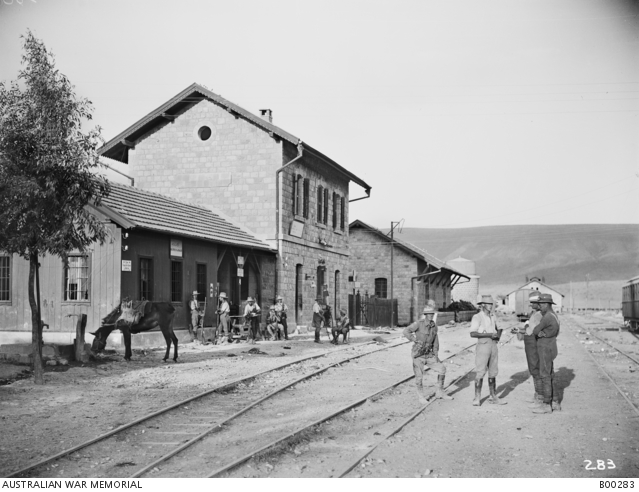
Semakh station in World War 1. Australian War Memorial image B00238.
Before dawn on 25 September, two squadrons (from each of the 11th and 12th Light Horse regiments) embarked on a charge – this time in the moonlight, before dawn. These squadrons included a contingent of Aboriginal soldiers, now permitted to join where previously they were denied, one of whom was the grandfather of Olympic sprinter Cathy Freeman.
The enemy fire began before they were within 800 metres of the station, and several horses fell. On reaching the village, they fought fiercely but were outnumbered and were rained upon by the Germans shooting from above through the windows of their strong station fort. Only when Australian machine gunners arrived, following the charging horses, did the tide begin to turn, as they disabled the fire from the windows.
The two squadrons then bashed down the door and entered the station, going from room to room, fighting hand to hand with rifles, swords and bayonets. It was the bloodiest battle on this operation, with 14 ANZACs killed and 64 wounded, together with almost 100 horse casualties, being nearly half of the horse contingent. They killed around 100 opponents (mostly Germans), took 365 prisoners (half of them German), with many more wounded. This was one of the last mounted charges in military history, as thereafter, mechanised transport and tanks were used instead.
Remembering the Fallen
Largely due to the vision of Ziv Ophir of Kinneret College, which is located around the site of Semakh, the college, together with the Australian Light Horse Association, the Jewish National Fund and the Israeli Government, has reconstructed the damaged station, restored the surrounding buildings and continues the memory of these gallant soldiers.
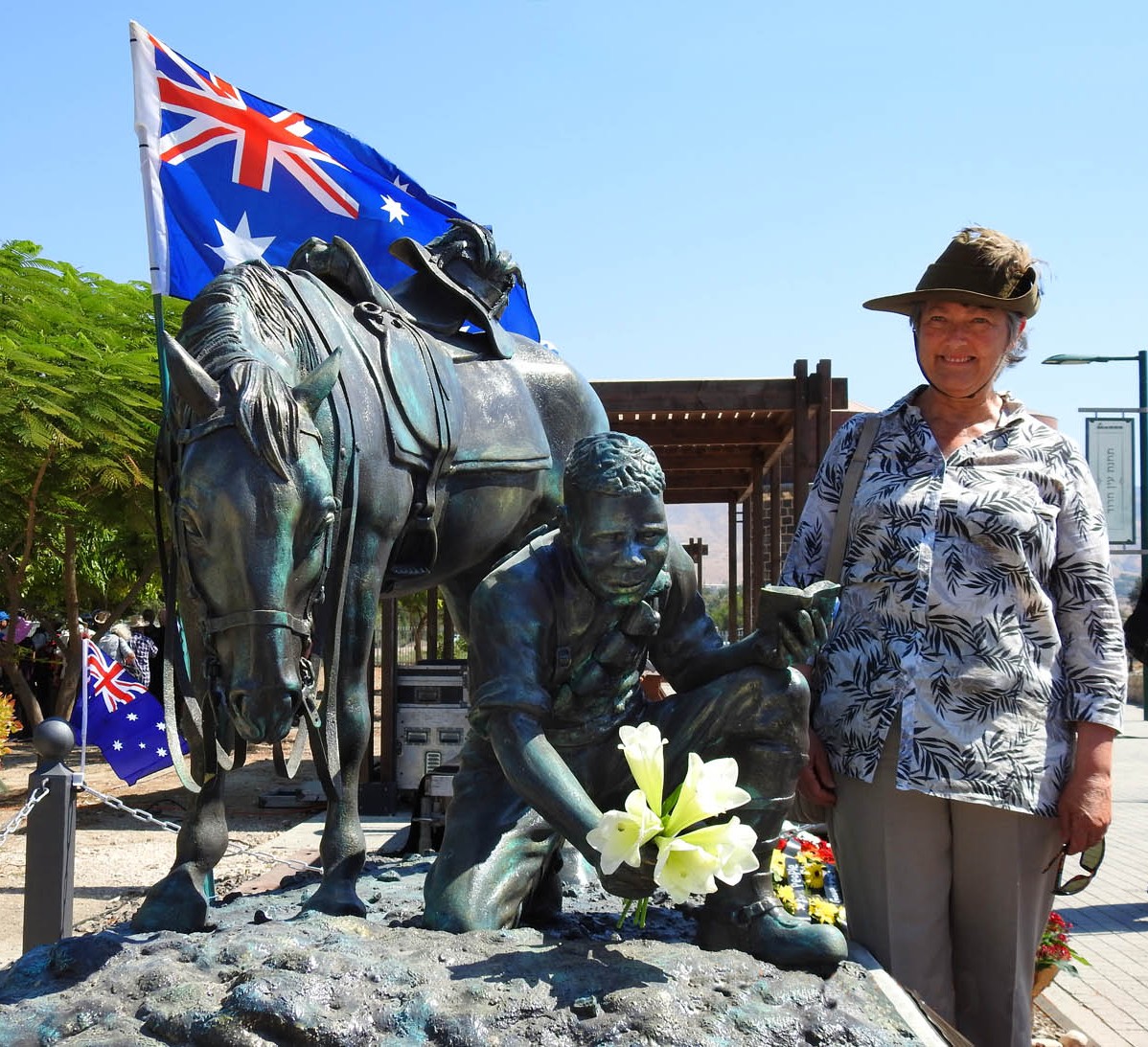
In the grounds of the college, they have erected a memorial plaque telling the story of the capture. Each of those killed is remembered with an individual plaque and a small gum tree. A statue by Jennifer Marshall, depicting a horse and an Aboriginal trooper, World War I soldier Jack Pollard, was added in 2019 to complete the restoration for the 100th anniversary of the battle.
From Semakh to Damascus
Meanwhile, across the Jordan, the Chaytor Force under New Zealand General Edward Chaytor finally conquered Amman and the 7th Turkish army, taking thousands more captive. From there, it was on to Damascus, where there were more battles that cannot be detailed here.
Allenby’s ambitious plan involving 34,000 horsemen against three Turkish armies had paid off. In only six weeks of the ‘Megiddo sweep’, they covered 560 kms on horseback and took 75,000 Turks captive, plus capturing 360 guns. The armistice in the Palestinian campaign was enacted at midday on October 31, 1918, exactly a year after the Beersheba charge.
32,000 men and 40,000 horses participated in the Palestinian campaign, which claimed 1,394 dead from injuries or disease and 4,851 wounded. Most of these were lost in the final part of the ‘Megiddo sweep’. Illness outnumbered other causes 37 to one.1 New Zealand had a population of just over 1 million in 1914. They lost 18,000 men in World War 1, with another 40,000 wounded. Of 250,000 eligible men, 120,00 enlisted and 100,000 served overseas.
While Beersheba was the first breakthrough in the ancient territory of the Holy Land, Semakh was the last major battle before they reached Syrian territory. Both involved Australian troops, showing the pivotal role our soldiers played in liberating the Holy Land from Ottoman domination. Interestingly, Tzemach means ‘branch’, a term used for the Messiah.
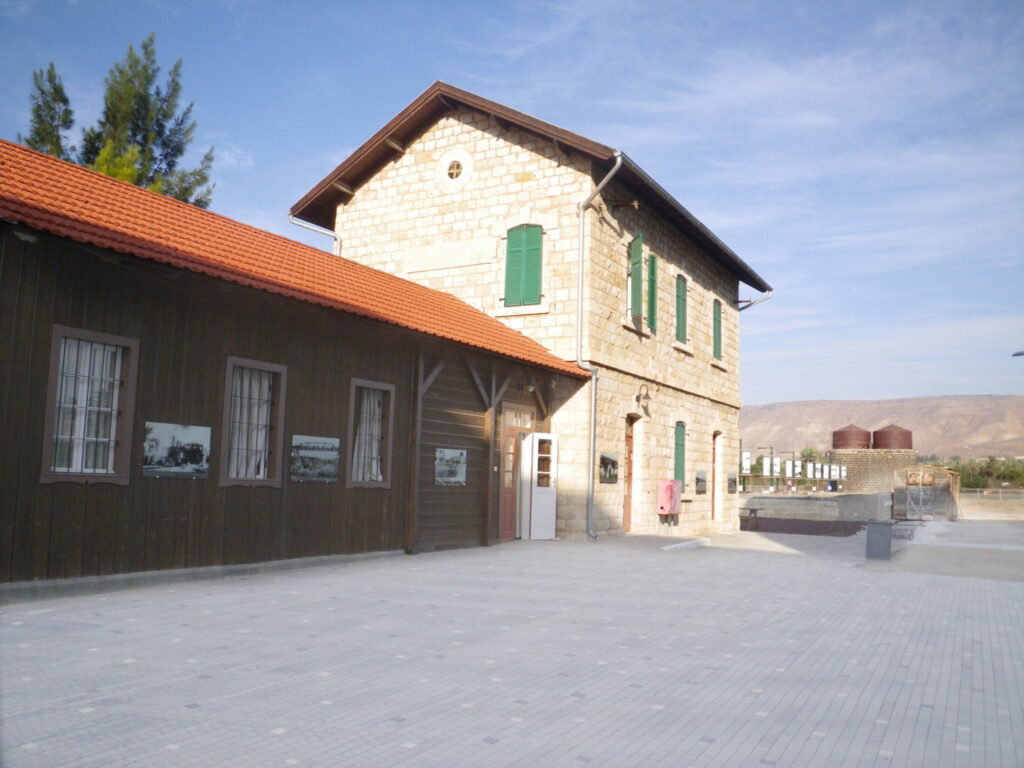
Semakh station now restored. Photo: J. Curry.
___
Find out more at the website Beersheba100.org.
Featured image: Official opening of the Statue at Semakh in 2019 with sculptor Jennifer Marshall – photo provided by Jennifer Marshall.
8 Comments
Leave A Comment
Recent Articles:

16 October 2026
4 MINS
A desperate Victorian Labor Party is peddling taxpayer-funded abortions as free “healthcare”. In a shameless attempt to stay in power, they're willing to do anything — including killing the unborn and forcing taxpayers to pay for it.

16 October 2026
4 MINS
Katie Zacharia’s first days as White House Press Secretary have sparked fierce media criticism, but her remarkable testimony of surviving an abortion attempt tells a deeper story.

16 October 2026
3.4 MINS
Australia’s proposed digital duty of care laws promise greater online safety and increased user control by switching off algorithms, but critics warn they could give ministers sweeping powers to restrict lawful content and threaten free speech.
A Million Women Movement Marks Second Anniversary: “Look What the Lord Has Done! Ishtar Has Fallen!”
16 October 2026
2.8 MINS
Two years after A Million Women gathered in Washington for ten hours of prayer and fasting, organisers point to victories they believe reflect God’s answers to intercession.
16 October 2026
2.6 MINS
Euthanasia accounted for 4% of all deaths in Belgium in 2025, with growing numbers involving people who were not terminally ill, dementia patients and psychiatric conditions.
16 October 2026
5.2 MINS
Christa Pike’s botched execution has sparked outrage across America, but critics argue that the same concern for human dignity is denied to abortion survivors.
16 October 2026
3.3 MINS
Jesus is calling us to love one another “just as I have loved you”. And if the Church does awaken to that agape (love), the world will see a great and powerful witness to Christ and his kingdom.



Australian armed forces played a key role in the ultimate establishment of Modern Israel in both the first and second world war. God used Aussies to help prophecy to come to pass. Great article Jill!!!!!
Thank you for the brilliant write up on Light horsemen Jill. The courage of those men from Australia and NZ was next to none and that of the faithful horses too. It was one of the most daring and victorious attacks in history. May God keep the memory alive and also preserve these beautiful statues and the rebuilt Semakh station.
Thank you for explaining the significance of the battle in terms of God’s holy land.
“While Beersheba was the first breakthrough in the ancient territory of the Holy Land, Semakh was the last major battle before they reached Syrian territory. Both involved Australian troops, showing the pivotal role our soldiers played in liberating the Holy Land from Ottoman domination. Interestingly, Tzemach means ‘branch’, a term used for the Messiah.”
Let us never forget the incredible breakthrough the troops gave so the land of Israel could be won back into Jewish hands later on in WW2…This winning of Bethsheba and Semakh triumphing over Turkish and German troop was instrumental.
We also must always honor and remember forever the Australian number who gave their lives :”32,000 men and 40,000 horses participated in the Palestinian campaign, which claimed 1,394 dead from injuries or disease and 4,851 wounded” or the NZ 80.000 who died in WW1.
Lest we forget
The Beersheba charge is well established in my knowledge of Australian battles in the Holy Land but I had never heard of any other of their battles. Great article. Hope somebody does a modern documentary on the non-Beersheba battles.
“LEST WE FORGET” became common statement across Australia and New Zealand after World War 1 as a symbol of commemoration in Australia. It began as an expression of mourning for the fallen, today it is a National form of our gratitude for those who fell in Wars for our Nation and to REMEMBER also our precious Veterans.”
We still consider ourselves as an ‘ANZAC’ Nation, a recognition of a kind of self-less love and mateship, formed in these wars, particularly Gallipoli and Beersheba – and clearly also in Semakh, a form of sacrifice of one person for another as one, and as a whole group of ANZACS together as one. And for ‘King and Country’ that is for Australia as a Nation, a special kind of love, we refer to as ‘mateship’ standing together, not forgetting each other as one, individually and as One People.
MATESHIP. This noble thought once formed part of our Australian identity.
We often quote the Scripture relating to this kind of love:
“Greater love has no one than this: to lay down one’s life for one’s friends” (John 15:13) “expresses the ultimate form of sacrificial love.: .. The statement points to the supreme example of love: laying down one’s life for others, which Jesus Himself would demonstrate on the Cross.:” Bible Hub” and on AI overview”
Our Nations foundations are the Judeo-Christian Biblical foundations and ethics at our roots. And this is reflected in our Constitution. Christianity, the rule of law as expressed in the special integrity and Christian ethic of the old Common Law introduced from Britain from our settlement beginnings. Woke philosophy is alien to this ethic.
There is also a phrase: “Those who cannot remember the past are condemned to repeat it” attributed to a Philosopher, George Santayana. Our History is important to our Future. Forget our History at our peril!
Remembering the huge price paid in the precious Blood of our Australians and New Zealand troops to free the Holy Land from the Ottoman empire is so important for our history today.
We do remember the Charge of the 800 Australian Light Horse at Beersheba, backed up by the New Zealander forces. The fierce battle at Semakh is less remembered, but clearly so very important that we too REMEMBER and aim for our History to follow suit!
The new Nations that came forth, decided mainly by Britain and France, post WW1, following this conquering and defeat of the Ottomans in the Middle East, represented in these ANZAC Battles, ARE IN OUR NEWS TODAY.
We have largely FORGOTTEN our history – and our Role for the freeing of the Holy Land, Israel.
The paradox of the current wars we see on our TV today – is, seemingly – to bring about a return of the former Ottoman lands (empire)! And Israel defending itself from these actions.
A stated aim in these current wars, mainly from former Ottoman empire nations, is to evict Israel from its ancient homeland – returned to the Jewish people by the World government – via the UN – agreed to – internationally – following the Holocaust – a decision made post World War 11 – for Israel’s return to a small portion of the Land decreed by Almighty God, to Abraham, Isaac and Jacob and their Descendents recorded in the Bible,
This is the meaning of ‘evicting’ Israel in the phrase: shouted from the streets in Australia now: ‘from the River to the Sea”! An expressed desire to change history from the UN Resolutions of 1948. We have truly FORGOTTEN our History!
Sadly too these sentiments expressed above in our own streets and demonstrations, seemingly aim bring about a repeat of the kind of Antisemitism that brought about the Holocaust and the prior actions from about 1933 that seemingly are being repeated today – and which caused the death of millions of Jews. Unthinkable, today – surely!
PLEASE REMEMBER – AUSTRALIA! LEST WE FORGET!
Daily we see references to Israel, Lebanon, Syria, Turkey and other Middle East post-World War 1 nations and their regions and their capital cities – including Damascus, Amman, Beirut, Jerusalem, and Gaza. Others.
Do we see a kind of attempt to ‘reverse’ History! Query: ? Aimed to ‘claw back’ lands in these present wars, :aiming for a reversal of what was won by the Australian and New Zealand forces and the British forces, in WW 1 to free the Holy Land which brought about the return of the Jewish People to their ancient Lands. Such an irony!
So, a knowledge of our own History is vital to our present-day actions. Ignorance of our own History and remembrance of what we won with the ANZAC courage and fortitude; our noble mateship; the Australian legacy gained by the Australian and New Zealand ANZAC Warriors at Beersheba and at Semakh and other WW1 battles.
Today we see our present government has FORGOTTEN our History, they are ignorant of both History and the Bible that also records truth and of history regarding the Jewish People and the return of their Lands. One passage re this Return,( there are many in the Bible), ‘Can a Nation be born in a day’ – Isaiah 66.8. “AI overview, Isaiah 66.8 asks if a nation can be born in a single day, highlighting the miraculous and sudden restoration of Zion.”
Yet today our present government in its ignorance and anti-Israel stance, today, speaks against Israel in the UN, where once we stood for Israel and were part of the ‘Yes’ vote for the restoration of the Nation of Israel back to its ancient Homeland. And we Australians once stood for Israel.
And there is so much ignorance by many in Australia to our ANZAC History regarding the freeing of the Holy Land that allowed the return of the Jewish People, post Holocaust to their Homelands. Our History is so important, LEST WE FORGET our vital Australian war and Parliamentary History and our own National destiny to stand with and for Israel and for the Jewish people!!!
And LEST WE FORGET – NOW – our proud History for all those who fell in other wars post WW2 and in the ‘Middle East” including Afghanistan, our present-day ANZAC Heroes. Who fought and died and came home battle scarred in many ways. They too fought for freedom, justice and righteousness to maintain what had been won in prior wars. Have we forgotten them too?
Thank you Jill for this amazing article to remind us of the courage and bravery of those who fought for us to live in peace. Lest we forget!
Thank you Bill for this great article. Cheryls great grandfather was a 32 yo lighthorseman based in Egpyt in WWI. He was from Eurobadalla Shire in South Coast of NSW . i will check inthink he was in the 12th
Sorry Jill , I wrote Bill .Thank you again for this very significant article
Thank you Jill for being faithful in telling the story of our great heroic of wars of victory not forgetting the horses too. The biblical significance of the land and its Hebrew names and prophetic significance is still a battle for the spiritual ANZACSto contend.
This history and revelation must be taught and told to the next generations lest they forget!!! We are accountable as the generations that have been blessed because as a nation we were chosen by God to be a blessing to Israel. May we and our children never forget that.