



What Kanye West and Eliot Page Can Teach Us About the Modern Secular Creed
Rapper and cultural icon Kanye West converted to Christianity at the end of 2019. [1]
While it’s not unusual to see big-name celebrities announce a new spiritual journey, the mainstream media and entertainment industry didn’t quite know what to do with him. Not only was his change dramatic (his music up until that time was not exactly in line with Christian morality). But he converted to Christianity — a religion that’s routinely mocked by the music and media elites.
And so, neither fellow celebrities nor mainstream media celebrated Kanye’s conversion.
Contrast that with the reception the lesser-known Canadian Actress Ellen Page received late last year, after announcing her gender transition to ‘Eliot Page’. A-list celebrities like Hillary Clinton, Ellen DeGeneres and Mark Ruffalo posted affirming messages on social media, celebrating her transition.
Why the difference in responses to Kanye and Eliot?
In large part, it’s to do with how Western culture has changed. Our culture and culture-makers now have a certain narrative or ‘creed’ about reality, which shapes how they view the world. And so, here’s what the different responses can teach us:
1) There is no ‘Neutral’ View of Reality
As Christianity leaves the Western world, another set of beliefs takes its place.
Australian author Kurt Mahlburg explains the new secular creed that has replaced Christianity:
When you spend centuries dismantling your own civilisation, as we have been doing [in the West], soon enough you need something to take its place. We humans are meaning-making, order-seeking creatures…we cannot live in a vacuum or a state of continual chaos.
He continues:
So somewhere in all of our cultural demolition, slowly but surely we have been rebuilding ourselves in the West. A cultural re-construction is underway, and even if we are not aware of it, a new set of beliefs has emerged to rival the old.’ [2]
People need a narrative — a set of beliefs about the world — if we’re to function. There is no ‘neutral’ view of reality that we default to without Christianity. And so, with Christianity leaving the western building, something else has taken its place.
2) The Modern Secular Creed
This secular creed redefines reality from our previous Christian view of the world.
According to Mahlburg, it does this in 7 key categories of reality:
- Ultimate Reality — what is real and true? Answer: Naturalism. Our universe is a closed, impersonal system (cue John Lennon’s ‘Imagine’).
- Epistemology — how can we know what is real and true? Answer: Existentialism. We discover and create our own truth and reality.
- Nature — how should we see the world around us? Answer: Materialism. In a world where only matter matters, science will prevail.
- History — where do we fit in the bigger story? Answer: Progressivism. Humanity conquers the past to build a better future.
- Society — how should we relate to each other? Answer: Individualism. The individual is the only significant unit of society.[3]
- Morality – how should we live? Answer: Moral Relativism. We can live how we like as long as we don’t hurt others.
- Identity – what am I, and what is my worth? Answer: I define myself regardless of what other people say.
These ideas are ‘unthoughts’ — they’re assumed to be common sense, which all right-thinking people hold to. They’re propagated across our culture via the arts, media, and everyday conversations.
3) Why Kanye West’s Conversion to Christianity Was Considered Offbeat
The Secular Creed is diametrically opposed to Christianity.
Let’s face it: if Kanye had gender-transitioned like Page, or converted to another religion like Buddhism, he probably would have been celebrated.
Why?
It’s because, as Mahlburg explains:
[O]ur secular creed easily accommodates most other spiritual and philosophical fashions. For all their variety, the ‘alternative’ paths followed by spiritual seekers tend to agree on the fundamentals: an impersonal universe, the supremacy of the individual, fluid morals, tailor made truth, and self-discovery.
He continues:
But in every category of the creed, Christianity and secular culture are at odds. There is agreement on a few small points, no doubt. But the contrasts are there, and they are stark. Just like Kanye, any follower of Jesus can dress to impress and make the best art, but they will still seem off-beat to everyone else… What Christians believe is what causes the biggest conflict with today’s culture.’ [4]
4) This Secular Creed is Also Influencing Christians
In a world where nature is all there is, our secular creed sees Christianity as a blind, illogical leap of faith. Thus many who confess Christ feel they need to close their eyes to the ‘facts of science’ and just believe. [5]
Of course, this brand of faith doesn’t last long in a culture like ours.
The Not-So-New Normal
I praise God that Kanye has been open about his faith, even in the face of such a cool reception from many. I can only imagine the temptation he feels to be quiet about Jesus.
While our culture is becoming less tolerant of Biblical Christianity thanks in part to its new secular creed, opposition to the Gospel is nothing new. Jesus taught His disciples to expect no less (Jn 15:18).
But whether we’re household names or lesser-known people, we can take heart knowing that Jesus has overcome the world (Jn 16:33).
___
[1] I’m assuming that Kanye is a genuine believer, but I’ll leave it to God to judge the genuineness of his faith.
[2] Kurt Mahlburg, Cross and Culture – Can Jesus Save The West? (Unanderra: Australian Heart Publishing, 2020), 65. I reviewed his book in a previous post.
[3] This category is being blurred by the rise of identity politics, which says that your particular ‘group identity’ is of more significance than you as an individual. See my post on Critical Theory.
[4] Mahlburg, 81-82.
[5] Mahlburg, 84.
___
Originally published at AkosBalogh.com
Image: BigStock
Recent Articles:
20 October 2026
4 MINS
Olympic champion Stephanie Rice has faced a wave of online ridicule after revealing she resigned from her dream job following what she believes was God’s direction.
20 October 2026
7.7 MINS
France and Europe are burning — is it too late to save them from the barbarians?
20 October 2026
4.6 MINS
As rioters burn cars and historical buildings, celebrating the destruction of France’s inheritance, the West confronts an uncomfortable question: what happens when a civilisation loses the will to defend itself?
20 October 2026
4.9 MINS
James McAuley’s legacy reaches far beyond Australia’s Catholic hymnals. Poet, convert and cultural warrior, he defended beauty, truth and faith in an age of changing values.
20 October 2026
4.9 MINS
A federal investigation has exposed how America’s biggest banks shut out conservative and Christian clients, relying on subjective reputation risks and controversial ideological watchdogs.
20 October 2026
3 MINS
Scripture teaches us to pray the "prayer of faith", because without faith it is impossible to please God.
19 October 2026
6.7 MINS
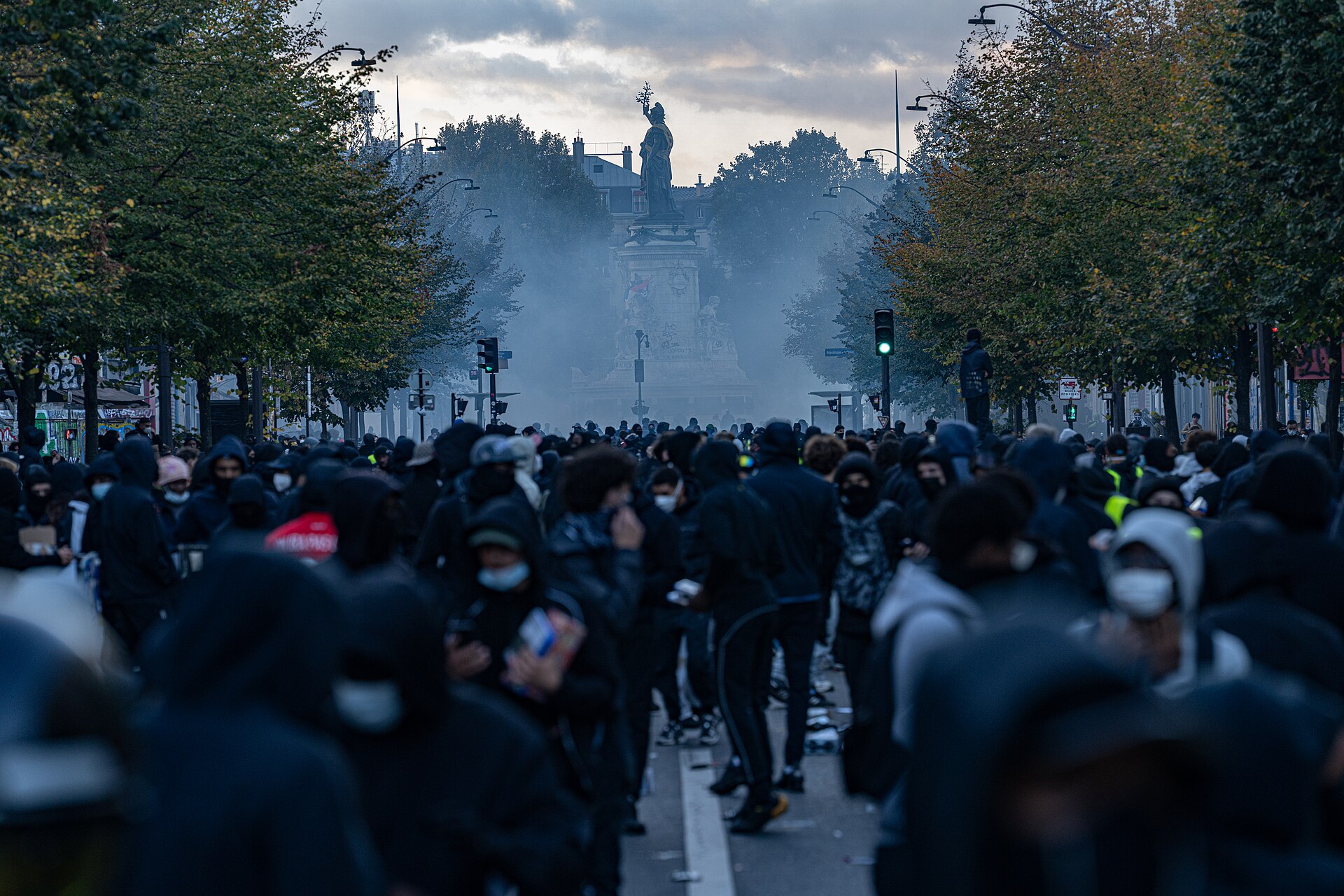
Europe’s escalating unrest raises urgent questions about immigration, national identity, secularism and the decline of Christian influence, prompting calls for repentance, prayer and renewed leadership.


