



Sovereignty, Intervention, and Justice
Is military intervention ever justifiable — if so, when?
Justice between individuals is something we aspire to, or should aspire to. We should seek to treat others justly. And justice within a nation is also a social good that we affirm, although we often fail to achieve it. Justice between nations in the international community is also a vital good.
Justice, peace and order are all important social goods that we strive for in these three arenas. Because we live in a fallen world made up of selfish sinners, these things are needed, but they also seldom live up to the expectations that we put on them. Thus injustice, conflict, and disorder are usually the norm instead of the exception.
But the fact that such social virtues are never fully realised or achieved does not mean we should not work toward them. And here I want to look at the third arena, that of international relations and geopolitics. How can we maintain justice among nations?
Indeed, when we consider the nation-state and the notion of sovereignty, how does talk of things like intervention fit in? Is it ever right for one nation to interfere in the affairs of another nation, be it militarily, economically, or politically?
Entire libraries exist to discuss these mega-topics, and many disciplines come into play here including politics, ethics, law, history, theology and philosophy. So this of necessity will be a very brief and skimpy introduction to these issues. Many more articles will be needed to tease these matters out in more detail.
Sovereignty
The modern nation-state arose during the 17th and 18th centuries. While nations have long had concerns about political and territorial integrity (think of ancient Israel and its clearly defined borders for example), the modern nation-state especially gave rise to the notion of national sovereignty.
The 1648 Peace of Westphalia laid out the principle of sovereignty whereby states could expect to be free from external control. Paul Miller discusses how the Westphalian tradition differs from the Augustianian tradition:
“Justice, in this view, did not include liberality or charity; it involved the protection of rights – not human rights, but the rights of sovereigns. Above all, in this era, international justice became equated with the rights of sovereign autonomy and the reciprocal noninterference associated with the treaties of Westphalia.”
Thus today the notion is widespread that we must adhere to the inviolability of state borders. But modern international law has acknowledged the obligation of nations to offer protection and humanitarian aid to those victimised by armed conflict and natural disasters. The 1863 Geneva Convention for example speaks to this, as do later conventions.
Some thinkers hold to national sovereignty as some sort of absolute. When it comes to war and international relations, the realists (eg Carr, Reinhold Niebuhr, Morgenthau, Kennan, and Kissinger) take this view, stressing the importance of non-intervention.
It is those who hold to versions of just war theory who see a place for intervention. They rightly ask, ‘Can a nation become so barbaric and tyrannical to its own citizens, and so belligerent and threatening to other nations, that some sort of armed intervention becomes prudent and morally acceptable?’
Taken further, is there ever a place for preemptive war? For example, would the world have been far better off with far fewer people killed had the Allies not waited until Hitler had taken large portions of Europe before acting? Might a first strike earlier on have prevented not just massive bloodshed, but the Holocaust as well?
All these questions have been debated at great length and cannot be entered into here in any thorough fashion. But the notion of intervention as a means of keeping the peace, preventing injustice, and maintaining some order and stability in the world is something that we need to carefully think about.
Intervention
If national sovereignty is a key principle of today’s international order — sacrosanct for some — how and when might intervention occur, if at all? Questions like this have been with us quite a long time, especially in the form of just war thinking. The need for self-defence or defending justice that comes under assault are key reasons why the use of military force can be moral. See more on this here.
While modern international law disparages offensive wars, and seeks a no-first-use rule, certain preemptive or interventionist actions can still be granted morally justifiable status. Various ethicists, philosophers and theologians have sought to make that case.
It was the church father Ambrose of Milan who famously said in On the Duties of the Clergy: “He who does not keep harm off a friend, if he can, is as much in fault as he who causes it.” This can apply not just to individuals but to nations. To help defend a nation under attack or on the receiving end of injustice can rightly justify the intervention of others.
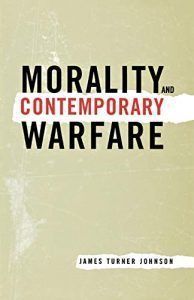 These principles, as many have pointed out, are often for the good of a third party. As James Turner Johnson put it,
“What is most fundamental in this conception of just cause is that it justifies the use of force not out of self-interest but for the sake of others: those who are in need of defence or who have suffered wrongs needing to be righted.”
This is an important point for the Christian, and one that I have raised elsewhere. Often a Christian will argue that we must simply turn the other cheek when attacked as per the instructions of Jesus. But as I have explained, the willingness to put up with a personal insult is one thing, but that does NOT preclude coming to the aid of a third party.
If someone insults me, I can just move on. But if someone tries to attack my wife or children, I have every moral and Christian right to come to their defence. That is the loving thing to do. See more on this matter here.
Let me very briefly mention two major just war thinkers on the matter of intervention. Michael Walzer in his classic 1977 work Just and Unjust Wars offers three main reasons for such intervention: 1) intervention in certain civil wars, to assist in secessionist movements; 2) counter-intervention in a conflict to offset prior intervention by another power; and 3) intervention to counter extreme violations of human rights, eg those threatened with massacre.
Paul Ramsey said this in his 1968 The Just War:
“It is simply an illusion to believe that there exists or can exist a system of impenetrable nation-states, founded upon an absolute principle of non-intervention, which has removed from among the decisions of magistrates the question whether the political good will be sustained more by intervention or by non-intervention.”
So a number of important thinkers argue that if there is a place for individuals to intervene in the face of aggression or injustice to another person, the same principle can be applied to nations. There may well be a place for intervention — even military intervention. Of course, we often lack fully clear mental and moral guidelines here. Most conflicts are messy and somewhat ambiguous.
We can ask when is a just war — as defined by the traditional criteria — actually and properly taking place? In a fallen world there will be no perfect and pristine just war, just as there will be no perfect and pristine anything. Determining if and when military intervention is warranted will always be a complex and difficult question to answer.
We also have related issues such as the possibility of just revolution. Is there ever a time and place for a justifiable revolution? Many Americans would obviously think that the American Revolution was just. But see more on this question in this two-part article.
As mentioned, this is just a bare-bones introduction to a number of related and important questions. Forthcoming articles will look at these matters in much more detail, so stay tuned.
For further reading:
- There are 85 or so volumes I featured in a recent article on what to read about war and peace.
- And I recently penned a piece on intervention.
- Here are a few more specific places to turn to:
- Paul Miller, Just War and Ordered Liberty. Cambridge University Press, 2012. See ch. 4, “The Westphalian Tradition.”
- Paul Ramsey, The Just War: Force and Political Responsibility. Rowman & Littlefield, 1968, 2002. See ch. 2, “The Ethics of Intervention.”
- James Turner Johnson, Morality and Contemporary Warfare. Yale University Press, 1999. See ch. 3, “The Question of Intervention.”
- Michael Walzer, Just and Unjust Wars. Basic Books, 1977. See ch. 6, “Interventions.”
___
Originally published at CultureWatch. Photo by Pixabay.
Recent Articles:

27 October 2026
1.5 MINS
Labor’s Digital Duty of Care Bill threatens free speech, empowers covert online surveillance, and imposes potentially burdensome regulations on Australian businesses.
27 October 2026
4.9 MINS
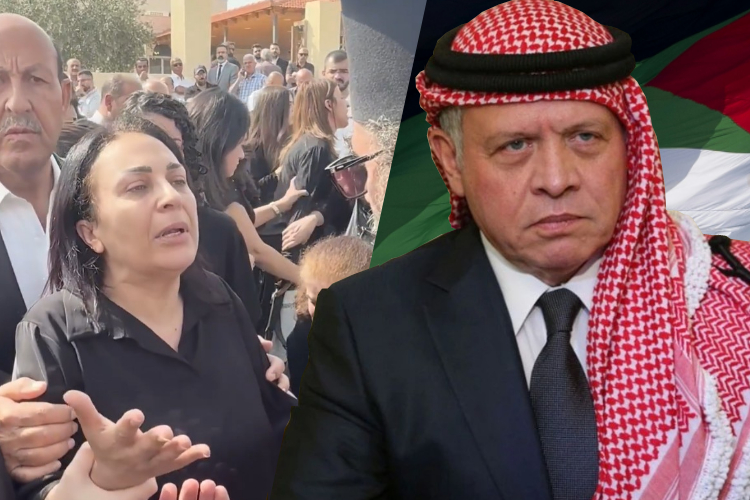
Nine Christians have been killed in a terrorist attack on a Jordanian church, prompting fierce condemnation, demands for justice and renewed concerns about religious persecution.
26 October 2026
2.5 MINS
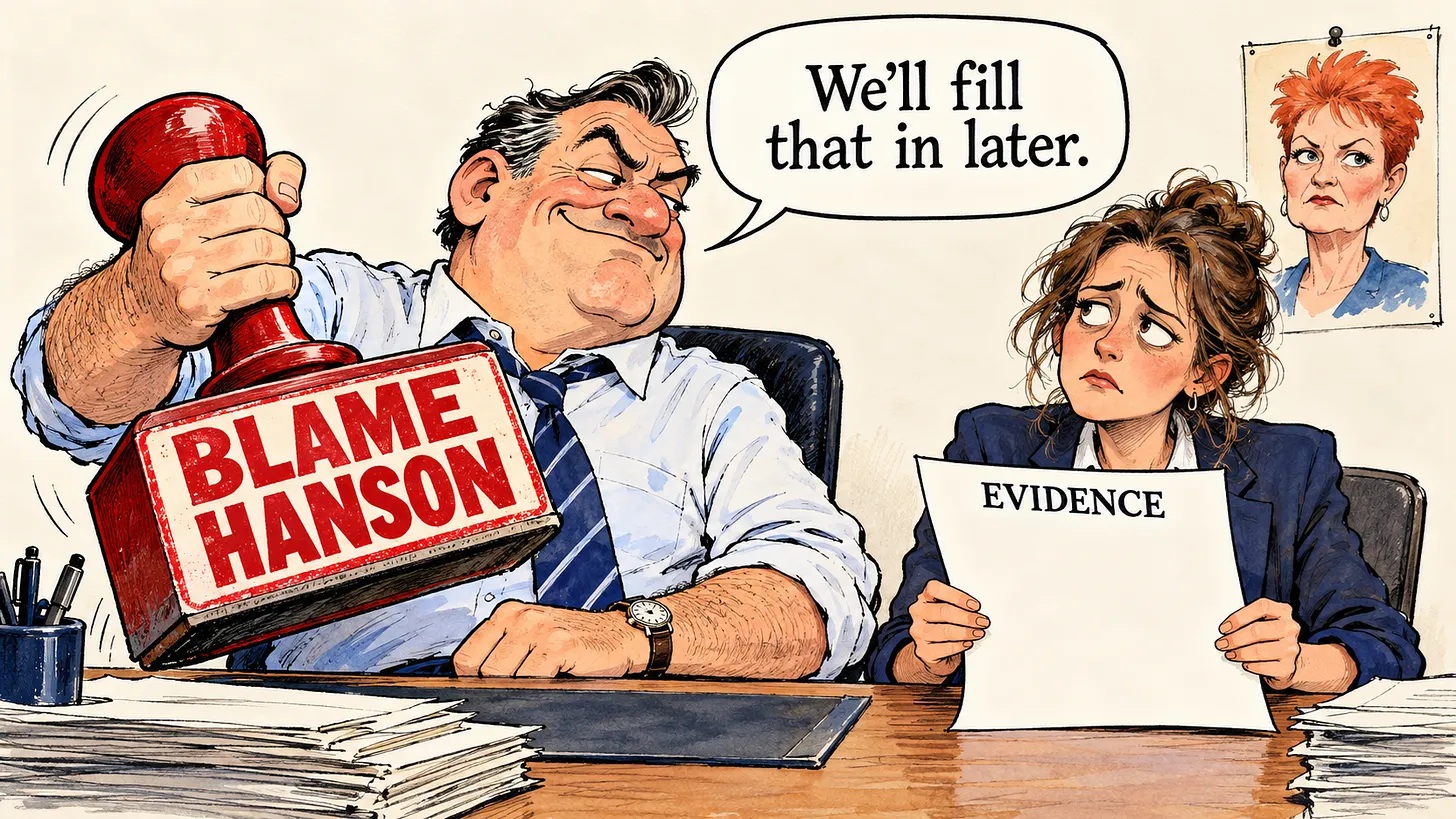
Nation First exposes the rush to weaponise the Haines attack against Pauline Hanson, conservative voices and men before investigators established a motive.
23 October 2026
13.1 MINS
Tasmania’s proposed conversion practices legislation raises serious questions about religious freedom, pastoral care and whether Christians can freely pray with those seeking to live according to their faith.

22 October 2026
4.7 MINS
Western Australia’s proposed anti-discrimination overhaul has sparked warnings from Christian leaders that religious freedom, parental choice and faith-based schools’ ability to uphold their beliefs are at risk.

21 October 2026
3.5 MINS
The alleged attack on Helen Haines demands condemnation, but rising threats against politicians also raise questions about public trust, political intimidation and selective outrage.

21 October 2026
3.5 MINS
Ben Carroll has called for an end to hateful political rhetoric, but his treatment of Pauline Hanson raises questions about how consistently he applies that standard.


