



The One Kingdom Where All Are Welcome
Human governments cannot do what only God’s government can.
Every tyrant and dictator wants to be ruler over all peoples, and with no dissent allowed. While the masses may in part go along with their rule, there are always various groups — ethnic, religious, cultural, political, etc. — who reject these overlords, and the only way they can be ruled is by force and coercion.
Consider how the Nazis dealt with unwelcome groups, or how Communist China today is dealing with the Uyghurs and others, to name but two examples. But even in democratic states we still have the political and social problem of unity and diversity — of the one and the many.
Even here in Australia, coercion of some sort is needed to get everyone to more or less get along as they live within one nation. Policies such as multiculturalism often have coercive elements to bring about preconceived ideas of a diversified yet harmonious culture.
Idealistic
Getting all sorts of different people to live together in peace and harmony is usually more of an ideal than a reality. Sure, some attempts may be better than others. Earlier on in American history, for example, the idea of a “melting pot” seemed to work fairly well.
For quite some time, this aim of unity in diversity was quite viable. So many different peoples wanted to come to America and live the American dream. They liked what it had to offer, and they wanted to fit in — including learning the language — to really make it in the new country, and to succeed.
Yet it had a Civil War, and we are now seeing a new civil war developing there, one fought along cultural, political and ideological lines. Many wonder how long America can survive with so much division and conflict. Can the centre hold? Or is it doomed to unravel?
Just yesterday, I wrote about the utterly laughable situation in Martha’s Vineyard in Massachusetts. This is a place of wealthy leftist elites who forever go on and on about the need for inclusion and compassion and open borders. Yet when 50 illegal migrants were taken there, all hell broke loose.
There was mass panic, and within hours they were all whisked away! You can’t have Venezuelans spoiling this rich people’s playground, no matter how much the residents speak about ‘we must welcome everyone with open arms’. These strangers are welcome alright — just NOT in my backyard!
So the solutions to national unity amid diversity continue to elude us. As Steven Bryan puts it in his brand-new and quite important volume, Cultural Identity and the Purposes of God (which I will speak further to in a moment):
“The differences between these various approaches to the question of the relationship between nationality on the one hand and ethnicity and race on the other are obviously immense. Yet, no system has proven particularly adept at dealing with the reality of cultural multiplicity within a society.”
The Christian Answer
Plenty has been written about the big problem of the one and the many — a major issue that the early classical philosophers for example extensively dealt with. That broader debate I cannot here go into, but I can mention one key 400-page volume that wrestles with the philosophical and theological issues, with plenty of social and political implications: The One and the Many by R. J. Rushdoony (Thoburn Press, 1971).
In a fallen world, it seems that no earthly kingdom can ever hope to have a unified nation yet with a diverse populace. But there is one kingdom that can and will achieve this. The kingdom of God is seeing real progress in achieving this now, and will one day see the full and complete realisation of it.
God is able to unite what man never could. And God is able to bring people from all nations and languages to become ONE people. The future version of this is powerfully laid out in a text like Revelation 5:9-10, where everyone is included:
“Worthy are you to take the scroll
and to open its seals,
for you were slain, and by your blood you ransomed people for God
from every tribe and language and people and nation,
and you have made them a kingdom and priests to our God,
and they shall reign on the earth.”
This was often foretold in the Hebrew Scriptures. Psalm 2:8, for example: “Ask of Me, and I will make the nations your heritage, and the ends of the earth your possession.” While we await the final fulfilment of this in the next age, we now, as the Body of Christ, live this out, albeit imperfectly.
Paul for example spoke about how we are one in Christ: “There is neither Jew nor Greek, there is neither slave nor free, there is no male and female, for you are all one in Christ Jesus” (Galatians 3:28). Right now, despite sin and selfishness remaining among God’s people, the church can demonstrate to the world that real oneness is possible — a oneness that does not take away our diversity.
Sure, often the church has failed to demonstrate this to the watching world. Yet, many times it has. And it all started with Jesus and his disciples. He called together a motley crew — including those who were despised tax-collectors as well as those who were anti-Roman zealots. In the world, such people could hardly have gotten along, but in Christ, they can and do.
All this is based on the foundational Judeo-Christian belief that we are all created in the image and likeness of God. So we all have value, dignity and worth, and that should translate into living together harmoniously and lovingly, despite all of our many differences.
So while the world often seeks unity through the squashing of diversity, or promoting a diversity amid oneness via failed multiculturalism policies and the like, the Christian church offers us a better way — and a genuinely viable way. The volume I mentioned above looks at all these matters in great detail. I urge you to check it out. Just one closing quote can be offered here: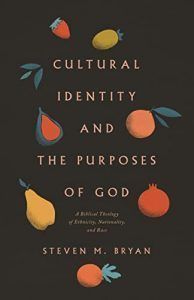
As the anticipation of God’s new humanity, the local church’s identity as a people of peoples is central to its witness within any political order. In a divided world, the local church makes visible the gospel’s achievement of the unified humanity of the new creation. But the church must never forget that this people of peoples comes into existence as individuals hear and believe the gospel of a crucified and risen Messiah.
A church that focuses only on the restoration of relationships between peoples without remembering that this is an achievement of the gospel risks the loss of both the gospel and its power to restore peoples to right relationships. Without the gospel, the quest for justice simply becomes a zero-sum dispute about power between groups in which equality is always pursued and never gained…
Every culture has its own shape that frames the stories of individual lives. Those stories come together and find their meaning within the story of God’s creation of a new humanity in Christ. The unity of this new humanity, depicted in Scripture as a gathering of peoples around an abundant table with a generous host, is not a brittle and fragile solution to an unsolvable dilemma. Rather, it is a unity that comes from the blessing of our shared participation in the unified life of the triune God.
What man alone has been unable to achieve, man in Christ is able to do — partially in this life and fully in the next.
Afterword
Since the left — both secular and religious — loves to talk about welcoming the stranger and tearing down walls, many leftist enclaves are proclaimed to be “Sanctuary Cities.” While that term is derived from the Bible, what the leftists have in mind and what Scripture teaches about this are two different things. See my earlier piece for more details on this.
___
Originally published at CultureWatch. Photo by Nina Strehl on Unsplash.
Recent Articles:
27 October 2026
10.3 MINS
As Tasmania and Western Australia consider conversion therapy bans, a former LGBT+ ministry leader warns of threats to religious freedom, personal choice and Christian discipleship.

27 October 2026
4.9 MINS
Nine Christians have been killed in a terrorist attack on a Jordanian church, prompting fierce condemnation, demands for justice and renewed concerns about religious persecution.
27 October 2026
3.6 MINS
For 25 years, the Mount Moriah Trust has supported struggling Christians across the Holy Land, bringing practical assistance, encouragement and hope to believers facing hardship and persecution.
27 October 2026
3.1 MINS
As the disciples discovered through a huge haul of fish, we can trust Jesus for a net-breaking, boat-sinking catch of people.
26 October 2026
3.2 MINS
Following Paul's example in Ephesians 1, let us pray for the Father to open the eyes of our hearts so that we may grasp the hope of his calling, the riches of his glorious inheritance in the saints, and the greatness of his power towards us who believe.

25 October 2026
4 MINS
Prayer is active partnership with God, and he is awakening his body to prayer, not by might or by power, but by his Spirit.

24 October 2026
3.3 MINS
When we ask God, "What is in my hand?", and see our possessions, money and time as seed that God asks us to sow, life becomes simpler.


