



Book Review: The Toxic War on Masculinity
A vitally important defence of men and masculinity.
Nancy Pearcey has said that this has been her most controversial book to date. That is telling. To simply affirm the importance of men and masculinity is controversial? Sadly, in the West today, it most certainly is. All the more reason for the importance of having a book like this available now.
Her title gets it right: the issue is NOT toxic masculinity (although that can and does exist, and she unflinchingly addresses it in this volume), but the war — the toxic war — on men, maleness and masculinity. This war has been unrelenting and coming from all quarters. This is something most of us should by now be quite familiar with, and Pearcey offers plenty of documentation on this sustained assault.
She clearly makes the case that the rise of aggressive secularism over the past few centuries has been the main cause of this attack, and also demonstrates with reams of documentation and social science evidence that the best way men can flourish — and others as well — is by affirming biblical Christianity.
Uplifting All
Indeed, a major reason why celebrating and defending masculinity is so very vital is because of the overwhelming benefits this confers upon women, children, and society as a whole. We all benefit when men are acknowledged and honoured, and we all suffer when they are not.
And all this goes straight back to Jesus Himself. He was the ideal man, displaying the ideal masculinity. As such, He radically raised the status of women by showing them true respect and dignity. And children also benefitted in very real ways. Back in the day, things like abortion and infanticide were rife. Jesus and His disciples helped to change all that. Pearcey writes:
The fact that the early church prohibited abortion and infanticide was one reason women flocked to Christianity. Today people who oppose abortion are accused of being anti-woman. But in the ancient world, people recognized that to reject abortion is to be pro-woman. The church’s opposition to abortion and infanticide communicated that Christians cherished the female contribution in bringing new life into the world. They treated women’s uniquely female role and function with respect.
Christian marriage was also so very unique, given the way things were in Greco-Roman culture back then:
“In this historical context, the Christian view of marriage was nothing short of revolutionary. At its core was a new form of sexual equality. To the shock of the ancient world, both sexes were held to the same moral standard. Christianity condemned promiscuity among men as well as women. It stood out as radically different because it taught that a husband actually wrongs his wife by committing adultery.”
Erosion
But getting back to the war on men, Pearcey traces the historical steps that have led to the present-day crisis in masculinity. There is much we can learn from in these early chapters of the book. Take just one period: the colonial age. She reminds us that it was heavily influenced by the Puritans. Of course, many folks soaked in modern woke culture will immediately think of things like the novel The Handmaid’s Tale.
‘Puritans were anti-women,’ they will intone. Not so, says Pearcey: “Surprisingly, the Puritans actually taught that women were spiritually equal to men.” She shares some quotes from them and says they “held both men and women to the same moral standards. Men were to be as humble and deferential to authority as women were. And by sheer necessity, frontier women had to be as courageous and resourceful as men were.”
As mentioned, secularism played an important role in this, as did things like the Industrial Revolution. Having most men move away from home and farm to factory and office had huge social consequences, of course.
“For the first time in American history, men were no longer working alongside their wives and children — with people they loved and had a moral bond with.”
She tells that story in detail, along the story of how things like radical feminism and the Sexual Revolution all took their toll on men, and how children especially suffer as a result. Simply this one figure shows how different — and destructive — things have become: today 40 percent of American children do not live with their natural fathers.
The evidence for the harmful effects of marriage breakdown and father absence has been around for many decades now. Pearcey also shares much of this social science data, and the worrying tale it tells. The research is clear: we all benefit when men are valued, fatherhood is affirmed, and true masculinity is again respected.
Says Pearcey:
“The sheer number of social problems exhibited by fatherless boys gives the lie to the idea that masculinity is toxic. If that were true, why is it that the greatest risk factor for violence and antisocial behavior in boys is growing up without a father’s presence in their lives?”
Solutions
The book does not just highlight the many flashpoints in the war against men and masculinity, but offers us practical hope for the future. Many things are mentioned here, including big-ticket items such as rethinking how and if some sort of return to a per-industrial mindset might be possible.
But affirming men in every sphere is also vital, including from the pulpit. We expect Hollywood and Madison Avenue and the media and popular culture to all denigrate men and deride masculinity. But too often, even the churches have joined in with this rejection of, and rebellion against, maleness. Many simply echo what is being said in the surrounding culture.
And while some will think that churches are bastions of male power and presence, the facts speak otherwise: “The typical US congregation draws an adult crowd that’s 61 percent female, and 39 percent male.” In the West, men seem to be fleeing our churches.
Part of this is due to the fact that many churches are replacing the Apostle Paul with the latest feminist theories. But this was not always the case. Pearcey quotes a number of earlier Christian leaders who knew that a sissified faith would just not cut it. She writes:
For example, the great Baptist preacher Charles Spurgeon wrote, “There has got abroad a notion, somehow, that if you become a Christian, you must sink your manliness, and run milksop.” He hoped to debunk that mistaken notion: “Young men, to you I would honestly say that I should be ashamed to speak to you of a religion that would make you soft, cowardly, effeminate.”
The Congregationalist minister Josiah Strong said, “A flowery bed of ease does not appeal to a fellow who has any manhood in him. The prevailing religion is too utterly comfortable to attract young men who love the heroic.” …
It was the Muscular Christianity movement that started the YMCA (Young Men’s Christian Association) in 1844. The YMCA proudly proclaimed itself to be a “man factory.”
However, as already stated, Pearcey does not shy away from the fact that there are of course some toxic men around. She reveals in some detail her quite shocking treatment and abuse from her own father when she was a young girl. As a result, she abandoned her religious upbringing and consumed all the leading feminist texts of the time.
She would have had every right to permanently be a part of the anti-men bandwagon. But coming to Christian faith with the help of people like Francis Schaeffer and his ministry in Switzerland, along with some real heavenly healing for all her hurts, helped her to turn her life around. And that also helped her to see the tremendous value in real, godly masculinity.
And she reminds us that there can be great men, and great male role models even in those who are not yet Christians. But overwhelmingly it is Christ who makes all this possible. Pearcey concludes her book with these words:
Even men who may not be Christian still retain vestiges of the biblical teaching that masculinity consists in Christlike sacrifice for the sake of others. Men seem to instinctively treat masculinity as the call to die so that others may live – the highest form of self-sacrifice. Jesus said, “Greater love has no one than this: to lay down one’s life for one’s friends” (John 15:13). That principle seems to be built into men’s created nature. Men know what it means to be a Good Man, even when the secular culture pressures them to fit into a mold of a “Real” Man. Manhood is fulfilled in the opportunity to serve and protect.
Masculinity is not originally or intrinsically toxic. Duty and compassion are masculine virtues, integral to the male character. True masculinity is a good gift from God, and we should be grateful for the men who embody it.
This book is a must-read: grab a copy now.
___
Originally published at CultureWatch. Photo by Lucas Piero.
2 Comments
Leave A Comment
Recent Articles:

25 October 2026
4 MINS
Prayer is active partnership with God, and he is awakening his body to prayer, not by might or by power, but by his Spirit.

24 October 2026
3.3 MINS
When we ask God, "What is in my hand?", and see our possessions, money and time as seed that God asks us to sow, life becomes simpler.
23 October 2026
6.8 MINS
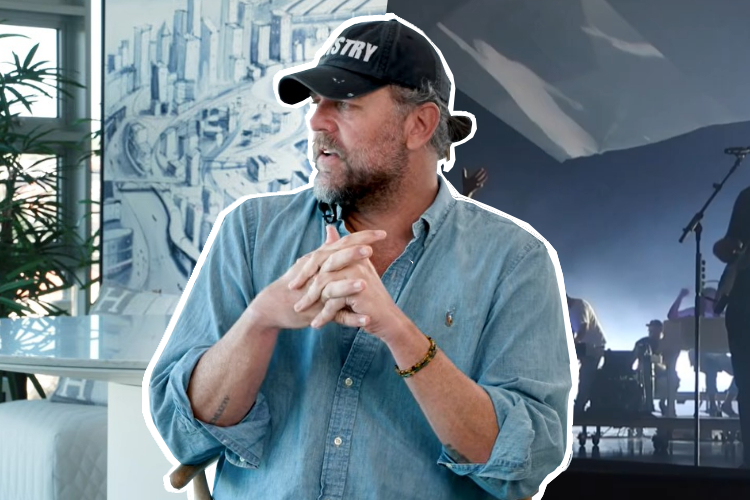
Hillsong UNITED’s Joel Houston reflects on fame, faith and the burden of ministry, questioning performative Christianity as he seeks a more authentic walk with God.
23 October 2026
13.1 MINS
Tasmania’s proposed conversion practices legislation raises serious questions about religious freedom, pastoral care and whether Christians can freely pray with those seeking to live according to their faith.
23 October 2026
7.7 MINS
Melbourne Catholic Archbishop Peter Comensoli has spoken out clearly against the deadly promises by both major parties in Victoria ahead of the election, drawing a comparison between abortion and capital punishment.
23 October 2026
3.1 MINS
The one who is worthy of it all is awakening his Church to be captivated by him, so that we will honour one another and share his gospel with humility and courage.
22 October 2026
2.9 MINS
Victoria Labor’s promise to fund free abortions has drawn a forceful response from Presbyterian leaders, raising profound questions about unborn life, government priorities and Australia’s moral direction.



Having just recently finished her “Love Thy Body”, this is one book I’ve been looking forward to getting my hands on. It appears that she touches on issues that she has written on in that book (the early church in the Roman Empire, as well as from her earlier apologetics works “Total Truth” and “Finding Truth” (the pioneer and Puritan experiences).
So I can’t wait to see how she ties them into her new subject matter. In a way, her works fit together into a “Magnum Opus”, going all the way back to her co-authoring with Charles Colson in “How Now Shall We Live?”.
She is arguably the pre-eminent apologist of our age.
I wonder Bill, if this relentless attack on men isn’t another arm in the spider like trans arsenal ?
Men saying they are women or animals or any number of living creatures and women doing similar.
Our whole culture is currently being groomed in these lies as the God given family unit staggers under the attack.
And what of the children of this once great Nation as these lies are enshrined into law ? It’s no longer abortion alone which is doing the killing as those who are born are also made in the image of God.
We are the people of God surely we will not comply with this evil ?