



Has Liberalism Failed?
Conservatives have been pronouncing the failure of liberalism since the late 1960s. And yet liberalism continues to reign supreme as the unofficial state ideology of virtually all Western democracies.
It is time for conservatives to switch gears and begin trying to account for liberalism’s undeniable longevity and success in spite of its inherent flaws.
I think liberalism’s surprising success (I think it has deep flaws) can be attributed above all to the economic prosperity it has engendered. This prosperity provides enough citizens with a large enough stake in the liberal regime to keep it going. It also offers citizens a realistic enough prospect of economic-status advancement to remain committed to the general liberal idea of freedom to pursue one’s “best life.”
Pluralism
I think another element that conservatives, in particular, have overlooked is the cooperative potential of human beings in a pluralistic culture. There is good historical precedent and factors, at least on paper, to make one suspect that such a degree of pluralism could not possibly work in the long term.
But I think there is enough evidence now to conclude that this probably underestimates the adaptability and cooperative instincts/potential of human beings (the point above helps, of course, so it perhaps all hinges on a collective sense of progress).
I’m not saying that conservatives should become uncritical proponents of pluralism. I just think that conservative critics of pluralism need to come up with a cogent account of why the growth in pluralism over the last 60 years in countries like Australia has coincided with economic growth and stable social order.
Just a couple of thoughts on liberalism and really an appeal to conservatives to abandon the facile “liberalism has failed” mantra and come up with a more sophisticated account of liberal flaws and success that accords with empirical reality.
___
Originally published on Dr Jonathan Cole’s page.
Subscribe to his podcast, The Political Animals, for more insights.
Photo by David McBee.
One Comment
Leave A Comment
Recent Articles:

14 October 2026
6.7 MINS
A national poll challenges claims that pro-life Australians are extremists, revealing broad support for abortion restrictions, protections for unborn babies and safeguards for vulnerable women.

14 October 2026
2.8 MINS
Queensland recorded 1,082 assisted suicide and euthanasia deaths in 2025–26, as the review board called for consultation on potentially widening eligibility criteria.
14 October 2026
5.5 MINS
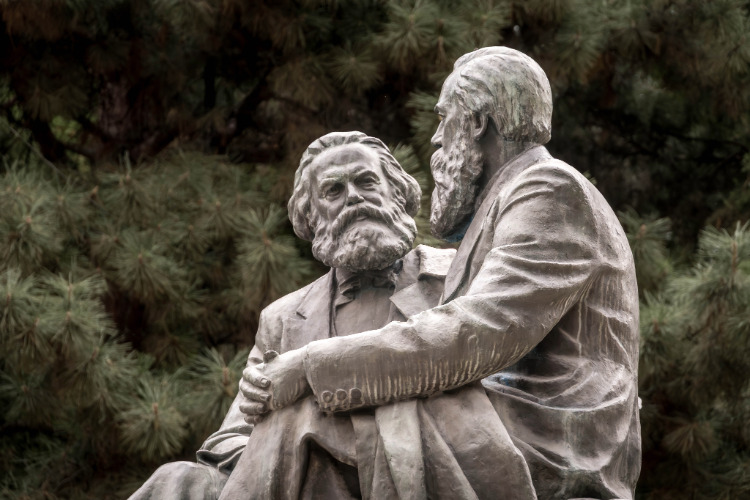
As Christianity fades from public life, Marxism or Communism offers a substitute faith built on oppression, liberation and political salvation — but at what cost?

14 October 2026
5.3 MINS
Marco Rubio’s Athens speech celebrates the Greek, Roman and Christian foundations of Western civilisation, warning that cultural self-loathing and radical ideologies threaten its future.

14 October 2026
2.8 MINS
Australia needs a courageous Church that never separates courage from Christian love — the courage of Peter and John, who, when ordered to cease speaking about Jesus, responded: “We can't stop.”

13 October 2026
2.6 MINS
Allegra Spender’s proposed bill reignites debate over discrimination protections, religious freedom and the right of faith-based schools to uphold their beliefs and values.

13 October 2026
3.9 MINS
Tasmania’s proposed conversion practices law raises serious concerns for churches, parents and faith-based schools, with broad definitions, severe penalties and uncertain protections for religious freedom.



Rebuttal to Dr. Jonathan Cole’s “Has Liberalism Failed?
Dr. Cole’s account of the longevity and successes of liberalism largely overlooks the underpinnings of the current pluralistic society, which, according to some analyses, is a direct result of the neo-Marxist revolution with its long march through the institutions. While Dr. Cole praises the success of liberalism due to economic prosperity, he does not acknowledge the subversive influences that have changed the fabric of society.
Firstly, while Marx originally posited a division between the proletariat and bourgeoisie, when this division failed to materialize to the extent needed for a revolution, a new approach was employed. As the West was deeply entrenched in bourgeoisie principles, the Marxist narrative adapted. Queer theory and critical race theory emerged as tools to create new divisions within society, not based on class but on race, gender, and sexuality.
These theories, according to some interpretations, were crafted with the express purpose of undermining the status quo by introducing internal conflicts that the liberal society would find hard to reconcile. Over time, these divisive concepts have gained traction in educational, media, and other major institutions, subtly shifting the societal zeitgeist.
While Dr. Cole attributes the success of pluralism to the adaptability and cooperative potential of human beings, he fails to recognize that the form of pluralism being propagated today is one influenced by these neo-Marxist theories. It’s not merely about celebrating diversity, but rather fostering divisions and emphasizing differences.
Furthermore, attributing economic growth over the past 60 years to liberalism alone is an oversimplification. Economic growth has occurred in tandem with many other variables, such as technological advancements, global trade expansion, and market dynamics.
Consequently, to suggest that liberalism has remained successful due to its inherent merit overlooks the external influences that have reshaped society. Liberalism has not failed on its own; it has been eroded and transformed by this neo-Marxist march through institutions. Instead of heralding the longevity of liberalism, it may be more accurate to acknowledge that what exists today is a version of liberalism that has been deeply influenced by other ideologies.