



Faith, Signs and Wonders
Are miracles necessary for belief? Do they always serve to strengthen our faith? Are they always from God?
That the miraculous is real is a given for Christians, since we know that God exists, and that He interacts with our world. We are not deists: we know that God takes an active role in the affairs of men. But the question that needs to be addressed here is this: Can some believers over-rely on signs and wonders at times?
That is, some believers are always talking up the miraculous and the need for it, almost assuming that if we have such signs and wonders occurring, that will automatically bring people to faith. The truth is, as we know from both Scripture and church history, sometimes they do, and sometimes they don’t.
We cannot assume that just because some amazing thing happens that people will leave their unbelief and embrace the Gospel – or even that believers will be further strengthened in their faith. It does sometimes happen, but not always. Simply reading the Bible will make this clear enough. In a moment, I will look at one example from the book of Numbers, since that is where I am now reading.
But so many other examples of the miraculous can be mentioned – examples that show that a saving faith was not always the outcome. For example, King Ahab saw the miracles of Elijah but he still persecuted God’s people. Pharaoh experienced firsthand heaps of the miraculous, but still his heart was hardened. Psalm 78:11-17 discusses God’s own people in this regard:
They forgot his works
and the wonders that he had shown them.
In the sight of their fathers he performed wonders
in the land of Egypt, in the fields of Zoan.
He divided the sea and let them pass through it,
and made the waters stand like a heap.
In the daytime he led them with a cloud,
and all the night with a fiery light.
He split rocks in the wilderness
and gave them drink abundantly as from the deep.
He made streams come out of the rock
and caused waters to flow down like rivers.
Yet they sinned still more against him,
rebelling against the Most High in the desert.
And it was the same with Jesus, of course. The disciples saw the Lord’s miracles, and even did some of their own, but in the end, they all abandoned Christ. And as we read about the people in general in John 12:37: “Even after Jesus had done all these miraculous signs in their presence, they still would not believe in him.”
Moreover, Jesus had to make warnings like this: “A wicked and adulterous generation looks for a miraculous sign, but none will be given it except the sign of Jonah” (Matthew 16:4). And then we have the issue of false miracles. Simply think of the first few signs and wonders that Pharaoh’s magicians duplicated after Moses and Aaron had performed them. Or consider warnings given to us elsewhere in Scripture. Paul, for example, provides this strong word in 2 Thessalonians 2:9-12:
The coming of the lawless one is by the activity of Satan with all power and false signs and wonders, and with all wicked deception for those who are perishing, because they refused to love the truth and so be saved. Therefore God sends them a strong delusion, so that they may believe what is false, in order that all may be condemned who did not believe the truth but had pleasure in unrighteousness.
Incredibly, we read there that God even allows deceptive signs and wonders for those who continue to reject him. And our Lord himself made clear warnings about this. Mark 13:21-23 for example, says this:
“And then if anyone says to you, ‘Look, here is the Christ!’ or ‘Look, there he is!’ do not believe it. For false christs and false prophets will arise and perform signs and wonders, to lead astray, if possible, the elect. But be on guard; I have told you all things beforehand.”
Or as we read in Revelation 16:13-14:
“And I saw, coming out of the mouth of the dragon and out of the mouth of the beast and out of the mouth of the false prophet, three unclean spirits like frogs. For they are demonic spirits, performing signs, who go abroad to the kings of the whole world, to assemble them for battle on the great day of God the Almighty.”
Numbers 14
So, at the very least, we must have great care and discernment as we test all things – even signs and wonders. But as mentioned, a story found in Numbers 14 is worth looking at here in more detail. In the first twelve verses, we read about how the people grumbled once again and rebelled against Moses and Aaron – and God. God then said he would wipe out these complaining ingrates. But in the next seven verses, we read about how Moses intercedes for the people.
What we find in verses 20-25 is what I want to highlight:
Then the Lord said, “I have pardoned, according to your word. But truly, as I live, and as all the earth shall be filled with the glory of the Lord, none of the men who have seen my glory and my signs that I did in Egypt and in the wilderness, and yet have put me to the test these ten times and have not obeyed my voice, shall see the land that I swore to give to their fathers. And none of those who despised me shall see it.
But my servant Caleb, because he has a different spirit and has followed me fully, I will bring into the land into which he went, and his descendants shall possess it. Now, since the Amalekites and the Canaanites dwell in the valleys, turn tomorrow and set out for the wilderness by the way to the Red Sea.”
One would think that with all the miraculous events that the Israelites had witnessed and experienced – including the ten plagues, the Red Sea crossing, and God’s amazing provision during the wilderness wanderings – these people would be mighty champions of faith and belief. But they were not.
Indeed, so much so, that of the 3 million folks who left Egypt, only Joshua and Caleb were allowed to get into the Promised Land – even Moses did not get in. So, if it is thought that just showing folks a lot of neat signs and wonders will guarantee their faith and obedience, that idea is clearly incorrect.
The incident recorded here – and other accounts like it – make it clear that while signs and wonders should help confirm to people the reality of who God is, they often do not have that effect. The truth is, miracles can lead some folks to turn to God, but they can also harden the hearts of others and turn them further away from God.
The sad story of ancient Israel, and the later story of the disciples and the people who experienced the ministry of Jesus, is a sad indication of this reality. Thus, we must strive to get the biblical balance right here. We do not want to deny that God can do the miraculous, nor do we want to grieve the Holy Spirit by insisting that He cannot intervene in amazing ways in our world and our lives.
But neither do we want to insist that God must always show up with the miraculous whenever we demand it. He is not our divine servant, someone we can boss around, ordering Him to perform signs and wonders. While the Christian church at large needs to be far more open to the possibility – and actuality – of the miraculous, we dare not think we can just snap our fingers and make it happen.
Paul, Signs and Suffering
The apostle Paul, who was quite capable of performing great feats for God, did not glory in them. He instead seemed to play them down, affirming instead his own weakness. New Testament scholar Scott Hafemann has written much on all this. His 2000 commentary on 2 Corinthians (NIVAC) is one useful work to consult on issues of strength and weakness in Paul.
Let me finish by quoting from his volume Suffering and Ministry in the Spirit (Paternoster Press, 1990, 2000). His remarks about Paul and his ministry, as found in 2 Corinthians, are fitting here: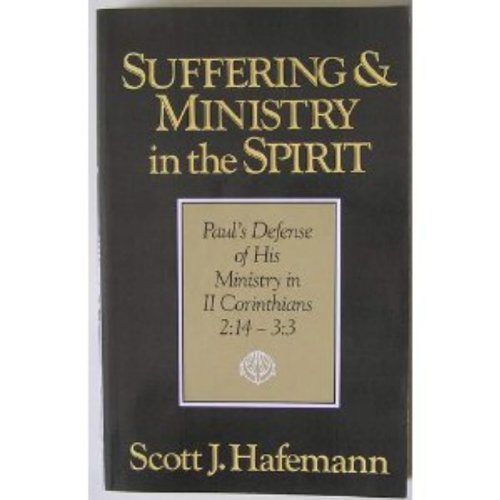
It is a fitting conclusion, therefore, that when forced to boast about the “signs” of his apostleship, Paul does not take refuge in the “signs and wonders and mighty works” which he had performed in Corinth (cf. 12:12), but in those things that show his weakness (cf. 11:30). For like his opponents, Paul too is interested in manifesting the “power of God” in his ministry.
But unlike his opponents, Paul is convinced that the same pattern displayed in the Christ who “was crucified because of weakness, but lives because of the power of God” (13:4), is also to be the distinguishing characteristics of his apostles. As he himself puts it,
“Most gladly, therefore, I will rather boast about my weakness, that the power of Christ may dwell in me. Therefore I am well content with weakness, with insults, with distresses, with persecutions, with difficulties, for Christ’s sake; for when I am weak, then I am strong. (12:9b-10, NASV)”
For as we have seen, part of the “mystery of God” which Paul preached and cared for as its steward (cf. 1 Cor. 2:1; 4:1) was the revelation that God was making himself known not in the outwardly flamboyant, self-confident display of “spiritual” power so characteristic of the spirituality of the Corinthian church, and of the false apostles which they had come to accept, but through the “weakness” and “death” of his genuine apostles.
The good news of the revelation of God’s power in the deliverance and vindication of those who trust in him in spite of their suffering, first declared in the biblical and post-biblical tradition of the suffering of the righteous, and then proclaimed and embodied in the ministry, death and resurrection of God’s own son, “the Lord of glory” (I Cor. 2:8), was now being made known to the world through Paul’s “ministry of the new covenant”. Thus, as a revelatory agent of the gospel of the power of God, Paul’s “sentence to death” could become both his “boast” (II Cor. 12:5, 9) and the ground for his thanksgiving (II Cor. 2:14).
These precious truths need to be kept in mind, especially in times of great hardship and suffering. I know personally of some believers who, after much prayer, have seemed to be able to turn around a deadly illness in an almost miraculous fashion. That is not true of all Christians, of course, including my own wife.
But whether an amazing change to our circumstances happens or not, be it in terms of miraculous healing or whatever, the main thing is that we bring glory to God in all that we do – whether by life or by death. And for Paul, it was his weakness that he gloried in, not the ‘power gospel’ of the ‘super-apostles’.
___
Originally published at CultureWatch. Photo by Tri Nguyen Trong.
3 Comments
Leave A Comment
Recent Articles:

27 October 2026
10.3 MINS
As Tasmania and Western Australia consider conversion therapy bans, a former LGBT+ ministry leader warns of threats to religious freedom, personal choice and Christian discipleship.

27 October 2026
4.9 MINS
Nine Christians have been killed in a terrorist attack on a Jordanian church, prompting fierce condemnation, demands for justice and renewed concerns about religious persecution.

27 October 2026
3.6 MINS
For 25 years, the Mount Moriah Trust has supported struggling Christians across the Holy Land, bringing practical assistance, encouragement and hope to believers facing hardship and persecution.
27 October 2026
3.1 MINS
As the disciples discovered through a huge haul of fish, we can trust Jesus for a net-breaking, boat-sinking catch of people.
26 October 2026
3.2 MINS
Following Paul's example in Ephesians 1, let us pray for the Father to open the eyes of our hearts so that we may grasp the hope of his calling, the riches of his glorious inheritance in the saints, and the greatness of his power towards us who believe.

25 October 2026
4 MINS
Prayer is active partnership with God, and he is awakening his body to prayer, not by might or by power, but by his Spirit.

24 October 2026
3.3 MINS
When we ask God, "What is in my hand?", and see our possessions, money and time as seed that God asks us to sow, life becomes simpler.



Thanks for your articles.
Check these signs out on facebook. The Sign of the Statue by Jonathan Cahn
https://www.facebook.com/share/v/WeKJxWtdkHs66sWY/?
Thank you Bill for such deep insights, especially mentioning the hardness of mankind’s heart even when miracles are carried out .Also remindings us the suffering Christ Himself went through on the cross and preceding the cross with great persecution and jealous rivals, and also not being recognized as the Anointed Son of God by many despite the signs He demonstrated.
You mentioned too those who don’t seek a sign are especially pleasing to God too- as they believe by faith and see the unseen one at work and God’s invisible hand – and believe His word and promises. (‘God’s way are not our ways’ as Isaiah wrote. We so need His holy spirit to help us understand His way if walking by faith)
The example of Paul’s own suffering is so relevant and your point that he relied only on God and his own weak physical condition/malady gave God more glory which Paul rejoiced in, as he knew the listeners and believers could see God exalted in him through his weakness. This gives such spiritual insight as humanly we tend to look at the outside while God says he looks at the heart…but as you have reminded us God loves those who don’t seek signs .
I imagine too, Paul he would have endured humiliation due with his eye condition which made him look unappealing and he did say too it kept him from being proud, so for him to give God the glory took great faith and trust in God.
As you say some are healed and glorify God through that healing but others are not healed or may be partially healed or given a longer time on earth than medically thought possible. It’s those unhealed/partly healed ones, who look forward to having a new body in heaven and yet still testify to God’s goodness, by faith while they are on earth and they point to the both the cross and Jesus suffering there and to the resurrection hope which is sure.
May there be a wonderful reunion when you see Avril again (I am so sorry she was one who suffered and therefore you too suffered.) May the Lord always shine light on the faith she had and comfort you.
Gail’s comments
Thank you Bill for such deep insights, especially mentioning the hardness of mankind’s heart even when miracles are carried out .Also reminding us of the suffering Christ Himself went through on the cross and preceding the cross with great persecution and jealous rivals, and also not being recognized as the Anointed Son of God by many despite the signs He demonstrated.
You mentioned too those who don’t seek a sign are especially pleasing to God too- as they believe by faith and see the unseen one at work and God’s invisible hand – and believe His word and promises. (‘God’s way are not our ways’ as Isaiah wrote. We so need His Holy Spirit to help us understand His way if walking by faith)
The example of Paul’s own suffering is so relevant and your point that he relied only on God and his own weak physical condition/malady gave God more glory which Paul rejoiced in, as he knew the listeners and believers could see God exalted in him through his weakness. This gives such spiritual insight as humanly we tend to look at the outside while God says he looks at the heart…but as you have reminded us God loves those who don’t seek signs .
I imagine too, Paul he would have endured humiliation due with his eye condition which made him look unappealing and he did say too it kept him from being proud, so for him to give God the glory took great faith and trust in God.
As you say some are healed and glorify God through that healing but others are not healed or may be partially healed or given a longer time on earth than medically thought possible. It’s those unhealed/partly healed ones, who look forward to having a new body in heaven and yet still testify to God’s goodness, by faith while they are on earth and they point to the both the cross and Jesus suffering there and to the resurrection hope which is sure.
May there be a wonderful reunion when you see Avril again (I am so sorry she was one who suffered and therefore you too suffered.) May the Lord always shine light on the faith she had and comfort you.